If it's not grounded then it's not going to provide any shielding.As for a pickup cover? They were supposedly there to keep radio/electronic interference to at least a minimum (that's always been Rickenbacker's excuse, anyway). But, just how effective they are at that, is... highly debatable.

Enjoy the benefits of a premium membership!
Upgrade Account
-
TalkBass has been independent since 1998. Add your voice.
Create a free account to reply to discussions, view embedded media, and browse with fewer display ads.
Join free Log in
Want zero display ads or expanded classifieds tools? Compare plans.
You are using an out of date browser. It may not display this or other websites correctly.
You should upgrade or use an alternative browser.
You should upgrade or use an alternative browser.
Why cover pickups?
- Thread starter Gabu
- Start date
More options
Who Replied?
If it was only intended to be a bridge cover wouldn't the Precision cover and the Jazz cover both be the same size?
American Vintage Precision Bass Bridge Cover Chrome | Sweetwater
No the JB bridge cover also covers the bridge pickup so it's longer / wider.
for the look and what they were intended to do, seems like excessive weight added. But who doesn't like chrome!
for the look and what they were intended to do, seems like excessive weight added. But who doesn't like chrome!
50s, 60s when these were designed, chrome was a thing and the more the better.


I like the look of the covers for the neck pickup; I had one installed on a couple of my Jazz Basses for some time, but I eventually found that while I could play with the cover on, I was starting to miss some of the tones I normally got from playing directly above or at least close to the neck pickup, so I compromised and got this:
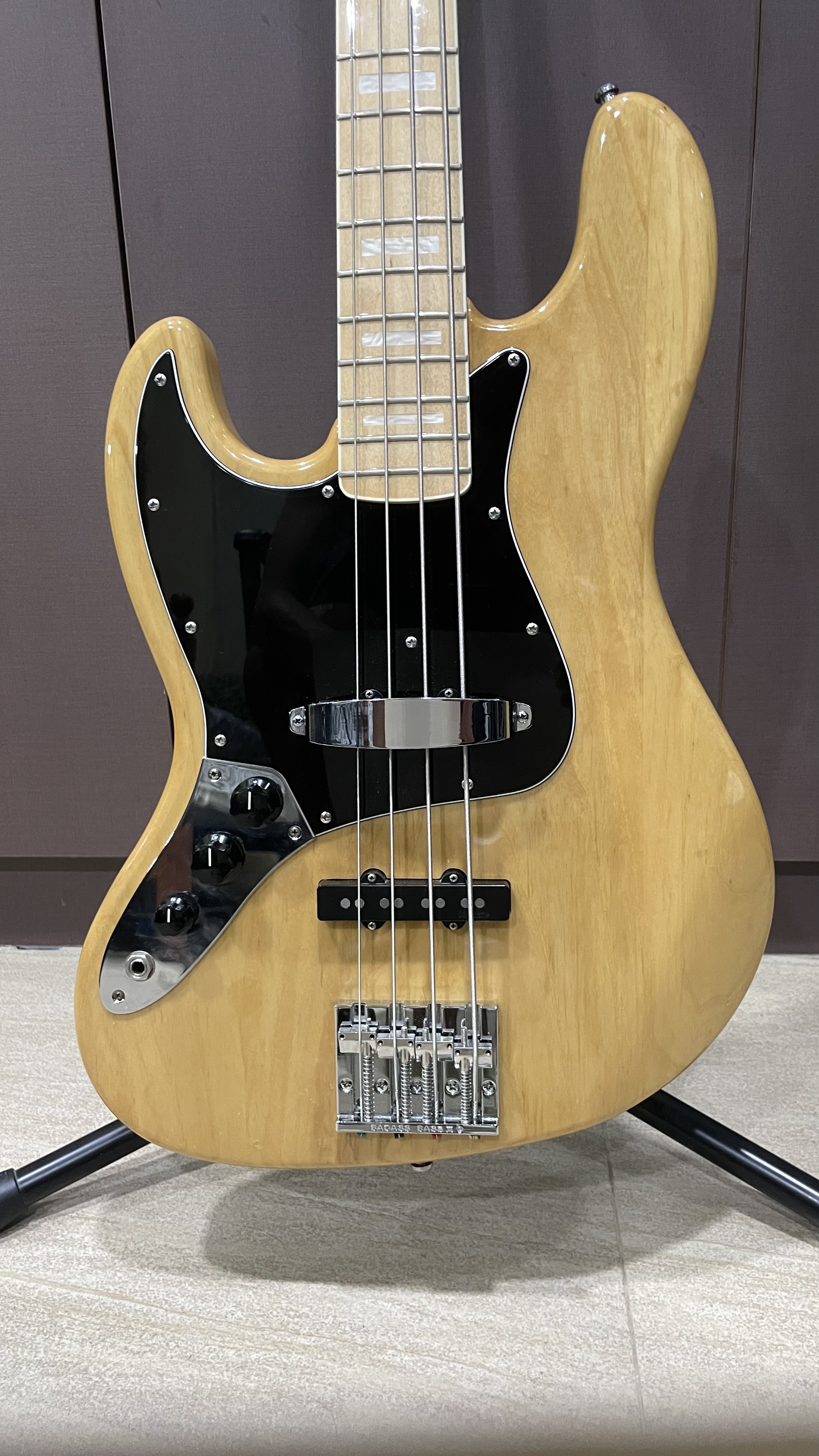
Atelier Z ZPF-3500 pickup cover, or pickup 'fence' as Atelier Z themselves call it, installed on my CIJ 75RI. It's basically a pickup cover that's the width of the pickup itself (approx. 24mm at the widest point); I get the neck pickup tones I need and still get to keep the aesthetic of a nice chrome cover on my bass. (P.S. The pic was taken from a slight upward angle so the top screws are visible while the bottom screws appear fully hidden, normally when looking at the cover from directly above, you should see half of the top screws and half of the bottom ones)
I got the idea from this video, where Marcus Miller had a similar cover on his own bass, you can see it at 1:55
Atelier Z ZPF-3500 pickup cover, or pickup 'fence' as Atelier Z themselves call it, installed on my CIJ 75RI. It's basically a pickup cover that's the width of the pickup itself (approx. 24mm at the widest point); I get the neck pickup tones I need and still get to keep the aesthetic of a nice chrome cover on my bass. (P.S. The pic was taken from a slight upward angle so the top screws are visible while the bottom screws appear fully hidden, normally when looking at the cover from directly above, you should see half of the top screws and half of the bottom ones)
I got the idea from this video, where Marcus Miller had a similar cover on his own bass, you can see it at 1:55

The original Fender bridge wasn't nice looking like later replacement bridges, it was like under the hood mechanicals. Originally the market was for acoustic double bass players to switch over and the foam mute was the way to get close to the envelope of a double bass, (which took over from tuba which has a bouncy attack as well) and it became it's own standard sound in the 50s and early 60s. A decade later and the mute was gone (usually) and 20 years later people liked to expose the bridge for practical purposes as well as exposed hot rod engine, the heavier replacements were pretty. Now the old bridge cover is being used because it's almost art deco and admired.
Well...
Couple of things. First; that ain't a pickup cover; it's a bridge cover - for a Fender Jazz Bass.
It is also a pickup cover.
It comes down to looks, in the end. It’s cosmetic trim, with certain secondary functionality – e.g. doubles as a mute holder or a finger/thumb/hand rest. Shielding might have been a theory, but that’s obviously nonsense. It was an aesthetic. Fender didn’t want bridge saddles or pickups exposed.
Removing them is like running an old car without hubcaps and trim rings, exposing your hubs, lug nuts, rims, and wheel weights. It’s a certain non-factory aesthetic that some people like. I think it looks bad most of the time, and the covers don’t get in my way at all on bass. They often do on guitar, but I only really need to remove them if I’m palm muting.
Commonly used guitar technique combined with common guitar pickup placements demanded that most guitar pickups remained uncovered – but if you notice, all ’50s Fender guitar pickups without external chrome covers had either white or chrome pickup covers on the coils themselves. It wasn’t until the the ‘60s that black plastic pickups were left visible, and then it was only on lower end “student” models.
Every ‘50s guitar they released came with a bridge cover: Esquires, Teles, Duo Sonics, Musicmasters, Strats - and Jaguars and Mustangs in the ‘60s. Those who thought they got in the way simply removed them, but they often didn’t get in the way until more rock oriented techniques became the norm. Most electric bass technique of the time wasn’t really impeded by pickup or bridge covers.
The first models without them were the ‘60s Duo Sonic IIs, followed by the Mustang Basses in the mid ‘60s, and Musicmaster Basses in 1970 – all student models, and also the first models with exposed pickups that weren’t white or chrome. They continued through the ‘70s on the other models.
Removing them is like running an old car without hubcaps and trim rings, exposing your hubs, lug nuts, rims, and wheel weights. It’s a certain non-factory aesthetic that some people like. I think it looks bad most of the time, and the covers don’t get in my way at all on bass. They often do on guitar, but I only really need to remove them if I’m palm muting.
Commonly used guitar technique combined with common guitar pickup placements demanded that most guitar pickups remained uncovered – but if you notice, all ’50s Fender guitar pickups without external chrome covers had either white or chrome pickup covers on the coils themselves. It wasn’t until the the ‘60s that black plastic pickups were left visible, and then it was only on lower end “student” models.
Every ‘50s guitar they released came with a bridge cover: Esquires, Teles, Duo Sonics, Musicmasters, Strats - and Jaguars and Mustangs in the ‘60s. Those who thought they got in the way simply removed them, but they often didn’t get in the way until more rock oriented techniques became the norm. Most electric bass technique of the time wasn’t really impeded by pickup or bridge covers.
The first models without them were the ‘60s Duo Sonic IIs, followed by the Mustang Basses in the mid ‘60s, and Musicmaster Basses in 1970 – all student models, and also the first models with exposed pickups that weren’t white or chrome. They continued through the ‘70s on the other models.
Last edited:

They were supposedly there to keep radio/electronic interference to at least a minimum
Fluorescent lights and a circuits without grounding were a problem.
No the JB bridge cover also covers the bridge pickup so it's longer / wider.
You are making my point.
It WAS intended to reduce the influence of electromagnetic fields one the pickup. The Precision has a humbucking pickup, so no need for a cover.
Last edited:
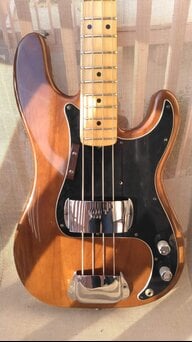
Pickup covers are always in my way. Chrome bridge covers on older instruments add character..and mojo IMHO.
Initially it wasn't just about looks. The single pickup on a '51-'57 P Bass has no plastic cover over it like on a post '57. Not only was it unfinished looking it's also easy to jam your thumb right down onto the cotton string covering the windings. It's also a raw sounding more touch sensitive pickup that can be overdriven if you play hard right over it. The chrome cover is a an aesthetic and sonic fix.
The bridge cover was probably mostly about aesthetics to hide that primitive looking bridge with some consideration given to the foam mute. By the late 60's the covers were probably more habit than anything else.
The bridge cover was probably mostly about aesthetics to hide that primitive looking bridge with some consideration given to the foam mute. By the late 60's the covers were probably more habit than anything else.

Only partially, apparently.@Gabu
It covers the Jazz bridge pup and the bridge

First thing?


Shielding and humbuckers solve different problems.You are making my point.
It WAS intended to reduce the influence of electromagnetic fields one the pickup. The Precision has a humbucking pickup, so no need for a cover.
In any event, the neck and bridge pickups on a Jazz are reverse wound, reverse polarity so they humbuck when their signals are balanced, the same as a Precision pickup.


My CIJ P Bass has an EMG Geezer pickup, if I lay the bass flat and loosely position the pickup cover in place it definitely makes the sound darker. By continually removing the cover and putting it back in place you can distinctly tell the difference in tone between with and without the cover, so the cover is altering the magnetic field. Whether this is more evident due to the EMG being quite a powerful pickup I don’t know.
I suspect however that the original pickup covers were fitted on Fender basses for cosmetic reasons. My old ‘73 P Bass came fitted with round wounds and a foam strip under the bridge.
I suspect however that the original pickup covers were fitted on Fender basses for cosmetic reasons. My old ‘73 P Bass came fitted with round wounds and a foam strip under the bridge.
Aesthetics of the time. I think Leo thought the pick up cover would provide some shielding, but was incorrect.
I have never had a metal cover on a pickup before.... is there any sound related reason some basses have this, or is it just a look?


My thoughts on it: When Leo developed the bass he thought we would play it with our thumb and anchor our other fingers on a little rest below the G string. This puts your forearm over the strings, so you need a rest to keep your forearm from touching the strings.


