• TalkBass has been independent since 1998. Add your voice.
    Create a free account to reply to discussions, view embedded media, and browse with fewer display ads.
    Join freeLog in
    Want zero display ads or expanded classifieds tools? Compare plans.

Why did you choose the amp that you use?

Between all the various threads on power amp class and all the differences of opinion, I have read a lot of descriptive words that really tell me nothing about what people are hearing. In my experience there are so many variables that dictate how a head sounds. Instrument and cab pairing, eq settings, desired amount of drive heard.

So what does everyone use? More importantly to me, why do you use it? What contributes to the sound you hear and love from your amp?

First, there is a LOT of yin yang involved in the entire instrument signal chain, including bass, effects, preamp, amp, and cab.

That said, I tend to favor active Jazz-ish instruments (meaning two pickups) and either the Sadowsky or Pope preamps.

My cabs are Bergantino AE212's (2) and an HD112. As other posts have referenced, I initially got on to the AE212 from @KJung 's posts; and have stayed with them, because I like their combination of sound, storage footprint, and schleppability.

I use three different amps. My go to for live backline use is a Demeter VTBP-201 - the older 1.5 rack space version. I have one of those with the Minnie 800D internally installed. That amp in a 3 space rack bag with a Furman PLTuner, weighing in around 20 pounds total, is my fav. It's Class D; but, the Class is irrelevant to the tone. I also have a second VTBP-201 that gets used with a Crest ProLite 3.0 for higher volume work. The Demeter preamp has a 3D character that perfectly matches the various Fender sounds I use; kind of the same way an SVT does.

I also have a Bergantino B|Amp, which gets pretty close to the Demeter for tone, and does fit into that light weight Class D zone. I like the B|Amp a little better with my Alembic Series I.

Finally, I have a Shuttle 9.0; which once upon a time replaced my Trace Elliot Hexavalve. LOL. On a Bergantino NV610, no less. I use the Shuttle 9 for daily practice. On off on off on off, you get the idea. Takes a licking and keeps on ticking.

All of those are Class D. Weight is a factor, but NOT the main consideration. That's just what we are using now.
 
  • Like
Reactions: bassbooty
Those Quilters are the ultimate head for someone who does not like tweaking knobs! I have no experience with them, so I have no idea what the range of sounds is, but if it is broad then I am, sure it is useful!

I haven't found any available sounds that aren't musical and useful in SOME setting. For the first year, I thought that "turning Contour fully clockwise" wasn't a usable sound as it was too muffled and muddy. I've used it two in the last two weeks. Great stuff!
 
  • Like
Reactions: PraiseBassing
IMG_0531.JPG
I really wish that the sound and feel of these old gurls could be honestly replicated with smaller more old man friendly gear, but I have not found it yet!
 
Thank you, I have a hard time finding any difference between any amp I've ever played before. They almost always sound the same to me after a few minutes. It's only on TalkBass where people with tons of time and extra money go nuts over apparently vital things that no one else can hear or cares about.

That 'after a few minutes' part intrigues me. That tells me that either you can get comfortable with a tone rather quickly or that you're one of those guys that knows how to dial a good tone in quickly even on unfamiliar equipment.

I'm also curious how long you've been playing. These days I tend to find decent amps at rehearsal studios to be fairly common but when I first started there were plenty of inferior amps. I started with a Crate combo amp very like this one: Bass Central Used Arrival 12-19-07 Crate I tried putting the EQ and gain in every position possible, and while you'd think there would be plenty of options with EQ sliders, it was absolutely impossible to get a clean tone! Even though it was a solid state amp, every note was always fuzzy, to the point that I could only accurately emulate a Jack Bruce or early John Wetton tone.

That experience alone forced me to pay attention to differences in tone, because I could sound much better back then just by plugging into somebody else's amp!

There is another measure over time that matters to me, which is how I feel after playing for 2 hours at high volume. If an amp is clean and punchy, I unconsciously play softer because I can easily hear my fingers attacking the string. At home I practice on an acoustic bass which has instant response, so I get into trouble with boomy amps because I try to recreate that feeling. The bottom line is that even though I can still sound OK, at the end of a couple hours my ears are more fatigued and I may have tore up my fingertips from overcompensating. I admit that these problems are partially my fault if I don't have a good relationship with or knowledge of equipment.
 
That 'after a few minutes' part intrigues me. That tells me that either you can get comfortable with a tone rather quickly or that you're one of those guys that knows how to dial a good tone in quickly even on unfamiliar equipment.

I'm also curious how long you've been playing. These days I tend to find decent amps at rehearsal studios to be fairly common but when I first started there were plenty of inferior amps. I started with a Crate combo amp very like this one: Bass Central Used Arrival 12-19-07 Crate I tried putting the EQ and gain in every position possible, and while you'd think there would be plenty of options with EQ sliders, it was absolutely impossible to get a clean tone! Even though it was a solid state amp, every note was always fuzzy, to the point that I could only accurately emulate a Jack Bruce or early John Wetton tone.

That experience alone forced me to pay attention to differences in tone, because I could sound much better back then just by plugging into somebody else's amp!

There is another measure over time that matters to me, which is how I feel after playing for 2 hours at high volume. If an amp is clean and punchy, I unconsciously play softer because I can easily hear my fingers attacking the string. At home I practice on an acoustic bass which has instant response, so I get into trouble with boomy amps because I try to recreate that feeling. The bottom line is that even though I can still sound OK, at the end of a couple hours my ears are more fatigued and I may have tore up my fingertips from overcompensating. I admit that these problems are partially my fault if I don't have a good relationship with or knowledge of equipment.

Well, I pretty much know what tone I am looking for no matter the amp and to clarify, I was strictly talking about heads only, not combo amps. I do realized that different amps have different "baked in" tone, all other settings being equal. I can appreciate that. Once I'm dialed in, that's about it and generally leave the settings where they are. So when I say "after a few minutes" I got what I wanted, and once I start playing, I forget about it. The point I was trying to make is that there always seems to be a never ending quest for better and better tone, and there is a little to no increase in marginal utility.

The way I see it, amps make sound, and EQ's help you change it to your liking which IMO varies little from amp to amp. Some amps have a lot more features which increase your precision in the matter, but more or less you get the same with most, even with variances in price. I will admit that on my TCBH250, sometimes it felt overall harder to dial in my sound but I can still find a sound I like, still, I switched to a cheap Ashdown and it feels easier for me to use. I'm mostly focused on features though, with things like a mute switch, or whatnot and making sure I have the power I need.

Ive was a home hobbyist for long time, but have been practicing regularly and playing with bands for the last 7 or so.
 
  • Like
Reactions: Kragnorak
My tonal goals are for relatively uncolored reproduction, with straightforward and effective EQ. A plethora of knobs is a turnoff to me (sorry Shuttlemax). I need headroom for my Tobias and raw wattage to push my Acme B2 around. I don't really want or need "grit" and "drive".

Coming from a Tubeworks RT-3300, less weight and more power were paramount in choosing my Genz-Benz Shuttle 6.2.
I'd played through a Shuttle 3.0 and thought the overall tone was okay, and everything I read about the improvements in the second generation Shuttle line convinced me to pull the trigger on a used one without ever having played through it, and I don't regret my decision for a second.

In my pursuit I'd gotten an Ibanez Promethean PH500 head, but it didn't have enough power and there was some inherent noise that I couldn't live with, so it didn't last long. I've tried all sorts of amps in the interim and the only one I really liked more was the Mesa-Boogie Subway D-800: on my list after I purge a bunch of other gear.
 
View attachment 3000262 I really wish that the sound and feel of these old gurls could be honestly replicated with smaller more old man friendly gear, but I have not found it yet!
I'd be interested to see some WiniSD modeling or something like that for those cabs to see what they are really doing. Whatever they do, a lot of people love it, and it would be interesting to see what's actually being put out.
 
So when I say "after a few minutes" I got what I wanted, and once I start playing, I forget about it. The point I was trying to make is that there always seems to be a never ending quest for better and better tone, and there is a little to no increase in marginal utility.

Your point is well taken. I think all of us have that sweet spot where x is good enough and anything after that becomes diminishing returns (instruments, amps, how long we play before changing strings, etc). I see it in the studio, where an engineer with golden ears has $5000 monitoring speakers that would be absolutely wasted on me, so therefore in a home studio I should not be spending more than a few hundred bucks on such speakers.
 
  • Like
Reactions: FingerDub
Your point is well taken. I think all of us have that sweet spot where x is good enough and anything after that becomes diminishing returns (instruments, amps, how long we play before changing strings, etc). I see it in the studio, where an engineer with golden ears has $5000 monitoring speakers that would be absolutely wasted on me, so therefore in a home studio I should not be spending more than a few hundred bucks on such speakers.
Well you have to go with what your budget allows, but those really expensive studio monitors really rock hard! That said, most studios will have a selection of monitors from expensive to cheap because it's good to listen to your tracks on different pieces of gear.
 
  • Like
Reactions: Al Kraft
Well you have to go with what your budget allows, but those really expensive studio monitors really rock hard! That said, most studios will have a selection of monitors from expensive to cheap because it's good to listen to your tracks on different pieces of gear.
I'll second this. It's been my experience that something that has all the right nuances on tens of thousands of dollars worth of playback equipment in a studio may sound quite different on consumer earbuds/headphones or on a car radio. I like to audition tracks on multiple sources and speakers.
 
  • Like
Reactions: JimmyM
I'll second this. It's been my experience that something that has all the right nuances on tens of thousands of dollars worth of playback equipment in a studio may sound quite different on consumer earbuds/headphones or on a car radio. I like to audition tracks on multiple sources and speakers.

I auditioned a mix for a surf band on the the cassette deck and door speakers of an ancient Ford Taurus wagon. It might not have been audio but it was "autio."
 
  • Like
Reactions: Al Kraft
"Why did you choose the amp that you use?"

The older I get, the harder it is to haul heavy tube heads... So, I have been shrinking my gig rigs for a couple of decades. Current gig head is the fab Quilter BB800! Fits in my gig bag with the wireless, and other necessary stuff... ALL of my bass guitars sound great with the Quilter - with and/or without pedalboard!

As far as cabs go, I couldn't afford what I liked, and didn't like what I could afford. So, I designed and built my own cabs. I now have a garage full of great sounding and performing cabs from small to large! The newest is a 112 that covers nearly everything I need.

My regular gig rig fits in the trunk of my small 2 door car as well! One trip load-in/out, and no back aches!!!
 
  • Like
Reactions: PraiseBassing
Well you have to go with what your budget allows, but those really expensive studio monitors really rock hard! That said, most studios will have a selection of monitors from expensive to cheap because it's good to listen to your tracks on different pieces of gear.

They absolutely do, but I personally don't deserve them. At my newbish skill level at home recording I might want $500 monitors because the diminishing returns for the buck factor kicks in pretty quickly these days. By that, I mean that you can buy poorly made speakers that might buzz on the cheap, but you can buy decent equipment fairly cheaply considering that the sound quality you get might match very expensive speakers from decades ago.
 
  • Like
Reactions: JimmyM
I'd be interested to see some WiniSD modeling or something like that for those cabs to see what they are really doing. Whatever they do, a lot of people love it, and it would be interesting to see what's actually being put out.
As legend has it the design for the Sunn cab came to Conrad Sunholm in a lucid dream, it would be interesting to see what's really going on.
 
My primary rig is a Shaw Audio B150 and Shaw Audio 115. For bigger stages I'll use a Ampeg Heritage 810..... Although I try to get away with just the 115 whenever possible. The B150 is basically a B15 front end married up to a quad of KT88's..... And that is why I use it. My 65/66 B15 sounds beautiful, but it's not always enough for some of the stages we play (although we don't play loud, so it works in a lot of situations). The B150 with the 115 sounds just like my B15, only with 5 plus times the power. It's quick with gorgeous mids, and a bit of "give" down low when you dig in. The Jensen transformer balanced out off the OT ensures my tone is going to the board. It has, along with my flat strung Pbass, become integral to not only my sound, but also my band's sound.

20180406_172220.jpg


20180428_171600.jpg
 
Zombie revival bump!

I came to a new town, and got picked up for a cover band. I was amp less (and in fact bass less- auditioned on an AEBG!) the guitar player suggested a Rumble 100 (that's what the last bassist had and that seemed to work for the band)

so I picked up a Peavey bass and a Rumble and was ready to gig! I eventually swapped the peavey for a P bass. I picked up a second Rumble to leave a rehearsal and to daisy chain for the occasional bigger gig.

I like the light weight, simplicity , affordability and tone character of the Rumble. Seems to work especially well with the P bass.
4A98336F-CD75-4DC0-BA9A-569DC7D5831C.jpeg


really tell me nothing about what people are hearing. In my experience there are so many variables that dictate how a head sounds. Instrument and cab pairing, eq settings, desired amount of drive heard.

For me, my GK MB210-II and 210MBE-II are lightweight and loud enough for any stage I will play. I'll do some testing with it later, because honestly there is a specific frequency range that it has a bump in with the eq flat, that led me to choose it. It's not down at 35Hz, but it is what was the most pleasing out of all the MB combos to my ears when playing up and down the B string. I'm assuming it is somewhere around 60Hz but don't know for sure, so I'll run some sine waves through it. I'll add more to this thread later.

So what does everyone use? More importantly to me, why do you use it? What contributes to the sound you hear and love from your amp?

I've been flirting with getting something GK for the extra clarity. Either the MB 210 or MB 112 + MBP 112. But by and large I've been happy with my Rumbles.
 
Zombie revival bump!

I came to a new town, and got picked up for a cover band. I was amp less (and in fact bass less- auditioned on an AEBG!) the guitar player suggested a Rumble 100 (that's what the last bassist had and that seemed to work for the band)

so I picked up a Peavey bass and a Rumble and was ready to gig! I eventually swapped the peavey for a P bass. I picked up a second Rumble to leave a rehearsal and to daisy chain for the occasional bigger gig.

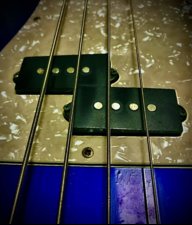
I like the light weight, simplicity , affordability and tone character of the Rumble. Seems to work especially well with the P bass.
View attachment 3576456


I've been flirting with getting something GK for the extra clarity. Either the MB 210 or MB 112 + MBP 112. But by and large I've been happy with my Rumbles.

This GK and BagEnd rig is quite killer with a Pbass....

20191012_153713.jpg