

Enjoy the benefits of a premium membership!
Upgrade Account
-
TalkBass has been independent since 1998. Add your voice.
Create a free account to reply to discussions, view embedded media, and browse with fewer display ads.
Join free Log in
Want zero display ads or expanded classifieds tools? Compare plans.
You are using an out of date browser. It may not display this or other websites correctly.
You should upgrade or use an alternative browser.
You should upgrade or use an alternative browser.
Why do all basses seem to look so uninspired and the same (in a bad way)
- Thread starter Liamberry9
- Start date
- Status
- Not open for further replies.
More options
Who Replied?
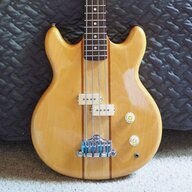
Speaking as a recovering Industrial Designer, it is obvious to me that the Leo Fender designs didn't benefit from ID skills. Modern Yamaha & Ibanez basses have a fundamentally similar profile to classic Fender designs, but have benefitted from professional design skill sets (based on my observation, I haven't looked into their teams or process). There's nothing wrong with loving the classic shapes as they're burned into our consciousness, but for me many have very awkward profiles and proportions. I love many early Matsumoku designs (including my cheap Vantage) as someone there was really good with proportion & symmetry (and yes, that symmetry = neck dive). I also struggle with almost any bass with the tuners on one side, as the heads get huge in proportion to the rest of the bass - especially considering the neck length.
It's a basic fact (from an Industrial Design standpoint): basses have challenging proportions compared to guitars, it's hard (but not impossible) to make them look beautiful. But I have an entire board on Pinterest of beautiful basses, they exist. But look at a basic Yamaha TRBX bass of any flavor - it's hard to say that's anything other than a professionally designed, modern version of a 'classic bass'.
It's a basic fact (from an Industrial Design standpoint): basses have challenging proportions compared to guitars, it's hard (but not impossible) to make them look beautiful. But I have an entire board on Pinterest of beautiful basses, they exist. But look at a basic Yamaha TRBX bass of any flavor - it's hard to say that's anything other than a professionally designed, modern version of a 'classic bass'.

What are you, 8?

A big thank you to everyone who is coming through with great suggestions for the OP. Here is a reminder to steer clear of the pejoratives regarding age, playing style, generational taste, etc.

Can I see an URL? I like seeing examples of well-designed basses. I have my opinions but I want to learn from others too.But I have an entire board on Pinterest of beautiful basses, they exist.
I can simplify my point above: Leo Fender created the Precision in 1951, and it looks it. That's good if you want an instrument that expresses its heritage, that's bad if you want something that doesn't look vintage. And unlike a cello or equivalent, the specific shape isn't required for the acoustics - it doesn't have to look like that to sound great.Speaking as a recovering Industrial Designer, it is obvious to me that the Leo Fender designs didn't benefit from ID skills. Modern Yamaha & Ibanez basses have a fundamentally similar profile to classic Fender designs, but have benefitted from professional design skill sets (based on my observation, I haven't looked into their teams or process). There's nothing wrong with loving the classic shapes as they're burned into our consciousness, but for me many have very awkward profiles and proportions. I love many early Matsumoku designs (including my cheap Vantage) as someone there was really good with proportion & symmetry (and yes, that symmetry = neck dive). I also struggle with almost any bass with the tuners on one side, as the heads get huge in proportion to the rest of the bass - especially considering the neck length.
It's a basic fact (from an Industrial Design standpoint): basses have challenging proportions compared to guitars, it's hard (but not impossible) to make them look beautiful. But I have an entire board on Pinterest of beautiful basses, they exist. But look at a basic Yamaha TRBX bass of any flavor - it's hard to say that's anything other than a professionally designed, modern version of a 'classic bass'.

The essence of social media, boiled down to its purest form"anything I don't like is terrible"

We'll, this is just me, exploring what I've found from an Industrial Design perspective. For all I know, many of these basses could be unplayable crap, and I expect most aren't cheap: but they're visually interesting to me (I expect many here would hate most of these).Can I see an URL? I like seeing examples of well-designed basses. I have my opinions but I want to learn from others too.
https://pin.it/3Y0En7e
(Note: clipping isn't endorsement, I have ID issues with details on many of these basses as well)
It's appreciated. In my idle moments I'm making sketches for a bass I'd someday like to build, and things like this are helpful!We'll, this is just me, exploring what I've found from an Industrial Design perspective. For all I know, many of these basses could be unplayable crap, and I expect most aren't cheap: but they're visually interesting to me (I expect many here would hate most of these).
https://pin.it/3Y0En7e
(Note: clipping isn't endorsement, I have ID issues with details on many of these basses as well)
Speaking as a recovering Industrial Designer, it is obvious to me that the Leo Fender designs didn't benefit from ID skills. Modern Yamaha & Ibanez basses have a fundamentally similar profile to classic Fender designs, but have benefitted from professional design skill sets (based on my observation, I haven't looked into their teams or process). There's nothing wrong with loving the classic shapes as they're burned into our consciousness, but for me many have very awkward profiles and proportions. I love many early Matsumoku designs (including my cheap Vantage) as someone there was really good with proportion & symmetry (and yes, that symmetry = neck dive). I also struggle with almost any bass with the tuners on one side, as the heads get huge in proportion to the rest of the bass - especially considering the neck length.
It's a basic fact (from an Industrial Design standpoint): basses have challenging proportions compared to guitars, it's hard (but not impossible) to make them look beautiful. But I have an entire board on Pinterest of beautiful basses, they exist. But look at a basic Yamaha TRBX bass of any flavor - it's hard to say that's anything other than a professionally designed, modern version of a 'classic bass'.
I consider Leo Fender's designs to be among the greats of mid-20th Century American design.
What's a recovering Industrial Designer?
I've never been an industrial designer but in my experience as a former graphic designer, recovery involves moving to a less stressful job that pays better and has a clearer path to promotions.What's a recovering Industrial Designer?
Because humans are still shaped the way we are.
If you look at Americans in 2022 vs 1954 you might think Leo was prescient about the ways in which we are not.
Bingo: ID has been moving offshore for the past couple decades, I'm a UX Design leader now. But my DNA stills says "ID".I've never been an industrial designer but in my experience as a former graphic designer, recovery involves moving to a less stressful job that pays better and has a clearer path to promotions.

I'm sure someone brought this up already but the majority of Alembics are quite inspired looking.
I guess the Spector NS-2's curved body is less obvious in a photo. But in person it's pretty striking, and I'd have a hard time categorizing a nice Spector as being uninspired.
I guess the Spector NS-2's curved body is less obvious in a photo. But in person it's pretty striking, and I'd have a hard time categorizing a nice Spector as being uninspired.
I agree, but the designs are vintage. Most products we buy today were designed recently, I love a Hudson Hornet but don't expect to find a new one at a dealership.I consider Leo Fender's designs to be among the greats of mid-20th Century American design.
Actually, the Hudson Hornet is a good example of what I mean. The 1950's were the era of lazy curves & bulbous forms, cool looking but kinda "Rubenesque" compared to what followed.
Last edited:
I agree, but the designs are vintage. Most products we buy today were designed recently, I love a Hudson Hornet but don't expect to find a new one at a dealership.
It seems to me an Eames LCW chair (or Tandem Sling seating), for example, would be make a better comparison. Herman Miller and Vitra both still produce them and people still buy and use them, including me.
Right, but they were designed by Charles & Ray Eames. I wouldn't put Leo at their level when it comes to form & proportion, they are hall of fame level. To me (just my opinion), those early Fenders are more equivalent to the Hornet.It seems to me an Eames LCW chair (or Tandem Sling Seating), for example, would be make a better comparison. Herman Miller and Vitra both still produce them and people still buy and use them, including me.
Oh my God, can you imagine if Charles & Ray designed an electric bass for Fender?! This entire thread probably wouldn't exist, and I'd be trying to convince my wife to get a second mortgage to buy one.It seems to me an Eames LCW chair (or Tandem Sling seating), for example, would be make a better comparison. Herman Miller and Vitra both still produce them and people still buy and use them, including me.


Musician's Friend | Bohemian Guitars Oil Can Moonshine Electric Bass
They have many other Oil Cans to choose from.
Bohemian Guitars | Musician's Friend
Was going to also recommend the reverse flying V but they are out of the price range.

Right, but they were designed by Charles & Ray Eames. I wouldn't put Leo at their level when it comes to form & proportion, they are hall of fame level. To me (just my opinion), those early Fenders are more equivalent to the Hornet.
We'll just have to agree to disagree on that. In the world of Industrial Design and ID history, I don't believe Fender ever received the recognition he deserved and I don't see a problem with the forms and proportions, particularly between '57 and '64.
A 34" scale bass guitar is what it is and the weight distribution/balance of P and J basses is fine. As far as the contours are concerned, they comfortable, practical--from the player and production standpoints--and the test of time has proven them often copied and classic. I don't see where Fender was playing any clams in the form and function department, particularly considering all the context of the times from whence they originated. Rickenbacker would be much more deserving target for critique in that regard.

Choice B.I understand that this will probably draw quite a bit of hate (even more as I've only switched to bass from guitar in the past year to fill bassist in my band). I actually enjoy playing bass and creating bass lines just as much if not more than guitar, I've been looking for a new bass recently in the range of like 400-600 and all there seem to be is really ugly jazz bass knockoffs. I'm a guy who loves a tastefully done weird alternate body bass (I'm in a grunge band) but everything is either really boring or too metal for my taste. I really think some of the Gibson/epiphone basses are really cool and I love the look of the Thunderbird but I played a reverse thunderbird today (they look disgusting) and it sounded terrible considering it's a 2k bass. I may just be playing through an amp that is no good or EQd poorly (more than likely) but I was wondering if anyone else agrees with me or if I'm just a dumb guitar player. Or alternatively if anyone has any suggestions on basses to look at?
- Status
- Not open for further replies.


