- Feb 12, 2006
- 61,064
- 5
- 221,109
- Disclosures
- Development Engineer-Mesa Boogie, Development Engineer-Genzler (pedals), Product Support-Genz Benz
In the parlor, with the lead pipe.That chicken had to do it!

TalkBass has been independent since 1998. Add your voice.
Create a free account to reply to discussions, view embedded media, and browse with fewer display ads.
Join free Log in
Want zero display ads or expanded classifieds tools? Compare plans.
In the parlor, with the lead pipe.That chicken had to do it!

Thanks-I get it now

Putting the amp in the signal chain can give you all the preamp EQ, compressor etc. that is available on the preamp. That is if the DI is switchable pre/post.So, say, from the DI male XLR line out of the amp head into the female XLR line in of the USB audio interface (MOTU, Focusrite etc.) and then via USB into the computer and the DAW. But one can skip the amp and plug the instrument directly into the USB audio interface and then into the computer. What is the difference? The coloration, or not, of the amp?

......to get to the other side
direct input or DI refers to the signal destination, an input on the mixing board.Yes, Direct Box, or d-box or db for short. That should eliminate any confusion!



Agreed, it's logical to follow the signal flow but there are many people that don't understand that concept simply because it's not a part of their knowledge base.except, a DI box IS an input. it has an input and an output.
the output jack on a bass is, only, an output. There is no input going on, and calling it an input jack is simply wrong.
same with people who say "can you download that to me" or similar things. Download copies data from somewhere to your system. You can download something from somewhere to your own system. Upload means you are sending data (a file or whatever) to somewhere else. Like uploading your photos to the cloud, or downloading them from the cloud onto a new device.
I can't stand those errors - I'm very picky about true meaning in logic-based systems, because if we don't know if something is an input or an output, the circuit can break.

Not to quibble too much but I believe people often call it the 'input jack' because you literally plug a cable INTO it. The simple connection in the mind is you plug IN to the INPUT. Anyway, it's just an odd quirk I guess.Nomenclature is a funny thing, it's the same as when people say "the input jack on the bass", really they are describing the output jack but because it goes into the input of the amp many call it an input jack.
Thank heavens speaker outputs are called exactly that...
Yeah, that makes sense. It really doesn't bother me because I understand what they mean when they say it. With other stuff I do try to educate people, especially with amp outputs because you can cause some serious damage if you get that wrong.Not to quibble too much but I believe people often call it the 'input jack' because you literally plug a cable INTO it. The simple connection in the mind is you plug IN to the INPUT. Anyway, it's just an odd quirk I guess.

Lol... yeah, I guess that's one way of looking at it.
Lol. The egg! Great!Six of one, half-dozen of the other...
View attachment 4213951
But...
If I go across the Atlantic, though, I wind up in North America.
Hell, if I go across the Pacific, I still wind up in North America.
Maybe Central America, or even South America, too.
What I want to know is, why does the switch go up and down when the pickups are placed back and forth?
Nearly a half-century of using instruments, leads, effects, and amps ...
NOT ONCE have I ever plugged a lead OUT of a bass or guitar.
It's physically impossible.

Calm down man!^^^ Reply from the OP on the first page. And now SIX PAGES LATER... <sigh> People must be bored.
Edit: I replied, so yeah, me too.
Edit2: At least we're getting together for a working breakfast tomorrow and finalizing our setlist for our first gig May 1st!!! Finally! Woohoo!!!
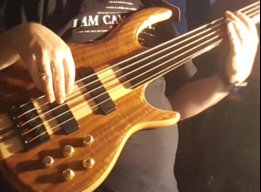
Yes, but. Is sound coming OUT of the guitar or going INTO it?Agreed, it's logical to follow the signal flow but there are many people that don't understand that concept simply because it's not a part of their knowledge base.
I know some great players that just don't have any technical knowledge at all and they're not interested in acquiring it, they're just plug and play kind of folks.
We’re in violent agreement on this subject.Yes, but. Is sound coming OUT of the guitar or going INTO it?
It's not hard. If you ever meet someone like that, just use that example. That's all there is to it, to the layman, and it's plenty enough to correct what can potentially be a serious communication problem when they start using pedals.
I think some of the confusion comes from the fact that pedals have "input" and "output" jacks, often. So the input connects to the guitar, right? That must mean the guitar jack is the "input" jack. I can totally see where the misinformation comes from. A single cable doesn't seem like it could magically change an input into an output.
But the above concept again is easy to teach them. Is sound coming out of the guitar? then it's an output jack. for the pedal, you want to put your sound into the pedal, so your sound output goes to the pedal's sound input. Then the sound comes out of the pedal... into amp.. and so forth.
It's such a simple thing to teach and is MIND BLOWING to those who haven't had anyone take 30 seconds to correct them.
from my experience anyway - people are completely shocked with the revelation if they've been confused by it before.
Maybe I just have nice friends who pretend to appreciate it when I do stuff like that, though... LoL