

Enjoy the benefits of a premium membership!
Upgrade Account
-
TalkBass has been independent since 1998. Add your voice.
Create a free account to reply to discussions, view embedded media, and browse with fewer display ads.
Join free Log in
Want zero display ads or expanded classifieds tools? Compare plans.
You are using an out of date browser. It may not display this or other websites correctly.
You should upgrade or use an alternative browser.
You should upgrade or use an alternative browser.
Why Doesn't Fender Offer These As Standard Equipment?
- Thread starter PolkaHero
- Start date
More options
Who Replied?

I never thought to use a metal washer before. So you just remove the strap button and then put the washer and strap on and then put it back on the body?
Yep. You just have to find one where the hole size is larger than the bottom of the button but smaller than the top.
First bass I tried it on was a Dean flying V where I had to move the button to the top side of the neck at the 12th fret to make it playable.

Fender can’t install stealth string retainers on all their basses because of a very important point everyone has missed so far - they only work with tuning machines that clamp onto to headstock with threaded hex bushings. They won’t work with basses that have the original, vintage style press-fit headstock bushings at all. There’s nothing to hold the stealth retainer ring down. This means a significant portion of the Fender bass line, from Squiers to player series to the Pino CS model won’t accept the stealth string retainer unless the right tuning machine is used. The hex-bushing is not offered on all Fender basses because of cost concerns or a desire to stay true to vintage spec.
Last edited:
I always marvel at how Fender always dances around the edge of common sense, string retainers being one of them. They've come up with all kinds of widgets, no doubt in some part to help people who won't help themselves: Just trim enough string, properly make your winds around the post and make it come out where the last wind is at the bottom, so you can develop a bit steeper angle and downforce over the nut. That thing doesn't change physics, it WILL NOT provide greater string tension. I'm sorry, it just really won't.
This is inexpensive, works on any bass from cheap to big money with any style tuning keys, and is easily installed, and puts all 4 or 5 strings at the same angle over the nut. Why it's not universally installed on parallel to the fingerboard pegheads is beyond me. Ladies and Gents, the Trapeze Retainer !
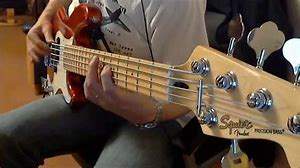
This is inexpensive, works on any bass from cheap to big money with any style tuning keys, and is easily installed, and puts all 4 or 5 strings at the same angle over the nut. Why it's not universally installed on parallel to the fingerboard pegheads is beyond me. Ladies and Gents, the Trapeze Retainer !
Last edited:

Agree. I’ve always thought the original round string tree was a flawed design, and if you add the Stealth Retainer, it looks really makeshift. Much better to use something like the Trapeze retainer and have done with it.I always marvel at how Fender always dances around the edge of common sense, string retainers being one of them. They've come up with all kinds of widgets, no doubt in some part to help people who won't help themselves: Just trim enough string, properly make your winds around the post and make it come out where the last wind is at the bottom, so you can develop a bit steeper angle and downforce over the nut. That thing doesn't change physics, it WILL NOT provide greater string tension. I'm sorry, it just really won't.
This is inexpensive, works on any bass from cheap to big money with any style tuning keys, and is easily installed, and puts all 4 or 5 strings at the same angle over the nut. Why it's not universally installed on parallel to the fingerboard pegheads is beyond me. Ladies and Gents, the Trapeze Retainer !
View attachment 4162045
Even better, something like the neat Hipshot retainer that doesn't require threading the string through.Much better to use something like the Trapeze retainer and have done with it.

It's only a $15 part that probably costs them not even half that amount, why not just make it standard on all models?
It's a slightly modified ring terminal. You can buy 10 x M10 for $1.50.
Custom size, bulk order, plated would struggle to reach $1.50 each.
There lies your reason why they don't come as standard.

I replace those simpleton disc retainers on all my basses with these, for a decent break angle on the A string. Cost a few bucks on ebay. I guess Fender thinks their clientele can't live with such a tradition breaker.
View attachment 4162067
I replace those simpleton disc retainers on all my basses with these, for a decent break angle on the A string. Cost a few bucks on ebay. I guess Fender thinks their clientele can't live with such a tradition breaker.
Can you post a link to that?

Can you post a link to that?
or Google 'chrome 3 string retainer'
Unnecessary and not very good...and only works on certain tuners anyhow. Out of my many, many Fender basses, only one has had those tuners. I tried the stealth retainer...just because I finally had those tuners, basically – and I wanted to see if the strings would fall more attractively/uniformly across the headstock with it. Totally unnecessary. Poorly made – so flimsy that the string tension pulls it up off the headstock anyhow. Changes the break angle very little. Changes nothing tonally. Looks weirder than the shallow break on an A string looks. Gives the string something to hang up on, theoretically. It's a retrofit part for people wha have visual OCD and an over-active imagination, and/or who don't know how to wind their strings properly, really – not something that needs to be standard equipment. It's kind of like lubricating your nut slots: a product-based fix for something that is actually due to an issue of workmanship or operation.
Bottom line: If you want one, then get one. By all means, help create employment and make yourself feel better by spending 10 or 15 bucks. But it certainly isn't something that needs to be standard equipment. It's perfectly placed as a dumbass accessory...like chrome wheel well trim or license plate frames.
Bottom line: If you want one, then get one. By all means, help create employment and make yourself feel better by spending 10 or 15 bucks. But it certainly isn't something that needs to be standard equipment. It's perfectly placed as a dumbass accessory...like chrome wheel well trim or license plate frames.
Last edited:
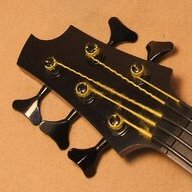
What I find interesting is nobody is addressing the behind the nut string buzz? That is due to an incorrectly cut nut slot and not break angle. Increasing break angle can cover up the error but a proper cut nut is the answer thus a string retainer would not be necessary.

Because it's perceived to be an "upgrade," and any company that offers a wide selection along a cost spectrum knows not to offer too many upgrades on entry- to mid-grade-level offerings because it will disincentivize customers to choose more expensive instruments.

They could eliminate even the placebo need for extra hardware by angling the headstock.I always marvel at how Fender always dances around the edge of common sense, string retainers being one of them. They've come up with all kinds of widgets, no doubt in some part to help people who won't help themselves

Been playing Fender basses for 46 years, never had any problem with strings rattling above the nut. Maybe instead of complaining about their part choices, you should learn how to string your bass. "Help, I'm doing this wrong. Make me a product so I don't have to learn anything"
Been playing all sorts of guitars and basses for almost as long, and only Fender basses require you to take extra precautions on one string to avoid potential rattles thanks to the shallow break angle. It does happen, maybe not to you, but it's common and easily solved with a decent string retainer, as used by numerous other manufacturers using the Fender headstock design.Been playing Fender basses for 46 years, never had any problem with strings rattling above the nut. Maybe instead of complaining about their part choices, you should learn how to string your bass. "Help, I'm doing this wrong. Make me a product so I don't have to learn anything"

I am pretty careful how I string my basses. Whether that's why I've never had a rattle on a bass yet, I don't know.
I guess mass production companies, like Fender, are making instruments to a price point. Every component and step in the manufacturing process will add to the cost, so they won't put anything on an instrument unless there is a clear need for it.
One person with a rattle probably doesn't qualify as a clear need.
I guess mass production companies, like Fender, are making instruments to a price point. Every component and step in the manufacturing process will add to the cost, so they won't put anything on an instrument unless there is a clear need for it.
One person with a rattle probably doesn't qualify as a clear need.
Expensive. Those headstocks are flat to save wood and make production simpler.They could eliminate even the placebo need for extra hardware by angling the headstock.

The low break angle over the bridge on the A string has been a problem with Fender basses for as long as I've been playing. It's just not a matter of winding the string correctly. Most of them are fine, but far too many will buzz at the nut if you play hard. If it weren't a problem, other manufacturers wouldn't have come up with solutions.
John
John


