• TalkBass has been independent since 1998. Add your voice.
    Create a free account to reply to discussions, view embedded media, and browse with fewer display ads.
    Join freeLog in
    Want zero display ads or expanded classifieds tools? Compare plans.

Why is my passive Yamaha dead (it wasn't when I put it away)?

Disclaimer - I'm a total beginner when it comes to electronics (I have read a lot about them, but have not worked on them). I'm just looking for some guidance on what to do next (and sorry for the four big pictures)

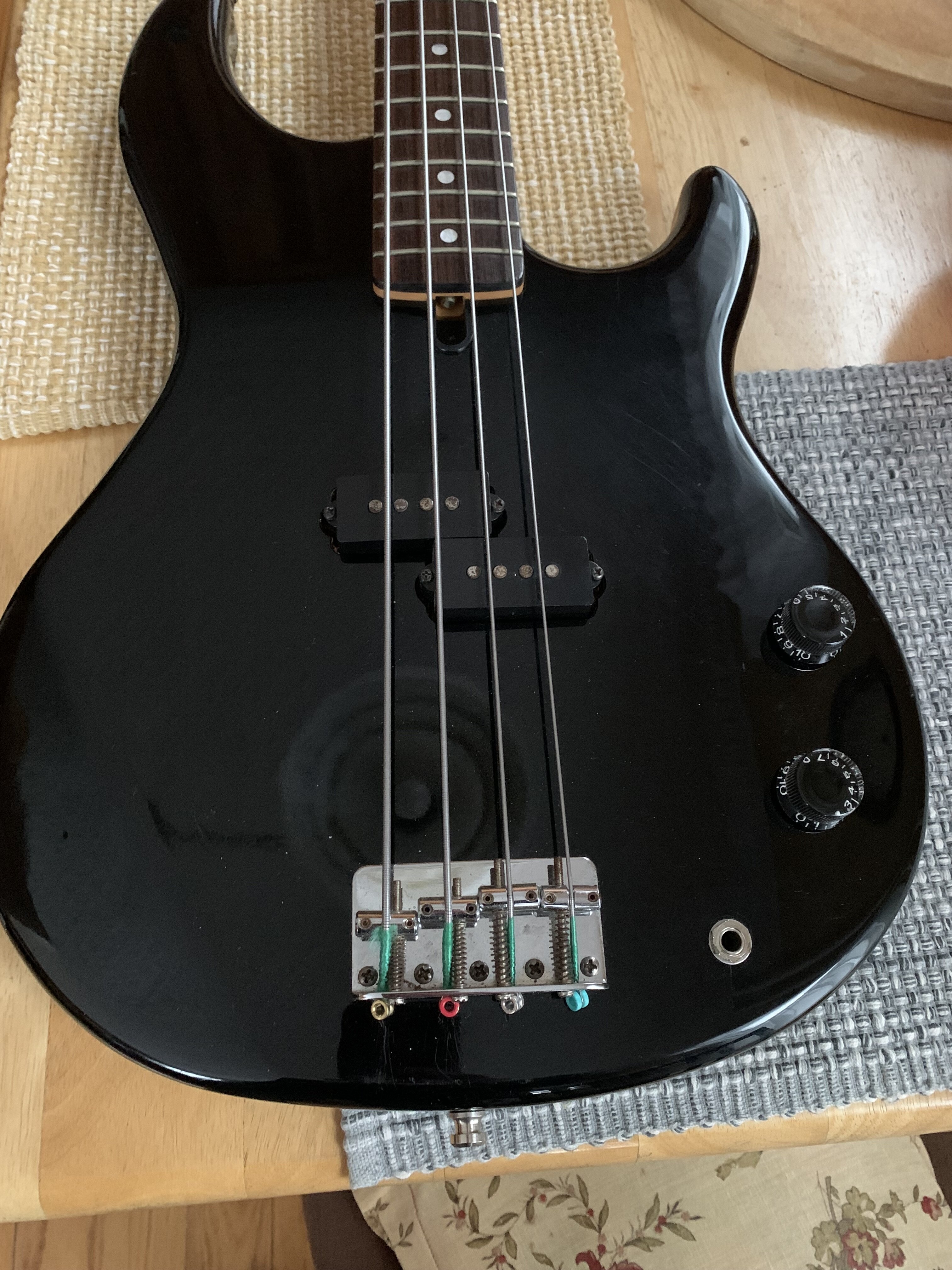
About 6 months ago I put an old BB200 Yamaha passive bass that was working fine into a hardcase and stored it (indoors, heated area). Last week I pulled it out and tried it - no sound, nada, nothing. I figured it was the output jack, so sprayed a little Deoxit in there, tried again, removed the back and loosened the jack, put it back together, plugged in and tried it again, etc. Nothing.
1739053568066.jpeg


So I brought it to a friend who knows how to solder and has a multimeter (but admits he isn't an expert) He checked some things and wrote them down:

Jack - 0Ω
Pickups - 0Ω
Pots - 0Ω (s/b 250-500)
Bypassed jack - no sound
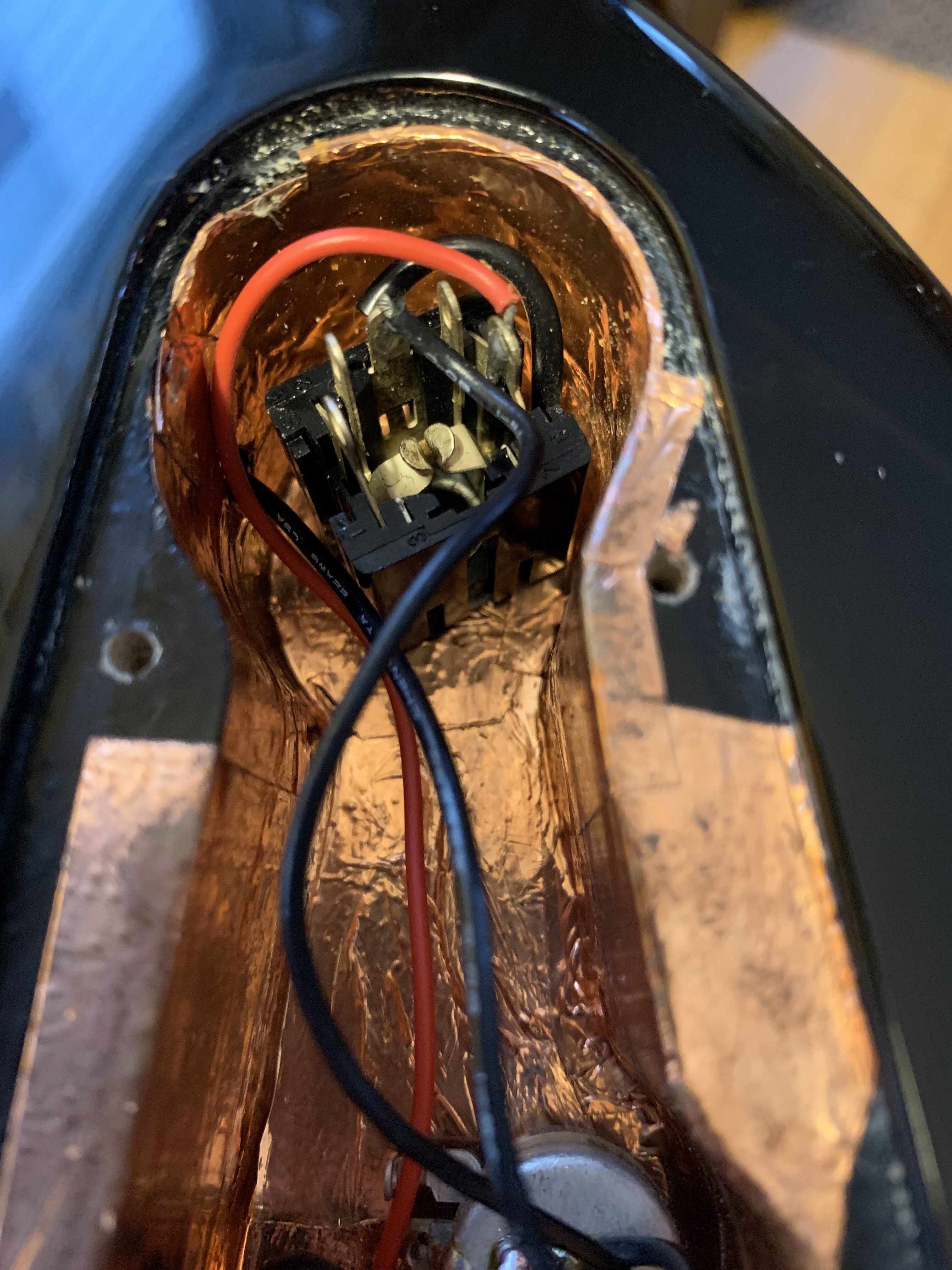

1739053604998.jpeg


1739053653531.jpeg


I watched him hook some alligator clips to the back of the output jack and touch to the 1/4" plug going to the amp for that last one. He also put one end of the multimeter in the output barrel and one to the strings, and it registered something like .02 or .2 (not sure what he was measuring).


1739053718251.jpeg


I just called a local music shop, and they said they'd charge $35 to basically do what my friend did. They said to try buying new pickups.

So, is that what went bad (and could they do that just sitting in the case)? Would both go at the same time? Any guidance on what to check next would be most helpful. My friend says he can disconnect and connect things and solders well, but I need to figure out what's wrong. Any help would be appreciated. Thanks.
 
Last edited:
  • Like
Reactions: Ellery
Before you try pickups I have two things to do.
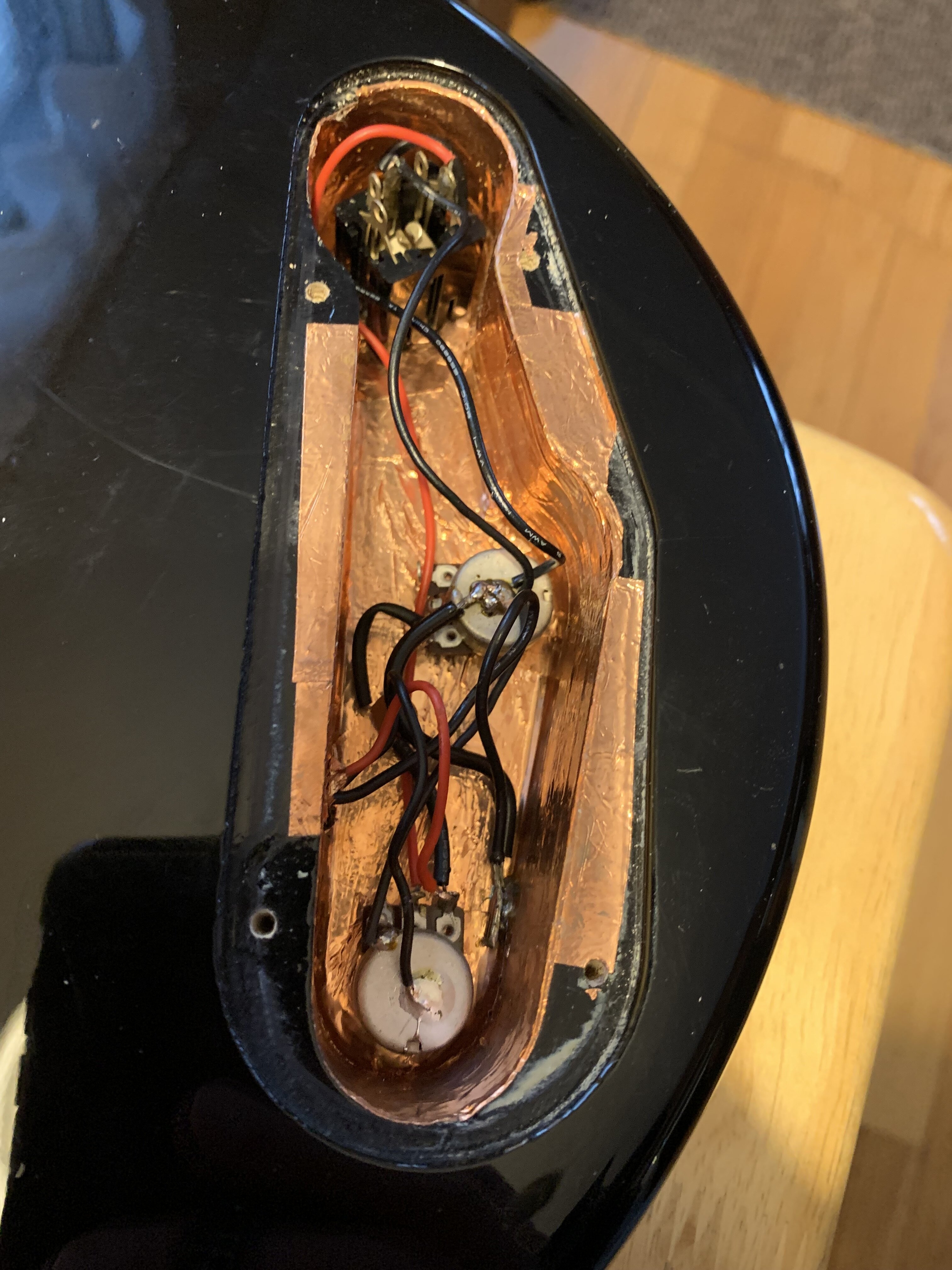
A. there is a black sleeve covering over the wire from the outer tone pot lug to what looks like the tone cap. Make sure the open bare cap wire is not shorting to the copper shield. At a minimum, I would put a piece of electrical tape under it as an insulator OR best practice do a better job with the wiring.

B. Spray the pots thru the slit in the pot typically on the side where the wire lugs come out (doesn't take much so do not over do it) then rotate the pot shaft several times back and forth. If you still have nothing it would be nice if you have a volt ohm meter to test the pots and the pickups but if not your other two options are start "shotgunning" pots and/or pickups (this can get needlessly costly and create other problems if you do not know what you are doing) OR take to someone who knows what they are doing.
 
Jack - 0Ω
Pickups - 0Ω
Pots - 0Ω (s/b 250-500)
Bypassed jack - no sound
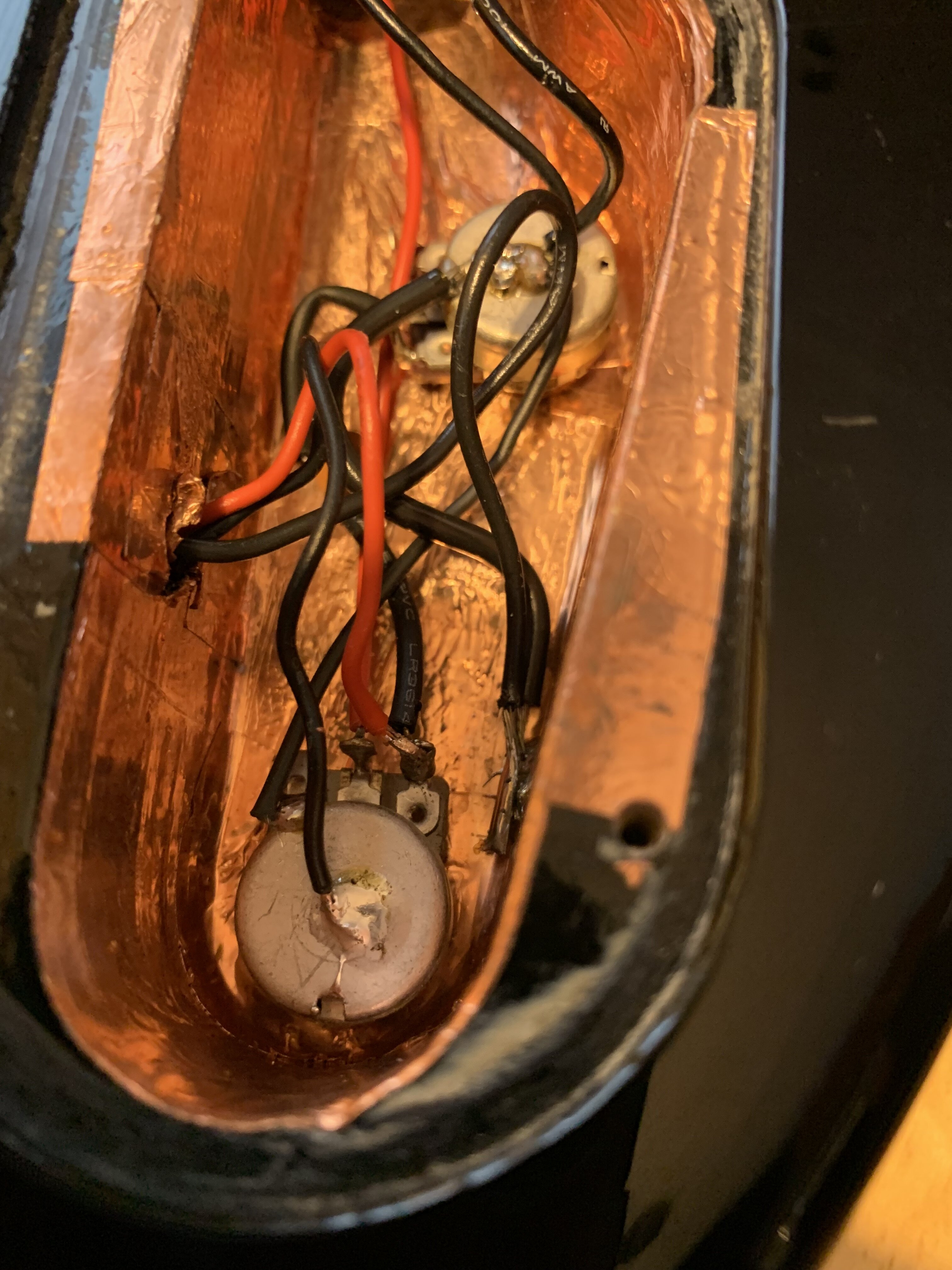
My guess is the 0Ω readings are actually the opposite: Ω

If that's the case, one of the pickup windings has probably opened up. My understanding is split coil P pickups are connected in series. Because of the series connection, if one coil goes open, the entire pickup goes dead.

If you confirm Ω across the pickup set. Measure the coils individually.

The pickup elements may have removable caps like this. If you can take the caps off you can measure across each winding.
1739056869598.png

Otherwise you may need to cut the wire that runs between the two pickup elements.
 
Last edited:
Could it be the instrument cable possibly?

I could be wrong here, I'm def no expert either, but wouldn't everything read zero since it's a passive bass? (Legit question for myself too btw)
It could be a cable and no, the only way you get zero ohms is if the signal chain is shorted to ground. If it is open it would read infinite. The way you would know is if shorted there will be no sound coming from the amp with the cable plugged into the amp only. If open you would hear the typical hum caused by the instrument cable acting like an antenna to noise in the air as you probably heard plugging the instrument cable into the amp with the other end open (not connected to bass). You can touch the tip of the cable plug that connects to the bass and it will really hum as your body is an excellent antenna for noise.
 
1. Is there shielding copper or paint in the pickup cavity?
If there is, make certain that the points where the wires are soldered to the pickup base plate or leads are not touching the shielding.
(It is possible that closing the case pressed the strings down onto the pickup and the pickup down against the bottom of the pickup cavity.)

You can cut a piece of electrician tape to cover those leads/solder points.
Check also where the wires leave one pickup half and enter the other.

2. Did your friend completely disconnect the pickup wires from the volume pot before testing the resistance and continuity of the pickup?

The pickup should be fully removed from the circuit before testing.

Presuming that you already cleaned the pots and jack with Deoxit D5, checked that no "hot" wires or Pot Lugs are touching your shielding and shorting to ground, then isolating that pickup by disconnecting it from the circuit would be my next step.
Then you might be able to see if you have a shorted pickup winding.

If the hot wires are not touching the shield, and the pickup tests good, then consider testing pots again, this time in isolation from the pickup.

I had a volume pot cr@p out on a P Bass that had been working before I hung it on the wall for a few months to play other basses.

Strange things can happen with humidity or the tiniest bit of sweat that finds its way into a pot or pickup.
 
To take the reading, one side of the pickup must be disconnected from the wiring.
2. Did your friend completely disconnect the pickup wires from the volume pot before testing the resistance and continuity of the pickup?

The pickup should be fully removed from the circuit before testing.
Read the above. Then go back and read everything @Artman wrote in that post and follow his procedure. Be thorough and you might not end up needing to take it to a shop.

Pickups and pots can die but it's a lot more common to have a short somewhere.
I just called a local music shop, and they said they'd charge $35 to basically do what my friend did.
It's easy to dismiss what they do as "basically doing what your friend did" but you'd be wrong in doing so. That $35 isn't so much for labor as it is for experience. They know what to look for so they're very likely to find it and they're not going to waste a lot of effort taking measurements without knowing exactly what they're measuring.

I don't know your local shop and I don't know the level of experience of their techs (I do find it a little suspicious that they suggested new pickups before they even looked at it) but if they have a reasonable reputation I can almost assure you they will not just be doing what your friend did. They'll actually troubleshoot the problem.
 
I agree with the foil theory. That looks like new foil, and this bass probably had none originally. The adhesive on that foil tape is not very robust.
Here is my 'no specialized tools or knowledge needed' trouble shooting technique:
I woud first examine the foil everywhere, including under the pickups (if it's there)
All the solder points seem to be too close to the copper foil. make sure that there is space, or an isolator between all solder lugs and the foil.
If it looks good and there is still no sound, try disattaching all the pots and jack, and see if you can get sound if all the electronics are hanging out, and not touching the control cavity. If you get sound, re-attach each piece (one at a time) until the problem returns to find the fault.

If you have foil or plates under the pickups, make sure to have a piece of foam between the pickups and the cavity.

None of those parts should 'go bad' when kept in safe storage.
 
Last edited:
TBH EMG makes a passive A5 pickup for precision type basses, they sell it in a kit that also contains potentiometers and a jack and it all plugs together without soldering. In case you're wondering the plugs are fighter aircraft spec so they're not coming out. And it's pretty reasonable for a complete swap out.

That's a nice bass, very simple, very clean, it might be something to consider.

Just my 2cents.... with the end result being a positive.
 
Looks like something is Jammed in the Jack.
I see something there too; it appears to be an insulated wire preventing contact with the tip; or a bare wire shorting out the tip. Look inside the plastic housing under the spring contacts. Use a small flat blade screwdriver to push the offending item out that side slot so it is out of the way.
 
Last edited:
  • Like
Reactions: FunkHead
So I might've missed it, did you try another bass and it works? Meaning are you positive we have a bass problem and not a cable problem (or amp).
(i.e. If you leave your amp "on" and touch the plug does it make a horrible noise or is it silent). Your buddy was on the right path but didn't fully understand how to troubleshoot it. Take it to somebody who knows how to trace the elect path. There's a bit of corrosion going on there and some shoddy soldering. But a meter in the hands of somebody who understands how to use it works better than asking us though.