• TalkBass has been independent since 1998. Add your voice.
    Create a free account to reply to discussions, view embedded media, and browse with fewer display ads.
    Join freeLog in
    Want zero display ads or expanded classifieds tools? Compare plans.

Why No Ground Wire on Input Jack on Jazz Basses?

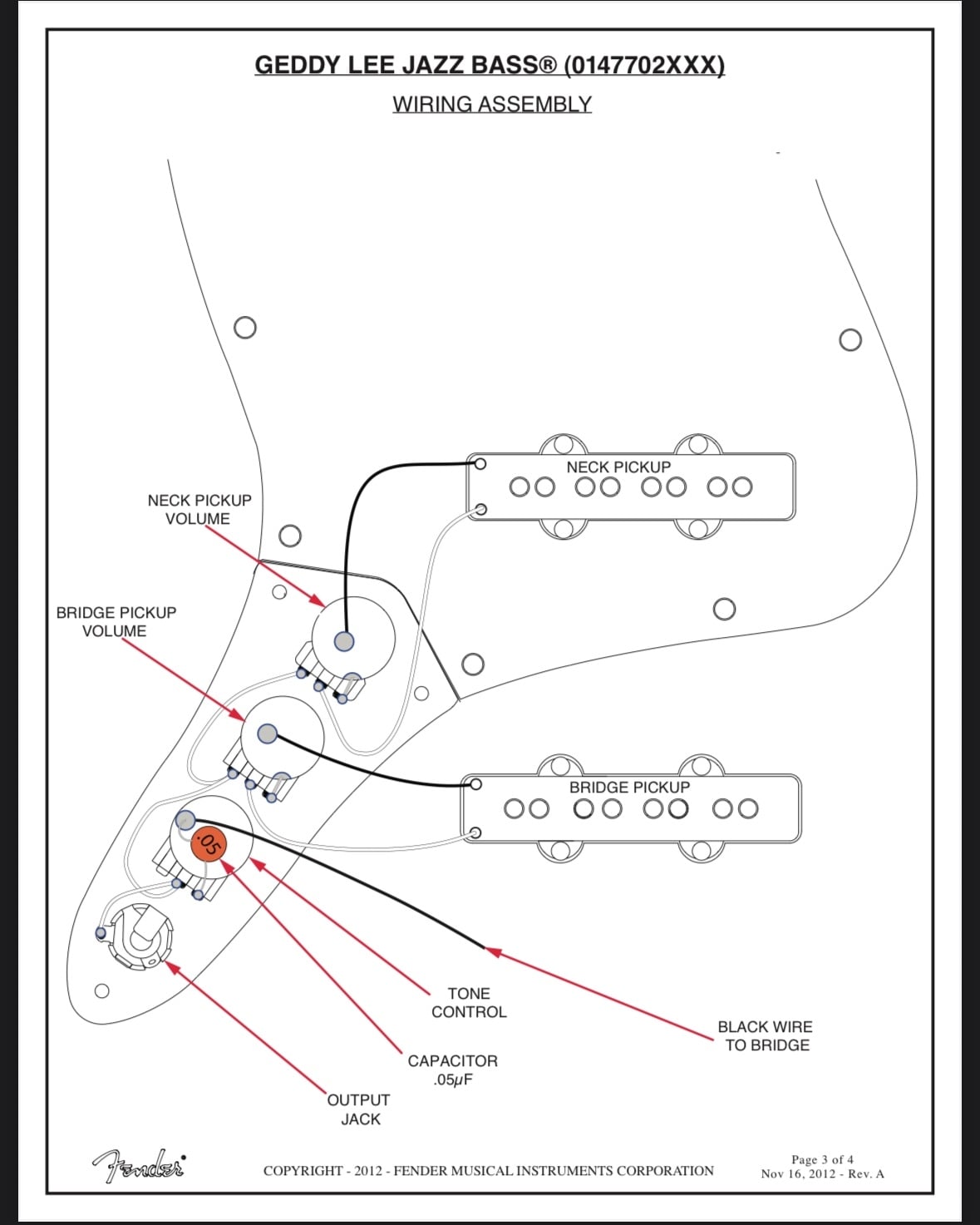
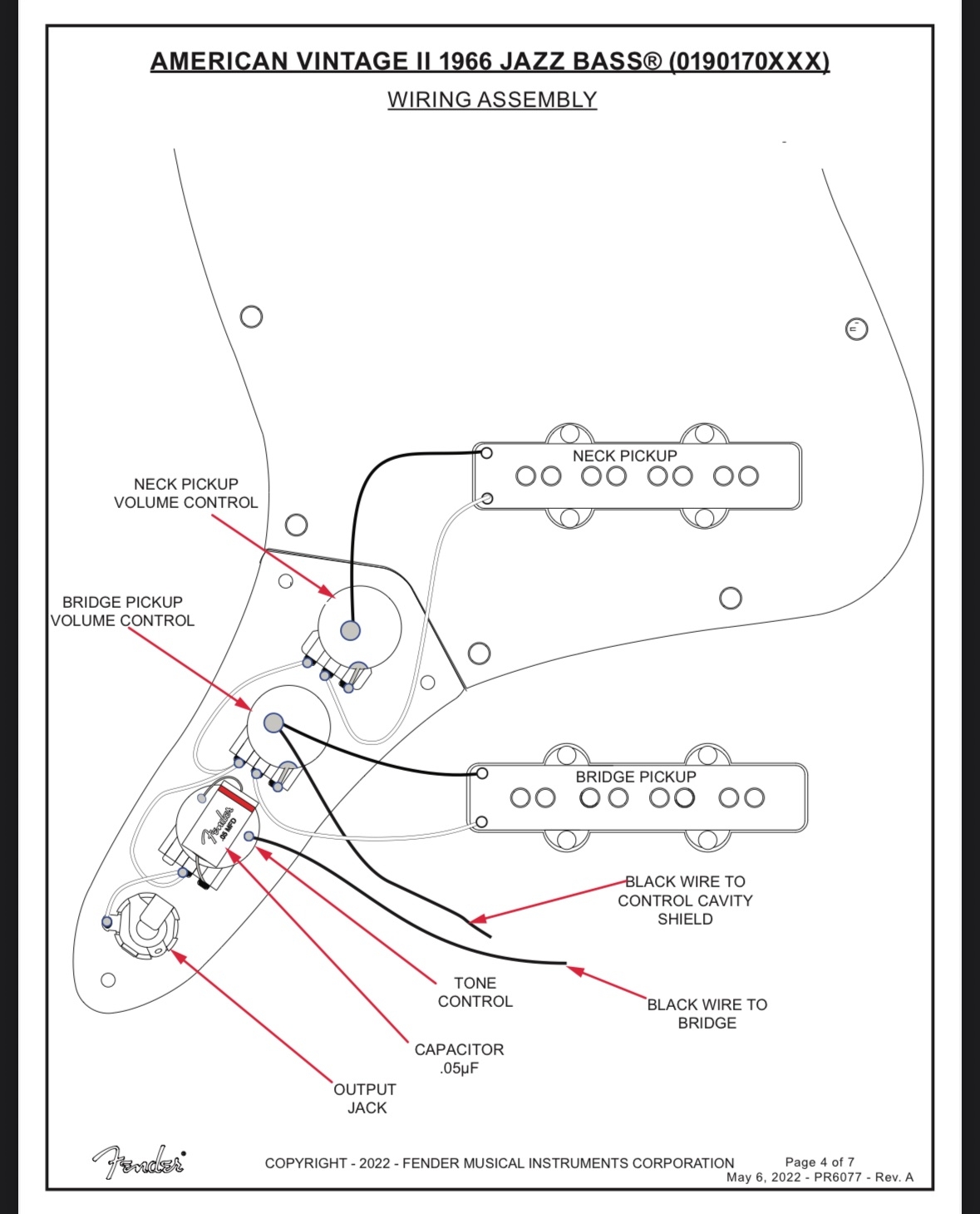
I looked at various Fender diagrams to make a new control plate for my Squier CV70s Jazz and I noticed a lot of those diagrams don’t have a ground wire connected to the sleeve of the jack and connecting to the rest of the pots.

Why is that? The P-Bass diagrams all show ground wires connecting the pots and jacks together though.

First diagram: Player Jazz Bass
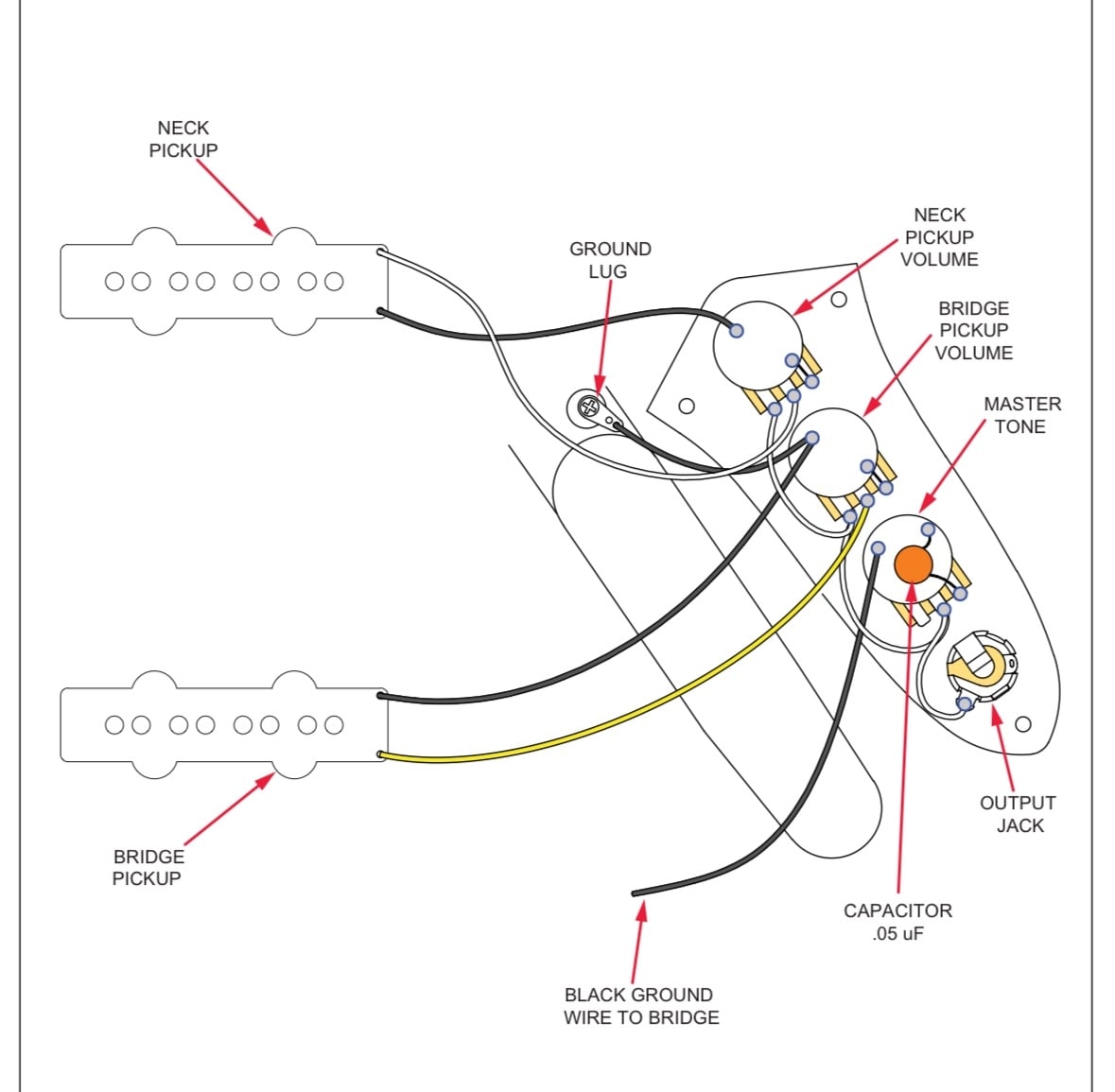
IMG_6009.jpeg


Second: Geddy Lee MIM Jazz
IMG_6010.jpeg


Third: AVRI II 66
IMG_6011.jpeg


Third:
 
  • Like
Reactions: covermego
Grounding the pots through the control plate will work fine on J-basses as long as the pots are properly fastened to the control plate.

The problem with this is that you are relying on a mechanical connection. Pots and jack sockets can loosen over time, and if this happens you will have an intermittent ground connection that can result in crackling and dropouts. If this happens during a gig... not great.

Personally I always solder ground connections to the pots on my J-basses. Some will argue that this can (in theory) introduce a ground loop, but I have NEVER experienced this to be a problem with passive guitar wiring (as long as the wiring/soldering is done right of course).

Still, J-basses have been made this way for decades. If you take proper care of your instrument and make sure the pots/jack socket are always properly fastened to the control plate, it shouldn't be a problem at all.
 
Grounding the pots through the control plate will work fine on J-basses as long as the pots are properly fastened to the control plate.

The problem with this is that you are relying on a mechanical connection. Pots and jack sockets can loosen over time, and if this happens you will have an intermittent ground connection that can result in crackling and dropouts. If this happens during a gig... not great.

Personally I always solder ground connections to the pots on my J-basses. Some will argue that this can (in theory) introduce a ground loop, but I have NEVER experienced this to be a problem with passive guitar wiring (as long as the wiring/soldering is done right of course).

Still, J-basses have been made this way for decades. If you take proper care of your instrument and make sure the pots/jack socket are always properly fastened to the control plate, it shouldn't be a problem at all.
+1
I’d add to the above…
Loose pots need to be fixed immediately. Besides losing the ground connection, If you ignore the problem the wires will break off.
 
In case anyone won't trust MY opinion (see my post above) on using soldered ground wiring on J-basses, it might also be worth mentioning that the standard Jazz Bass wiring diagrams from most pickup manufacturers (like for example Seymour D, Lollar, Fralin...) do in fact have soldered ground cables between the jack socket and pots.

We don't HAVE to do things on the cheap just because Fender does it.
 
  • Like
Reactions: AK Bass Guy
It’s a vintage thing Leo did back in the day to save money on wire. I usually put one on anyways.
I don’t mean to contradict, but doesn’t a stamped piece of metal cost more than a little bit of wire and solder? Or was it, perhaps, a macro “save money by eliminating a little bit of labor” step?
 
I suppose connecting a ground wire from a pot to the jack won’t hurt, right?

Someone mentioned over-grounding can also cause problems but at what point is it too much grounding for this particular wiring?


It’s not. A ground loop is often referenced but a passive guitar circuit doesn’t have enough current to produce a ground loop so don’t worry about it.
 
the standard Jazz Bass wiring diagrams from most pickup manufacturers (like for example Seymour D, Lollar, Fralin...) do in fact have soldered ground cables between the jack socket and pots.
That's because they can't assume the bass you install them in will have a path to ground via a plate or shielding. I prefer to keep a circuit as simple as possible so there's less complexity when troubleshooting problems. To each their own - probably no issue in most cases.
 
It’s not. A ground loop is often referenced but a passive guitar circuit doesn’t have enough current to produce a ground loop so don’t worry about it.

True! And a totally different matter on a tube amp.

I sometimes install grounding lugs in basses and guitars and run all kinds of grounding to that. It's neat and effective. Leo was always economical but it never hurts to have decent grounding.
 
That's because they can't assume the bass you install them in will have a path to ground via a plate or shielding. I prefer to keep a circuit as simple as possible so there's less complexity when troubleshooting problems. To each their own - probably no issue in most cases.
That's true, and both ways will work fine on a standard Jazz Bass as long as you take good care of your instrument. Do whatever works for you of course.

However, if you solder ground wires to the pots you won't have to ever worry about pots/jack socket coming loose when you're on stage (at least as long as you don't go nuts with the loose pot and break a wire/solder point...). Only ONE of the pots, or the jack socket, will have to loosen just a tiny bit for the mechanical ground connection to become intermittent, with potential crackling/dropouts as a result. Unless you take the time to regularly remove the knobs, open up the control plate and make sure all components are properly fastened this is something than can happen at ANY time. In fact, it WILL happen at some point if you've never re-tightened the pots/jack socket.

So basically, you don't HAVE to use soldered ground wires to the pots on a J-Bass (as long as it's a model with a metal control plate) but it makes the instrument more reliable and there are no negatives whatsoever. In my world that's a no-brainer. The same goes for the Fender Bass VI, Mustang Bass, Jaguar Bass and any other Fender basses I may have forgotten that use a metal control plate for the grounding of the pots.

Please don't take this the wrong way. I'm not trying to start an argument over this. I'm just trying to give people the best advice, to reduce the chance of their basses failing on stage.
 
Last edited:

Latest posts