We're both knowledgeable about things within our areas of expertise, which probably have some overlap. We have different theories of where the vibration enters the neck on a bass guitar (we're not both right). I've thought about his, and presented (in a previous post) an experiment that will help us resolve which theory is right. If his theory (the vibration enters the neck at the nut) is right, then it would enter the nut for all strings at all fret positions, and thus all the strings on a bass should behave the same when playing a given note. If my theory is right, then they shouldn't. The simple, and obvious way to observe this behavior is with dead spots - they're the most obvious (and consequential) acoustical behavior we have in bass guitar necks.
So, play a few basses until you find a dead spot (hint - a Jazz neck, G string, somewhere around the 4th through 7th fret). Observe how that behaves. Now play the same note on the D string (5 frets up). does it sound the same? If so, his theory is right. If not, my theory is right.
This is how things are resolved in Science - we have different theories on how things work. We discuss our theories, and what the consequences of each are. We find a place where the theories predict different things. Then we do that experiment. If the results of the experiment disagree with a theory, it's gone. If they agree with a theory, although it might not be a perfect theory (a better theory can usurp it later), but at least for the time being, it stands as a workable theory.








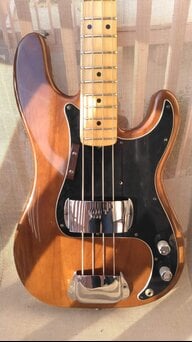
 . I'm not sure if a nut or zero fret is best cause I'm only a player not a engineer. I just like the zero fret better. I've never had to replace a nut on a fretted instrument that is zero fret. On fretless I want it to be as close to a violin or cello as possible.