
Enjoy the benefits of a premium membership!
Upgrade Account
-
TalkBass has been independent since 1998. Add your voice.
Create a free account to reply to discussions, view embedded media, and browse with fewer display ads.
Join free Log in
Want zero display ads or expanded classifieds tools? Compare plans.
You are using an out of date browser. It may not display this or other websites correctly.
You should upgrade or use an alternative browser.
You should upgrade or use an alternative browser.
Why the love (by some) for thin necks?
- Thread starter stringthrough
- Start date
More options
Who Replied?

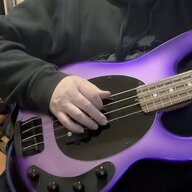
Point one is about neck construction quality and not about the thickness of the neck. I’ve played skinny Ibby necks that were sufficiently stiff to be stable in the extreme weather variations of the Canadian prairie. My Xotic Jazz V has a thin neck for a 5-string and is so well built it doesn’t shift during the year at all. So neck construction is the take away for me on this point.> They are frequently more prone to shifting as environments change
> They contribute less to tone compared to their thick-necked relatives
> Thin-neck basses give the impression that their action is higher when compared to thick-necked basses having the same string relief
> Having owned thin and thick-necked basses I don’t find thin-necked basses easier to play (I have average-sized hands)
Point two doesn’t make sense to me. All my basses have low action. I would think uneven frets and other defects would impact your action.
Point three, I learned that I prefer modern Fender Jazz and Precision necks for my 4-string basses. My 5-string basses tend to be average, such as my Fender Jazz V, to a bit thinner like my Xotic Jazz V. I hate really thin necks and find the necks I currently use allow me to play effortlessly.

the resistance to humidity changes alone are reason enough to go as thick as you can handle.
funny how thin is always associated with "speed."
yet the speediest player of them all, billy sheehan, has one of literal thickest necks on the market.
i still, after all these years, can't see how "thin" and "fast" got associated..
funny how thin is always associated with "speed."
yet the speediest player of them all, billy sheehan, has one of literal thickest necks on the market.
i still, after all these years, can't see how "thin" and "fast" got associated..

For half of the population it's because the internet told them to like thin necks, while the other half are out playing gigs> They are frequently more prone to shifting as environments change
> They contribute less to tone compared to their thick-necked relatives
> Thin-neck basses give the impression that their action is higher when compared to thick-necked basses having the same string relief
> Having owned thin and thick-necked basses I don’t find thin-necked basses easier to play (I have average-sized hands)


Thinner necks feel better to play for me. That simple.
I don't recall any of the thin neck basses I've had over the last 15 years having the problems the op listed.
I've discovered my favorite neck is my Fender at 1.5 nut, 12in radius and around and inch front to back at 1st fret and 3/4in at 12th. Im guessing that's considered thin?
I don't recall any of the thin neck basses I've had over the last 15 years having the problems the op listed.
I've discovered my favorite neck is my Fender at 1.5 nut, 12in radius and around and inch front to back at 1st fret and 3/4in at 12th. Im guessing that's considered thin?
Last edited:

I've got small hands and I've got three necks that I like a lot that are quite different from each other in some ways. They're all stable, handle flats with high pull, of gauges in the 52 to 55 - 105 to 110 range and they sound great.
In no specific order:
Neck 1: C width/1-3/4"; the profile is a very soft V that transitions to a C toward the heel; .82" @ 1st fret; 7-1/4" R; 2-pc construction P neck
Neck 2: C width/1-3/4"; the profile is a soft V to C; .88" @ 1st fret; 9-1/2" R; 1-pc construction P neck
Neck 3: A width/1-1/2"; the profile is a C; .79" @ 1st fret; 9-1/2" R; 2-pc construction J neck
All three fit my hand differently but they all fit my hand nicely. Some might think Neck 2 might be a problem for small hands but that size and soft V profile fills my left hand just right. It's not too much but it's enough to be what I can best described as feeling supportive of my hand.
The right profiles and good setup matter most.
In no specific order:
Neck 1: C width/1-3/4"; the profile is a very soft V that transitions to a C toward the heel; .82" @ 1st fret; 7-1/4" R; 2-pc construction P neck
Neck 2: C width/1-3/4"; the profile is a soft V to C; .88" @ 1st fret; 9-1/2" R; 1-pc construction P neck
Neck 3: A width/1-1/2"; the profile is a C; .79" @ 1st fret; 9-1/2" R; 2-pc construction J neck
All three fit my hand differently but they all fit my hand nicely. Some might think Neck 2 might be a problem for small hands but that size and soft V profile fills my left hand just right. It's not too much but it's enough to be what I can best described as feeling supportive of my hand.
The right profiles and good setup matter most.

I have basses with 38 and 42mm nut widths (J and P) and guitars with wider nut widths, and most have different back profiles, I can manage OK on all of them, but my favorite for feel is a Warwick Rock Bass neck with a 38mm nut. That neck just feels ideal, the first time I held it it was like coming home. (Haven't needed to touch the truss rod in years either.) I don't even need, or want, to know why that neck feels the best to me, but it does, right thickness, depth, profile, fretboard radius. Since I've had it I've copied it's dimensions on a couple of other necks I've built. Everything about it might feel wrong to someone else, it's a good thing there's options available isn't it?

> They are frequently more prone to shifting as environments change
> They contribute less to tone compared to their thick-necked relatives
> Thin-neck basses give the impression that their action is higher when compared to thick-necked basses having the same string relief
> Having owned thin and thick-necked basses I don’t find thin-necked basses easier to play (I have average-sized hands)
Trying to wrap my head around this. Gee -- sounds like some ex-wives I've known....

And with the evolution of woodworking, luthiery, engineering, etc in neck construction, it is possible to make slender necks that are just as stiff and durable as chunky ones, if not more so.
During my most active years in the gigging/touring scene, I probably saw more Ibanez Soundgears on stage than I did Fenders, and those gigging, touring, and otherwise working bassists who PlayBass more than TalkBass don't seem to have problems with their "pencil neck" Soundgears.
Fantastic basses, Soundgears. Though I'll admit their necks were too pencil-skinny for me. On the other hand, I found the neck on an early 2000s Spector ReBop I once had too chunky for my tastes. And like baby bear, the updated thin-U on my LTD D-5 is just right. It's thinner than the neck on my early 2000s LTD F-205 yet it feels more stable. (I wear M-sized gloves so my hands aren't big at all).
During my most active years in the gigging/touring scene, I probably saw more Ibanez Soundgears on stage than I did Fenders, and those gigging, touring, and otherwise working bassists who PlayBass more than TalkBass don't seem to have problems with their "pencil neck" Soundgears.
Fantastic basses, Soundgears. Though I'll admit their necks were too pencil-skinny for me. On the other hand, I found the neck on an early 2000s Spector ReBop I once had too chunky for my tastes. And like baby bear, the updated thin-U on my LTD D-5 is just right. It's thinner than the neck on my early 2000s LTD F-205 yet it feels more stable. (I wear M-sized gloves so my hands aren't big at all).
Why the Love for Ketchup on Hot Dogs?
Hot Dogs with Ketchup are more prone to sliding off their buns as environments change
ketchup contributes less flavor than mustard
Ketchup contributes flavor to a hot dog giving the impression that the actual sausage is more flavorful than it is.
having had Hot Dogs with and without ketchup I can definitively say for all
Mankind that ketchup on hot dogs is an absolute waste and if you don’t prefer hot dogs exactly as I do you are insane and wrong
Hot Dogs with Ketchup are more prone to sliding off their buns as environments change
ketchup contributes less flavor than mustard
Ketchup contributes flavor to a hot dog giving the impression that the actual sausage is more flavorful than it is.
having had Hot Dogs with and without ketchup I can definitively say for all
Mankind that ketchup on hot dogs is an absolute waste and if you don’t prefer hot dogs exactly as I do you are insane and wrong
Last edited:
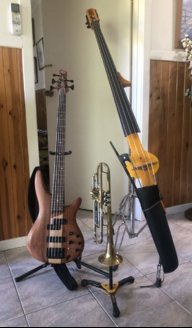
I’m much more comfortable with medium to thinner necks. I play with my thumb behind the neck like a classical guitarist and find deep necks fatigue my fingers and get very uncomfortable. Also, whilst moving around the neck I often lift my thumb and fretting fingers right off it to reduce string noise and friction & give my hand a bit of a rest and that works way better for me with shallowed profile necks and flatter fret-boards. I love the Soundgear SR series profiles, especially the 5ers which are great but as shallow as I’d want. I recently got an American Pro II Precision (‘63 profile neck) which is the perfect end of thick for me.
Not sure why you think thin necks aren't stable. My fretted 6 has a graphite wide ultra thin neck which is a pleasure to play. I haven't had to touch the truss rod in 20+ years. My Frankenfretless 6 has a wide thin Ibanez Prestige neck that has been extremely stable and has not needed any re-adjusting either. I've had thick necks that changed with the weather and have even twisted. I think the issue is more with quality than the thickness of the neck.

Out of 121 basses that I currently own of many different specs (not all FSO's or slabs o'wood), I like them best, but maybe even more flat radii.> They are frequently more prone to shifting as environments change
> They contribute less to tone compared to their thick-necked relatives
> Thin-neck basses give the impression that their action is higher when compared to thick-necked basses having the same string relief
> Having owned thin and thick-necked basses I don’t find thin-necked basses easier to play (I have average-sized hands)
 However, a fatter, thicker neck doesn't stop me from playing when I feel like changing things up...but Glarry baseball bat necks can but a damper on that just a bit.

Throwing in my vote.
I don’t care about neck width. It doesn’t make one bass different from another in my mind.
It’s like steering wheel thickness. Sure, it’s different in different cars. Not the first thing I think of though. “Oh, I’d take the XX today but the steering wheel is way too thin, so it stays in the garage.”
I don’t care about neck width. It doesn’t make one bass different from another in my mind.
It’s like steering wheel thickness. Sure, it’s different in different cars. Not the first thing I think of though. “Oh, I’d take the XX today but the steering wheel is way too thin, so it stays in the garage.”


Nope.WHaaat?Do you have a shop?
I am divorced with no kids and a four bedroom house and a bit of a problem...just a bit.
Maybe a shop later when I retire from my Civil Engineering career.

Why the love (by some) for thin necks?
If you have(had ) good upright technique, the handshape makes the neck width not very important. You play on the tips of the fingers, and the fingering pressure comes partly from the upper torso, so you dont need to choke the neck with your thumb and screw up your shifts..
If you have(had ) good upright technique, the handshape makes the neck width not very important. You play on the tips of the fingers, and the fingering pressure comes partly from the upper torso, so you dont need to choke the neck with your thumb and screw up your shifts..
funny how thin is always associated with "speed."
yet the speediest player of them all, billy sheehan, has one of literal thickest necks on the market.
Maybe he'd be faster with a thinner necked instrument? Is he really the fastest? Les Claypool, Mark King - how chunky are the necks on their instruments?


