
Enjoy the benefits of a premium membership!
Upgrade Account
-
TalkBass has been independent since 1998. Add your voice.
Create a free account to reply to discussions, view embedded media, and browse with fewer display ads.
Join free Log in
Want zero display ads or expanded classifieds tools? Compare plans.
You are using an out of date browser. It may not display this or other websites correctly.
You should upgrade or use an alternative browser.
You should upgrade or use an alternative browser.
Will poly get age eventually?
- Thread starter Bassguitar man
- Start date
More options
Who Replied?


It will take quite a while if you're hoping for more of a satin finish. Depending on what you want (and realizing anything will effect resale), you can 'experiment' with steel wool or ultra fine sandpaper on the back.
A few years in a window that gets full sun will also dull the shine of a poly finish. Ask any pawn dealer.
A few years in a window that gets full sun will also dull the shine of a poly finish. Ask any pawn dealer.

Kinda depends on the type/brand of polyurethane being used. If it has UV blockers in it, it'll be a long time before the poly yellows, or if it's a natural finish, the wood itself darkens
There are 4 things that will survive a nuclear holocaust.
Keef
Twinkies
Cockroaches
And modern polyester finishes
Keef doesn't appear to be aging (well).
Twinkies, who can tell if they're fresh or not?
Cockroaches never stand still long enough to be examined.
Keef
Twinkies
Cockroaches
And modern polyester finishes
Keef doesn't appear to be aging (well).
Twinkies, who can tell if they're fresh or not?
Cockroaches never stand still long enough to be examined.

Bash it against the floor a few times. That'll age it.

No, it will survive a nuclear holocaust along w Keith Richards.

My Olympic White 2002 American Series Stratocaster has yellowed nicely, if a bit unevenly. Still looks basically white (not yellow or cream), but clearly yellowed a bit with age.
On the other hand, the finish of my black 2003 MIM Standard Precision Bass doesn’t appear to have aged at all (aside from some scratches and dings). I had the pick guard off like a year ago to do a pickup swap and, in contrast to with the Strat, I didn’t particularly see any aging between the parts covered by the pick guard and the rest of the body.
On the other hand, the finish of my black 2003 MIM Standard Precision Bass doesn’t appear to have aged at all (aside from some scratches and dings). I had the pick guard off like a year ago to do a pickup swap and, in contrast to with the Strat, I didn’t particularly see any aging between the parts covered by the pick guard and the rest of the body.


As to shininess, not that I exactly recommend it, but you could regularly wipe it down after playing using a kitchen paper towel instead of a ‘lint free microfiber polishing cloth’ (or whatever they’re called).
The paper towel will leave little micro scratches that add up over time and eventually leave the bass without that "Mr. Clean new polished linoleum" shine, but also without any particular damage to notice. Just an idea...
I wonder if using just a regular old shirt would eventually have a similar effect, but with even smaller individual "micro scratches" than those that paper towels leave?
Anyway, or, just wait. Plastic constantly (if slowly) outgasses and eventually shows the effects of no longer being new. Meanwhile, sunlight accelerates (slowly, but relentlessly) the degradation of plastic
The paper towel will leave little micro scratches that add up over time and eventually leave the bass without that "Mr. Clean new polished linoleum" shine, but also without any particular damage to notice. Just an idea...
I wonder if using just a regular old shirt would eventually have a similar effect, but with even smaller individual "micro scratches" than those that paper towels leave?
Anyway, or, just wait. Plastic constantly (if slowly) outgasses and eventually shows the effects of no longer being new. Meanwhile, sunlight accelerates (slowly, but relentlessly) the degradation of plastic
Last edited:

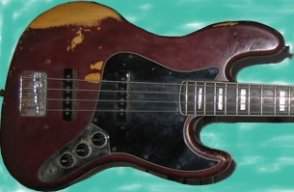
Don't know if they are still doing it, but the '70s Fenders still had Nitro on the headstock cause otherwise they had problems with the logo. And I remember hearing that a part of the poly finish on the body - the top layer - was still nitro. If this is true or not, my '78 olympic white Jazz is nicotine-yellow now! My '75 sunburst Precision looks as if the top layer of the sunburst has yellowed. I don't know if Fender is still using something that is very sensitive to UV light as a top layer on poly finishes. Or how long they did it. Or if it was really nitro in the '70s. I'm pretty convinced they do it no longer. Would be interestig to know if the US made 70 Reissues are period correct in this regard!
None of my other poly basses besides the Precision and the '78 Jazz look like this:

And some of them are 20-nearly 40 years old.
But if I remember correctly I've seen at least olympic white models from Fender that aren't vintage reissues or nitro that have yellowed a lot.
What will never happen with poly is that it ages or relices like nitro. If poly gets damaged it comes down in flakes.
Pictures from someone removing a poly finish from a telecaster:
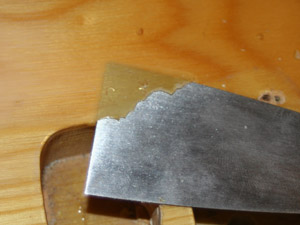
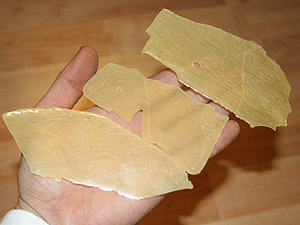
Sometimes it is hard to decide what you see on older instruments because a lot of players and sellers seem to artificially "relice" their instruments.
None of my other poly basses besides the Precision and the '78 Jazz look like this:
And some of them are 20-nearly 40 years old.
But if I remember correctly I've seen at least olympic white models from Fender that aren't vintage reissues or nitro that have yellowed a lot.
What will never happen with poly is that it ages or relices like nitro. If poly gets damaged it comes down in flakes.
Pictures from someone removing a poly finish from a telecaster:
Sometimes it is hard to decide what you see on older instruments because a lot of players and sellers seem to artificially "relice" their instruments.

I think some folks might be mixing up polyurethane and polyester. AFAIK they are two different finishes.
Unless it has a retardant of some kind polyurethane will yellow over time. I think polyester is much more resistant.
Can anyone tell me what the mid 90s fender Standard MIM P Basses had? My '95 has just a touch of yellowing on the neck but nothing that most folks would notice. I assume it's polyester then because IIRC the polyurethane fenders from the 70s were already completely yellowed by the 90s.
Unless it has a retardant of some kind polyurethane will yellow over time. I think polyester is much more resistant.
Can anyone tell me what the mid 90s fender Standard MIM P Basses had? My '95 has just a touch of yellowing on the neck but nothing that most folks would notice. I assume it's polyester then because IIRC the polyurethane fenders from the 70s were already completely yellowed by the 90s.

buldog5151bass
Kibble, milkbones, and P Basses. And redheads.
Not like lacquer. It can chip or scratch, but won't wear with normal use. I've got a poly bass that has been gigged for 15 years. It has a few Nick's in the clear you can feel, but looks new from the crowd.

Can anyone with more knowledge expound up on the difference between polyurethane and polyester?
I see so many references to "poly" (I've made them myself) but it seems like folks aren't specifying which.
One other slightly related point. I put a brushed-on Minwax polyurethane on a bunch of pine IKEA shelves. Poly like this seems to start with just a hint of yellow, but In just 8 years they are noticeably yellower than they originally were and notably yellower than the un-polyed shelves. All this while being in an attic with almost no sunlight.
I have a few of the same shelves of about the same age that didn't get the poly as a sort of control group so I know it's not just the predictable wood changing/darkening which has happened just a bit with the un-polyed wood.
I see so many references to "poly" (I've made them myself) but it seems like folks aren't specifying which.
One other slightly related point. I put a brushed-on Minwax polyurethane on a bunch of pine IKEA shelves. Poly like this seems to start with just a hint of yellow, but In just 8 years they are noticeably yellower than they originally were and notably yellower than the un-polyed shelves. All this while being in an attic with almost no sunlight.
I have a few of the same shelves of about the same age that didn't get the poly as a sort of control group so I know it's not just the predictable wood changing/darkening which has happened just a bit with the un-polyed wood.

My now 38 year old Stingray looks nearly new other than the normal minor dings and surface scratches you can't see unless you get up close. I do like natural, honestly earned mojo if the original factory finish allows, but I despise phony "relicing" to make them look like they're older than they actually are. My preference is that my instruments look like they're well taken care of and near new despite their age, so my hope is that the poly finishes on my own instruments won't ever show their age.


- Mar 19, 2013
- 1,612
- 2,694
- Disclosures
- If only I were that good....
Bash it against the floor a few times. That'll age it.
Best polyester aging for metal??


reh•liss: to re-apply lice upon something"relice"


