• TalkBass has been independent since 1998. Add your voice.
    Create a free account to reply to discussions, view embedded media, and browse with fewer display ads.
    Join freeLog in
    Want zero display ads or expanded classifieds tools? Compare plans.

Wood Combinations

I'm beginning to collect woods for instrument builds this year. I've already started gluing up the neck wood (this will yield maybe 4-5 neck blanks..depending on how well I cut it down). I also have the top woods for all of them. My only choice now is body/fingerboard woods. I don't know a whole lot about wood combinations and their tonal properties....that's where you guys come in. In your experience/opinion, what sound would I expect from the following combinations:

5-piece neck for all instruments (maple/bubinga stringers/flame maple center)

10007461_2562923545553_1519033588_n.jpg


Wood combinations:

photo3_zps1ad78264.jpg


4-string bass
-Buckeye Burl Top
-Walnut Body
-Ebony FB
-Set-neck
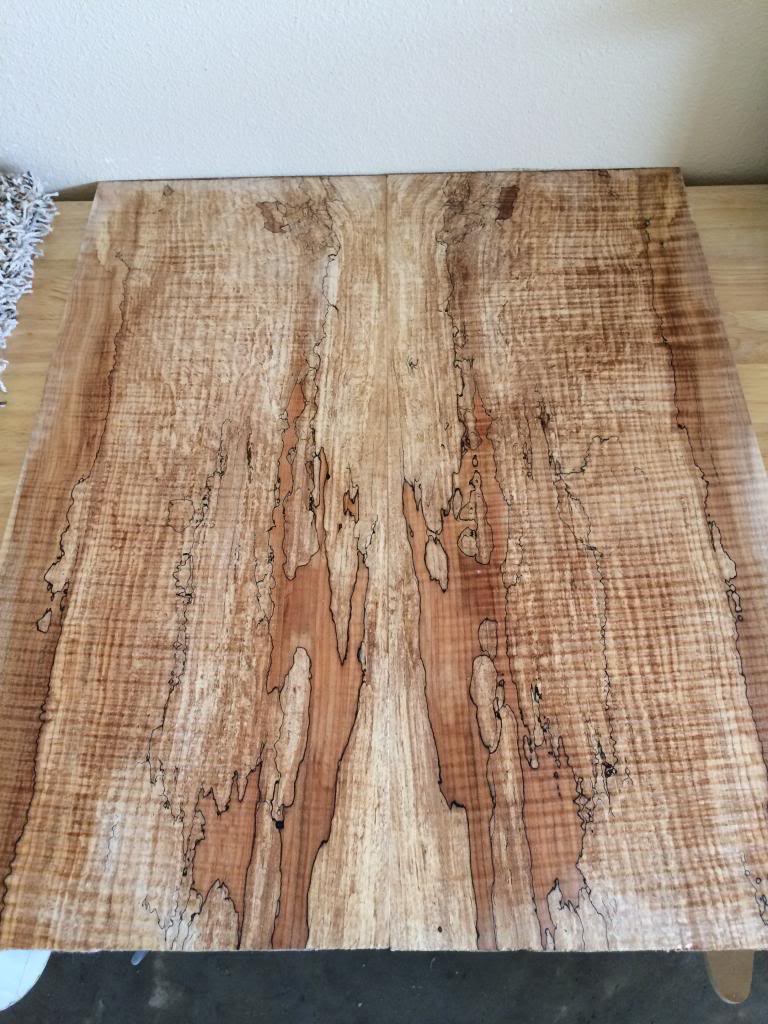
photo2_zpsb3d28919.jpg


Guitar
-Spalted Maple top
-Neck-thru
-Walnut Body w/ Alder neck block
-Ebony, Rosewood, or Cocobolo FB

photo1_zps254594f8.jpg


The "Twins" (Guitar and Bass)
-Holly Top
-Ebony FB
-Neck-thru
-Alder body wings and neck block
-These two will be built exactly the same as far as wood combination/shape goes. The electronics will be different.

Any sort of input is greatly appreciated, and since I have not already ordered the body/fb woods I am open to any suggestions you may have.

Thank you all for doing what you do to make this site awesome.
 
I'm beginning to collect woods for instrument builds this year. I've already started gluing up the neck wood (this will yield maybe 4-5 neck blanks..depending on how well I cut it down). I also have the top woods for all of them. My only choice now is body/fingerboard woods. I don't know a whole lot about wood combinations and their tonal properties....that's where you guys come in. In your experience/opinion, what sound would I expect from the following combinations:
...

I think you'll find a lot of discussion about how wood influences tone, especially when it comes to electric instruments. There's two basic camps - those that don't believe wood has much, if any, influence on tone, and those who believe that they do.

After playing bass (and guitar) for many, many years, and having the opportunity to own and play many different types of instruments, I don't believe the wood has much influence. It's mostly the strings, pickups, electronics, and of course, the player's technique. That said, I've always preferred maple. Some people say that we hear with our eyes. I wouldn't argue that.

For what it's worth, I like your choice of woods, at least in the way they look and blend visually. Any of the combinations you listed would look, and most likely sound, great.
 
I'm in the 1st camp. For acoustics, definitely yes, but electrics, no. Even if wood species DID have a perceptible effect, there are so many things in the signal path that affect the tone of an electric instrument that it renders it null and void. It's all subjective, psychological marketing mumbo jumbo. Take "tone blocks". Their only function is to enable builders to use less expensive 4/4 lumber, but they can't say that, so it becomes a tone thing. Choice of pickups, electronics, and especially amp is going to have infinitely more effect on tone than wood choice.

I'm with Mapleglo, your combos look great and I think you should use whatever is aesthetically pleasing to your eye. I'm looking forward to following your builds.
 
Thanks for the replies!

I'm in a boat of both worlds. IMHO I believe that wood has the underlying tonal aspect, but the electronics/pickups you use can counteract those natural tones and make a bass sound different.

I'm excited to begin these builds. I'm in graduate school and as it is towards the end of the semester I probably will not be able to begin any building until May because of my studies. Doesn't mean I can't acquire everything I need until then ;). I'm looking to sell these instruments when they are completed...my first attempt at letting go of an instrument I build. I hope I don't get too attached :P
 
It is true that wood does not change the sound of an electric bass sound very much when it is masked by a preamp that colors, pedals that cloud, and amp that alters.

It is true not much, but, if recording and looking for wood sound, you will find it.

Be sure to know that species does not always dictate the sound, it is THAT PIECE OF WOOD. If your wood in the neck and body is not special (or particular) and are IN CONCERT for a particular voice. I can agree, don't look for much.

I have found major differences in planned occasions of design.
 
For what it's worth, I think walnut bodies will look wonderful with both buckeye burl and spalted maple.

Also, do you mind if I ask where you got the spalted maple?

Thanks!! Big fan of your builds and what you have posted on this site.

I got it from here: Invalid Link Removed

Great tops at a very reasonable price, but shipping is a little higher coming from Canada. I will definitely be ordering from them again in the future.
 
  • Like
Reactions: lbridenstine
For electrics, in my experience in building for the last 15 yrs. , the neck wood (fingerboard included) tends to make the most impact .
I have built a number of basses that used the same electronics and they do have subtle differences from the body woods , most evident when played solo .
 
Woods should be chosen for stability, and aesthetics. Any tonal attributes, if there are any at all, are so minor that they are not worth worrying about. In fact the slight differences in electronics, even if they are the same brand and model,will make a much bigger tonal impact than the wood will. The age of the strings, and the minor differences in setup between two basses will make a bigger difference in tone than the wood its made of.
 
Thanks!! Big fan of your builds and what you have posted on this site.

I got it from here: Invalid Link Removed

Great tops at a very reasonable price, but shipping is a little higher coming from Canada. I will definitely be ordering from them again in the future.

I missed this when you posted it somehow. Thanks for the link and thank you for the compliment too. I'm liking your builds a lot so far.

There's a couple of spalted maple tops on that site that are really tempting me.
 
  • Like
Reactions: kaoskater08
The wood may not influence the tone much, but the design definitely does. The fingerboard has a huge effect. Whether or not the body is semi-hollow or solid body is another. Trust me, these factors definitely influence tone. And I think the body wood does too, depending on the construction. Bolt-on versus set-neck or neck-thru-body. I've played many basses over the years. Yup, definitely influences tone.
 
I think wood and how it affects tone in solid body magnetic pickup instruments is being looked at wrong. So many people say body wood makes no difference, when it obviously does contribute to the sound. In my experience the fretboard makes the most difference. I discovered that pretty early on, I had a jazz bass and didn't like the look of the maple fretboard, swapped the neck for one that was identical except for having a rosewood fretboard. Much mellower sounding. I was not expecting a difference. It was very noticeable.

I'm thinking since the pickups only pick up string vibration then the wood must "reflect" sort of.

So I'm trying to find out 2 things,
First I think the neck affects the tone more than the body, especially the fingerboard. Is that true? Why?

Second, HOW does the wood of the body affect the string vibration? I understand it in acoustic instruments, I have read tons and tons about soundboard wood and tonal characteristics of different wood and composite materials. But on solid body it has to be different. Possibly inverse even.

I need to know, it's driving me crazy and I can't find scientific documentation about woods in electronic instruments. Plenty of what and not enough why.


Pickup position affects the tone a gazillion times more than the wood choices, but to really dial in the sound wood choices matter too. Even stickers put on too change the sound a lot, again especially on acoustics but solid instruments too.

I had an ibanez p j bass, it had a "shell" coating of polyester paint, really thick, it had a really bright tone. Using toluene I stripped the coating , the instrument sounded completely different, warmer and duller. The paint made a difference.

Can someone explain how the wood affects the plugged in tone? Is it a symbiotic relationship between the vibration of the string, does the string absorb the wood vibrations ? What can I read to learn more?
 
  • Like
Reactions: kaoskater08
I think wood and how it affects tone in solid body magnetic pickup instruments is being looked at wrong. So many people say body wood makes no difference, when it obviously does contribute to the sound. In my experience the fretboard makes the most difference. I discovered that pretty early on, I had a jazz bass and didn't like the look of the maple fretboard, swapped the neck for one that was identical except for having a rosewood fretboard. Much mellower sounding. I was not expecting a difference. It was very noticeable.

You didn't just change the neck, you also changed the setup, and strings. Even if you used the same strings, you changed their break angles.

I'm thinking since the pickups only pick up string vibration then the wood must "reflect" sort of.

So I'm trying to find out 2 things,
First I think the neck affects the tone more than the body, especially the fingerboard. Is that true? Why?

You are right, the fretboard has an influence on tone, but I wouldn't call it all that huge. My theory is that the fretboard is the closest thing to a direct contact from string to wood. Its similar to how a fretless board effects the string, but on a much smaller level because it is anchored against a metal fret instead of directly to wood.

Second, HOW does the wood of the body affect the string vibration? I understand it in acoustic instruments, I have read tons and tons about soundboard wood and tonal characteristics of different wood and composite materials. But on solid body it has to be different. Possibly inverse even.

I have never noticed body wood having any noticeable real world effect on tone. The pickups are not anchored directly to the body, they are either suspended by a pickup ring, or foam.

I need to know, it's driving me crazy and I can't find scientific documentation about woods in electronic instruments. Plenty of what and not enough why.

There is no scientific documentation to be found. Every test I have seen has missed the mark on a few key points that invalidate the test.


Pickup position affects the tone a gazillion times more than the wood choices, but to really dial in the sound wood choices matter too. Even stickers put on too change the sound a lot, again especially on acoustics but solid instruments too.

To really dial in the sound, you pick the right strings and dial in the right settings on your amp. Fine tuning your tone by wood selection is voodoo, and at the very best a guessing game. Stickers will not effect the sound at all.

I had an ibanez p j bass, it had a "shell" coating of polyester paint, really thick, it had a really bright tone. Using toluene I stripped the coating , the instrument sounded completely different, warmer and duller. The paint made a difference.

Can someone explain how the wood affects the plugged in tone? Is it a symbiotic relationship between the vibration of the string, does the string absorb the wood vibrations ? What can I read to learn more?

The finish has no effect on tone, if the sound changed its because it was set up differently after the finish was stripped.[/quote][/quote]
 
Last edited:
  • Like
Reactions: kaoskater08
Good points. I'm going to get to the bottom of it. new thread started, gathering gear. I want to know once and for all. Maybe finish only affects acoustics, I'll give you that one. Psychosomatic probably.

Check out this study agreeing with you

http://www.stormriders.com/guitar/telecaster/guitar_wood.pdf

now look carefully at the images of the soundwaves, they look different to me, so I would interpret his results differently. Wish they had used a control, like steel or plywood or anything even empty space or
 
Last edited: