• TalkBass has been independent since 1998. Add your voice.
    Create a free account to reply to discussions, view embedded media, and browse with fewer display ads.
    Join freeLog in
    Want zero display ads or expanded classifieds tools? Compare plans.

Work From Home / Music Room Office

warptheory

Gold Supporting Member
Sep 8, 2021
1,545
5,764
I work from home, and currently have an office in my house, but am getting kicked out soon so that the kids don't have to share a room anymore.

So we are building a tiny home/office in the backyard for my office desk set up and music stuff. We are working with a local contractor, so we can customize the shape/windows/doors to an extent.

I do have neighbors, so any ideas on sound proofing as much as possible? Any type of insulation that works better than others? I plan on raising my bass cab off the floor to de-couple it, but anything else I should be looking at?

As far as recording goes, I don't do much with vocals. And I don't do a ton of mixing or mastering, so just need something that is serviceable. I'm going to have a bunch of stuff in the room, so it won't be an open dead space, but open to putting treatments in corners or what not.

Any suggestions on what else you would include?

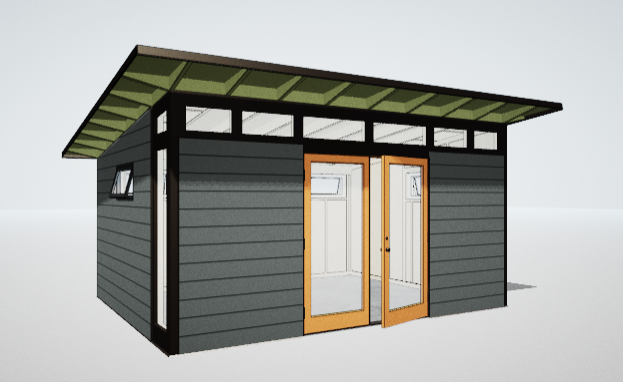
Here is the a rough sketch of what we are looking to build. 12x16 to keep it under 200sqft so we don't need permits:
1730224818280.png


Here are some of the things I want to put in it:

  • Work Desk
  • Music Desk (computer for recording/interface/record player/monitor speakers)
  • Amp and Cab
  • Couch/hideabed
  • File Cabinet for taxes
  • Printer/NAS
  • Upright Piano (was my parents and now its mine)
  • TV
  • Minisplit HVAC
  • Wall space for hanging basses
  • Some sort of wall display for pedals not in rotation
  • Storage for pedal boxes/records/cables/etc.
 
Last edited:
I do have neighbors, so any ideas on sound proofing as much as possible? Any type of insulation that works better than others? I plan on raising my bass cab off the floor to de-couple it, but anything else I should be looking at?
  1. Soundproofing is a made-up term. The correct term is sound isolation.
  2. You can only do so much in an "as much as possible" capacity. It tends to be more of an "all or nothing" proposition. That's not 100% accurate, but by the time you get into doing meaningful sound isolation you might as just go all in as the first aspect of it, your wall construction, will constitute the biggest dollar value and without it you might as well just skip it.
  3. Forget about insulation in terms of sound isolation. Isolation is a function of transmission characteristics, whereas insulation is a function of reflection characteristics (i.e. acoustic treatments). The two are not the same and don't provide much in the way of overlapping function.
  4. Doors and windows are a challenge, and an expensive one at that if sound isolation is really your goal.
  5. You mention a mini split, which accounts for the H and the AC, but does nothing for V. You need some form of ventilation. If sound isolation is actually a goal then you'll need more V than you think as you won't be able to operate with a door or window open for fresh air. Further, getting all aspects of HVAC worked into your sound isolation model can be complicated, and HVAC contractors do not understand it. In some cases they'll actively push back against your wishes in this regard.
  6. Buy a copy of "Build it Like the Pros" by Rod Gervais. It has everything you need to know.
I did a similar thing years ago, and still work out of this facility. Feel free to read through my build thread to find relevant pitfalls: https://www.talkbass.com/threads/my-new-studio-build-perhaps-overly-detailed.1167698/

Addendum: For this kind of thing I would advise NOT sound isolating. You'll eat up floor space, spend a ton of money, complicate the build, and add a ton of stress. Your needs of playing bass are not massively loud if you're just by yourself. Be judicious with volume to not annoy your neighbors. Mitigate their disturbances socially by befriending them, giving them your contact info so that if things get loud they can message you directly rather than calling the police.
 
Last edited:
  1. Soundproofing is a made-up term. The correct term is sound isolation.
  2. You can only do so much in an "as much as possible" capacity. It tends to be more of an "all or nothing" proposition. That's not 100% accurate, but by the time you get into doing meaningful sound isolation you might as just go all in as the first aspect of it, your wall construction, will constitute the biggest dollar value and without it you might as well just skip it.
  3. Forget about insulation in terms of sound isolation. Isolation is a function of transmission characteristics, whereas insulation is a function of reflection characteristics (i.e. acoustic treatments). The two are not the same and don't provide much in the way of overlapping function.
  4. Doors and windows are a challenge, and an expensive one at that if sound isolation is really your goal.
  5. You mention a mini split, which accounts for the H and the AC, but does nothing for V. You need some form of ventilation. If sound isolation is actually a goal then you'll need more V than you think as you won't be able to operate with a door or window open for fresh air. Further, getting all aspects of HVAC worked into your sound isolation model can be complicated, and HVAC contractors do not understand it. In some cases they'll actively push back against your wishes in this regard.
  6. Buy a copy of "Build it Like the Pros" by Rod Gervais. It has everything you need to know.
I did a similar thing years ago, and still work out of this facility. Feel free to read through my build thread to find relevant pitfalls: https://www.talkbass.com/threads/my-new-studio-build-perhaps-overly-detailed.1167698/
Yes, sound isolation is what I'm going for.

Doors and windows are likely the biggest detractor from isolation, which makes sense. But I also don't want to spend 8-10 hours in a cave. It's a tradeoff for sure.

Venting is important and something I didn't consider. I don't plan on having the windows open all the time, but would be nice to get some fresh air every now and then.

I'll check out that book and read through your thread.

Thanks for the insight!
 
Sound isolation will require ultra thick walls and probably not be very effective negating loud low bass frequencies. But standard acoustic treatment is a definite requirement. Here's how my office-home studio ended up. I built the treatments based on some internet specs. The corner bass traps are stored in a corner and inserted in-place for recording sessions. Green screen is on a ceiling roller track. Lighting and cloud treatments are on the ceiling. Cosey and functional!

Studio-1-small.JPG


Studio-2-small.JPG


Studio-3-small.JPG


Studio-4-small.JPG
 
Yes, sound isolation is what I'm going for.
If you want to go down that road, get Rod's book, read it, then read it again while you're making a plan. Your contractor won't know any of this stuff and will likely question the decisions. Get ready for sticker shock on how much this costs and how much floor space and headroom you stand to lose.
 
If the inside walls are drywall, make it 2 layers, staggering the seams. Same for the ceiling. Mass is what helps stop sound. I think one big problem is the double entrance door. It's a big opening and most doors don't stop much sound. Get heavy doors and make sure there is good weatherstripping completely seal the doors. Every little opening that can leak air becomes a miniature speaker.
 
I've built three different test facilities for measuring noise and so I have a bit of insight into what you're trying to do.

What you're interested in is keeping your neighbors from being annoyed by your loud noises. This means you wish to prevent transmission of noise through your walls.

The keys to preventing noise transmission through walls are:

- Mass
- Isolation
- Sealing
- Damping

and to a far lesser extent,

- reverberation

The first three are the most critical.

Mass means that all the walls must be as massive as possible so that it takes more energy to excite the walls into vibration - in your case, energy from the inside exciting the walls, which then radiate it to the exterior of the building. The gold standard here is concrete block, filled with sand - but that doesn't help ceilings, and you're not going to do it anyway. A reasonable approach is to use double or triple layers of the thickest drywall you can obtain. (The joints in each layer must be sealed before applying the next layer, but that's under "sealing".) This is something that, with forethought, can be done on ceilings as well.

Isolation means that you need to prevent direct conductive paths from the inside to the outside. If you have your little building on a slab, there's not much you can do there, but the mass of the concrete slab mitigate the fact that the edges of it do present a direct path. For walls and ceilings, you want to have two sets of studs, one for the exterior wall surfaces and one for the interior wall surfaces. They must not be tied together. Now of course if you want windows and doors, there'll be some connection at those penetrations, but a lot can be done with overlapping framing and sealing between them with a resilient caulk.

Sealing means that you must prevent direct air-to-air connections. So, for example, if you use standard electrical outlets set into the wall, you've just negated all that double thick drywall and given the sound a direct path into the wall cavity. Surface mount electrical outlets and conduits. Doors should be double - an outswinging outer door, an inswinging inner door. Seals at the doors. Ideally, windows would be an inner double-pane window mounted to the inner wall, and an outer double-pane window mounted to the outer wall, and the gap at the edge of the window sealed by the aforementioned resilient caulk.

All penetrations for ventilation are a big problem. Anything you can do to get ventilation is a direct path for noise. The design of baffled ventilation systems for these kinds of test rooms is so involved that I've just had no ventilation - you run the test, then you open the door. If you use a mini split for heating and cooling, you can seal around the penetration where the refrigerant lines go through the wall.

Damping - well, unfortunately there's little you can do with damping. Those big sheets of drywall (or exterior siding) can be treated in between layers with mastic, so they don't ring like drum heads. There's stuff specially made for this, but I can't remember the names. You can put fiberglass in the walls if you want to, but it won't do much. If you really tightly pack it, or use expanding foam, it'll help a bit. But thermal insulation is really intended to stop convection currents that set up in a hollow wall and enhance heat transfer across the wall. That's largely irrelevant to noise prevention.

Finally, we get to the thing everyone thinks of first, spends their money on, and gets the very least result - reverberation. All those little pieces of Sonex foam, egg crates, etc. - they're intended to cut reflection within a room. First of all, the little Sonex foam peaks don't do squat below a certain frequency - look it up, there's a coefficient for each frequency range, and to get effective reverberation control in bass frequencies the Sonex has to be something like 10 inches thick (and boy howdy is that ever expensive!) But let's be clear here: killing reverberation, making the room "dead", has a big effect on the way the music sounds inside the room, and makes it a much more pleasant space (up to a point) but it only reduces the energy available to be transmitted outward by a small amount. And if you want to use a surface treatment like that to reduce transmission in any meaningful way, you'll have to treat ALL the surface, not the usual four little 3 foot square patches on the walls. But, you will want to address reverberation - the best stuff is Roxul rock-wool product, which is about 4" thick and more effective than the 10" Sonex. If you're willing to do some of the other things I've mentioned and just want to kill the most annoying reverberation inside the room - not for reducing transmission because as I said it doesn't do a lot of that - then you can do the traditional things of hanging heavy draperies, putting down carpet, acoustic ceiling tiles.
 
Mass is what helps stop sound.
Correct. Most people underestimate the quantity of mass required to do it effectively. You can offset this through the other two tenets of isolation, which are decoupling, and damping which is the process of converting acoustic energy into thermal energy (how it was explained to me by the folks that manufacture Green Glue).
 
Could you build with cement block? That would solve a lot of problems from the get-go...add a cement roof and you'll also have a bomb shelter!
Would adding a deck outside enable you to hold 'block party' public performances? May as well get your money's worth!

I hope you can get this done with some degree of affordability - it sounds expensive!
 
Everything I'm reading on silky's thread is screams $$$. He did it right though.

Me on the other hand, I don't intend on playing drums or tracking a lot, I just want something where I can play my bass at a reasonable volume at night through an amp. Reasonable is subjective though.

I'm going to de-couple everything the best I can. Read that book, and put in everything that is feasible. We were looking at moving to a bigger space, but that fell through. We really like our current house, so putting in an office is "cheap" compared to this building. That being said, I don't have unlimited budget and will need to think hard about the niceties of windows vs the cons of sound perforation.

I live in the PNW, so windows are nice to have to get some vitamin d, and HVAC is a must with the rising temps in summers and cold winters.
 
  1. Soundproofing is a made-up term. The correct term is sound isolation.
  2. You can only do so much in an "as much as possible" capacity. It tends to be more of an "all or nothing" proposition. That's not 100% accurate, but by the time you get into doing meaningful sound isolation you might as just go all in as the first aspect of it, your wall construction, will constitute the biggest dollar value and without it you might as well just skip it.
  3. Forget about insulation in terms of sound isolation. Isolation is a function of transmission characteristics, whereas insulation is a function of reflection characteristics (i.e. acoustic treatments). The two are not the same and don't provide much in the way of overlapping function.
  4. Doors and windows are a challenge, and an expensive one at that if sound isolation is really your goal.
  5. You mention a mini split, which accounts for the H and the AC, but does nothing for V. You need some form of ventilation. If sound isolation is actually a goal then you'll need more V than you think as you won't be able to operate with a door or window open for fresh air. Further, getting all aspects of HVAC worked into your sound isolation model can be complicated, and HVAC contractors do not understand it. In some cases they'll actively push back against your wishes in this regard.
  6. Buy a copy of "Build it Like the Pros" by Rod Gervais. It has everything you need to know.
I did a similar thing years ago, and still work out of this facility. Feel free to read through my build thread to find relevant pitfalls: https://www.talkbass.com/threads/my-new-studio-build-perhaps-overly-detailed.1167698/

Addendum: For this kind of thing I would advise NOT sound isolating. You'll eat up floor space, spend a ton of money, complicate the build, and add a ton of stress. Your needs of playing bass are not massively loud if you're just by yourself. Be judicious with volume to not annoy your neighbors. Mitigate their disturbances socially by befriending them, giving them your contact info so that if things get loud they can message you directly rather than calling the police.
SO glad you reposted this build thread! I remember following it almost a decade ago and had completely forgotten that was you. Can you link a “completed” post here and maybe as an edit to the original so people can find it easily?
 
  • Like
Reactions: dmt
Hi,

You didn't mention what kind of winter you get where you live.

Most sheds are built for storage and not for people to stay in for long periods of time.

Vitals are proper air exchange (with heat recovery), proper electricity supply, and thermal insulation with effective heating/coolng. Will you have water in there?

I wouldn't worry much about sound bothering others. The volume knobs on amps generally work well. When no one else is in a small room, 60dB sounds pretty loud.
 
  • Like
Reactions: meisi
Here is the a rough sketch of what we are looking to build. 12x16 to keep it under 200sqft so we don't need permits:
View attachment 7064978
Was this actually designed for you, or is it a rendering of a generic outbuilding? It looks very much like that latter, a typical office/get-away-from-the-kids/wife/whoever kind of design that I've seen countless times over the years.
 
I live in the PNW, so windows are nice to have to get some vitamin d, and HVAC is a must with the rising temps in summers and cold winters.
Oh, I didn’t realize you’re a PNW’er as well. I’m in Seattle. If you want to swing by and see my space to get construction examples, talk shop, etc. please shoot me a DM. I’d be happy to have you over!


Can you link a “completed” post here and maybe as an edit to the original so people can find it easily?
I did a “I’m finally moving in” post, but nothing as a full summary. I’ll find that post and link it tomorrow.
 
Hi,

You didn't mention what kind of winter you get where you live.

Most sheds are built for storage and not for people to stay in for long periods of time.

Vitals are proper air exchange (with heat recovery), proper electricity supply, and thermal insulation with effective heating/coolng. Will you have water in there?

I wouldn't worry much about sound bothering others. The volume knobs on amps generally work well. When no one else is in a small room, 60dB sounds pretty loud.
Oh, I didn’t realize you’re a PNW’er as well. I’m in Seattle. If you want to swing by and see my space to get construction examples, talk shop, etc. please shoot me a DM. I’d be happy to have you over!


I did a “I’m finally moving in” post, but nothing as a full summary. I’ll find that post and link it tomorrow.

I'm outside of Salem Oregon in a small town. About an hour south of Portland. Winters are rainy and cold, occasional ice/snow storms. Nothing too extreme, lowest it ever gets is maybe 28 degrees. Cold enough to need heat and ideally something better than a space heater. In the summer it gets hot, we will have a few weeks of 90+ and days in the 100s. Since this is where I work and spend 8-10 hours a day, I want to be comfortable.

@silky smoove If I'm ever up that way I'll let you know. I've been meaning to get up that way to try out some Mike Lull's and take the kids the EMP and the Space Needle.

I'm only on page 42 of the thread, and man that has been a journey so far. I'm keeping mine below 200 square feet so we don't have to get any permits or anything like that. I'm also not doing any of this myself. I have a guy that built us a great patio cover about 5 years ago that we are enlisting to build this to our specs.

I'm not doing a lot of recording or tracking drums, so I'm not looking for a real "studio" environment, I just don't want the neighbors to hate me. If there is any low hanging fruit to help with isolation, then I want to build those in now while under construction, like hanging drywall with resilient channels.
 
Was this actually designed for you, or is it a rendering of a generic outbuilding? It looks very much like that latter, a typical office/get-away-from-the-kids/wife/whoever kind of design that I've seen countless times over the years.
It's a screenshot from this site:

They sell kits, and their design tool it pretty nice. I'm using it as a template for the builder to let him know what I'm looking for. I imagine he will have an architect draw up the plans once we have gone back and forth a few times and hashed out windows/doors/etc.
 
  • Like
Reactions: Jeff Scott