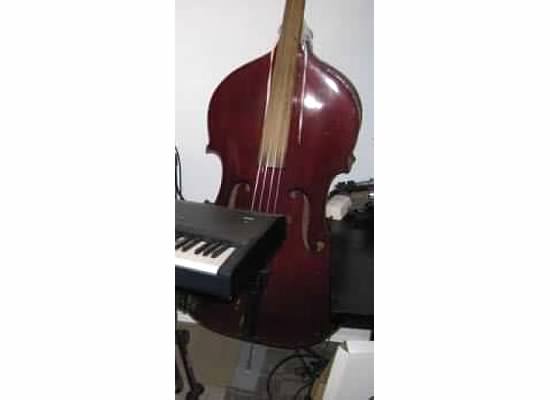
Okay, so "carved" vs laminate. It doesn't mean everything, especially for a "getting into URB" instrument. But if you look at the side/edge of the top, you should be able to see either grain going through the sheet or ply-laminations. Also look at the edges in the f-holes. If these appear to kind of be painted or otherwise obscured, that's a sign that probably there wasn't beautiful grain running through. It could effect your resale value and it COULD make a difference in sound, but it's just a factor.
If it is solid wood (they're not all "carved"), then look for cracks and if you find some, look for beautiful, perfect cleats on the inside indicating professional repair. In either case, look at the top to see if it holds it's shape evenly. If you see any caving or indention under the bridge feet or a bulge or crack where the soundpost is, it's almost definitely not worth it at any price.
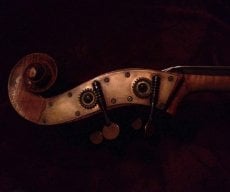
Look for any signs of a break, crack or weird angle at the heal of the neck and peg box. They're under a lot of tension and sometimes get mishandled, this is where that might show up. Not that it couldn't be repaired, but you get into some stuff there. If it has an old repair (very common) in one of those places and it was done right, no worries. If you see a screw or something else foreign...worry.
Check the seems. If you can take a small flashlight to shine inside and then look for light peaking out from someplace that it shouldn't be. Absent a properly repaired crack, this would be a sign that it's coming apart. Can almost always be repaired, but understand what you're getting into and don't tell yourself that classic Spicoli lie "we can fix this, my dad's a TV repair man, he's got an awesome set of tools."
If you've never played one before, it's going to be tough to go on the sound. The technique that being a great EBG player involves will not produce the sound in your head on a DB. It will take some time to adjust. Don't be surprised or read too much into the instrument based on that.
Look for a manufacture's label inside the f-holes. They're not always there and they're not always helpful, but sometimes they are. Also look for shop and repair labels. It might give you some date and history clues.
Measure the mensure; bridge to nut of the strings. 42" is pretty standard 3/4, give or take maybe 1/2 an inch. Shorter than about 41.25" and you're dealing with something probably not meant for you. Also, if your plan is to resell, your market will be limited with something less than 3/4. It's unlikely that it's larger than that.
If I know when you're going and you want to call me once you've had a look at it, PM me and I'll give you my cell phone number. I might be able to help a little bit or at least answer some questions while you're there. Better still, offer lunch/beer/help painting to someone local in exchange for going with you to check it out.