When does an instrument become a bass? Would TB'ers consider a Baritone Guitar as a type of bass? Or would it still be considered a guitar? Some 6-string basses - Fender Bass VI, and various Danelectros, to mention just a few - are tuned a 4th lower than a standard guitar (B), others are tuned a 5th down (A), while still others are tuned a full octave down (E). When does the change from guitar to bass occur?

Enjoy the benefits of a premium membership!
Upgrade Account
-
TalkBass has been independent since 1998. Add your voice.
Create a free account to reply to discussions, view embedded media, and browse with fewer display ads.
Join free Log in
Want zero display ads or expanded classifieds tools? Compare plans.
You are using an out of date browser. It may not display this or other websites correctly.
You should upgrade or use an alternative browser.
You should upgrade or use an alternative browser.
Would a Baritone Guitar be considered a type of bass?
- Thread starter MusicBear
- Start date
More options
Who Replied?
I have no idea, and I'm not sure I really care. I have an A1 tuned baritone, a number of E1 4 string basses, some B0 five and 6 string basses, and E1 tuned 6 string basses.

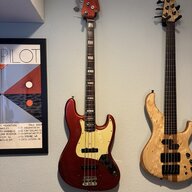
What’s in a label?
A 30in baritone can be a setup as a bass vi and vice versa.
A 30in baritone can be a setup as a bass vi and vice versa.
An Instrument becomes a bass when it's used as one
The guitar in Seven Nation Army is the bass instrument of this song. So a baritone can be a bass but usually isn't
The guitar in Seven Nation Army is the bass instrument of this song. So a baritone can be a bass but usually isn't
This!An Instrument becomes a bass when it's used as one
The guitar in Seven Nation Army is the bass instrument of this song. So a baritone can be a bass but usually isn't
The line is pretty blurry, but use case is the best argument. I wrote and recorded two whole albums with me playing piccolo bass in lieu of guitar. I played piccolo bass in the roles of lead and rhythm guitar so it became a guitar in that sense.
The same can be applied to baritone guitars and Bass VI style guitars.

Well, it would be considered a baritone guitar, in the same way that an regular electric bass is considered a bass guitar.
It's really an instrument in it's own regard, but definitely have more in common with a regular 6 string guitar, than a bass guitar, from a design perspective.
A bass in baritone tuning is considered a tenor bass guitar.
This might look like contradictory, but mind this it here is referring to a tenor guitar (4 string short scale guitar) in bass tuning, not tenor as the frequency ranger.
A baritone guitar works best if you play it considering neither a regular 6 string guitar or a bass, but an instrument in its own regard, that requires its own unique playing style, sort of a crossover between traditional bass and traditional guitar playing style.
Bass VI is neither a regular guitar, bass guitar or tenor guitar, but again an instrument in its own regard.
I suppose you could call it a long scaled guitar in a bass tuning, or a short scaled 6 string guitar with narrow guitar like string spacing, but that would be missing the point of the instrument.
It can sort of be played like a bass, and it can sort of like being played as a guitar, but again really works best when you adjust your playing style to accommodate its unique design.
In any case it doesn't really matter how we categorize instruments, what matters is the we adjust our playing style to actually fit the instrument, both from a design and frequency range perspective.
It's really an instrument in it's own regard, but definitely have more in common with a regular 6 string guitar, than a bass guitar, from a design perspective.
A bass in baritone tuning is considered a tenor bass guitar.
This might look like contradictory, but mind this it here is referring to a tenor guitar (4 string short scale guitar) in bass tuning, not tenor as the frequency ranger.
A baritone guitar works best if you play it considering neither a regular 6 string guitar or a bass, but an instrument in its own regard, that requires its own unique playing style, sort of a crossover between traditional bass and traditional guitar playing style.
Bass VI is neither a regular guitar, bass guitar or tenor guitar, but again an instrument in its own regard.
I suppose you could call it a long scaled guitar in a bass tuning, or a short scaled 6 string guitar with narrow guitar like string spacing, but that would be missing the point of the instrument.
It can sort of be played like a bass, and it can sort of like being played as a guitar, but again really works best when you adjust your playing style to accommodate its unique design.
In any case it doesn't really matter how we categorize instruments, what matters is the we adjust our playing style to actually fit the instrument, both from a design and frequency range perspective.
Last edited:
Made a couple of mistakes that could lead to misunderstandings,Well, it would be considered a baritone guitar, in the same way that an regular electric bass is considered a bass guitar.
It's really an instrument in it's own regard, but definitely have more in common with a regular 6 string guitar, than a bass guitar, from a design perspective.
A bass in baritone tuning is considered a tenor bass guitar.
This might look like contradictory, but mind this it here is referring to a tenor guitar (4 string short scale guitar) in bass tuning, not tenor as the frequency range.
A baritone guitar works best if you play it considering neither a regular 6 string guitar or a bass, but an instrument in its own regard, that requires its own unique playing style, sort of a crossover between traditional bass and traditional guitar playing style.
A Bass VI is also neither a regular guitar, bass guitar or baritone guitar, but again an instrument in its own regard.
I suppose you could call it a long scaled guitar in a bass tuning, or a short scaled 6 string bass with narrow guitar like string spacing, but that would be missing the point of the instrument.
It can sort of be played like a bass, and it can sort of like being played as a guitar, but again really works best when you adjust your playing style to accommodate its unique design.
In any case it doesn't really matter how we categorize instruments, what matters is the we adjust our playing style to actually fit the instrument in question, both from a design and frequency range perspective.
The above quote now fixed.
Last edited:

I know human beings need to frame everything in boxes, but when it comes to music, who cares? Certainly not the audience. Let's cross the frontier, play music and have fun 

Before they made any four strings, Danelectro’s very first bass guitar in 1956 was a six string. They continued to make it well into the 1960s.
When the company that bought the rights to the name started making instruments in Korea, they started selling baritones tuned B to B, but not as 6 string basses. They share the 29.75” scale length, so just popping different strings on it makes it a bass.
When the company that bought the rights to the name started making instruments in Korea, they started selling baritones tuned B to B, but not as 6 string basses. They share the 29.75” scale length, so just popping different strings on it makes it a bass.
Last edited:
Baritone is not bass. Baritone has a range that overlaps bass. In fact almost any two instruments you arbitrarily select are going to have some overlap in range.
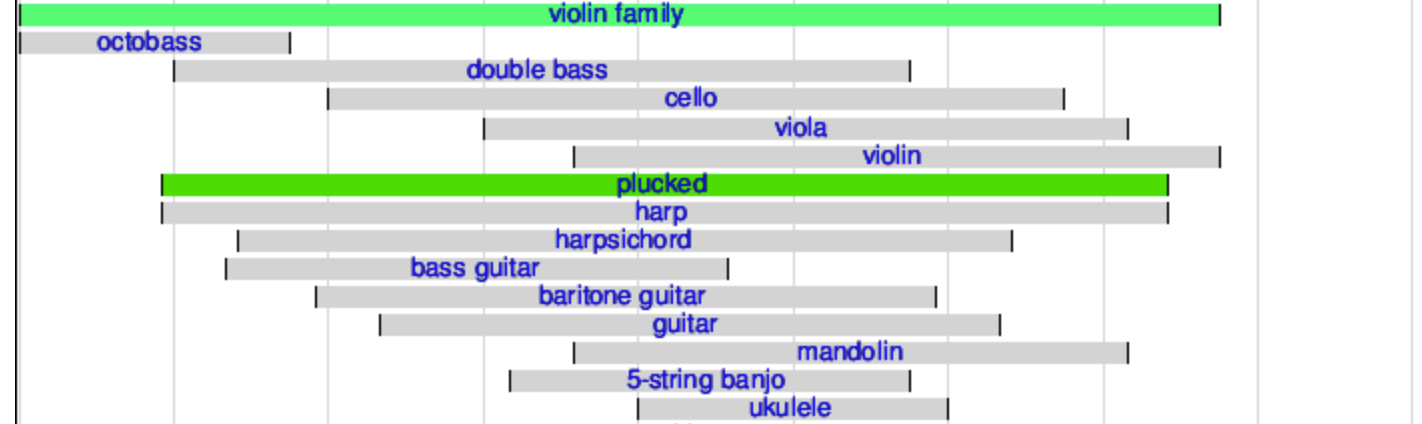
Snipped from a much larger chart on Wikipedia. Click the link if you want to see how this compares to, for example, the garklein recorder or piccolo trombone.
If you're able to play a bassline in the way you want on a baritone, you should go ahead and do it and not worry about the distinction.
Snipped from a much larger chart on Wikipedia. Click the link if you want to see how this compares to, for example, the garklein recorder or piccolo trombone.
If you're able to play a bassline in the way you want on a baritone, you should go ahead and do it and not worry about the distinction.

A guitar is a tenor guitar. A bass guitar is a bass guitar. A baritone guitar is a baritone guitar - it's tuned in between the two. There is no threshold where it becomes "not a guitar" - they are all guitars. The way you play them is more different than the instrument themselves.
If you sing in a choir, it's the same thing - lower your range a few notes, you're no longer a tenor, but you're still a singer. Bass choir parts are very different from tenor parts, but you are both still singers.
If you sing in a choir, it's the same thing - lower your range a few notes, you're no longer a tenor, but you're still a singer. Bass choir parts are very different from tenor parts, but you are both still singers.

Except "Tenor Guitar" (sometimes) specifically means a four string guitar.A guitar is a tenor guitar. A bass guitar is a bass guitar. A baritone guitar is a baritone guitar - it's tuned in between the two. There is no threshold where it becomes "not a guitar" - they are all guitars. The way you play them is more different than the instrument themselves.
If you sing in a choir, it's the same thing - lower your range a few notes, you're no longer a tenor, but you're still a singer. Bass choir parts are very different from tenor parts, but you are both still singers.
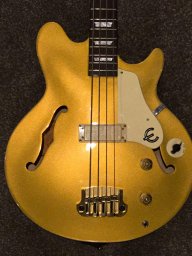
I had an acoustic baritone guitar for a while. Six strings tuned B-B. It looked like a large acoustic guitar (auditorium body size) and played like one. I played guitar chords on it, but they were in a different key, so I had to transpose when playing in an ensemble, which which was a bother. I could have used a capo, but then I might as well have just played a standard acoustic guitar.
If it had been a solid-body with magnetic pickups and steel strings, I would have called it a bass VI.
If it had been a solid-body with magnetic pickups and steel strings, I would have called it a bass VI.
Except "Tenor Guitar" (sometimes) specifically means a four string guitar.
Tenor is a range, not a number of strings.
Well apart from the fact that you are somewhat right, there is something horrible wrong with that graph.Baritone is not bass. Baritone has a range that overlaps bass. In fact almost any two instruments you arbitrarily select are going to have some overlap in range.
View attachment 7377663
Snipped from a much larger chart on Wikipedia. Click the link if you want to see how this compares to, for example, the garklein recorder or piccolo trombone.
If you're able to play a bassline in the way you want on a baritone, you should go ahead and do it and not worry about the distinction.
Like why do a double bass go much deeper than a bass guitar?
Also tenor, baritone and bass means slightly different range for different instruments.
Technically a guitar is a tenor instrument, but then you have tenor guitar, just as one example.
A guitar is a tenor guitar. A bass guitar is a bass guitar. A baritone guitar is a baritone guitar - it's tuned in between the two. There is no threshold where it becomes "not a guitar" - they are all guitars. The way you play them is more different than the instrument themselves.
If you sing in a choir, it's the same thing - lower your range a few notes, you're no longer a tenor, but you're still a singer. Bass choir parts are very different from tenor parts, but you are both still singers.
A tenor guitar is indeed a 4 string guitar, that usually it tuned in a higher pitch than a regular guitar and in all 5th.Except "Tenor Guitar" (sometimes) specifically means a four string guitar.
And a tenor bass is a bass guitar tuned in the baritone range, or rather a bass tenor guitar, referring to the instrument tenor guitar, rather than the frequency range.

I have a bass with piccolo bass strings on it, tuned an octave up from standard bass tuning, except the strings are tuned BEAD (an octave up from the low 4 of a 5), making my lowest note the same as the second fret on a standard 4 tuned EADG.
I haven’t worried about what to label it. It does seem odd to modify “guitar” by adding “bass” to the name to indicate a lower range an octave down, then modifying that modified name by adding “piccolo” to indicate the range is an octave higher again. This is particularly odd because piccolo isn’t a range, but a reference to size, coming from a half-sized flute which happens to be an octave higher than a standard concert flute. My bass is a short scale, so who knows what that does to naming conventions.
I haven’t worried about what to label it. It does seem odd to modify “guitar” by adding “bass” to the name to indicate a lower range an octave down, then modifying that modified name by adding “piccolo” to indicate the range is an octave higher again. This is particularly odd because piccolo isn’t a range, but a reference to size, coming from a half-sized flute which happens to be an octave higher than a standard concert flute. My bass is a short scale, so who knows what that does to naming conventions.
While I can see it being confusing for some, it's not really that odd, at least not as far as I am concerned, one refer to the name of the instrument in question, another to the frequency range.I have a bass with piccolo bass strings on it, tuned an octave up from standard bass tuning, except the strings are tuned BEAD (an octave up from the low 4 of a 5), making my lowest note the same as the second fret on a standard 4 tuned EADG.
I haven’t worried about what to label it. It does seem odd to modify “guitar” by adding “bass” to the name to indicate a lower range an octave down, then modifying that modified name by adding “piccolo” to indicate the range is an octave higher again. This is particularly odd because piccolo isn’t a range, but a reference to size, coming from a half-sized flute which happens to be an octave higher than a standard concert flute. My bass is a short scale, so who knows what that does to naming conventions.
And while you might find it odd these names are standard convention, I personally find it more odd and confusing to start giving it you own names, just because you don't like the conventional name.
It does seem practical to me to have one conventional term for an instrument in a given tuning, rather than having to explain it with a full sentence.
Last edited:
I’m certainly not opposed to using a conventional name, I just don’t know that there is one for what I have. The tuning puts it the range of a baritone guitar based on the lowest string. However based on the strings I need to buy it is a piccolo bass. It’s also an extended range with the BEAD so it’s not exactly a piccolo bass at an octave up from a standard 4.While I can see it being confusing for some, it's not really that odd, at least not as far as I am concerned, one refer to the name of the instrument in question, another to the frequency range.
And while you might find it odd these names are standard convention, I personally find it more odd and confusing to start giving it you own names, just because you don't like the conventional name.
It does seem practical to me to have one conventional term for an instrument in a given tuning, rather than having to explain it with a full sentence.
The naming oddity I was pointing out wasn’t any particular confusion on my part. I just think calling something a piccolo bass is like needing a medium shirt and buying a small large, or would that be a large small…
I think I’m kinda stuck calling it a piccolo bass tuned BEAD. Oh, and it’s a short scale. Can’t forget to shoehorn that in there.


