• TalkBass has been independent since 1998. Add your voice.
    Create a free account to reply to discussions, view embedded media, and browse with fewer display ads.
    Join freeLog in
    Want zero display ads or expanded classifieds tools? Compare plans.

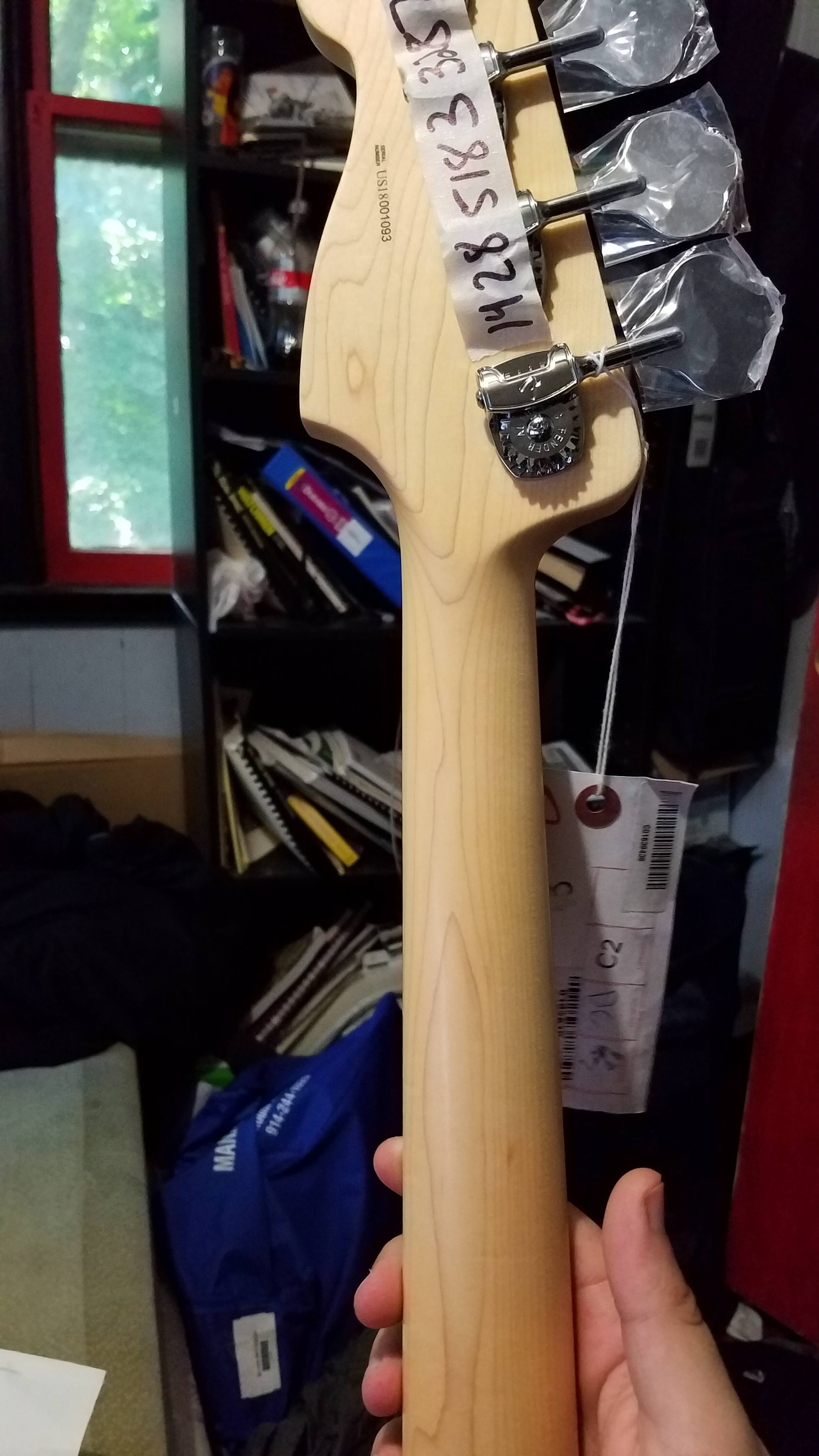
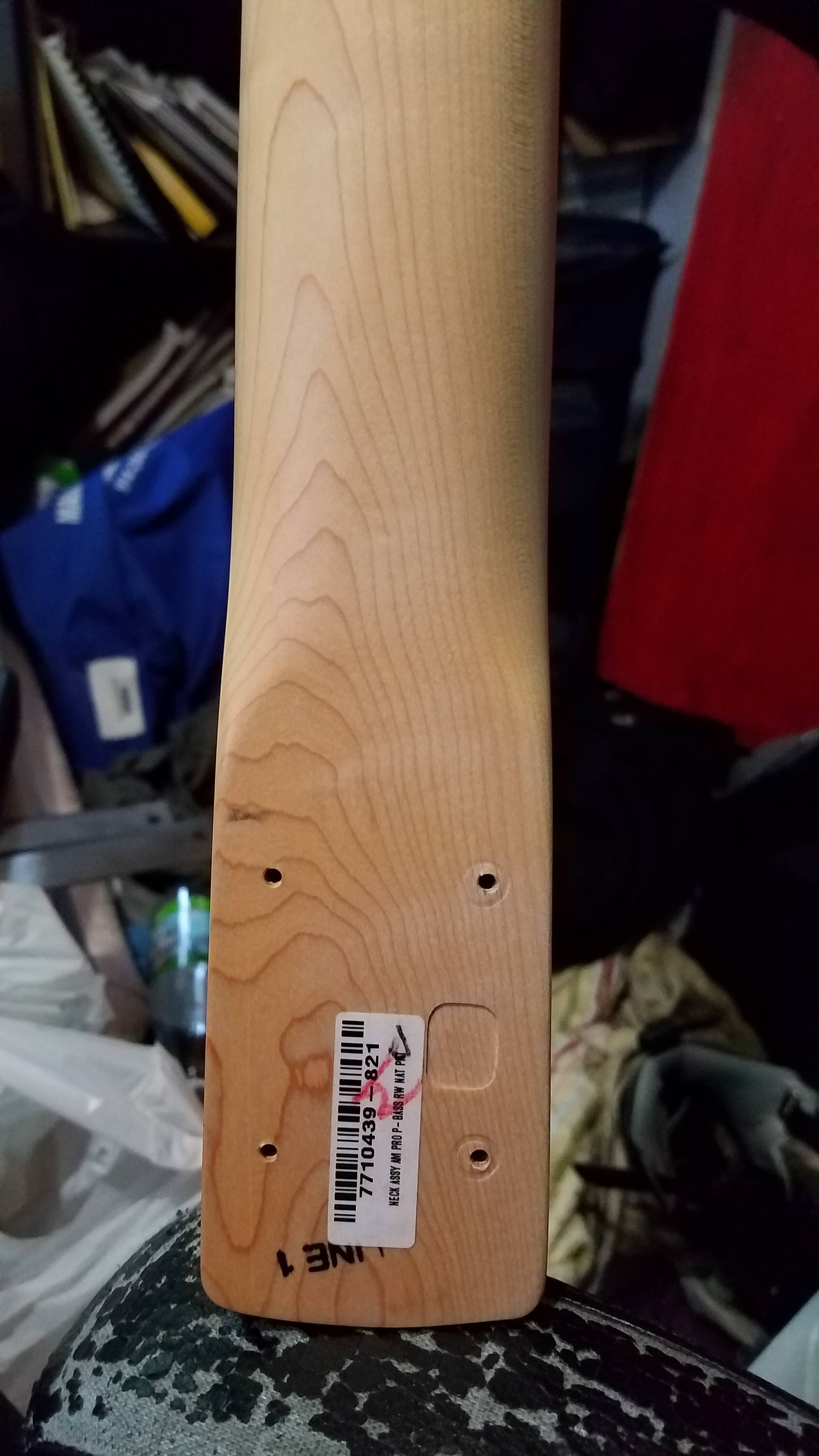
Would this replacement neck be prone to twist?

I ordered an American Professional P bass neck. Maybe it's just me, but it seems like these are factory seconds that are sold as replacement necks. Took forever to find a decent cut of rosewood.

Anyway, I noticed that this might have the darkest, wackiest grain pattern on the maple. Half the neck is nice and tight/straight. The other half looks like a pretty lousy cut.

The aesthetics bug me, but I can live with it if I'm assured that this would be a stable neck.

Is this kind of grain prone to problems with twist/warp? I'm really good about regulating temp. and humidity.

Any thoughts?
o4t66Vq.jpg


IwBBWg3.jpg


5EPe6ZB.jpg
 
Based on my limited experience it looks perfectly fine and I would be surprised if it would give you any issues. I have a real nice high end bass that has a neck looking exactly like that, as if it's in between flatsawn and quartersawn. I attached a picture. Looking at the grain at the heel of the neck may also give you some information. I'd love to learn if I'm incorrect :)
 

Attachments

  • 20180711_151916.jpg
    20180711_151916.jpg
    1.2 MB · Views: 21
  • 20180711_151859.jpg
    20180711_151859.jpg
    731.3 KB · Views: 28
Personally I like how it looks.

I wouldn't worry too much about it warping because of that grain. There are millions of Fenders out there with flatsawn necks that have stayed straight. If a piece of wood is going to warp, it's likely going to do so regardless of how it's sawn (flat, quarter, rift, etc.) Some boards are going to refuse to stay straight no matter what, and there's pretty much no way to tell visually. Conversely, some boards will never warp and it's equally impossible to confirm this visually. Yes, quartersawn wood is more stable than flatsawn, but the difference isn't as great as many are led to believe.
 
The graphite rods in that neck should help minimize the twisting, if the neck tries to do that.

The best thing you can do to avoid twisting is torrefied (roasted) wood, as it relieves the stresses in the wood that cause twisting. I have Warmoth roasted necks in most of my basses, and they're...rock solid.
 
When you consider how many flatsawn necks there are out there doing just fine after all these years, you can reasonably reckon that it's not the sawing that is the source of warping, bowing, twisting etc in necks. So it should be just fine with proper care and storage, unless you have the bad luck to get a wonky board, which can move regardless of how it is sawn. If you're really concerned about neck stability, torrefied (which is baked or "pre-aged in an oven") necks are the way to go, or laminated necks. There's probably some modern impregnation method which creates dead stable wood boards, too, but I don't have any experience with such materials and imagine that they are very heavy as well as expensive.
 
Thanks for the replies, everyone! Now on to the next issue which is, the frets are rocking on my fret rocker quite a bit, which is a bummer for a new neck. I'm going to test it under tension though. A bare neck often has a bit of a backbow so I'm hoping that's why the rocker's reading is like this.
 
Thanks for the replies, everyone! Now on to the next issue which is, the frets are rocking on my fret rocker quite a bit, which is a bummer for a new neck. I'm going to test it under tension though. A bare neck often has a bit of a backbow so I'm hoping that's why the rocker's reading is like this.

For the fret rocker to tell you anything meaningful, you’ll need to straighten the neck first. You will need a straightedge to verify this.
 
I have an 18 inch stewmac straight edge and feeler gauge. it's definitely backbowed a bit so i'll wait until I have it under tension.

I would recommend that you adjust the truss rod to make the neck as straight as possible when not under tension to verify that the frets are level. You will generally have a bit of relief in the neck when under tension.
 
I would recommend that you adjust the truss rod to make the neck as straight as possible when not under tension to verify that the frets are level. You will generally have a bit of relief in the neck when under tension.
This is the correct way, the only way to get frets level is with a straight neck, anything else is guesswork
 
“The aesthetics bug me”

What?! That thing looks fantastic. Perhaps you’d be happier with the soft, washed-out maple they use on Korean and Indonesian guitars. There’s no pleasing some people.

All the time folks want to know what they get for their MIA Fender money. A chunk of maple like that.
 
  • Like
Reactions: Hounddog409
Maybe I'm superstitious, or overly cautious. But on a neck that hasn't been under tension, I wouldn't mess with the frets until it had been strung up and under tension for a few days. Let it settle into it's playing shape
 
Maybe I'm superstitious, or overly cautious. But on a neck that hasn't been under tension, I wouldn't mess with the frets until it had been strung up and under tension for a few days. Let it settle into it's playing shape

I understand your point, but this is the way it done. Putting the neck under tension first doesn’t really accomplish anything aside from testing your neck joint... and to be sure that the neck doesn’t snap like a dry twig. :roflmao:
 
It will also show if you have any twist in the neck.

You can determine twist in a neck far before it installed, and before the fretboard is installed. I use winding sticks to check for twist. Once the neck is under tension it is really too late to take any meaningful corrective action. Discovering that your neck is twisted after putting it under tension is a worst case scenario.
 
You can determine twist in a neck far before it installed, and before the fretboard is installed. I use winding sticks to check for twist. Once the neck is under tension it is really too late to take any meaningful corrective action. Discovering that your neck is twisted after putting it under tension is a worst case scenario.
That's not my point. It's that a neck might develop a twist when it goes under tension. When that does happen, it's not usually terrible, unless you want really low action. Isn't that worth knowing, while the neck can still be returned?