• TalkBass has been independent since 1998. Add your voice.
    Create a free account to reply to discussions, view embedded media, and browse with fewer display ads.
    Join freeLog in
    Want zero display ads or expanded classifieds tools? Compare plans.

Zero Fret string position/holder material

Greetings!

I'm looking for a bit of feedback about cost conscious Zero fret string position/holder material. I've used dyed black bone, but didn't need to be bone, Tusq (the synthetic kind) as well as black walnut.

Notice how I called them position/holders? This thread isn't to debate about nut tone, but just good manageable material choices for string positioning when having a Zero fret.

For me color plays into it as well as cost. The manufactured synthetic tusq hasn't been consistent lately (finding divots while filing down) and $10 or more per unit is just not scalable.

Aluminum is on the table and of course sheets of synthetic material would work.

Different wood species like Ebony are a bit pricey.

Thanks in advance for any of your insights, suggestions :)

~ Adam
 
Thanks for the great ideas @dwizum, @Beej,@2groggy!

In the cases where I had a maple fb and binding I continued with the binding color up to the nut/holder.
If walnut, put walnut there.

If no binding I've used this synthetic Tusq. I guess it would look as good with the same maple the same tint as the FB. But birdseye maple can get holeish which adds steps. Bear with me as I think out loud :)
 
  • Like
Reactions: Beej
Florida - so, thinking somewhat locally, coconut shell (laminated if need be, but from the right section of shell might not need to) - stuff looks good polished up. Sort of an exotic wood you can only get in small pieces.
 
Florida - so, thinking somewhat locally, coconut shell (laminated if need be, but from the right section of shell might not need to) - stuff looks good polished up. Sort of an exotic wood you can only get in small pieces.

Interesting idea! I can imagine coconut shells can be had a plenty around here (unless there's some other demand)…and thinking it could serve purposes beyond this as well.
 
  • Like
Reactions: T_Bone_TL and Beej
I have a couple of upcoming builds where I am going to use the fretboard itself extended enough beyond the zero fret to act as it's own guide. I have never done this before so will see if it actually works in real life, but the trigonometry says it will.

Hope it all works out :)

I'm thinking that when making the fretboard blank the next time i'll save a decent amount from the heel for insurance…
 
  • Like
Reactions: Jeff Siddall
I have a couple of upcoming builds where I am going to use the fretboard itself extended enough beyond the zero fret to act as it's own guide. I have never done this before so will see if it actually works in real life, but the trigonometry says it will.
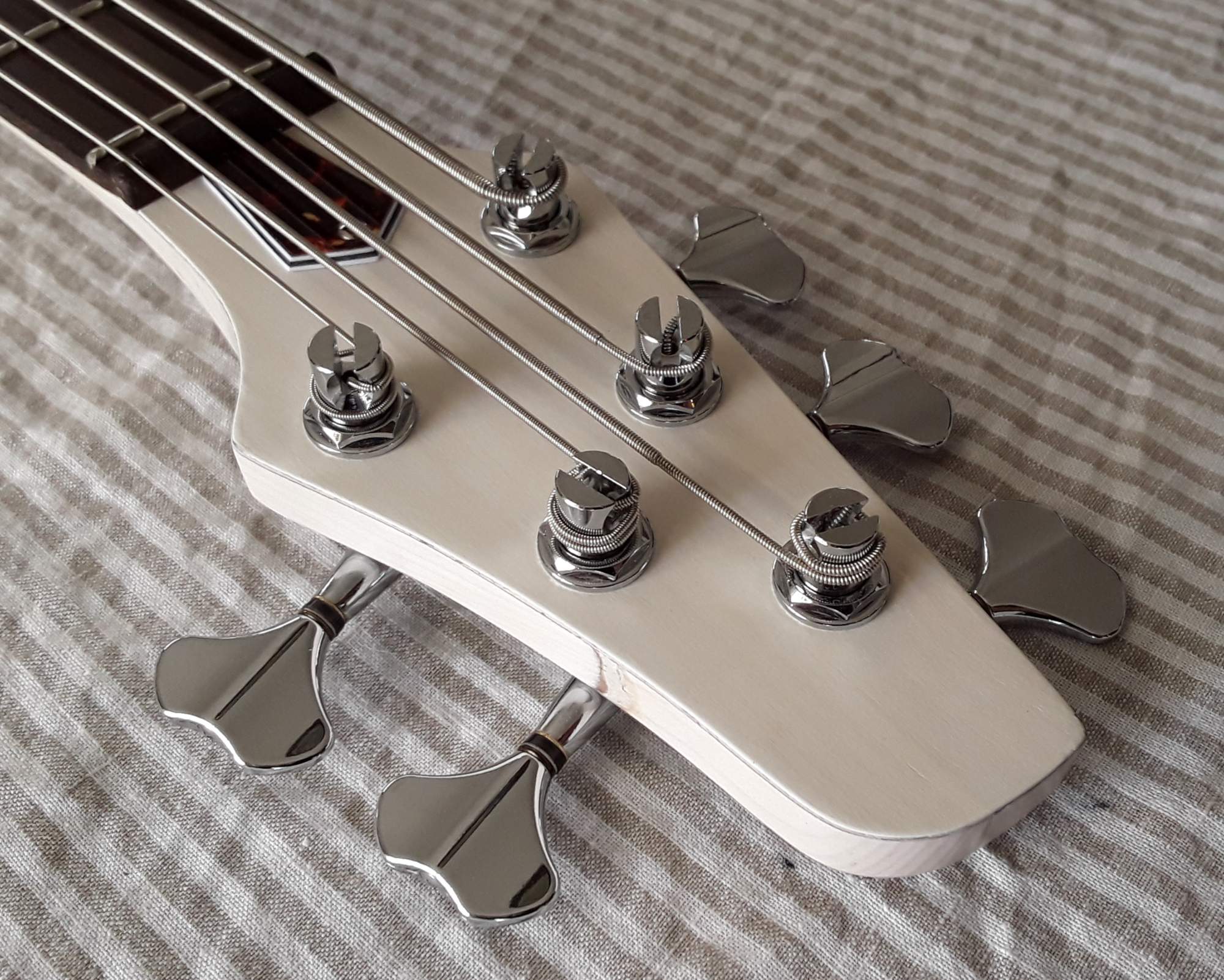
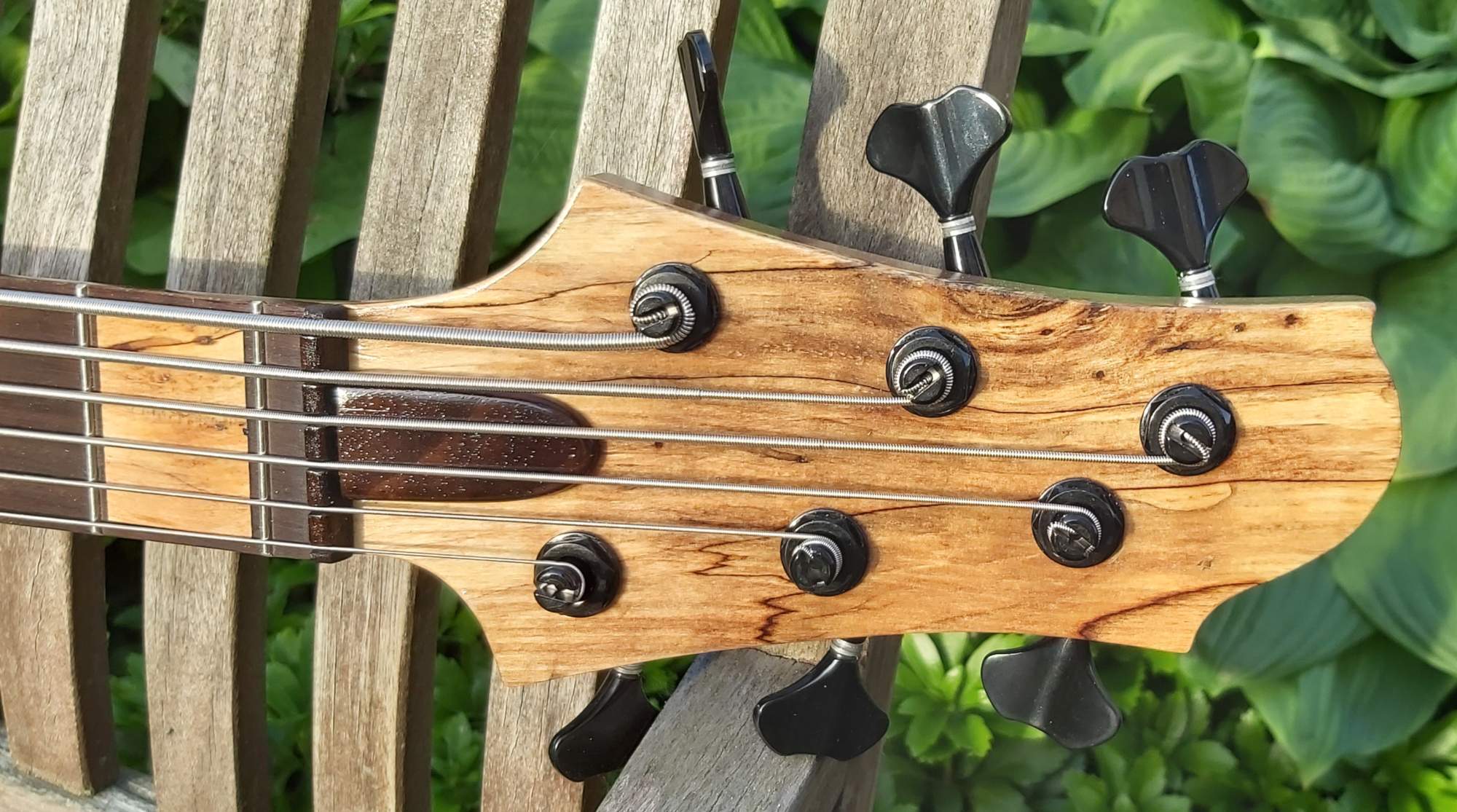
I'm trying this currently. Should have test results within 2 weeks.
KIMG2746.JPG

KIMG2745.JPG
 
My preference is simply to use bone for string guide material on zero fret instruments. The economics, workability, and looks all make sense to me. Many of the other options we might use to shortcut the process of fitting a bone string guide end up looking like a botched attempt at taking an easier route. (I've done it, so I speak from practical experience.)

It's also easier to sand the board if there's not a level change beyond the zero fret slot.
 
It's also easier to sand the board if there's not a level change beyond the zero fret slot.
Yep. This was a concern with what I did. Luckily it's a flat board and a one-off build, but I'll still have a hard time sanding near the guide.
Also, it makes repairs a little more complicated, should something chip or snap off. My plan is to fortify the slot area with CA glue. But, I'm not recommending any of this. I just saw Jeff mention wanting to do it and got excited that I'm not alone in goofy idea land.
 
  • Like
Reactions: Beej
Richlite/Rocklite/Ebanol/Phenolic resin... whatever you want to call it. Cutoffs from a synthetic board blank have worked for me in the past.
You could also buy a [Invalid or Expired Link Removed] and cut it into enough blanks to make them each super cheap (assuming you need a lot).

But I've used aluminum before. Status used brass when they had 0 fret models.
 
  • Like
Reactions: chinjazz
I'm trying this currently. Should have test results within 2 weeks.
View attachment 4611986
View attachment 4611987

That looks good and I am curious how the finished guide looks.

However, to be clear, I am not making a raised part on the board to guide the strings. Instead I will use the intersection of the strings at their break angle (typically 10 degrees for me) and the radiused board. IIRC this will be the better part of an inch beyond the zero fret.

Ex: the fret slot you see on the left side of this image is the zero fret. The bit of board to the left of that is to make the string guides:
20220219_202848.jpg
 
Last edited:
That looks good and I am curious how the finished guide looks.

However, to be clear, I am not making a raised part on the board to guide the strings. Instead I will use the intersection of the strings at their break angle (typically 10 degrees for me) and the radiused board. IIRC this will be the better part of an inch beyond the zero fret.
Got it. That's essentially what I'm doing. How much I leave raised up will be determined by how the strings end up wanting to lay and how much material they need to stay in place. Mine may very well end up being filed down to almost nothing.