• TalkBass has been independent since 1998. Add your voice.
    Create a free account to reply to discussions, view embedded media, and browse with fewer display ads.
    Join freeLog in
    Want zero display ads or expanded classifieds tools? Compare plans.

Neck dive solution?

Yeah I was being tongue in cheek there. Personally, certain models I won’t own because of ergonomics. T Birds are one example. Not that they aren’t cool. But there are plenty of other basses to keep me happy.
For sure - I've played basses that were heavy and/or really neck-dove (both deal breakers) but liked the way they look and sound.
 
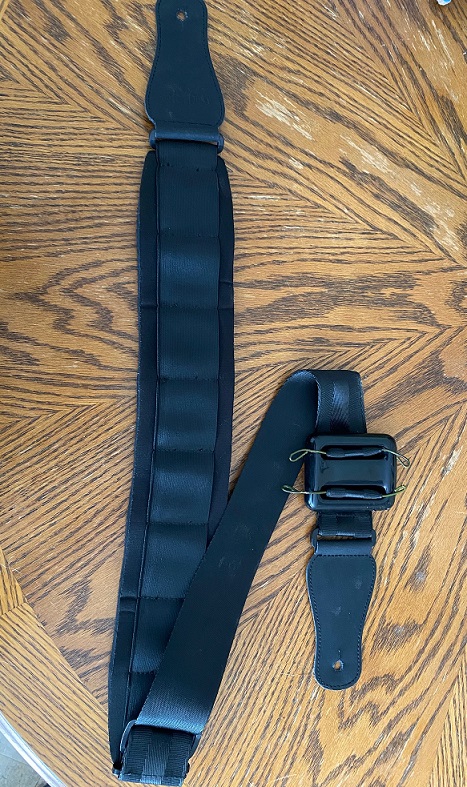
Here's a solution to neck dive.
59FC3773-AE72-4AE6-8BB0-D445D39794D3.jpeg
 
Last edited:
Nice!

Here’s what the Soviets came up with:

View attachment 7150952
View attachment 7150953

Doubles as antenna for reporting to Moscow.
Did they make basses in the shape of ALL the Eastern Bloc nations? This looks like the Estonia model.
Here's a page dedicated to the Tonika, the first Soviet mass-produced electric guitar, originally made in Leningrad, then in Ekaterinburg, Rostov-on-Don and Vladikavkaz in North Ossetia:
Link Removed
and one about the bass (same distinction)
Link Removed
 
  • Like
Reactions: Matt O
No-one ever tried to just reposition the REAR strap button (not the horn one) a little higher on the body? Like an offset straplock ?
I didn't had the need to do so but simple physics suggests it should work just fine.
🤔
@stringthrough's solution in post #43 above operates on the same principle.
You're of course right. The rear button is positioned where it usually is because that's where it pretty much has to be...on acoustic guitars, where the tail block is the only area solid enough to support it.
On solid bodies there is zero reason to consider that location as set in stone. Moving the button closer to the center of mass of the instrument, leaving a slice of the body, and its weight, to the right (if northpaw) of the button, can cure the worst neckdiveyness in a much more elegant way than adding weight or front button extenders can. (Lightweight tuning machines are just as elegant, but more expensive and ineffective for serious cases.)
 
I used something like this. Drill two holes to mount to back of bass then another hole to attach a strap lock. Paint it flat black. Similar to a few others earlier in this thread. There used to be extenders available for the Steinberger bases as well.

 
As an Amazon Associate, TalkBass may receive commissions from qualifying purchases made via links on this site.
@stringthrough's solution in post #43 above operates on the same principle.
You're of course right. The rear button is positioned where it usually is because that's where it pretty much has to be...on acoustic guitars, where the tail block is the only area solid enough to support it.
On solid bodies there is zero reason to consider that location as set in stone. Moving the button closer to the center of mass of the instrument, leaving a slice of the body, and its weight, to the right (if northpaw) of the button, can cure the worst neckdiveyness in a much more elegant way than adding weight or front button extenders can. (Lightweight tuning machines are just as elegant, but more expensive and ineffective for serious cases.)
On my custom basses, I always locate the lower strap peg off center toward the E side. If positioned correctly - a 'contoured body' bass can stand upright on its own with a Dunlop Strap-Lok system & strap engaged.

1739502705406.jpeg