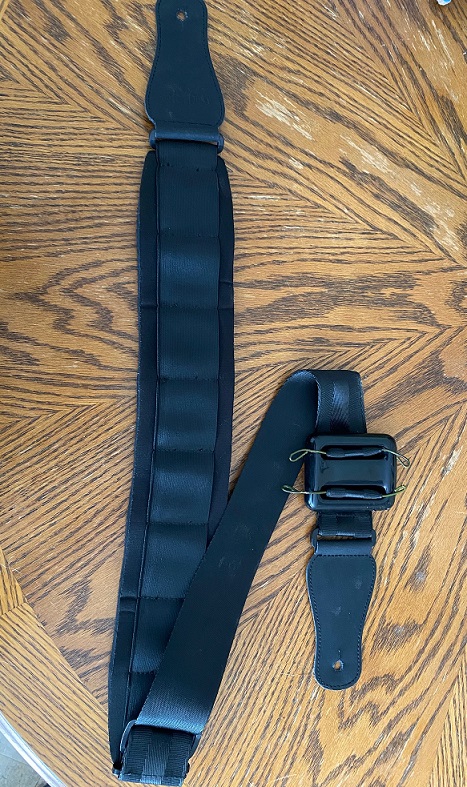
@stringthrough's solution in
post #43 above operates on the same principle.
You're of course right. The rear button is positioned where it usually is because that's where it pretty much has to be...on acoustic guitars, where the tail block is the only area solid enough to support it.
On solid bodies there is zero reason to consider that location as set in stone. Moving the button closer to the center of mass of the instrument, leaving a slice of the body, and its weight, to the right (if northpaw) of the button, can cure the worst neckdiveyness in a much more elegant way than adding weight or front button extenders can. (Lightweight tuning machines are just as elegant, but more expensive and ineffective for serious cases.)