
Enjoy the benefits of a premium membership!
Upgrade Account
-
TalkBass has been independent since 1998. Add your voice.
Create a free account to reply to discussions, view embedded media, and browse with fewer display ads.
Join free Log in
Want zero display ads or expanded classifieds tools? Compare plans.
You are using an out of date browser. It may not display this or other websites correctly.
You should upgrade or use an alternative browser.
You should upgrade or use an alternative browser.
12th fret neck attached strap button?
- Thread starter InternetAlias
- Start date
More options
Who Replied?


 !
!
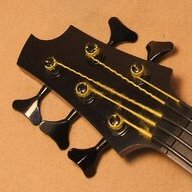
Buddy it's your bass and I get why you did that but please know there's a very good chance it'll eventually cause catastrophic damage. There's A LOT of tension on that bolt where it goes in to the wood because the tube acts as a pry bar against the face of the horn. It may fail for the same reason long strap lock buttons pull their screws out... Leverage. Shear isn't so bad but tension is and you've got tension here.Strong steel bolt inside aluminum tube.View attachment 3993396
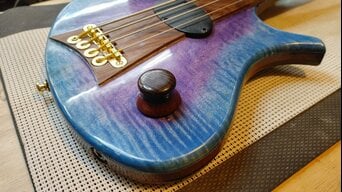
I wanted this Renaissance to hang close to vertical. Rick Turner uses a shorter extension he calls a "Dingus", and that one inspired this aluminum extension.
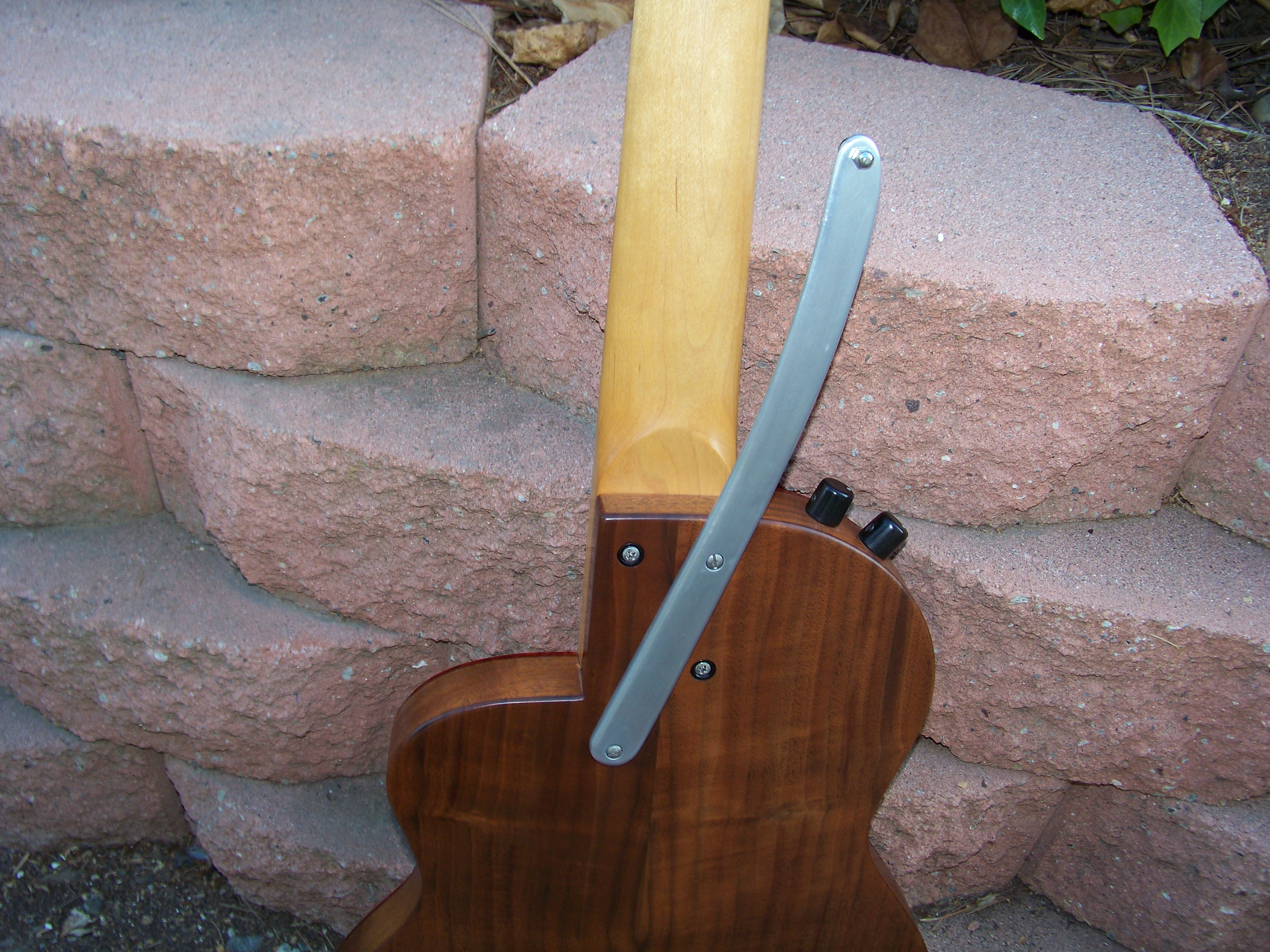
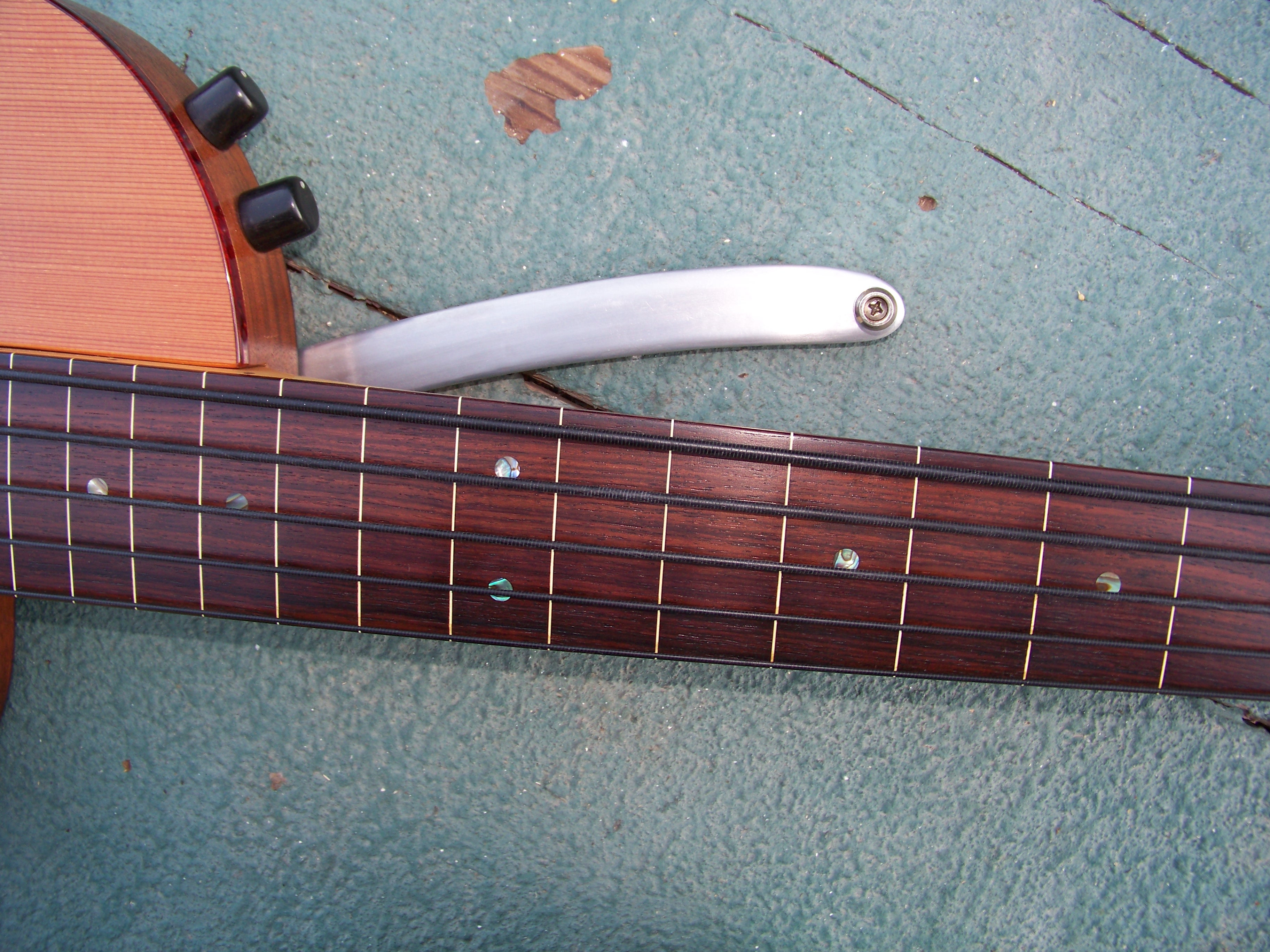
A little north of the 10th fret. It hangs close to vertical, and the extension doesn't get in the way of anything. Just some aluminum bar stock, and a couple of longer neck bolts. I hope to someday meet someone who can teach me to work aluminum, because I went through a mess of blades cutting it out!
A little north of the 10th fret. It hangs close to vertical, and the extension doesn't get in the way of anything. Just some aluminum bar stock, and a couple of longer neck bolts. I hope to someday meet someone who can teach me to work aluminum, because I went through a mess of blades cutting it out!

I hope to someday meet someone who can teach me to work aluminum, because I went through a mess of blades cutting it out!
What sorts of blades on what tool/saw? Aluminum is easy to work, on the whole - you do have to clean file teeth regularly (and really should get the curved-tooth files made specifically for soft metals to work it with files, but it cuts fine with files intended for steel, it just likes to fill their teeth up something awful.) You can saw the stuff with a coping saw "intended" for wood quite easily in my experience. You can darn near whittle it with a utility knife if you want to, but I would not recommend that.
Thanks for the help, T-Bone!
To profile the bar, I was using a DeWalt jig saw to cut 1/4" thick 6061, and it ate up pretty much every blade I had on hand! A few were low-end Harbor Freight blades, but a few were decent quality bimetal "metal" cutting blades from one of the consumer-grade suppliers. Packaged on a gray card. The teeth were clogging almost immediately on the cheap blades, and pretty quickly on the ones I thought would work better! Clogged smooth, like there were no teeth in there, the business side was as smooth as the back!
Once I got it profiled, I finished it with silicon carbide belts on a 1x30 belt sander, and that was not a problem, but it seemed crazy to profile a 2" wide bar with the sander.
I am getting ready to cut some tilt-back legs for a combo, so I ordered a variety of metal cutting blades from McMaster-Carr. I have no experience with aluminum, so this could be another case of operator error!
To profile the bar, I was using a DeWalt jig saw to cut 1/4" thick 6061, and it ate up pretty much every blade I had on hand! A few were low-end Harbor Freight blades, but a few were decent quality bimetal "metal" cutting blades from one of the consumer-grade suppliers. Packaged on a gray card. The teeth were clogging almost immediately on the cheap blades, and pretty quickly on the ones I thought would work better! Clogged smooth, like there were no teeth in there, the business side was as smooth as the back!
Once I got it profiled, I finished it with silicon carbide belts on a 1x30 belt sander, and that was not a problem, but it seemed crazy to profile a 2" wide bar with the sander.
I am getting ready to cut some tilt-back legs for a combo, so I ordered a variety of metal cutting blades from McMaster-Carr. I have no experience with aluminum, so this could be another case of operator error!

Thanks for the help, T-Bone!
To profile the bar, I was using a DeWalt jig saw to cut 1/4" thick 6061, and it ate up pretty much every blade I had on hand! A few were low-end Harbor Freight blades, but a few were decent quality bimetal "metal" cutting blades from one of the consumer-grade suppliers. Packaged on a gray card. The teeth were clogging almost immediately on the cheap blades, and pretty quickly on the ones I thought would work better! Clogged smooth, like there were no teeth in there, the business side was as smooth as the back!
Once I got it profiled, I finished it with silicon carbide belts on a 1x30 belt sander, and that was not a problem, but it seemed crazy to profile a 2" wide bar with the sander.
I am getting ready to cut some tilt-back legs for a combo, so I ordered a variety of metal cutting blades from McMaster-Carr. I have no experience with aluminum, so this could be another case of operator error!
Those metalcutting blades are made for cutting steel. For 1/4" 6061 aluminum, use normal wood cutting blades. Honestly, they will work better and not clog up the teeth so quickly. Coarser teeth with more side clearance. Also, if your jig saw is variable speed, go real slow.
If you were cutting 7075 aluminum, then you'd need to use the metalcutting blades.
By the way, those clogged blades aren't ruined, they are just clogged with melted aluminum. If you want to put a few minutes time into them, you can clean them off and they'll be good as new. Spray some WD-40 on them and push a wire brush across the teeth to knock the chunks out.
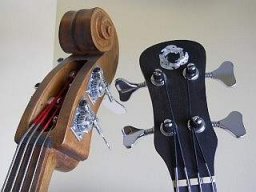
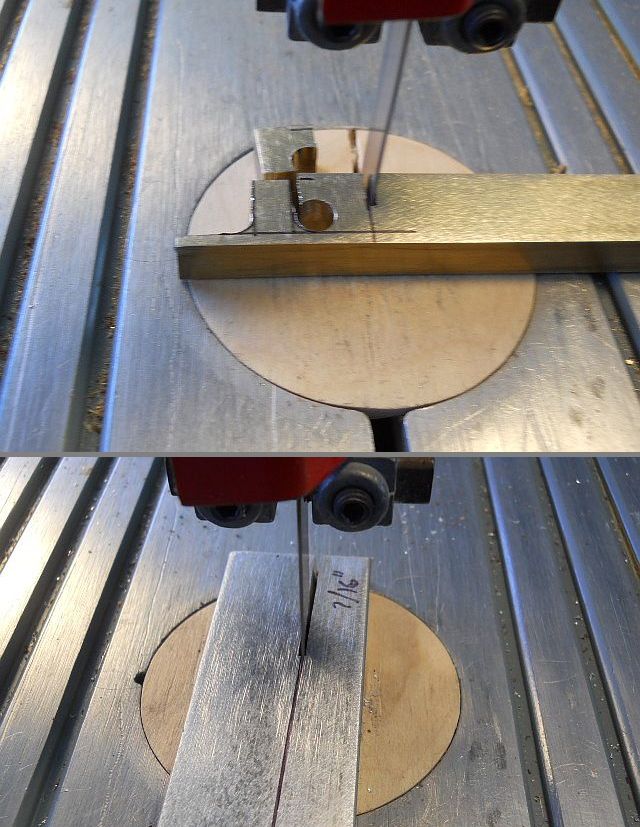
I cut 3/8" thick aluminum bar stock and brass ranging from 1/8" to 3/8" thick fairly often and use my band saw which is fitted with a 1/2" 3 tpi skip tooth blade. It cuts quite easily and leaves a clean edge requiring minimal filing and/or sanding.
After cutting aluminum or brass I do clean the cuttings off the bottom wheel so they don't end up embedded in the tire.
The 1/2" 3 tpi skip tooth blade gets used for everything. I find it's not worth the time or trouble to change blades for a different size. A narrower blade would be nice for tighter curves, but you can adjust your cutting technique to use the wider blade effectively.
Cutting 3/8" brass and 3/8" 2024-T4 aluminum:
After cutting aluminum or brass I do clean the cuttings off the bottom wheel so they don't end up embedded in the tire.
The 1/2" 3 tpi skip tooth blade gets used for everything. I find it's not worth the time or trouble to change blades for a different size. A narrower blade would be nice for tighter curves, but you can adjust your cutting technique to use the wider blade effectively.
Cutting 3/8" brass and 3/8" 2024-T4 aluminum:
Last edited:
I thought the same thing, just didn't really wanna say anything for fear of coming across argumentative. I would certainly suggest using a much longer screw, or maybe even a slightly thicker shank screw, or maybe both.Buddy it's your bass and I get why you did that but please know there's a very good chance it'll eventually cause catastrophic damage. There's A LOT of tension on that bolt where it goes in to the wood because the tube acts as a pry bar against the face of the horn. It may fail for the same reason long strap lock buttons pull their screws out... Leverage. Shear isn't so bad but tension is and you've got tension here.


