• TalkBass has been independent since 1998. Add your voice.
    Create a free account to reply to discussions, view embedded media, and browse with fewer display ads.
    Join freeLog in
    Want zero display ads or expanded classifieds tools? Compare plans.

Double Bass 1938 King Mortone Restoration and veneer replacement

JBarz

On indefinite internet sabbatical
Supporting Member
Mar 6, 2015
1,970
3,274
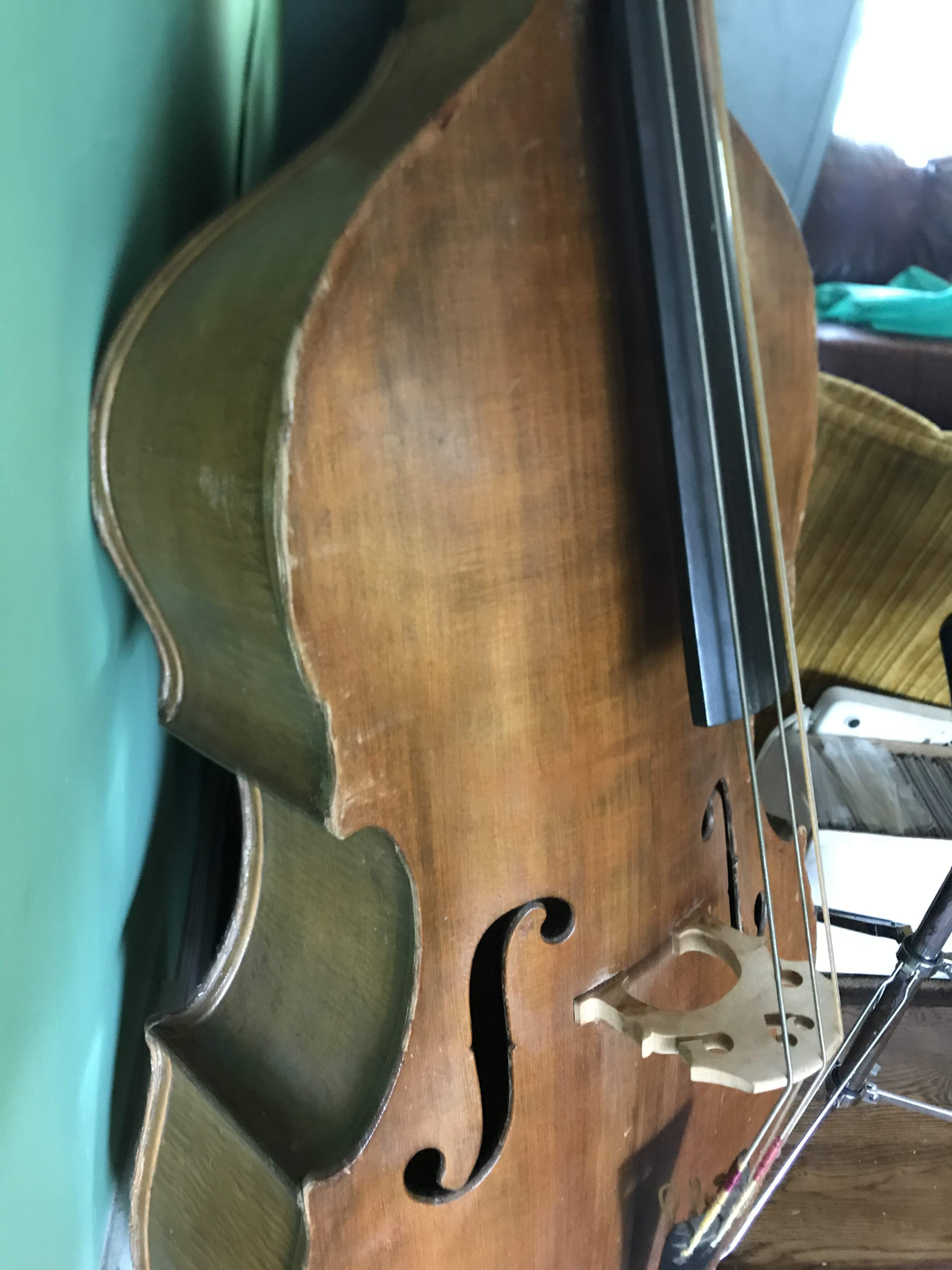
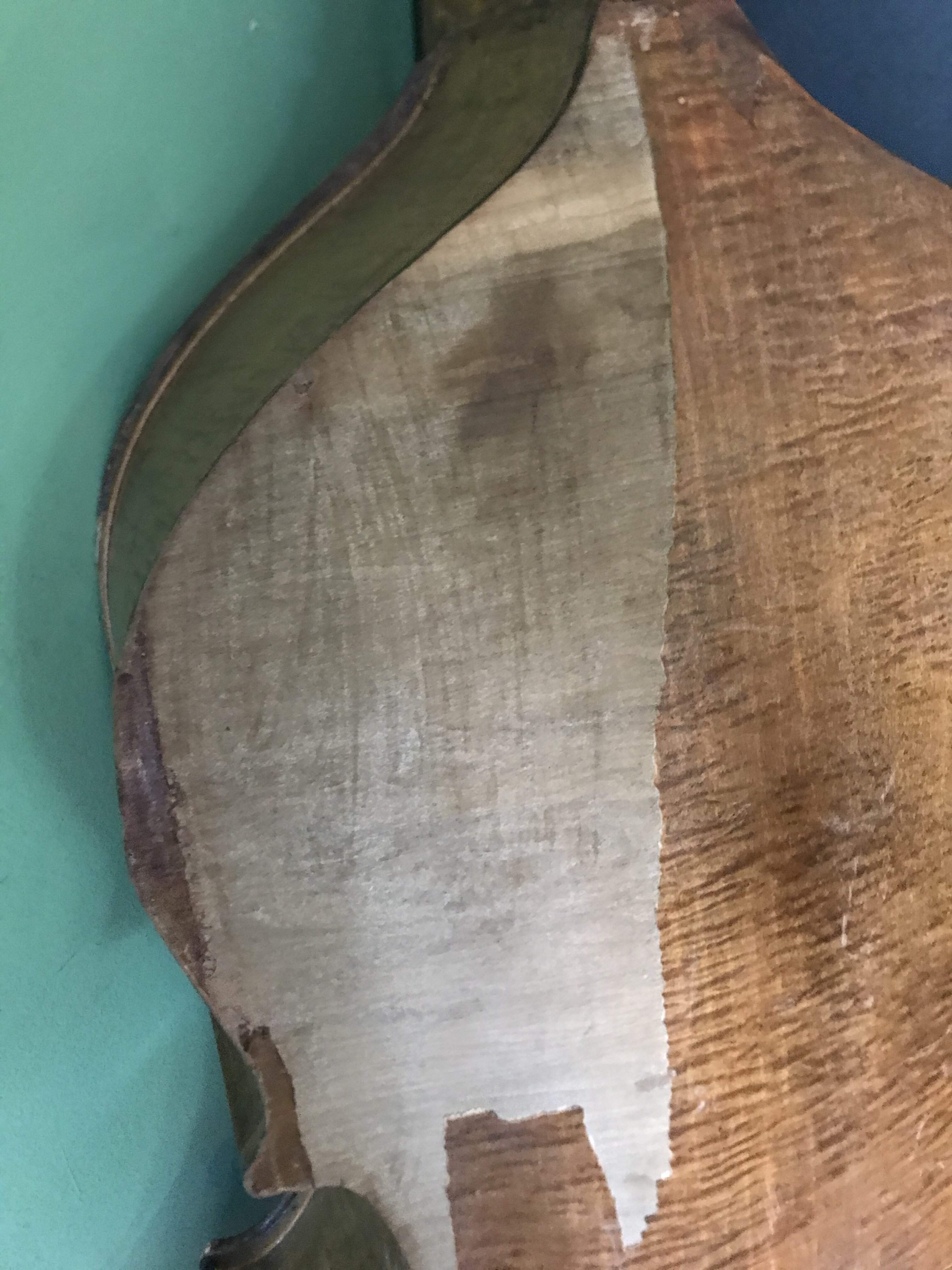
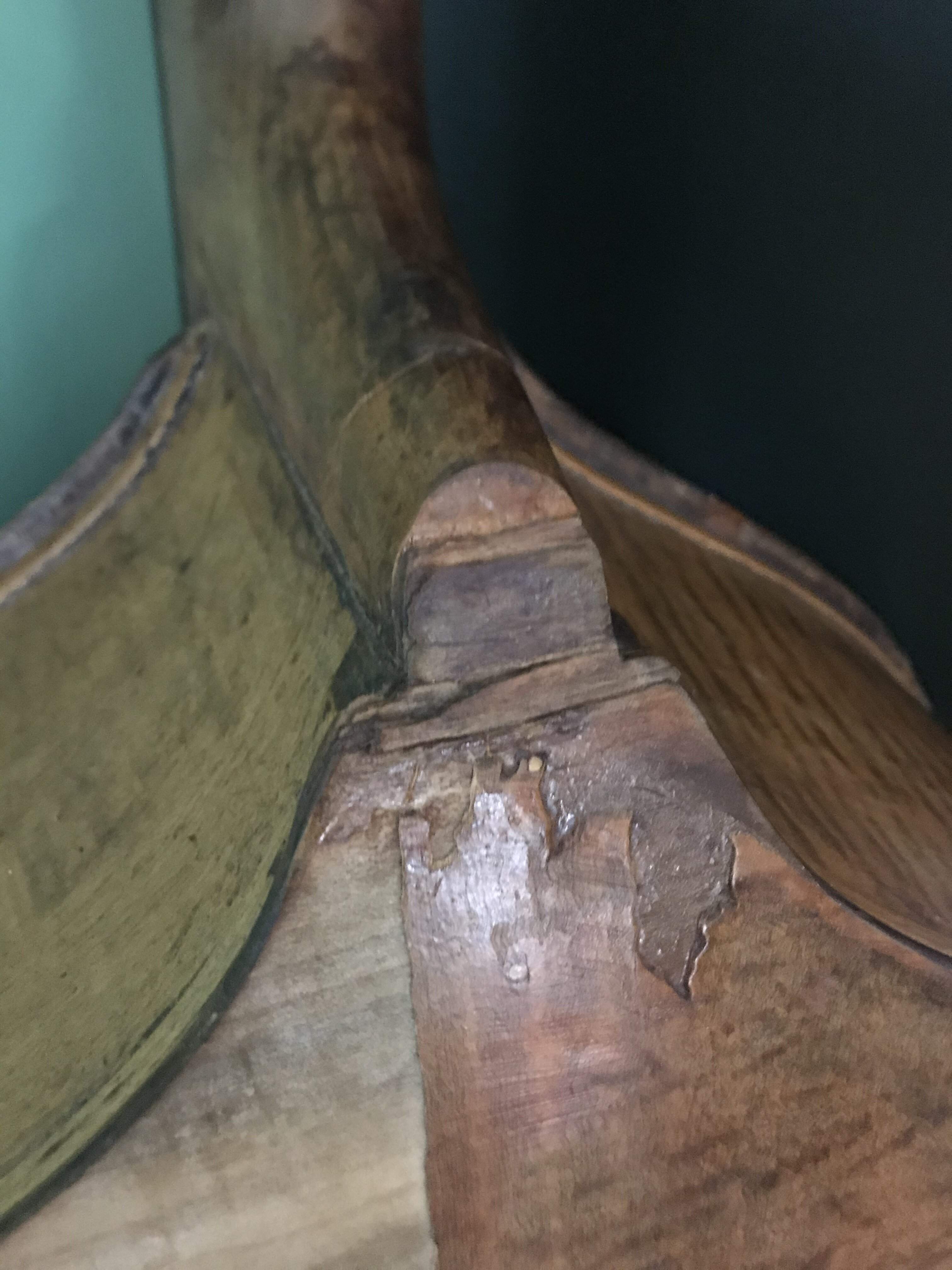
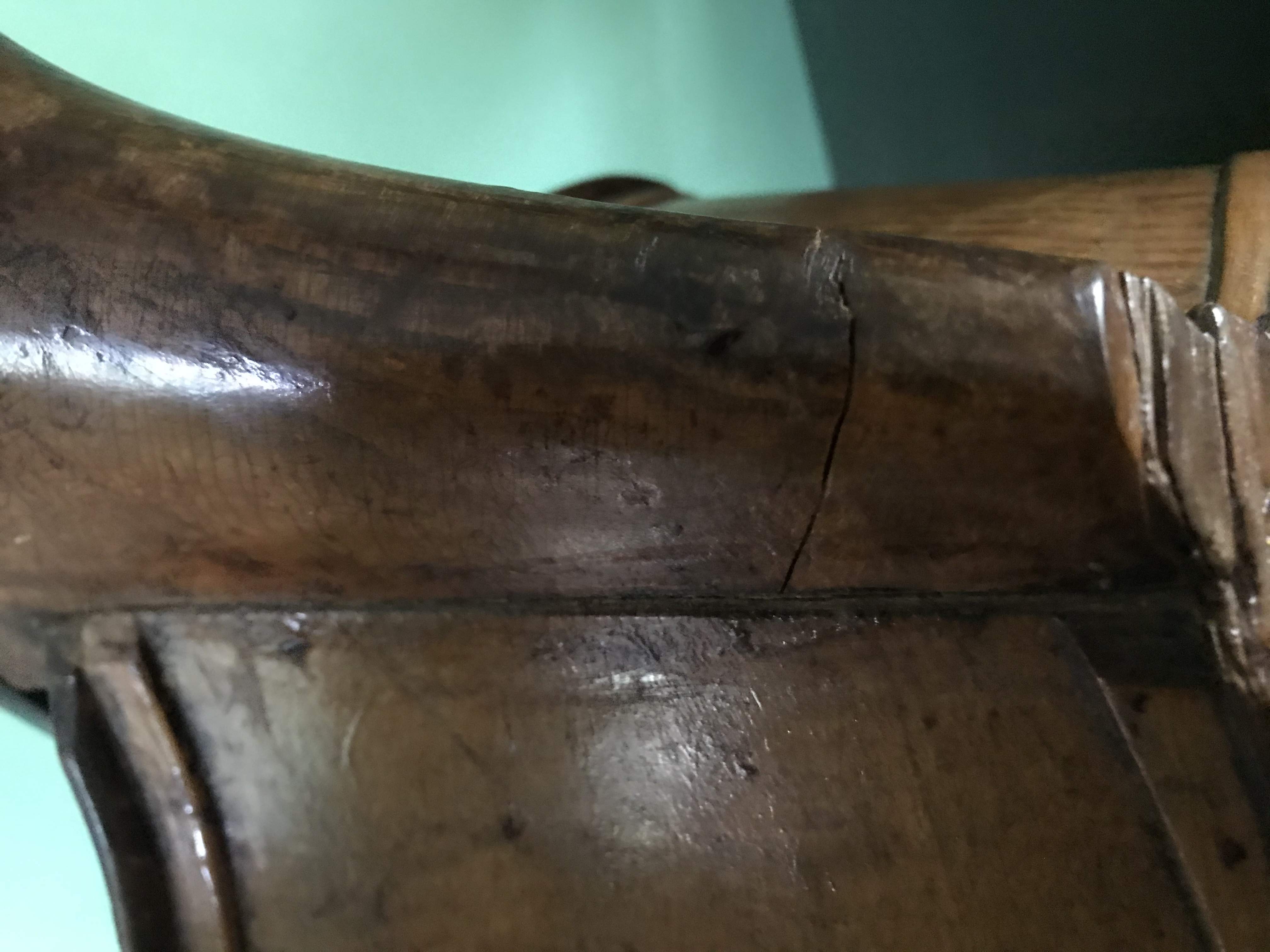
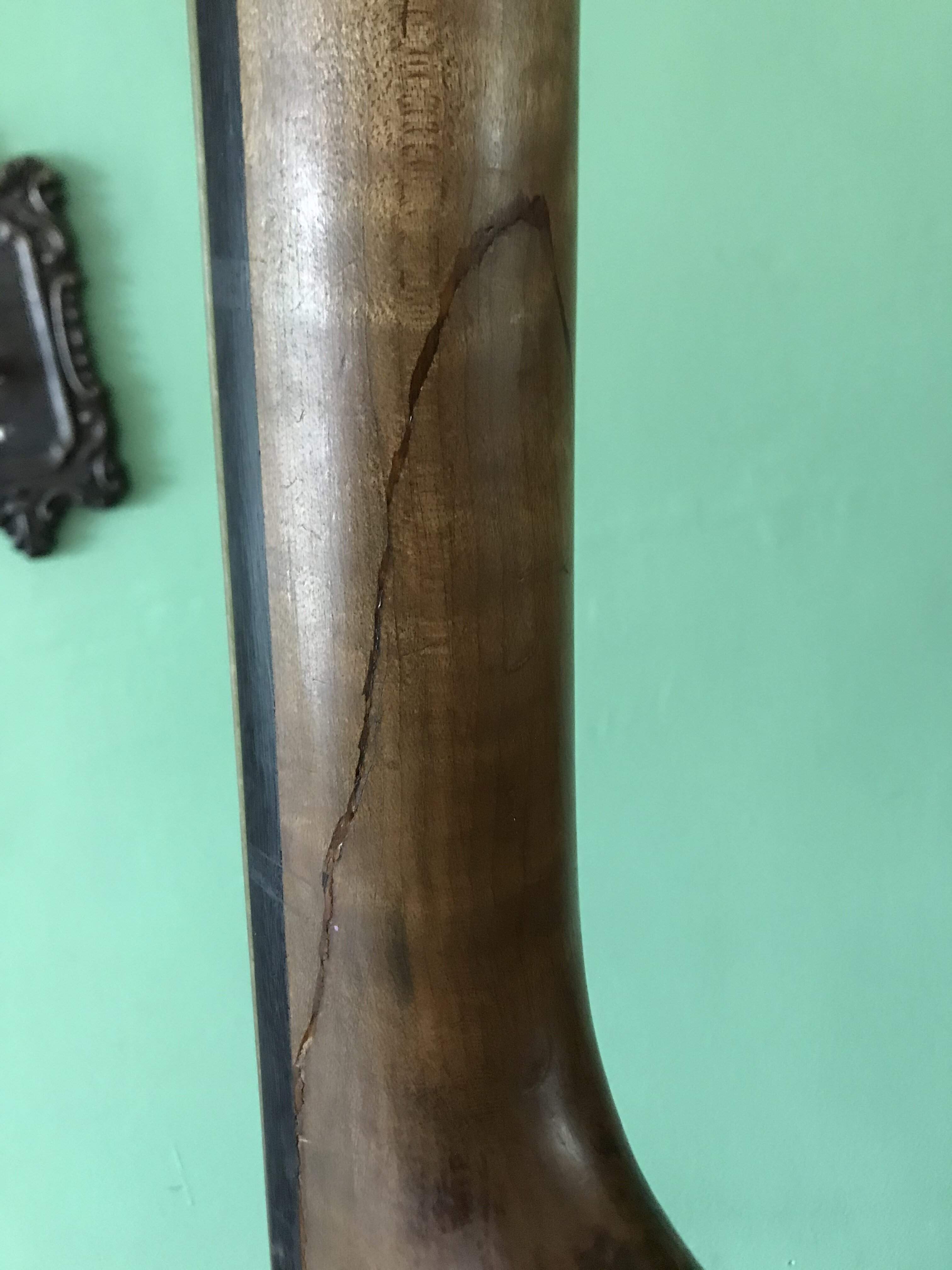
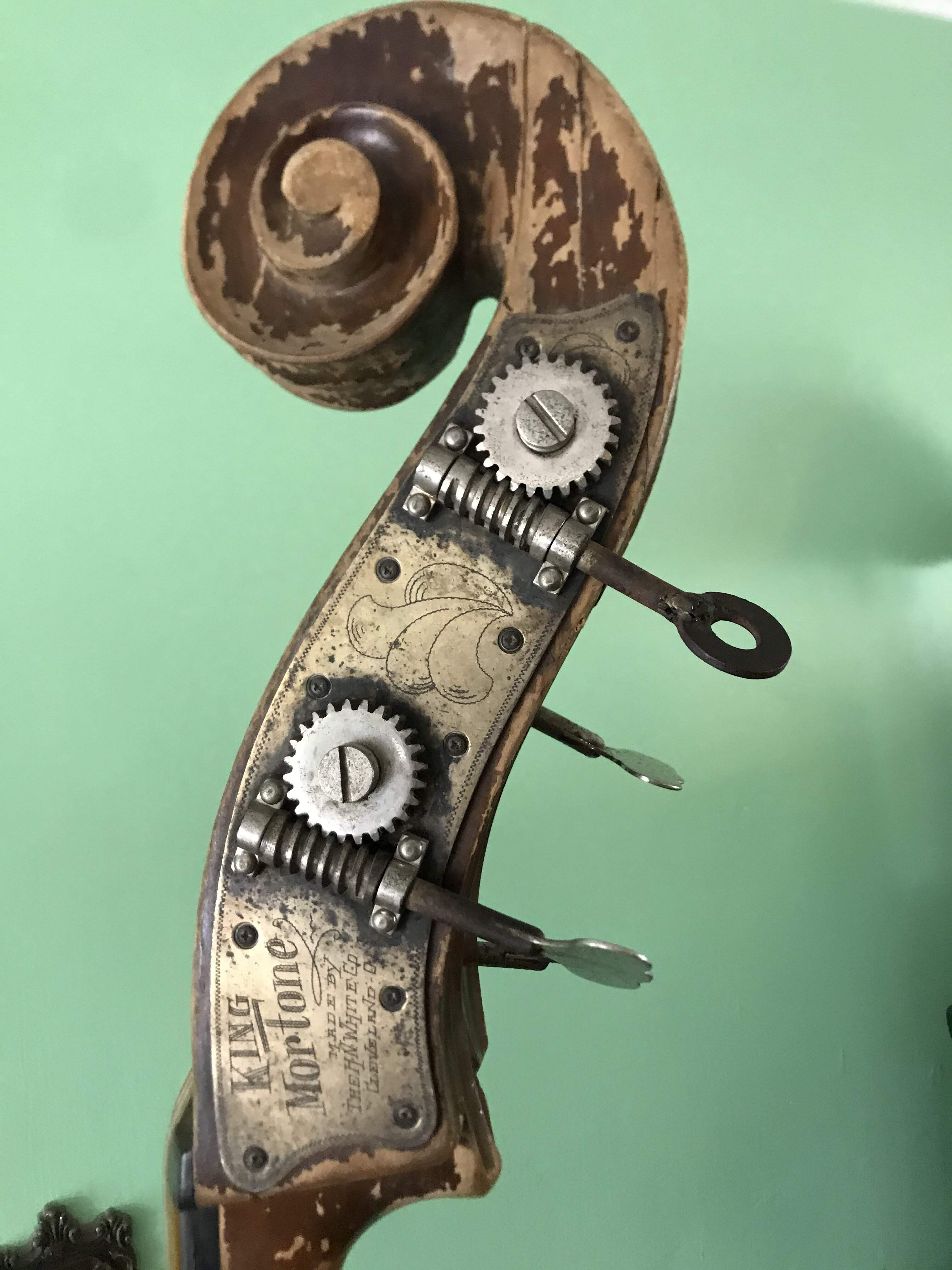
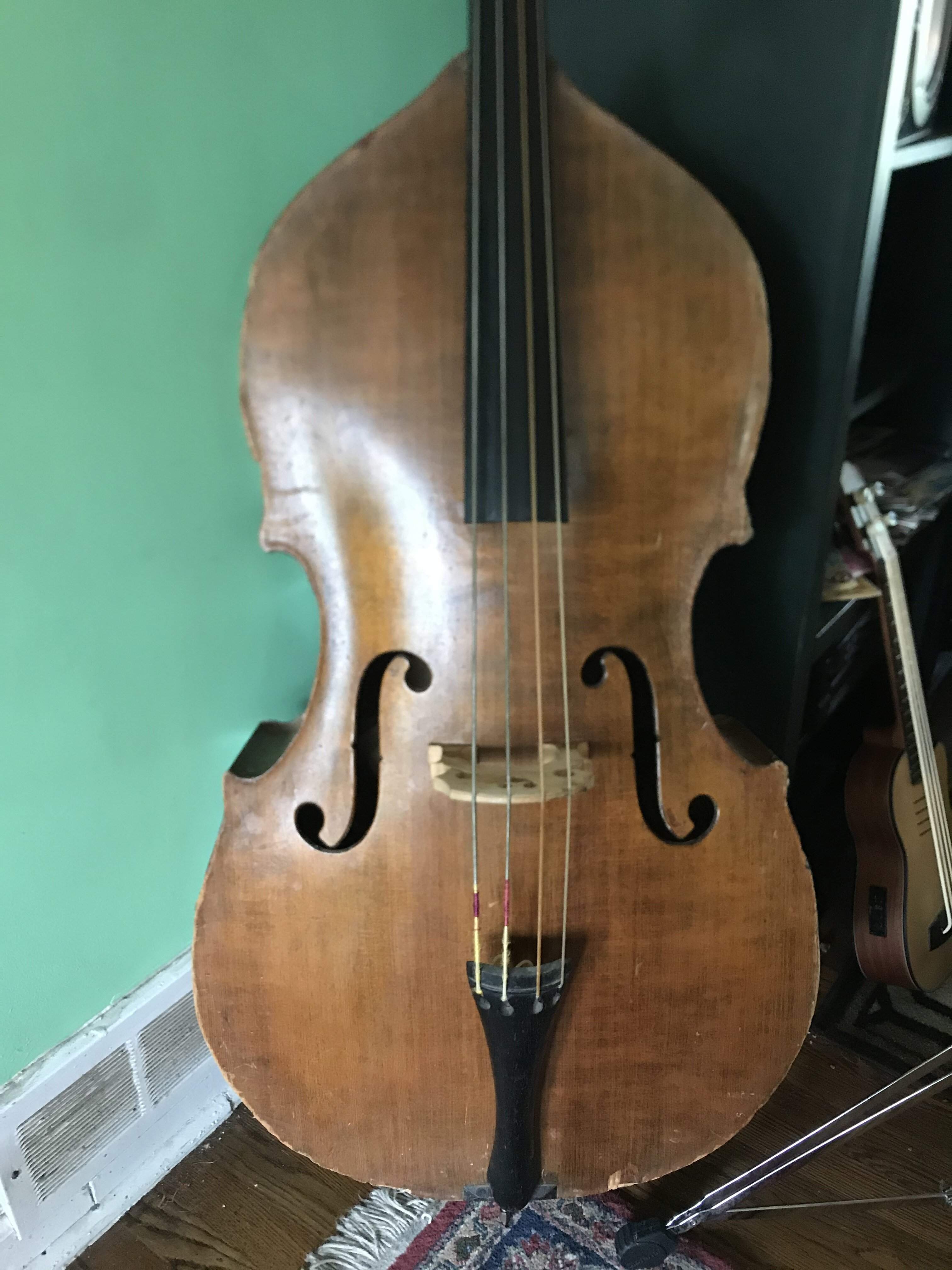
I sent a little intention out to Nature to find a busted up King bass to restore, and lo, She tracked down a guy in Texas who sold me a bunch of basses that had been lost and forgotten in a storage unit for 50 years. The one I am most excited about is this old King Mortone from ‘38, but the veneer on the back is about 1/4 missing and the neck has been repaired really sloppily in several spots. The scroll seems to be holding on miraculously, but one knock and that joker’s gone. Glue and clamp and hope for the best, I guess. Check out the washer someone welded to the D tuner! The good news is, they did cut it down to 42.5 scale with a D neck just like my American Standard, so it feels like home, and it feels surprisingly stable. Also, there’s no delamination happening to the ply, thank goodness, and it came with a bombin’ set of old gut strings w/ wound A/E. It plays right now, but the bridge is sloppy as hell and uneven and the fingerboard could use a good deep cleaning and touch up. I am going to get it playing with what it’s got, but eventually might try my hand at fabricating a new neck. The veneer loss concerns me because it’s only going to get worse unless I stop it. I figure I’ll research furniture veneer restoration, but if Steven or James or any of you other brilliant repair savvy folks are on the line, I’d love to hear your take about the most advisable course of action and am super excited about this project!
C8AE95CF-1A0B-4902-81C5-42B11BE4DD3B.jpeg
82818267-1BC0-4B55-A70D-635E43AA2C5C.jpeg
7A95E1AD-354A-4B97-90A7-F2024B67C4DC.jpeg
91C5ABFF-2918-454C-B0BD-80B203C121AF.jpeg
F998C8B5-7B93-4928-8070-49010CF5B217.jpeg
AD8F3EAE-7070-4D13-9848-EDBEEAC6BA9E.jpeg
B45E00EE-B83B-4217-AC06-0BCBDBB802F6.jpeg
2C9233EC-F41B-4508-8FAC-84099B22FFF0.jpeg
019D2FCF-24DF-4294-88DF-2AAA2B694DA7.jpeg
565B1913-F758-4237-B5EB-81833F221123.jpeg
B95975C1-9E4B-4A9E-B2D7-632E78FD51BF.jpeg
 
Last edited:
Yikes.

It's a shame about the back, that was a really nice veneer. For a resto I'd be looking for a couple big bookmatched pieces of curly maple, just clear off the old one and start fresh. Maybe pop the back off and take it to James.

The neck is pretty clearly a slap-together job, we can hope with the right glue, at least. Lots of dickin' around to do there. It can be fixed, but a new neck is a simpler and more economically feasible choice, I expect, if you want it to be pretty.

No pinstripes = it's been scraped, maybe sanded at least once, so keep an eye on the top veneer thickness.

More than I'd want to take on, f'sho.
 
My guy! Thanks for responding! Yeah it’s going to be an elephant to restore, but I have absolutely no need for this bass other than as a huge project to keep me busy and a lab to learn stuff on - one bite at a time. Bummer about the back, indeed! The layer underneath seems pretty nice - was honestly considering stripping the whole veneer and just sanding and sealing that - but I’m just in the spitballing stage. I won’t have a lull in my schedule to really get into this for a couple months, but I’m dying to try to carve a lion headstock. I used to carve ventriloquist dummies in a past life so I’m not too bad with a chisel. I don’t think I could have justified doing a whole new neck on a king unless it was this jacked up. What is surprising is that with just a little tlc on the fingerboard today, the thing plays pretty dang well. The sound post was at a silly angle/place and the fingerboard was covered in tape, but now it’s starting to speak. I am going to try my best to restore the button botch job too, I’ve got nothing if not patience.
 
Put all of your effort and focus into that neck; it is not long for this life....the rest is just cosmetic. This is a perfect candidate for a removable neck bass & a visit for a few days as a student to learn how to make & install a new neck.

This shows how solid the archings and tops on the old King / American Standards are. Even with that level of abuse, I rarely see them with collapsed arches, yet 50% of old Kays suffer from it. The H.N. White company had the first US patent for the use of a vacuum press and resorcinol glue to make basses in 1934.

If only you knew the right person with the proper giant vacuum / heat press and set of moulds; they can easily fix that back veneer issue and still keep about 60% of the original intact.;)

I don't have any spare parts, but I actually know where there is a brand new, never installed NOS unfinished 1935 blonde King back with that same veneer sitting in a basement a few states away from me. Personally I prefer the original beat up vibe.

Call the shop & we can chat it up a bit. You are only a few hours away....
 
Last edited:
James, thank you and I absolutely will come bring it and several of these other basses to you as soon as I can swing it (sometime this summer probably) - that all sounds ideal!!! Truth be told, I really am as green as they come as a luthier, but super interested and into it (lots of trial and error), so the offer to come tap your wisdom and guidance is invaluable (and exciting!). Thank you thank you!
 
  • Like
Reactions: AGCurry
Golly, you weren't kidding about that neck not having long! I took the strings off to throw them on this other carved bass instead because it was in better shape and closer to finishing. Without tension, the neck of the Mortone immediately started to come loose. I'm going to steam it off all the way sometime this weekend and we'll see what we're left with in terms of a neck block (fingers crossed...). Without a doubt, since the button is so jacked up anyway, this bass is going to Ashville to see Mr. Condino this year at some point to get the full bolt-on-neck conversion treatment. I'm really looking forward to pouring love into this old girl. She's weathered, but still has a lot to say about stuff.
 
EA80DBBE-58FE-4D9C-BBAE-FCB9849F8780.jpeg 1EC21617-E37B-4948-B907-0D341DAD3686.jpeg image.jpg image.jpg image.jpg Whew. I managed to get the neck off, which was more difficult than anticipated. What looked like a dowel straight through the center of the heel into the block was actually just the cover for a giant steel bolt that wouldnt back out. Awesome. Figured since the button was all f’d up anyway that the pull saw was going to be my only recourse. I managed to cut the bolt with minimum damage and slid the neck off. I cleaned it all up really nice, got rid of all old glue. The corners of the block got broken off, but I put them back together like a jigsaw puzzle with strong hide glue. While that was waiting and I had the pot hot, I glued up the scroll. It also had a hidden bolt, but I just left it in there. It cleaned up real nice and should be solid now. The neck didn’t fit very well in the dovetail joint, so I used some really thin maple strips left over from my last project to clean up the lines on the block and push the neck down more to compensate for the slop glue job from before. Anyway, I didn’t take any pictures because I was knee deep and a** high in it, but here’s my creative clamping - I’m pretty proud of it! The neck seems super tight in there - much cleaner than before at any rate- but we’ll see in 48hrs when it goes back under tension. I figured I couldn’t mess it up any worse so no harm trying to breathe some live back into here - all in all a great afternoon!
 
Here are the “clamps off/dance off” photos of yesterday’s neck reset. Lookin pretty good! I filled in the crack and hole with some wood dough and sanded smooth - I think (assuming it holds) I’ll be able to maybe make the heel break “disappear” with some delicate spraying after all is said and done. New set of Lensler gut strings ordered from Gollihur’s should give me at least 3 days of forced patience to make sure the joint is fully set before applying tension. I love this kind of work...
1D92C76B-5217-4495-B48B-4212B22022D2.jpeg
13D2EE4F-C4DC-4543-A1D4-A1E94020EB0F.jpeg
 
Last edited:
I wanted to try to patch up a small part of the back to get a feel for the task ahead... I used scrap thin maple and tried to find a groovy grain. Used a sheet of paper and kids’ crayon to make etching of the spot to be repaired, taped to the maple and cut with scissors. HHG and clamp. Looking forward to laying on shellac thick enough to blend in a little more.
EACCEAD0-1E67-454C-B912-51F629DDB801.jpeg
 
EE170BFB-729D-4ED7-B734-AE20455A9113.jpeg
Alright, I gotta tap ya’lls shoulder for some advice, if you don’t mind...
I put the original strings on to fit the bridge, new gut still enroute.

It has settled at a comfortable, but still high for my tastes, 10-12-13-14 mm spread with the adjusters all the way down. The tone is on point - and LOUD, but it feels too high for me. I have all my other basses setup much lower (around 6mm @ G), but am considering leaving this one this height just for the sake of having something different - an acoustic cannon. My worry is that I am treading on the “too little material above the heart” territory if I take it down any further, and the feet seem like they don’t have much left in them either. Split the difference and try to take 1.5mm off both? Does keeping the adjusters closed effect transfer negatively? Isn’t there supposed to be at least a .5mm gap, or is that just to make the full circle pickups speak?
 
  • Like
Reactions: DJ Bebop