Yea, I haven't done the final shaping yet, waiting to see how it feels after it settles/stretches. I hear you though - It has a distinct "don't over work it - it'll tell you when it's done" vibe to the situation. Is it cool if the adjusters are closed all the way when a pickup isn't in the setup?If that was my bass I'd take down the crown a tiny bit on the treble side but otherwise leave it alone.

Enjoy the benefits of a premium membership!
Upgrade Account
-
TalkBass has been independent since 1998. Add your voice.
Create a free account to reply to discussions, view embedded media, and browse with fewer display ads.
Join free Log in
Want zero display ads or expanded classifieds tools? Compare plans.
You are using an out of date browser. It may not display this or other websites correctly.
You should upgrade or use an alternative browser.
You should upgrade or use an alternative browser.
Double Bass 1938 King Mortone Restoration and veneer replacement
- Thread starter JBarz
- Start date
More options
Who Replied?
View attachment 4261757 Alright, I gotta tap ya'lls shoulder for some advice, if you don't mind...
I put the original strings on to fit the bridge, new gut still enroute.
It has settled at a comfortable, but still high for my tastes, 10-12-13-14 mm spread with the adjusters all the way down.
As a player, I'd prefer to be able to lower and raise the bridge to my tastes. Those heights with the adjusters full down is too high IMO. Perhaps recut the bridge legs to get a more calibrated height? String height with adjusters full down should be low, and with adjusters full up should be high. The ranges of Nice should be somewhere in the middle.


For the adjusters to be useful I agree that you'll need more play, but I'm wondering: are you sure of the neck angle? To me the bridge looks low already.
No, man, I am certainly not sure of the neck angle. I kind of just threw it all back together the way it was, half way assuming it wouldn't hold up. I have this thick piece of ebony fingerboard left over from when I was working on that blonde Kay - do you think it would be wise to consider replacing this one? It would add at least 1/4" or more of overstand and/or I can finally try that carbon fiber + shim thing. At this point I am treading slowing and weighing all my options before I proceed any direction. I sure do appreciate your input.
Awesome. That thankfully blows that theory out of the water, lol. Makes sense that the design would become heartier during that period when steel came into fashion. Sheriff, would you do me a solid and measure your overstand for me and/or post a photo of your bridge? Mine is at almost exactly 14cm from the top to the A string at present. Thanks again!
I don't have metric anything. Overstand is exactly 1 inch, bridge is six inches tall.
Thanks dude. Yeah, my bridge is measuring 5.5" not too far off. I misunderstood "overstand" it turns out, but mine measures an inch too.
Are you new to gut? You want some air under the strings. I used to own an 1890ish German flatback and you could fit your hand under the strings. It projected like crazy.
Last edited:
Last edited:
Nice photo from the strings at the nut.
You can easily see the amount of twist of the plain gut strings and that the D has a higher twist than the G string.
This is done to make the D more flexible than if it had the same amount of twist as the G.
Not what you wanted to show, but interesting anyway.
You can easily see the amount of twist of the plain gut strings and that the D has a higher twist than the G string.
This is done to make the D more flexible than if it had the same amount of twist as the G.
Not what you wanted to show, but interesting anyway.
Last edited:
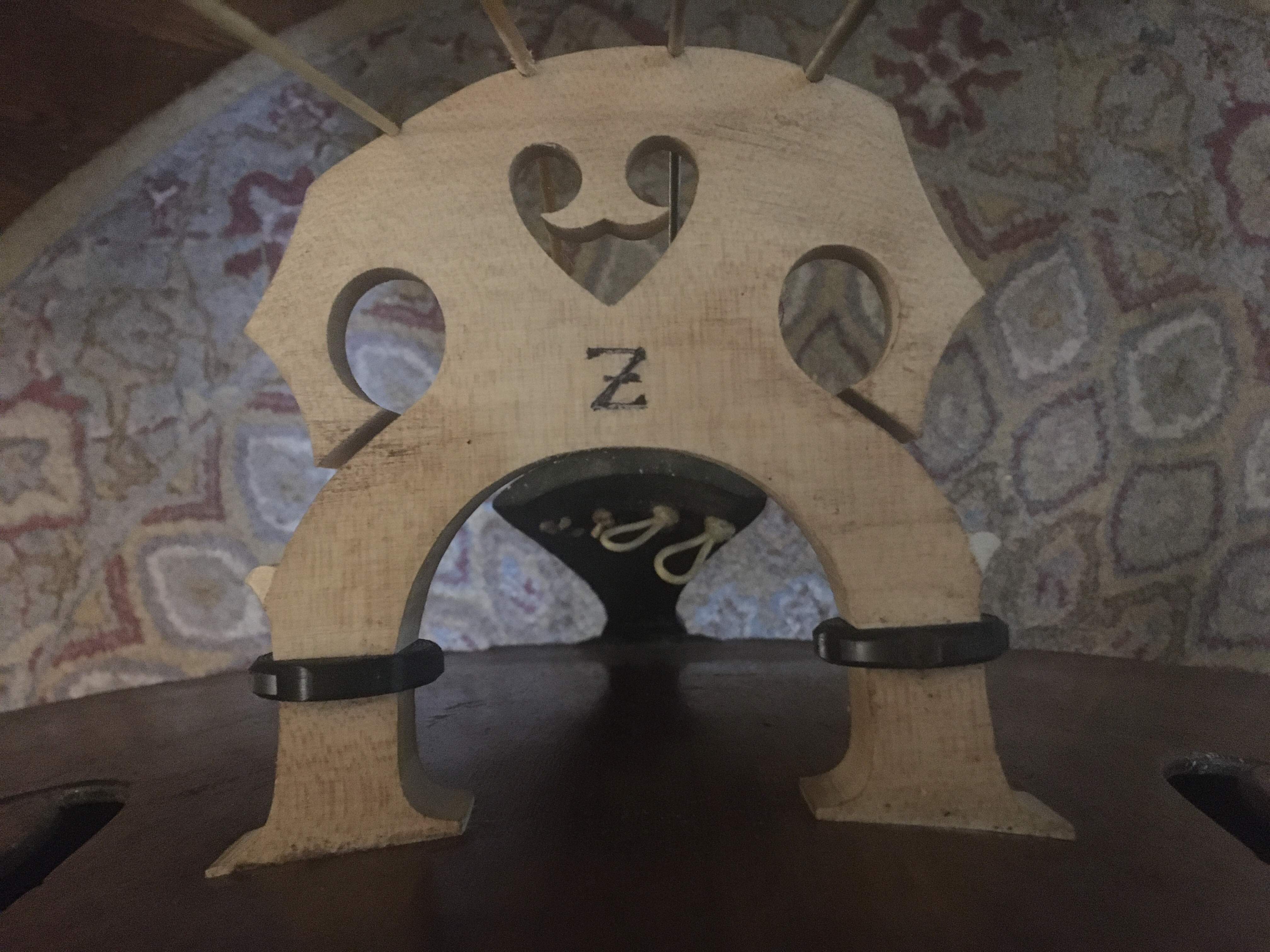
"Out of the night, when the full moon is bright, comes a masked luthier known as Barzizza. This bold renegade carves a "Z" with his blade, a "Z" that stands for Barzizza!"
This thing is settling really nicely. The neck at first seemed to indicate it was an Eb, but now that the strings are setting it's definitely a D neck. The heel joint crack that I had made totally disappear after a couple of days tension has ever-so-slightly reappeared indicating there is some small degree of movement in the neck. It's still holding up strong, so I shouldn't stick a dowel straight through the button down the length of the heel, right? I am to understand that in general, "dowel repairs are foul repairs." But this tiny tiny moment has me on alert.
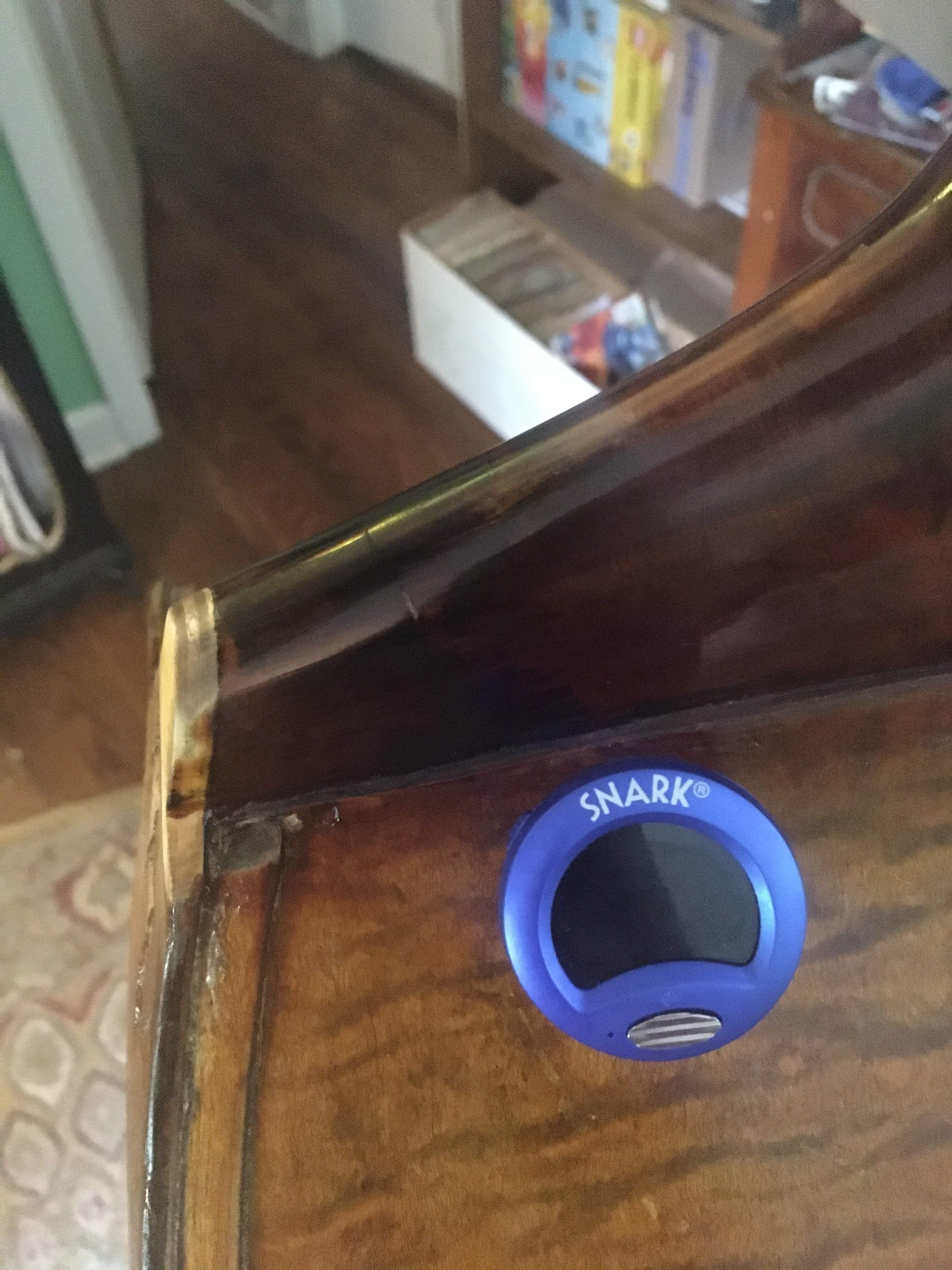
This thing is settling really nicely. The neck at first seemed to indicate it was an Eb, but now that the strings are setting it's definitely a D neck. The heel joint crack that I had made totally disappear after a couple of days tension has ever-so-slightly reappeared indicating there is some small degree of movement in the neck. It's still holding up strong, so I shouldn't stick a dowel straight through the button down the length of the heel, right? I am to understand that in general, "dowel repairs are foul repairs." But this tiny tiny moment has me on alert.
More to the point, dowel repairs are generally ineffective.
That's what I thought - just checking. I'm still really new to luthier stuff and don't really understand the nuance of the "never use bolts or dowels except under these specific circumstances" stuff ... my gut tells me not to worry about this crack becoming a little visible, but my neurosis is having a field day about it.
That's gonna fail. The most likely possibility is that the joint is contaminated.
Dowels actually weaken the heel, because you're removing wood. Savvy?
When it pops I'd clean it up and re-glue with urethane or West Systems T-88 epoxy.
Most epoxies creep, but T-88 is what the SEALs use to fix their inflatable rafts.
Dowels actually weaken the heel, because you're removing wood. Savvy?
When it pops I'd clean it up and re-glue with urethane or West Systems T-88 epoxy.
Most epoxies creep, but T-88 is what the SEALs use to fix their inflatable rafts.

Not to hijack the thread, but I assume that you are suggesting using epoxy on the vertical crack area only on the heel? I have a similar potential issue on a bass is why I ask, and I know dowels are a no no.That's gonna fail. The most likely possibility is that the joint is contaminated.
Dowels actually weaken the heel, because you're removing wood. Savvy?
When it pops I'd clean it up and re-glue with urethane or West Systems T-88 epoxy.
Most epoxies creep, but T-88 is what the SEALs use to fix their inflatable rafts.
Zoot- Zorro already has the "Z" patented. you'll have to come up with something more original

Yes, you take me correctly. People who use permanent adhesives on joints that will eventually have to come apart will be taken out back and fed to the hamsters.


