

Enjoy the benefits of a premium membership!
Upgrade Account
-
TalkBass has been independent since 1998. Add your voice.
Create a free account to reply to discussions, view embedded media, and browse with fewer display ads.
Join free Log in
Want zero display ads or expanded classifieds tools? Compare plans.
You are using an out of date browser. It may not display this or other websites correctly.
You should upgrade or use an alternative browser.
You should upgrade or use an alternative browser.
3rd build- Lightest possible/back problems
- Thread starter Rip Topaz
- Start date
More options
Who Replied?
Rip, I know you've said repeatedly that you don't think neck dive will be a problem, but I think it may be more than you think. I've struggled with back problems for years and I too play almost exclusively sitting down or leaning against something. I'm in a metal band now and I get a lot of grief from my bandmates about the sitting part, but I just tell them, if I can't sit or lean, I can't play, so suck it up.
At any rate, neck dive on an instrument really exacerbates the pain, regardless of the weight. The act of needing to support the bass by the neck or conversely holding the body down with my right elbow makes it worse.
I know you want a T-bird and they are cool, but my suggestion is to reconsider. If you can get your hands on a t-bird, try playing it for a few hours, sitting, leaning and standing and see how you feel about it before you bite the bullet and start the bass. I'd hate for you to build this joyous baby and then find its even worse to play than a heavy bass.
In my case I also avoid the heavy, but I'd rather bend at the knees to pick up a heavy bass to play on a stool than pick up a light bass and play on a stool only to have my back burning a few hours later due to the constant compensation for neck dive.
If you're really set on a T-bird, maybe consider a non-reverse body style instead. All the vibe with much less dive...
At any rate, neck dive on an instrument really exacerbates the pain, regardless of the weight. The act of needing to support the bass by the neck or conversely holding the body down with my right elbow makes it worse.
I know you want a T-bird and they are cool, but my suggestion is to reconsider. If you can get your hands on a t-bird, try playing it for a few hours, sitting, leaning and standing and see how you feel about it before you bite the bullet and start the bass. I'd hate for you to build this joyous baby and then find its even worse to play than a heavy bass.
In my case I also avoid the heavy, but I'd rather bend at the knees to pick up a heavy bass to play on a stool than pick up a light bass and play on a stool only to have my back burning a few hours later due to the constant compensation for neck dive.
If you're really set on a T-bird, maybe consider a non-reverse body style instead. All the vibe with much less dive...

Seems like a chambered body t-bird would be prone to serious neck dive, I guess a really wide strap would be necessary and good for your back anyway though.
You could probably negate the neck-dive by going neck-thru. You wouldn't be able to 'chamber the hell' out of the body - but you'd still be able to chamber it pretty significantly.
The wings could be seriously light and the bulk of the weight would be the 'core' or neck, which going from end to end would balance better than a bolt-on attached to a very light body.
I think... I can see it in my mind and think I could make it work, but I have no way to estimate weight...
Beej is right about the Thunderbird. I would focus on the best possible design ergonomically. A neck through may add more weight than a bolt on since the bolt on you can chamber as much of the body as you want - make it hollow like mine. You might also want to consider a short scale since you would be reducing the lever arm of the neck
My bass does have a little neck dive since the body is so light, but I didn't use the Ultralite Hipshot tuners, plus the Dyamondwood is not the lightest material. I think you could make a 5lb bass maybe? The other woods to consider is basswood and agathis both very light
mikeyswood
Inactive
Homie's right, but a Mahogany neck, heavy bridge, and lightweight tuners would help with a more balanced approach. The 8 lb goal is uncertain, though.
That was my thought, too. Neck-thru, lightweight tuners, heavy bridge. Should balance things a little, right?

Rip
Keep in mind the tbird is a very long bass - tail to headstock. does stretching out your arm put any pressure on the back. It usually bothers my shoulder more but you should think about it. It made me sell my first alembic series 2 for a fodera in 1983 - thats why many are short scale.... Have you thought about the nonreverse tbird shape. Its a little more traditional shape - might allow you to put in more cavity/chambers; easier access too. but it is actually a few inches longer than a regular tbird. but with the more "traditionalish" NR you may be able to cheat bringing in neck and moving bridge back
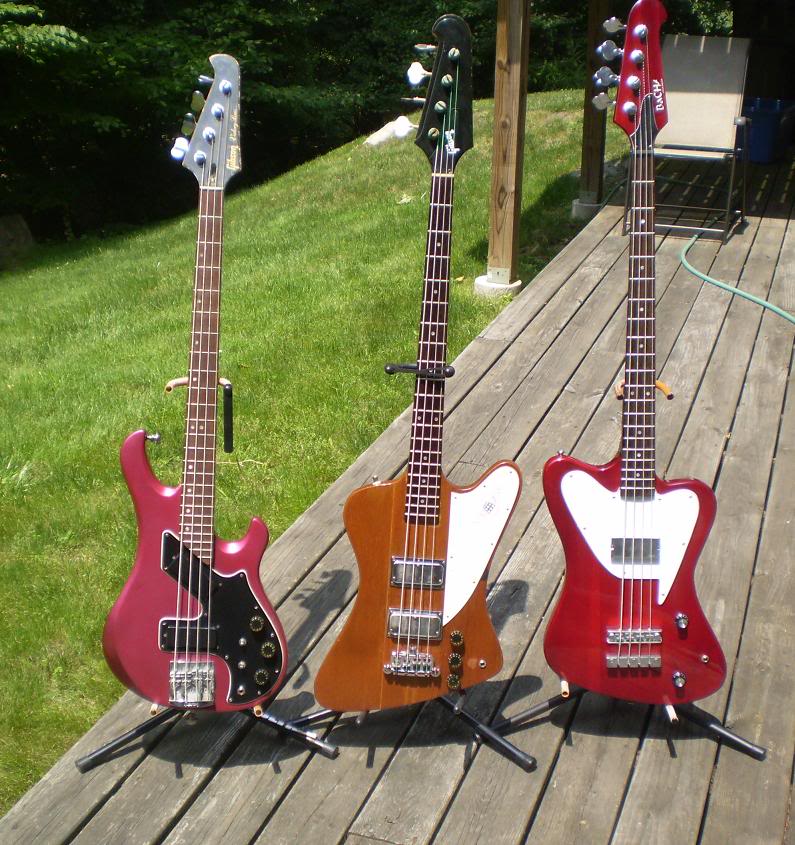
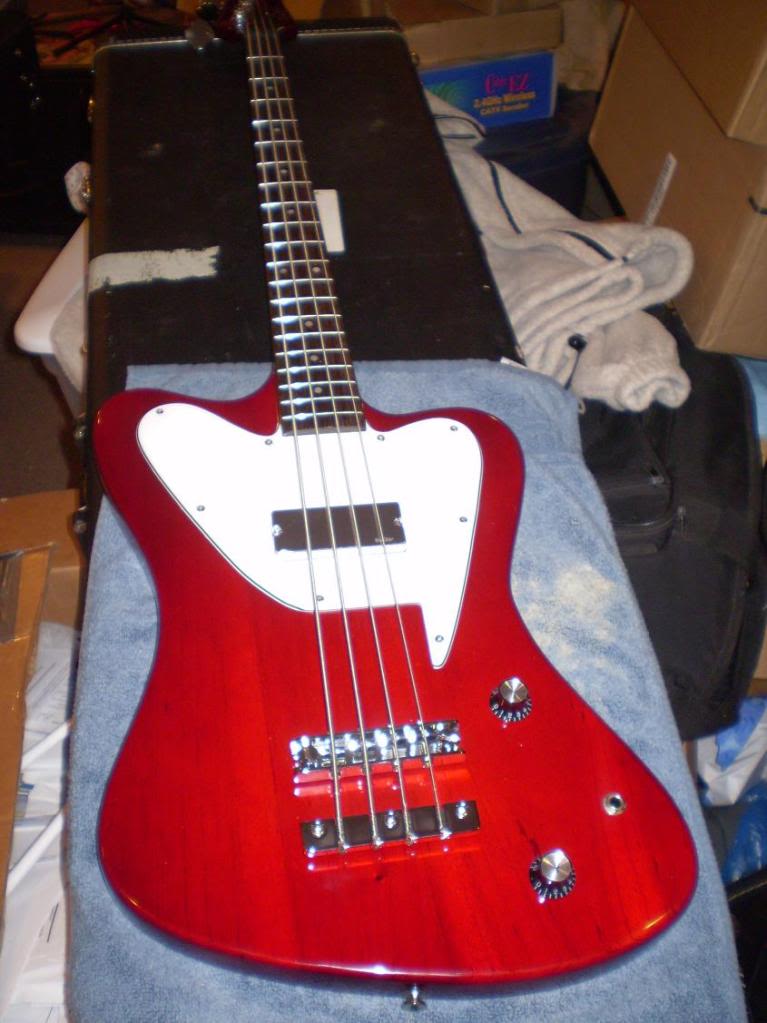
Keep in mind the tbird is a very long bass - tail to headstock. does stretching out your arm put any pressure on the back. It usually bothers my shoulder more but you should think about it. It made me sell my first alembic series 2 for a fodera in 1983 - thats why many are short scale.... Have you thought about the nonreverse tbird shape. Its a little more traditional shape - might allow you to put in more cavity/chambers; easier access too. but it is actually a few inches longer than a regular tbird. but with the more "traditionalish" NR you may be able to cheat bringing in neck and moving bridge back
I'm a pretty tall guy, over 6'. I've had 35" scale basses before and loved the extra length, though that was before my injury.
Not really into the NR shape.
Not really into the NR shape.
Homie's right, but a Mahogany neck, heavy bridge, and lightweight tuners would help with a more balanced approach. The 8 lb goal is uncertain, though.
+1 A quartered mahogany neck with carbon reinforcements may be the lightest way to make a neck, next to an all carbon fiber/graphite neck of course. Couple that with a mahogany or alder or swamp ash body. Still may not break the eight pound mark, but that'll get ya close.

I did a simple as pie conversion on a couple of my DIYs to work with a Ned Steinberger EUB stand so I can play them upright either standing or sitting on a stool.
Total weight of bass on back/shoulders...zero, zilch, nada, nill.
Here's the fretless bass:
Link Removed
Total weight of bass on back/shoulders...zero, zilch, nada, nill.
Here's the fretless bass:
Link Removed
Now THAt is a definite possibility, though I'd like to see what I can accomplish before the stand.

Since lightening the body by chambering would tend to exacerbate neck dive, would you consider a headless T-bird? The body should be long enough for the headless bridge/tuners, and no headstock is a huge plus for balance.
Also, not knowing your budget, if the body shape is not a deal breaker you could consider one of [Invalid or Expired Link Removed]. And if your budget is huge, you could even have them do a T-bird shape.
Also, not knowing your budget, if the body shape is not a deal breaker you could consider one of [Invalid or Expired Link Removed]. And if your budget is huge, you could even have them do a T-bird shape.
Now THAt is a definite possibility, though I'd like to see what I can accomplish before the stand.
My lightest weight reduced bass is a Mustang RI I re-bodied with an ultralight paulownia body and Gotoh Res-O-Lite 350 tuners. The total weight was 4lbs 13 oz. The body is so light that I had to extend the upper strap button to balance the head so it wouldn't dive.
Here 'tis:
Link Removed

- Mar 22, 2005
- 240
- 1
- Disclosures
- Karl Thompson, Builder (Formerly Fat Karl)
My thoughts exactly, but I think a headless T-Bird would be butt ugly.Since lightening the body by chambering would tend to exacerbate neck dive, would you consider a headless T-bird? The body should be long enough for the headless bridge/tuners, and no headstock is a huge plus for balance.
Check out some of the curly Redwood tops at www.oregonwildwood.com. That would be another lightweight & gorgeous option for a top.
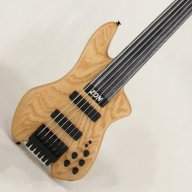
Sorry, I don't get it. You have back problems, but choose the worst neck-diving shape out there, and want to make it even more neck-divey by pulling out more body wood.
Neck dive causes as much, if not more, discomfort than a slightly heavier bass. I'm not sure if you want to reconsider the shape you have chosen, or have any plans to mitigate the neck dive.
Neck dive causes as much, if not more, discomfort than a slightly heavier bass. I'm not sure if you want to reconsider the shape you have chosen, or have any plans to mitigate the neck dive.
I have to admit the challenge of making a 'true to form' t-bird without neck dive and under a certain weight sounds like a really cool challenge.
I started drawing one up and found a lot of hurdles - and in my limited experience, I am not sure it can be done without some pretty noticeable alterations to the design.
My first thought was based on another post that mentioned how 'long' a T-bird is due to bridge placement. Since the bridge is pretty far in, I thought moving it more to the bottom of the body would ultimately shorten it and relieve some of that lever action.
Problem: reaching the upper frets once you do that... It's obvious now... so you'd have to implement a significant cutaway on the lower horn to access high frets... !!!Buzzz!!! Fail...
I still think neck-thru + super-chambered body + super light 'paddles' on the headstock along with a heavy bridge and light tuners could get you there. Again - not sure how light it'd be - but with the right wood and a thin, chambered body I think it could be made quite light and still look like a T-bird.
Very interesting challenge, though!
I started drawing one up and found a lot of hurdles - and in my limited experience, I am not sure it can be done without some pretty noticeable alterations to the design.
My first thought was based on another post that mentioned how 'long' a T-bird is due to bridge placement. Since the bridge is pretty far in, I thought moving it more to the bottom of the body would ultimately shorten it and relieve some of that lever action.
Problem: reaching the upper frets once you do that... It's obvious now... so you'd have to implement a significant cutaway on the lower horn to access high frets... !!!Buzzz!!! Fail...
I still think neck-thru + super-chambered body + super light 'paddles' on the headstock along with a heavy bridge and light tuners could get you there. Again - not sure how light it'd be - but with the right wood and a thin, chambered body I think it could be made quite light and still look like a T-bird.
Very interesting challenge, though!
I know the 'bird is a bad shape for bad backs, but let's be real. They are freaking cool. That's my reason for the build. I'm making this for me, and I like Thunderbirds.
The huge headstock probably won't be the same. Gonna draw up a few 2+2 headstocks and see if I can come up with something that looks good.
Ok so this is what we have so far:
Lightweight tuners
Chambered body
Heavy bridge.
Neck dive is an important consideration. Gonna focus a little more on relieving that.
Some really good arguments against the T-Bird shape, hopefully I don't have to give that up.
Let's remember, this will be fretless, so it's not exactly the T-Bird SOUND so much as the look that I'm after.
The huge headstock probably won't be the same. Gonna draw up a few 2+2 headstocks and see if I can come up with something that looks good.
Ok so this is what we have so far:
Lightweight tuners
Chambered body
Heavy bridge.
Neck dive is an important consideration. Gonna focus a little more on relieving that.
Some really good arguments against the T-Bird shape, hopefully I don't have to give that up.
Let's remember, this will be fretless, so it's not exactly the T-Bird SOUND so much as the look that I'm after.


