
• TalkBass has been independent since 1998. Add your voice.
    Create a free account to reply to discussions, view embedded media, and browse with fewer display ads.
    Join freeLog in
    Want zero display ads or expanded classifieds tools? Compare plans.

4 vs 5 is there a difference in sound?

Interesting thread.

My question is, Do 5 strings have dead spots like a lot of 4 stringers? I've never played a 5, so I don't know. BUT I do have a dead spot on my 4 string (typical C on the G string). I know that the problem was lessened when I put a Hipshot D-Tuner on the E string, and the problem is even less with a 'Fatfinger' on the headstock.

So.... does the added mass of a wider neck, more strings, and an additional tuner solve the dead spot issue
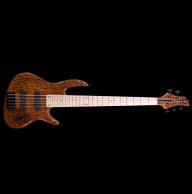
 
I can hear the difference on Stingray's - the 4 string models always sound more round, basically more midrange. A good amount oflow end with the on-board EQ at the center detents. Still can go plenty low though. The 5 string Stingray's just seem to have more low end on EVERY string with the knobs on the middle detents. I have noticed that on almost every Stingray I have ever played.

Different neck lengths, another string to add more pounds of force to the bass neck, a higher mass bridge, more wood overall, there are definite tone differences.

As always, play both and determine from there.

For the EBMM Stingray, until a few years back the pickup wasn't the same so it can't sound the same. If you played new EBMM stingray then, well, you can ear the difference !
 
Interesting thread.

My question is, Do 5 strings have dead spots like a lot of 4 stringers? I've never played a 5, so I don't know. BUT I do have a dead spot on my 4 string (typical C on the G string). I know that the problem was lessened when I put a Hipshot D-Tuner on the E string, and the problem is even less with a 'Fatfinger' on the headstock.

So.... does the added mass of a wider neck, more strings, and an additional tuner solve the dead spot issue


My Yamaha BBNII5 has a dead spot on the D note of the G string. I think it is unavoidable on a bolt-on neck compare to set-neck and neck-through, I never found any dead spot on my Carvin LB76 and those are NT.
 
The biggest thing that effects tone in my experience is the room you are playing in.

My practice area is acoustically HORRIBLE. I've sold perfectly good basses because I thought they sounded bad, when in fact, it was my room that sounded bad. I've now learned how to "listen" to a bass in my practice area and know if it will sound good or not.

This brings me to my point. There are MANY factors that come into play when it comes to how a bass sounds.

1) Cabinet
2) Driver size
3) Amp
4) Strings
5) Playing style/technique
6) Sound man
7) PA

The list goes on.

I'm not a professional musician, and I know that in the studio small changes in tone are a big deal, but I'm assuming most of us play live through a PA of some sort. Because of that, I don't really think it matters if you are playing a 4 or 5 string, if you have nickel or steel strings, round or hex core, a bad ass bridge, a bone nut, single coil or humbuckers, etc. It's all splitting hairs.

I typically get a copy of the board mix when I play and in most cases, the bass is so far back in the mix that I could be playing a washtub bass and no one would know.
 
So here are a few hair brained theories I have about why it's different.

Neck mass, and body/neck mass ratio
Thickness of neck directly under string
Additional neck stiffness from larger size
Distance from string to pole piece different due to neck radius
Width of pickup coil, compromise on wind count vs impedance.
Changes in technique from different ergonomics
Different amount of tuner mass and different tuner placement (like the diff a fat finger makes)
Higher bridge mass

The biggest thing is that I often want to use a different set of strings on a 5 to make the b work better, compromising what I'd otherwise use.

A lot of this is def. irrelevant in a club setting where you are lucky to get any kind of decent tone.

And the change can be positive too, different can be good or bad. I've had a lot of great 5s. But the best ps, js, and rays I've had we're all 4s.
 
So my theory is the more strings on the neck the better the rest of the strings sound. More stress on the compresses the wood so it resonates better.

Now thats a reasonable theory. I like it.

I'd expect that you could manipulate this as well on a single bass, through your tuning and string choices. I totally agree that the more tension the strings have, the more sustain they have. Sometimes good, sometimes bad... I personally dig the attack sound of floppier strings, gets more of a Les Claypool twang than a smooth attack.
 
Bottom line is *all* basses have different sound of varying degrees - there are so many factors involved that it makes this question moot.

But some people seem to be stating they can tell the the difference between a 4 string and a 5 string by sound alone.

A good test would be:
1. Obtain a variety of 4 and 5 string basses from different manufacturers.
2. String all instruments with the same brand and type of string (perhaps a series of tests with different brands and types?)
3. Use the same cable and amplifier for all tests.
4. Either record or play live the same sample - or a series of samples - for each instrument. For 5-string, player must utilize the E-A-D-G strings and avoid the 5th string, as this would be an obvious giveaway/
5. The live players would obviously be shieled from view and would select instruments randomly.
6. A number of tests must be run to eliminate the percentage of chance.

My "Adam Savage"-style prediction would be that people would not be able to tell the difference between a 4 string and a 5 string. But like Adam, I would be delighted to be wrong.

I don't think this one is interesting enough to make it to Mythbusters, though.
 
Totally different for me, I play them totally differently. Playing a low G or F on the E string for example: with a 4 my fingers release off of the string freely, on a 5 the B string is there so there's not the same "follow-through". Different technique will yield different results obviously, this is just an example of what the biggest differences are sound wise IMO.

Sure the extra mass and tension probably has some effect.
 
Once someone knows there is a difference in two instruments it seems obvious that it can make a difference in sound to some level. Some like to assume they can hear all these differences and are afraid of being inferior if they can't. So then they hear them and feel good.

Have you noticed how many people simply can't admit they can't hear a difference in things when they know there is some kind of physical difference? You see phrases like "almost no difference in tone" or "the difference is negligible" or "the difference is very subtle" when they should just say I can't hear any difference and learn humility.

Of course if someone can listen to a bass they are not in control of and tell me how many strings it has by just listening I will be very impressed and change my view. Until then I'll tend to believe it's more psychological than real. Others will disagree.

That's a very good point. I'm sick of reading discussion regarding pickups where people states that "this set sounds better than this one", etc...

When it happens that a set sounds different that other, the most expensive is the best, automatically.

And the same happens to basses. My experience is that you cannot tell a difference from 4 to 5 in most of the situations. As you cannot load 4 or 5 strings in the SAME instrument, there's no way to make a hand by hand comparison. Just hear and choose.
 
I typically get a copy of the board mix when I play and in most cases, the bass is so far back in the mix that I could be playing a washtub bass and no one would know.

Well, there's your problem. Knowing this invalidates practically everything in your preceding paragraphs. How would you expect anyone else to be able to extrapolate from your experience? :eyebrow:

Do you think it's possible that those who enjoy much more presence in the mix might accordingly find such things as one's choice of 1) strings, 2) bridge, and/or 3) pickups to have a noticeable effect upon one's sound...and hence, also upon the sound of one's band?

No? Never mind... :rolleyes:

MM
 
I would think it would be next to impossible to find this out,that is until someone builds two IDENTICAL basses from the EXACT SAME BATCHES of wood. Obviously,both basses would have to be passive. As electronics would 'color' the sound. The only difference should ONLY be the different dimensions on the neck,to accommodate the extra string,of course.
It would seem (IMO),that there would be a ever so slight change in tone due to the extra mass on the 5-string neck.

Just my 2 cents.

naa, just grab a frikin fender j 5er and a 4 and see who can tell...so many people swear they can hear all these differences but then have every excuse in the world for not being able to tell in a blind test....if the difference is night and day to your ears, it should not be hard to tell between 2 fender j basses, close enough I would think. But the golden ears will never settle, something will always be flawed!:rolleyes:
 
Thats down to technique I believe. You cant quite slap the E in exactly the same way as on a 4 as your avoiding hitting the B. There was a thread in LC about it a couple of weeks back which may be useful http://www.talkbass.com/forum/f57/sound-e-string-5string-bass-188937/.

If you slap with your thumb down I understand that you'll have to modify your technic on a 5 strings bass but if your thumb is parallel to the strings, it shouldn't make any difference that you have 4 or 5 strings.
 

Latest posts