• TalkBass has been independent since 1998. Add your voice.
    Create a free account to reply to discussions, view embedded media, and browse with fewer display ads.
    Join freeLog in
    Want zero display ads or expanded classifieds tools? Compare plans.

$5 bass rescue from death

I was recently browsing CL and saw an ad for a "basket case" bass that was headed for the dump. I felt bad for the bass, and thought, "That's a pity." It was a Memphis P-bass, listed for $5.

I decided to see if it could be rescued. It looked sad in the pictures. It looked worse in person.

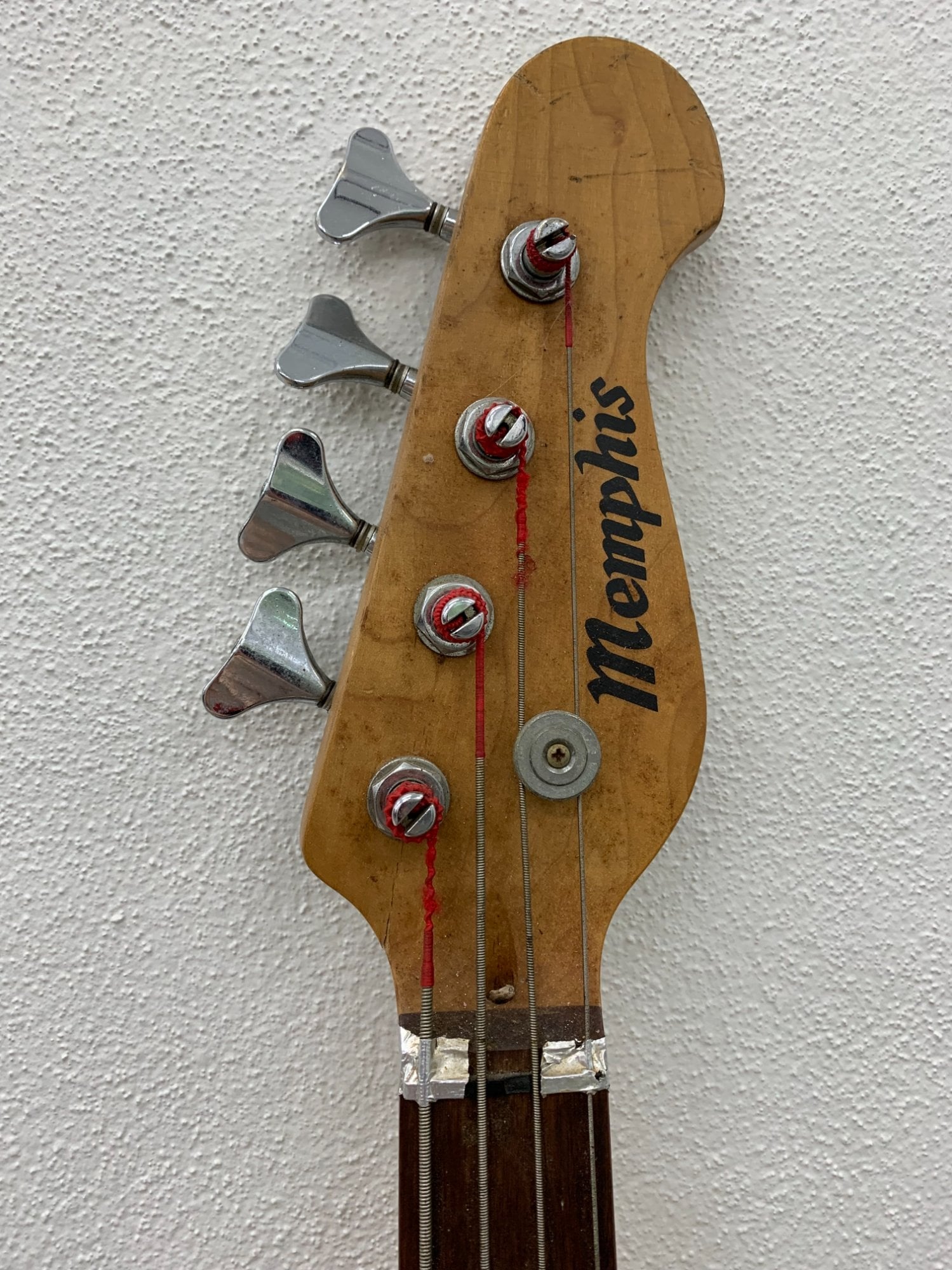
The good: The neck looked pretty straight, the original tuners had been replaced with Gotohs, and the bass was relatively light (8 pounds).

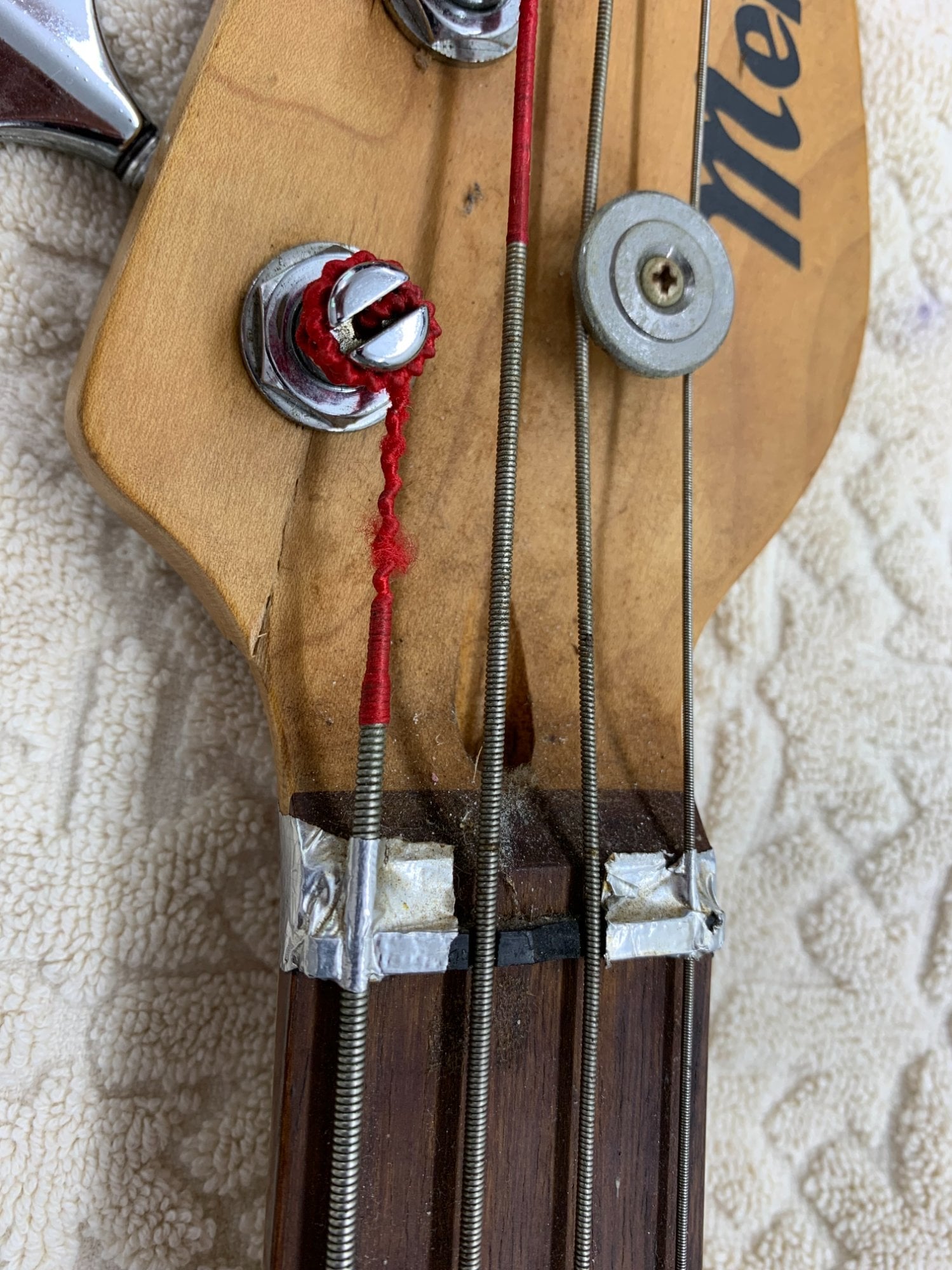
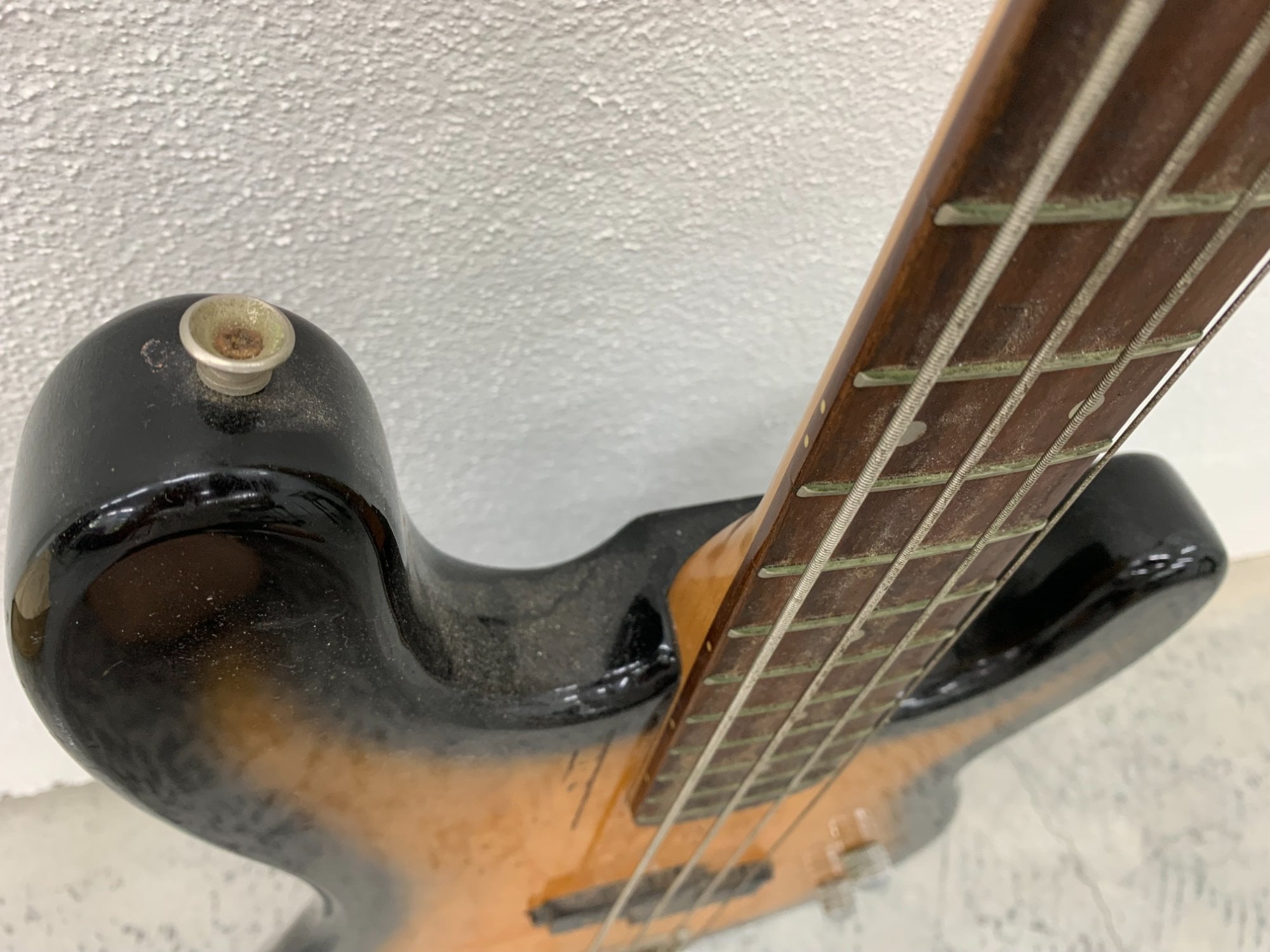
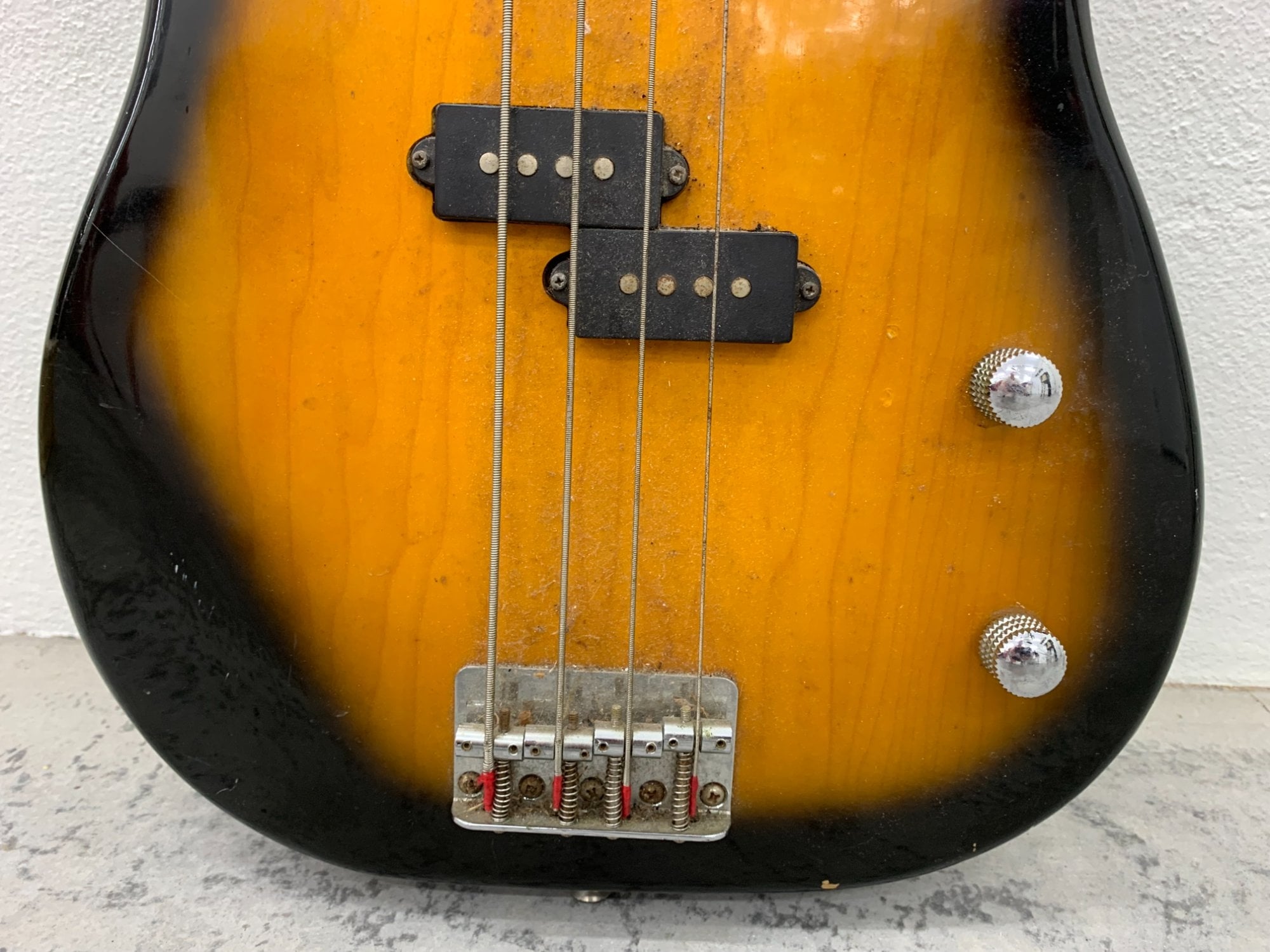
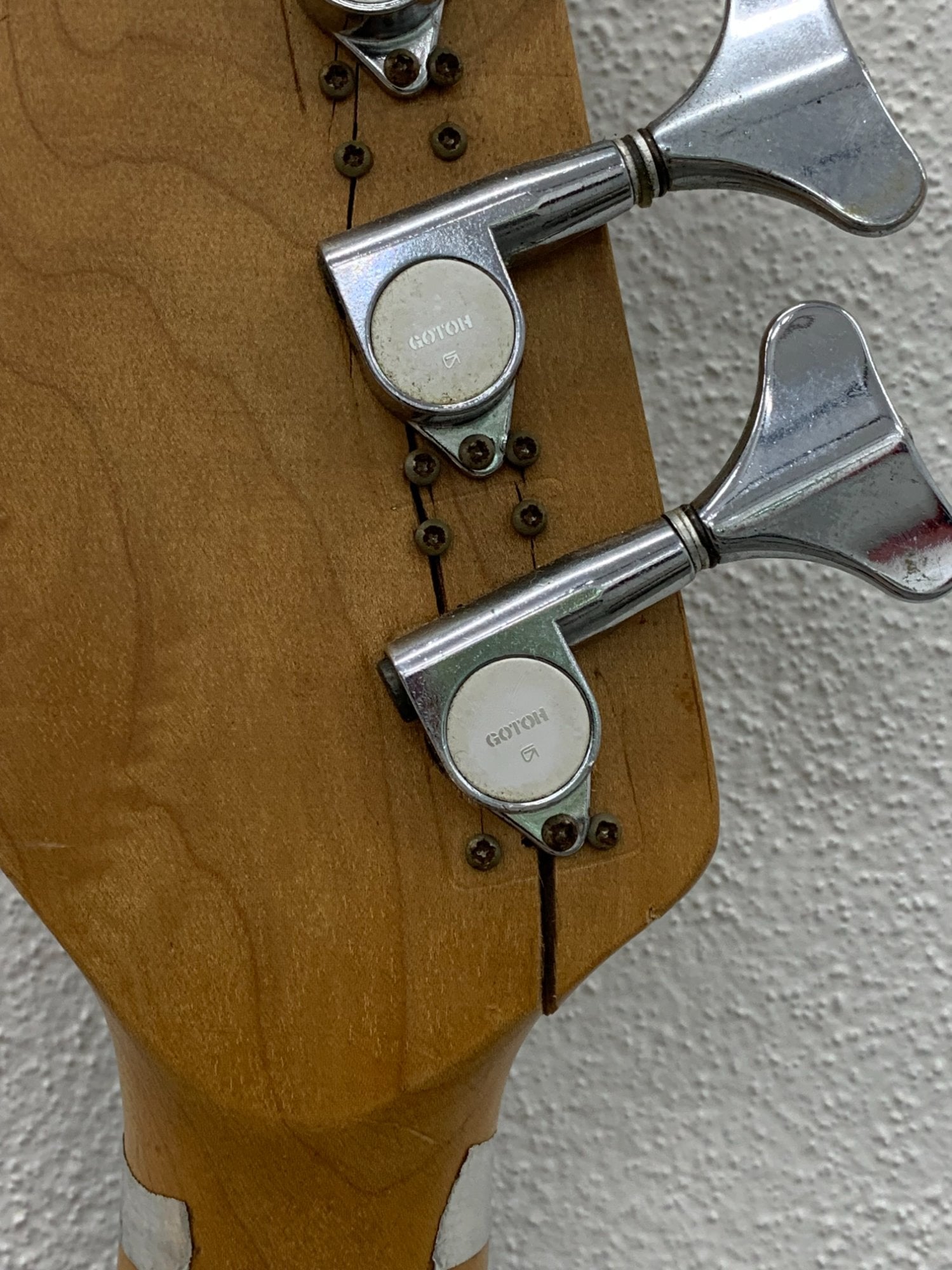
The bad: The headstock was broken and split open at the tuner holes, and had small splits at the screw holes. The nut was broken and was partly covered with aluminum foil tape. There was a gooey grime all over the bass, and rust on a bunch of the hardware, including the pole pieces on the pickup. When I plugged it into an amp, there was a pop and a ground buzz but no sound from the strings, which were filthy and a bit rusty.

Headstock crack
IMG_2465.jpg


Broken nut
IMG_2474.jpg


Grime
IMG_2463.jpg

IMG_2462.jpg


rusty pole pieces and more grime
IMG_2461.jpg
 
Last edited:
Day One - discovery and disassembly

Step 1 - Before doing anything else, I checked the truss rod. It worked fine.

Step 2 - Checking the pickup. The wiring was broken off in a few places, including at the input jack. I temporarily taped things in place and touched the input jack wires directly to the tip of the cable (going to the amp) and got sound from the strings, along with a lot of EMI noise. Pickup working, good.

Step 3 - Seeing if the headstock can be repaired.

I completely disassembled the bass and its components and started work on the neck. I removed the aluminum tape from the nut and cleaned everything with alcohol. The goo took quite a bit of scrubbing but eventually all came off.

headstock cleaned off
IMG_2475.jpg

cracked clean nut
IMG_2489.jpg
 
Last edited:
I clamped the headstock to test the repair. The wood had warped at the crack, so the piece broke off completely. Sigh.

I retested the fit in a vise (dry) and alignment was close but not exact due to the slight warp.

I glued it all with Titebond wood glue, got the alignment as close as possible, and put it back in the vise for 2 days to dry. I was skeptical about the fit, the strength of the glue, and the possibility of grime in the crack that might weaken the bond.

Headstock in clamp
IMG_2479.jpg
 
Day two - hardware and body

While the neck was in the vise, I cleaned all the hardware and the body. Lots and lots of scrubbing with alcohol. I also used chrome polish for rust and grime removal on the tuners, bridge and saddles, screws, and other hardware.

To address the rusty pole pieces, I removed the pickups and their covers, flat-filed and sanded the rust off, cleaned them with alcohol, and then gave them a coating of clear satin Rustoleum for protection, using a q-tip. During that work, another wire connection broke off.

That cleaning took an entire day. The bass was really filthy.
 
I filled the unused screw holes from the factory tuners with sharp dowel ends and wood glue.

I had planned to replace the broken nut, but decided to try to repair it instead. I squared off the rough cracked area with a file and super-glued in a small rectangular black piece of plastic. Then I filed the top, sides, and nut slot into shape, finishing with sandpaper. While I was there, I checked the other nut slots with a straight edge and reshaped them.

Nut pic
IMG_2498.jpg
 
I test-fit the tuner sleeves and found the holes were misshapen and too small. That's probably how the headstock got split open: force-fitting the tuner sleeves into too-small holes. I used a Dremel sanding drum to open the holes to properly fit the tuner sleeves.

Fret check. I adjusted the truss rod to get the neck straight (while removed). Frets 4 and 5 were a bit high, so I covered the fretboard with masking tape and used a flat file to level them. I used the same file at a diagonal to put back the fret crowns.

The back of the neck had a gloss finish which I don't like. So I sanded it off with 150 grit, followed by 220 grit. Then I gave it a coat of wipe-on satin clear poly and sanded that with 800 grit.

neck
IMG_2558.jpg
 
Day four - back to the body

While everything was apart, I shielded the pickup and control cavities with copper tape, running a copper tape tube through the wire hole between them (around the pickup wires) to connect the cavity grounds to each other.

3 of the 4 pickup screw holes were drilled incorrectly, too close to the edge or off-center, so I filled them with dowels and glue.

copper tape tube between cavities
IMG_2502.jpg

IMG_2503.jpg


pickup holes filled
IMG_2507.jpg


cavity shielding
IMG_2509.jpg

IMG_2511.jpg


pickup pole pieces sanded, cleaned, and painted
IMG_2510.jpg
 
Day 5 - finish the neck and reassemble

Back on the headstock, I trimmed the excess wood and glue flat with a razor blade and then sanded the entire headstock with a palm sander until it was all flat and smooth. The black "Memphis" logo came off and became a shadow, which I liked.

Using a rag, I wiped 4 thin coats of semi gloss poly on the headstock and then polished it with (automotive) cleaner wax to get a shine.

headstock sanded and polyed

IMG_2546.jpg

IMG_2547.jpg
 
Last edited:
With the neck done, I reattached it to the body.

I gave the original strings a decent but not perfect cleaning, and temporarily installed them on the bass to run tests. The bass sounded great! No more EMI noise, the volume & tone pots worked perfectly, and to my amazement, the strings still had a piano-like ring to them. So I set relief, action and intonation and called it good (for now).

strings
IMG_2564.jpg
 
Why on earth did I spend 5 days fixing an inexpensive bass rather than just buying a new or undamaged used one?

1) One less thing in a landfill.
2) It feels good to bring things back to life.
3) The continued learning process.

Since I'm mainly a short-scale guy, having this will be nice whenever I get the itch to futz with a full scale. And because repaired basses probably aren't worth much on the used market, that will eliminate brain cycles tied up thinking about selling it. 🤓
 
Last edited:

Latest posts