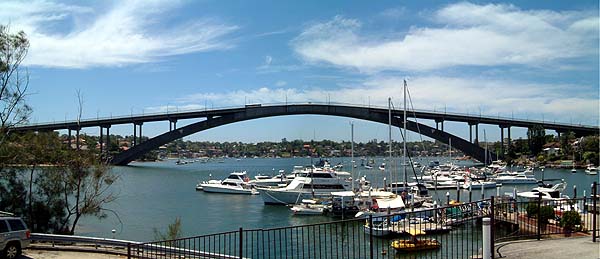
Is that what I think it is?If they try to sell you one of these, don't buy it, dam it.


TalkBass has been independent since 1998. Add your voice.
Create a free account to reply to discussions, view embedded media, and browse with fewer display ads.
Join free Log in
Want zero display ads or expanded classifieds tools? Compare plans.
Is that what I think it is?If they try to sell you one of these, don't buy it, dam it.
The Hoover Dam is close to 80 years old. How is it that concrete is still viable?

Nope. Also, it wasn't widely used before 1865 either.Modern concrete doesn’t contain the bones of Roman slaves.


Don't...
Sacramento rice paddies will be out of luck.
I remember that they are working on commercial applications. If the Roman version sets faster than our current stuff, it would seem that there might be a mix/delivery time issue to get it to the work site and pour quickly enough.
Good general life advice. But this write-up is about a research paper from the MIT labs. The MIT labs have produced a lot of very good research before and so I'll assume for the moment that they're not deliberately lying. It's easy for researchers to fool themselves though so, like most research, this means nothing until other people can replicate their results.Don't believe everything you read.
Most civil project rebar is epoxy-coated.
This same lab at MIT is also working on concrete that absorbs greenhouse gasses from the air, and on concrete that is less environmentally damaging to produce. The present discovery involves microscopic sections of calcium-carbonate embedded within the concrete mixture that refill microscopic cracks when they occur. What if they could instead embed microbeads of calcium that absorbed carbon directly from the air to repair the concrete - and that concrete was significantly better for the environment than what we have today? Is that possible? No one knows yet.Roman concrete cannot, by itself, satisfy our needs. And we can't just make more of it to reduce the need for reinforcement, because cement production is a major greenhouse emitter.
Sure, but there are also many applications such as building slabs, roads, etc. where it might be possible to eliminate or reduce the iron reinforcement. And production of iron is even worse for the environment than of cement.Adding reinforcement in the form of steel bars or other materials results in a composite with high compression and tensile strength, allowing structures to be much lighter. The results are visible in road bridge spans and skyscrapers.
… "You never change things by fighting against the existing reality. To change something, build a new model that makes the old model obsolete."
..... this write-up is about a research paper from the MIT labs. The MIT labs have produced a lot of very good research before and so I'll assume for the moment that they're not deliberately lying. It's easy for researchers to fool themselves though so, like most research, this means nothing until other people can replicate their results.
It is not new information that Roman concrete is much more durable than all our modern formulations or that builders have been trying to reproduce it for the last 1700 years though. This is widely known and documented.
That's cool. The last concrete I poured for a project designed by a civil engineer was 1982, so the epoxy-coated rebar is a development since then. Is it much more expensive than the regular? Probably so, the last time I bought rebar at Home Depot to pour some steps at my Dad's house, all they had was the same ol' same ol' uncoated rebar that we've been using for decades.

I guess what I am bristling at is the perception that modern concrete is inferior, or at least inferior to Roman concrete, and I'm not convinced of that. Not even if I read it on the Interwebs.
..... it's obvious there was knowledge available in the past we no longer have.....
Really? It is amusing to me, on this topic and so many others, the impressive contingent of people who will believe something exciting, something romantic, something intriguing largely because it is so unlikely and counterintuitive, just on the basis of a suggested theory which flies in the face of facts and logic. The Colisseum almost no longer exists. Half of it is GONE and the other half is only standing because of structural repairs and improvements.
The question of how long modern concrete structures will last, and there has been nowhere near enough time to even guess at that. And it will be challenging to answer even when time has run its course. Why? Because we don't leave structures standing until they fall on their own. We demolish them for purposes of public safety and, more often, because new technologies have given us the ability to replace them with better, more functional structures. The Empire State Building is still structurally sound, but is only still standing because it is such an iconic landmark. it was not designed to accommodate modern air-handling, safety and electrical/technological systems.
Some years ago, the out-dated Kingdome was demolished near me. It was out-dated, and was replaced by two EXCELLENT sports stadiums. Maybe the best baseball stadium in the nation. But left alone who knows how long the Kingdome would have stood. Its implosion required a massive amount of explosives. It was built like the proverbial brick outhouse. Personally, I think it would have still been indistinguishable from a brand new structure after 1000 years.
Really? It is amusing to me, on this topic and so many others, the impressive contingent of people who will believe something exciting, something romantic, something intriguing largely because it is so unlikely and counterintuitive, just on the basis of a suggested theory which flies in the face of facts and logic. The Colisseum almost no longer exists. Half of it is GONE and the other half is only standing because of structural repairs and improvements.
The question of how long modern concrete structures will last, and there has been nowhere near enough time to even guess at that. And it will be challenging to answer even when time has run its course. Why? Because we don't leave structures standing until they fall on their own. We demolish them for purposes of public safety and, more often, because new technologies have given us the ability to replace them with better, more functional structures.
air handling systems, most especially in high rise towers, and other industrial applications has been my trade for 38 years. i have spent enough time in high rise office towers, i can confidently say that there isn't anything significant that would be a hindrance. if anything, it gets easier in some ways. equipment now is smaller, lighter, and more efficient. systems are alot more modular than they were as well. i can't speak of the other trades, someone else would know more.The Empire State Building is still structurally sound, but is only still standing because it is such an iconic landmark. it was not designed to accommodate modern air-handling, safety and electrical/technological systems.
Some years ago, the out-dated Kingdome was demolished near me. It was out-dated, and was replaced by two EXCELLENT sports stadiums. Maybe the best baseball stadium in the nation. But left alone who knows how long the Kingdome would have stood. Its implosion required a massive amount of explosives. It was built like the proverbial brick outhouse. Personally, I think it would have still been indistinguishable from a brand new structure after 1000 years.