There have been a few threads posted previously on hand care: dealing with dry wintry hands, fixing blisters, developing callouses. There's the odd gem to be found within but they're mostly full of grandma-said/worked-for-me nonsense and useless advice, or suggestions that'll prevent your fingers from healing properly. I'm a nurse and I've worked on a burns and plastics unit for the last six years fixing a lot of wrecked hands, and I've played bass for thirty years. Here's some common scenarios and how I'd deal with them. It's a long post, hopefully the images will help you skip to where you need to get to. Do comment, ask questions or argue below.
Scenario 1: Baby hands

You're new to the bass. Or, you use hand cream all the time; you work in a job that leaves you with chronically dry hands or live somewhere cold and have to use hand cream all the time. Whatever the case, you don't have the callouses and keep getting blisters.
The quick and easy solution is surgical spirit. This is what gymnasts use to toughen their hands, ballerinas their feet, runners their heels. It's cheap, you can find it at any pharmacy, just dab it on your fingertips with some (say) cotton wool. I'll do it when they need it as I'm laying down to sleep (not often, but as a beginner keep it up). Do bear in mind that it's highly flammable (give it a few minutes before that next cigarette), and try to leave your left/right thumb untouched; your touchscreen phone won't work with the skin hardened by surgical spirit. It's that good.
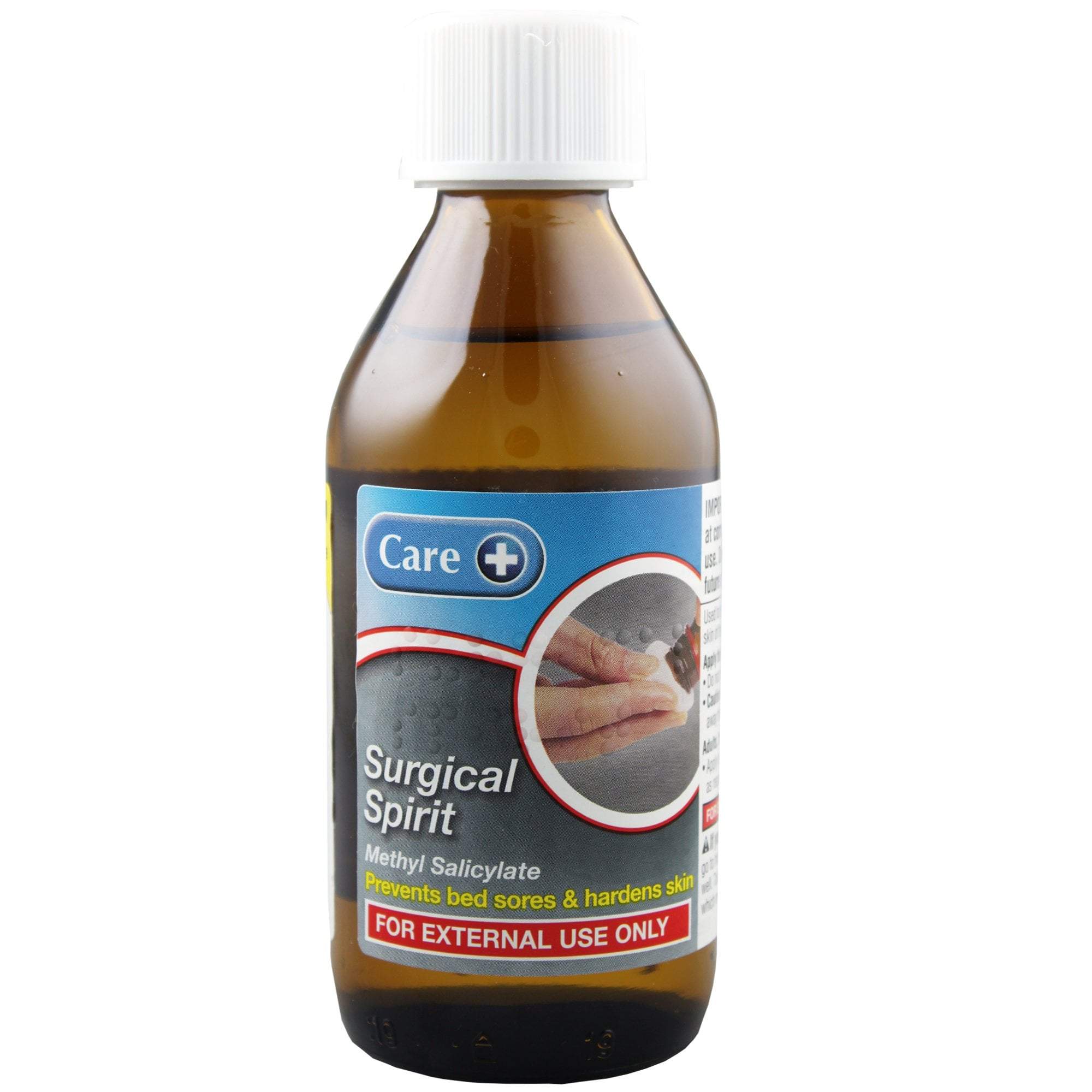
Longer term solutions would include any activity that toughens up your hands by a little friction and dryness (woodwork, gardening, climbing, etc.) and trying to avoid the fingertips when putting on hand cream (or wiping it off straight away). Don't forget you have to look after your hands now that you play bass, and injuries don't always heal straight.
Scenario 2
Blistered hands
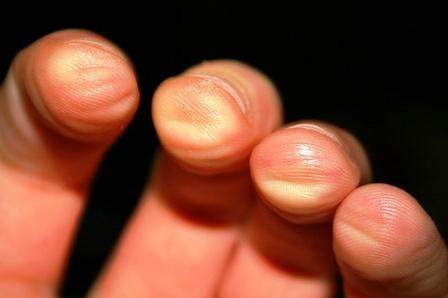
You've been playing a lot of bass. Or doing something else that has blistered up your hands - I don't want to know. First off: blisters are full of junk. It's not magical liquid, it's the product of torn-open cells and the skin's inability to take in the extra fluid leaked out to them. Your blister may contain one of three types of liquid: the usual clear garbage (serrous fluid, produced by the body), blood (not enough to kill you) or pus, in which case it ain't a blister (or at least isn't anymore if you've been playing with it). Best advice for blisters: leave them alone!
If you can't do that for some reason (nurse I may be but first I am a bassist, and there are reasons) here is the lowdown. The skin on the top of a blister is dead and will come off - if you were an inpatient of mine whose hand would be dressed aseptically daily and covered the 24 hours between dressings, I'd cut it off with a pair of scissors. But don't do that, because you are not an inpatient and the skin left is most likely the best dressing you've got. Like any dressing, if it's falling off, covered in gunk, catching etc. trim it, but the "skin" underneath it is raw, missing its top layer and likely to get infected, sore, not heal well and/or scar if exposed before new skin grows ("granulates" then "epithelialises"). You're going to need to dress it anyway if you want to play bass, but leave as much as you can intact underneath. Clean the area first with an anti-septic spray or something like surgical spirit; this will harden the skin as well as kill off any loitering bugs. If the blister is intact and in a place that's going to pop if you're playing and you really really need to drain it, then do so carefully. Get a sharp needle/syringe, sterilise it and lance the blister in a corner, then carefully push the fluid out and clean it again. Then apply a dressing, but a REAL one, NOT duct tape, not PVA, not staples. Use DuoDerm, Clearpore (or any other island dressings that are skin like) or Mepore, Advapore (island cloth dressings that let you slide up the strings a lot easier and keep some tone on an upright, but not waterproof). Then, if you wish, whatever else you can think of over the top, but I wouldn't be able to see why. Perhaps you could let me know.
There are small developing blisters, huge swollen blisters, and festering non-healing repeatedly blistering fingers and they'll all need different treatment. Please ask for specific advice below or by contacting me.
Other countermeasures include:
switching to Flatwounds, or strings at a lower gauge.
Using a "Musician's practice glove" to give your left fingers a break, a plectrum for your right fingers.
Cleaning the strings (rosin is a killer) before putting your hands on them.
Playing less ...
Scenario 3
Dry hands
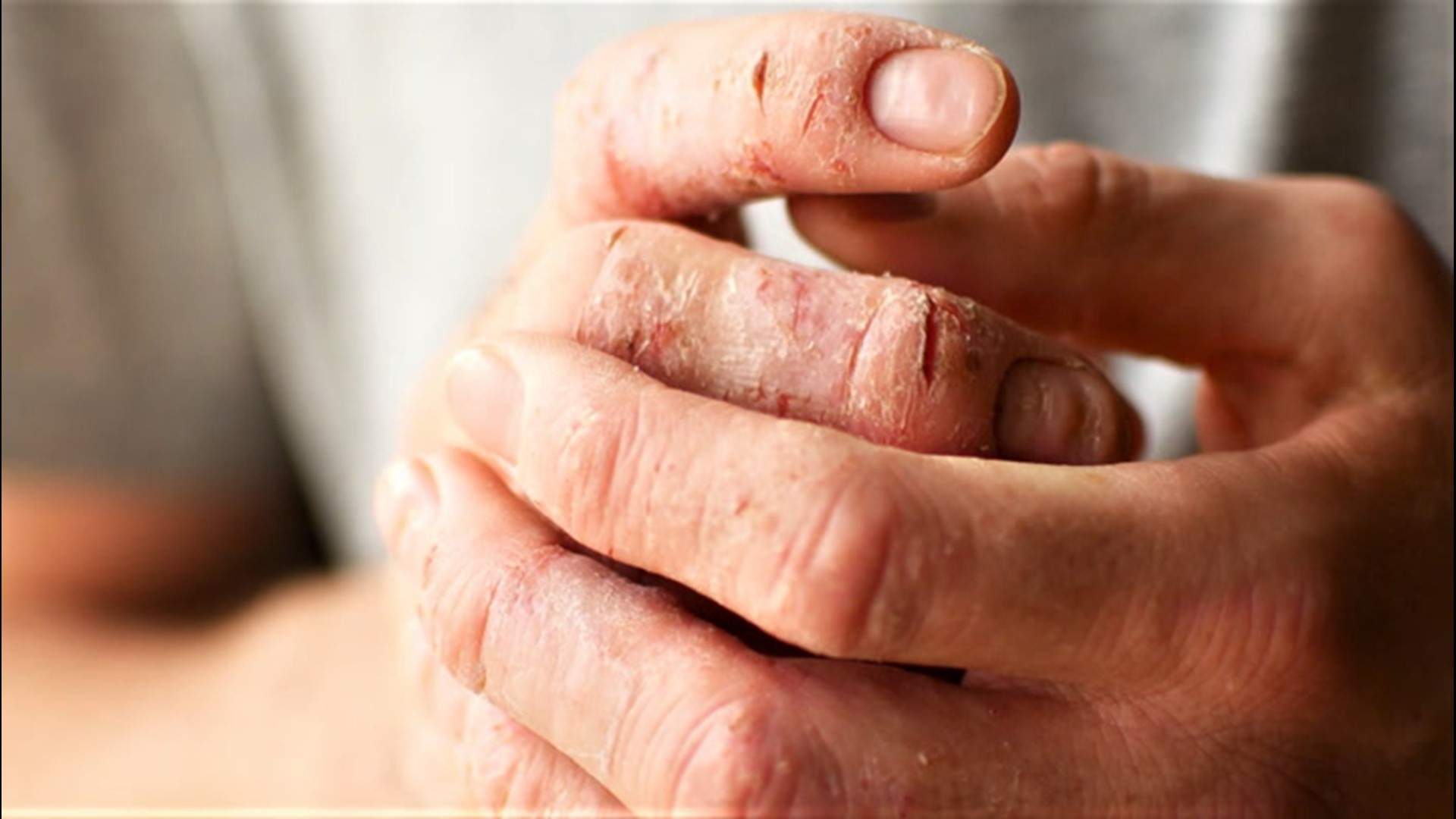
It's cold, you don't drink enough water, you work a job that dries out your hands or means you wash them all the time, and the skin on your hands are raw and cracking at the seams. It hurts and you're getting blood on your strings. The problem isn't your fingertips, it's the whole hand and wrist. So you need to moisturise.
It's not really possible to moisturise your hand and not soften your fingertips, but unfortunately you need to repair those hands to avoid pain, blood and infection (bringing a lot more of the first two). So I moisturise before hardening the tips with surgical spirit.
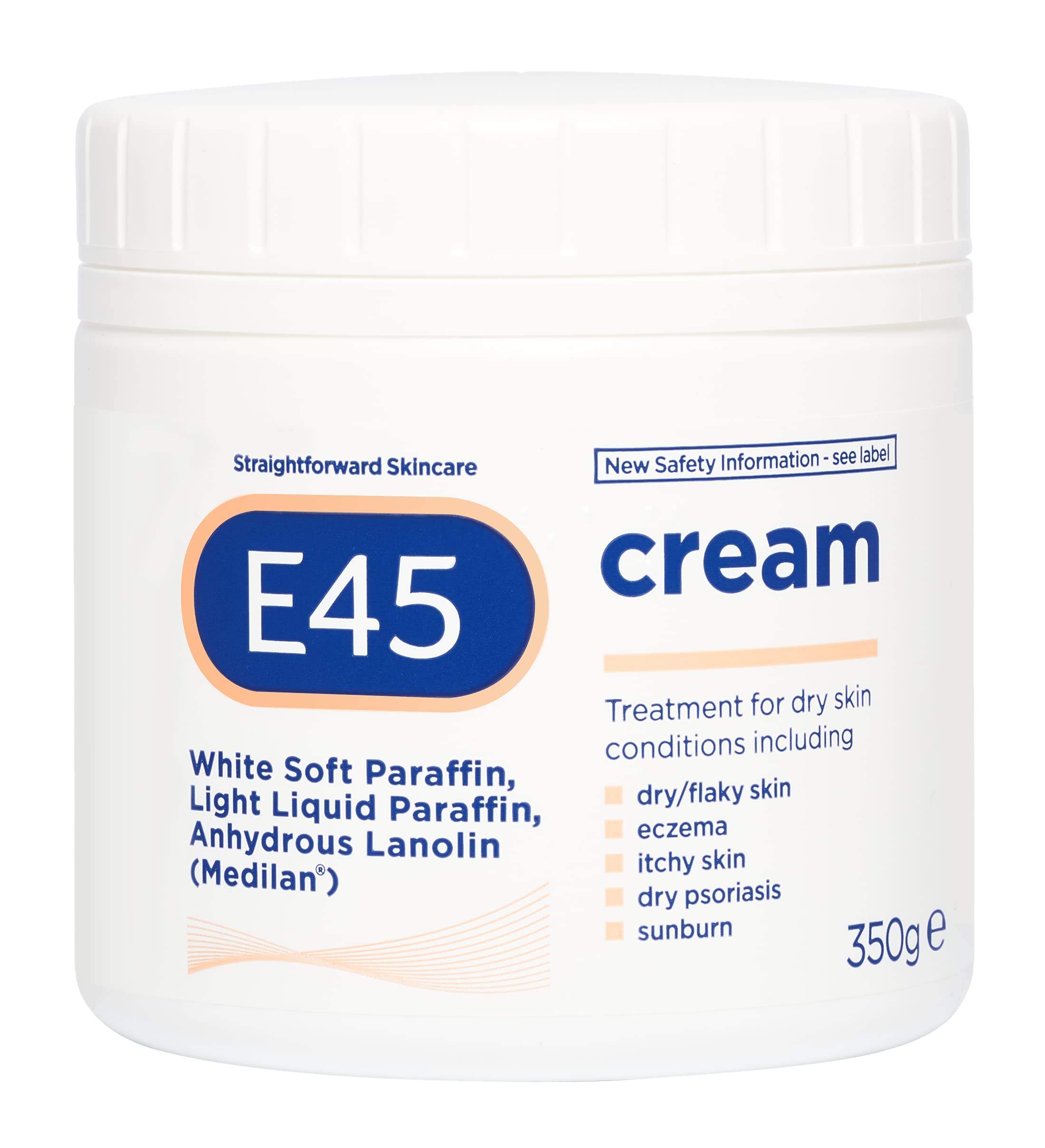
Routine moisturising: simple cream with as few ingredients as you can get. In the UK I'd recommend E45. There are many expensive copies and many creams that do sod all but perfume your hands or leave your hands feeling like you've just done a shift in a fish and chips shop (I've had many professions). Avoid them. Lather it on thick as you climb into bed (as regularly as keeps them in reasonable shape, might be daily, might be weekly) and it'll be absorbed by morning.
Intensive moisturising: there are more "intensive" creams for worse damage such as O'Keefes and Neutrogena (better of the two) that are closer to Vaseline. You can simplify things with Vaseline, but it'll take longer to absorb and is messy on hands. Or you could simplify the Vaseline and use a constituent ingredient: liquid paraffin. On the burns unit a hand stripped of skin or burnt dry would get stuck in a plastic bag (or a glove) generously lined with liquid paraffin, Vaseline or a specialist cream. Wrap some gauze and tape around the wrist to seal the bag / glove and change after 24 hours.

You can do this yourself, but do try a lot of cream first, then cream under a (surgical/latex/nitrile) glove before resorting to taping bags over your hands (it's not easy to do much like that and man do the bags stink when they come off). Keep your nails short to avoid those irritating splits alongside the nail bed, and don't bite the skin - cut it with nail clippers. And if you bite your nails, stop doing it.
Scenario 4
Calloused hands
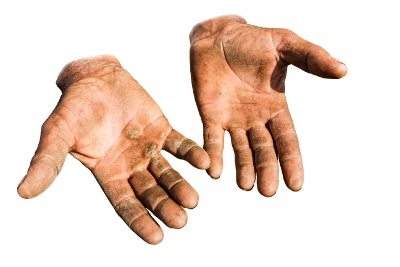
Overly worked and tough hands (think farmer, builder, gymnast) can be problems when playing bass; limiting flexibility, changing your contact with the string, and damaging the neck of your bass. You can take sandpaper and a scalpel to the hard lumps, or a pumice stone or emery board if you prefer. Soggy (post shower/bath) with a pumice stone, dry for anything more tool-like. But you can get quite a lot off if you are patient. If you want to, that is.
Scenario 5
Injured hands (wounds, broken fingers, etc.)
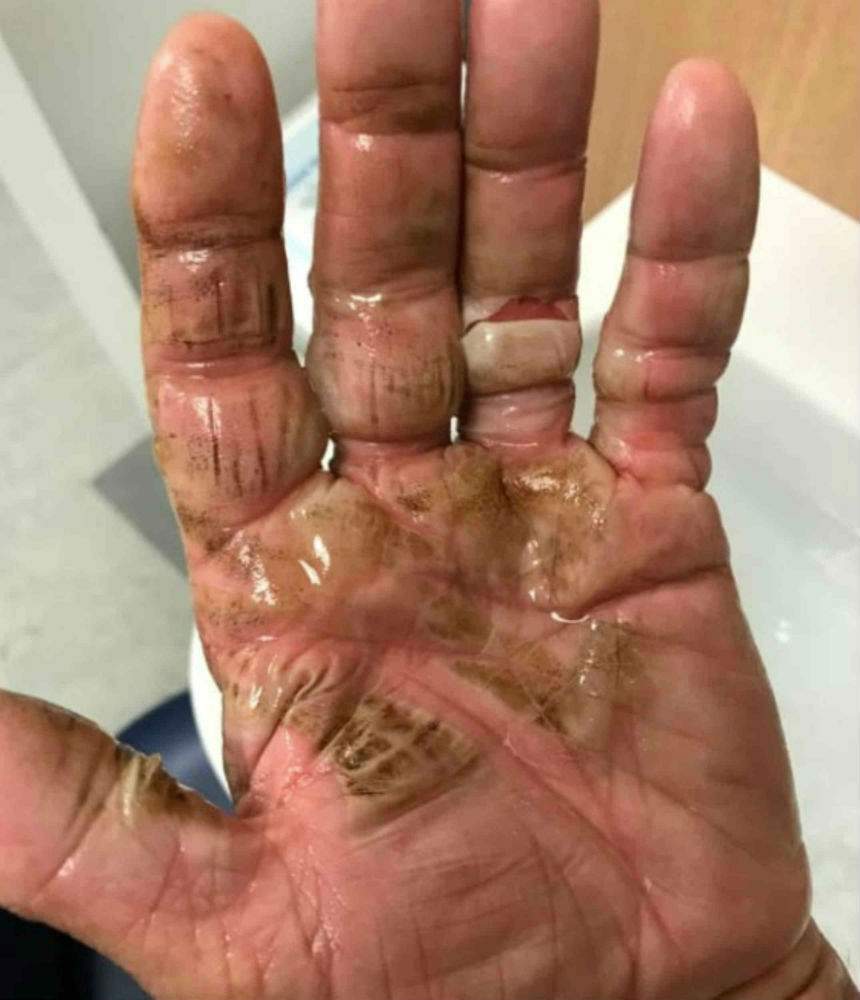
Minor injuries such as grazes, superficial cuts and scrapes generally just need a good rinse under the tap, a wipe or spray with antiseptic and a dressing until it's dry. If the skin is torn but not so deep that you can see things moving underneath, you might be able to avoid stitches by using steri-strips or even superglue (CA). Steri-strips will hold a wound together and are easily replaced, and glue is useful for awkward places (like the edges of fingernails). Just don't skip the antiseptic treatment, and put a decent dressing on top (something with an "island" contact layer so glue is not stuck on to the wound). If it swells up, reddens (or purples, depending on your complexion) and/or gets hot it's infected and you will need to get it seen to. I hope it goes without saying that heavy bleeding or the inability to move/feel fingers would necessitate a trip to the hospital, and likely surgery.
Burns will present initially as blisters, but might shed easily. If it's more than blistering (or even if it is) you should probably get help. First aid is everything, cool it for a good twenty minutes under a tap (that's what the paramedics would do to a huge burn before getting in to the ambulance) and elevation will help the swelling and thus the pain more than anything else.
There's broken fingers and there's broken fingers. If it's not straight and not moving properly after a week or so, it ain't going to be again unless you get it looked at. Maybe not anyway. The bones in your finger are pencil-thin but tough and heal well, but we all age, and self-healing is sadly a young thing.
General tips for bullet-like fingertips
Cheap moisturiser for your hands (and)
Surgical spirit for your fingertips (+/- palm) should be on your bedside table.
Dress your blisters properly and they'll heal quickly and toughen.
Infected and/or serious injuries have to be seen by a nurse or doctor.
You're a musician, look after and out for your hands.
There are medically encouraged, cheap and ways of dressing injuries that will allow you to play that fretless gig.
Scenario 1: Baby hands
You're new to the bass. Or, you use hand cream all the time; you work in a job that leaves you with chronically dry hands or live somewhere cold and have to use hand cream all the time. Whatever the case, you don't have the callouses and keep getting blisters.
The quick and easy solution is surgical spirit. This is what gymnasts use to toughen their hands, ballerinas their feet, runners their heels. It's cheap, you can find it at any pharmacy, just dab it on your fingertips with some (say) cotton wool. I'll do it when they need it as I'm laying down to sleep (not often, but as a beginner keep it up). Do bear in mind that it's highly flammable (give it a few minutes before that next cigarette), and try to leave your left/right thumb untouched; your touchscreen phone won't work with the skin hardened by surgical spirit. It's that good.
Longer term solutions would include any activity that toughens up your hands by a little friction and dryness (woodwork, gardening, climbing, etc.) and trying to avoid the fingertips when putting on hand cream (or wiping it off straight away). Don't forget you have to look after your hands now that you play bass, and injuries don't always heal straight.
Scenario 2
Blistered hands
You've been playing a lot of bass. Or doing something else that has blistered up your hands - I don't want to know. First off: blisters are full of junk. It's not magical liquid, it's the product of torn-open cells and the skin's inability to take in the extra fluid leaked out to them. Your blister may contain one of three types of liquid: the usual clear garbage (serrous fluid, produced by the body), blood (not enough to kill you) or pus, in which case it ain't a blister (or at least isn't anymore if you've been playing with it). Best advice for blisters: leave them alone!
If you can't do that for some reason (nurse I may be but first I am a bassist, and there are reasons) here is the lowdown. The skin on the top of a blister is dead and will come off - if you were an inpatient of mine whose hand would be dressed aseptically daily and covered the 24 hours between dressings, I'd cut it off with a pair of scissors. But don't do that, because you are not an inpatient and the skin left is most likely the best dressing you've got. Like any dressing, if it's falling off, covered in gunk, catching etc. trim it, but the "skin" underneath it is raw, missing its top layer and likely to get infected, sore, not heal well and/or scar if exposed before new skin grows ("granulates" then "epithelialises"). You're going to need to dress it anyway if you want to play bass, but leave as much as you can intact underneath. Clean the area first with an anti-septic spray or something like surgical spirit; this will harden the skin as well as kill off any loitering bugs. If the blister is intact and in a place that's going to pop if you're playing and you really really need to drain it, then do so carefully. Get a sharp needle/syringe, sterilise it and lance the blister in a corner, then carefully push the fluid out and clean it again. Then apply a dressing, but a REAL one, NOT duct tape, not PVA, not staples. Use DuoDerm, Clearpore (or any other island dressings that are skin like) or Mepore, Advapore (island cloth dressings that let you slide up the strings a lot easier and keep some tone on an upright, but not waterproof). Then, if you wish, whatever else you can think of over the top, but I wouldn't be able to see why. Perhaps you could let me know.
There are small developing blisters, huge swollen blisters, and festering non-healing repeatedly blistering fingers and they'll all need different treatment. Please ask for specific advice below or by contacting me.
Other countermeasures include:
switching to Flatwounds, or strings at a lower gauge.
Using a "Musician's practice glove" to give your left fingers a break, a plectrum for your right fingers.
Cleaning the strings (rosin is a killer) before putting your hands on them.
Playing less ...
Scenario 3
Dry hands
It's cold, you don't drink enough water, you work a job that dries out your hands or means you wash them all the time, and the skin on your hands are raw and cracking at the seams. It hurts and you're getting blood on your strings. The problem isn't your fingertips, it's the whole hand and wrist. So you need to moisturise.
It's not really possible to moisturise your hand and not soften your fingertips, but unfortunately you need to repair those hands to avoid pain, blood and infection (bringing a lot more of the first two). So I moisturise before hardening the tips with surgical spirit.
Routine moisturising: simple cream with as few ingredients as you can get. In the UK I'd recommend E45. There are many expensive copies and many creams that do sod all but perfume your hands or leave your hands feeling like you've just done a shift in a fish and chips shop (I've had many professions). Avoid them. Lather it on thick as you climb into bed (as regularly as keeps them in reasonable shape, might be daily, might be weekly) and it'll be absorbed by morning.
Intensive moisturising: there are more "intensive" creams for worse damage such as O'Keefes and Neutrogena (better of the two) that are closer to Vaseline. You can simplify things with Vaseline, but it'll take longer to absorb and is messy on hands. Or you could simplify the Vaseline and use a constituent ingredient: liquid paraffin. On the burns unit a hand stripped of skin or burnt dry would get stuck in a plastic bag (or a glove) generously lined with liquid paraffin, Vaseline or a specialist cream. Wrap some gauze and tape around the wrist to seal the bag / glove and change after 24 hours.
You can do this yourself, but do try a lot of cream first, then cream under a (surgical/latex/nitrile) glove before resorting to taping bags over your hands (it's not easy to do much like that and man do the bags stink when they come off). Keep your nails short to avoid those irritating splits alongside the nail bed, and don't bite the skin - cut it with nail clippers. And if you bite your nails, stop doing it.
Scenario 4
Calloused hands
Overly worked and tough hands (think farmer, builder, gymnast) can be problems when playing bass; limiting flexibility, changing your contact with the string, and damaging the neck of your bass. You can take sandpaper and a scalpel to the hard lumps, or a pumice stone or emery board if you prefer. Soggy (post shower/bath) with a pumice stone, dry for anything more tool-like. But you can get quite a lot off if you are patient. If you want to, that is.
Scenario 5
Injured hands (wounds, broken fingers, etc.)
Minor injuries such as grazes, superficial cuts and scrapes generally just need a good rinse under the tap, a wipe or spray with antiseptic and a dressing until it's dry. If the skin is torn but not so deep that you can see things moving underneath, you might be able to avoid stitches by using steri-strips or even superglue (CA). Steri-strips will hold a wound together and are easily replaced, and glue is useful for awkward places (like the edges of fingernails). Just don't skip the antiseptic treatment, and put a decent dressing on top (something with an "island" contact layer so glue is not stuck on to the wound). If it swells up, reddens (or purples, depending on your complexion) and/or gets hot it's infected and you will need to get it seen to. I hope it goes without saying that heavy bleeding or the inability to move/feel fingers would necessitate a trip to the hospital, and likely surgery.
Burns will present initially as blisters, but might shed easily. If it's more than blistering (or even if it is) you should probably get help. First aid is everything, cool it for a good twenty minutes under a tap (that's what the paramedics would do to a huge burn before getting in to the ambulance) and elevation will help the swelling and thus the pain more than anything else.
There's broken fingers and there's broken fingers. If it's not straight and not moving properly after a week or so, it ain't going to be again unless you get it looked at. Maybe not anyway. The bones in your finger are pencil-thin but tough and heal well, but we all age, and self-healing is sadly a young thing.
General tips for bullet-like fingertips
Cheap moisturiser for your hands (and)
Surgical spirit for your fingertips (+/- palm) should be on your bedside table.
Dress your blisters properly and they'll heal quickly and toughen.
Infected and/or serious injuries have to be seen by a nurse or doctor.
You're a musician, look after and out for your hands.
There are medically encouraged, cheap and ways of dressing injuries that will allow you to play that fretless gig.




 I like the name wintergreen oil but that's neither here nor there.