- Dec 3, 2003
- 23,079
- 46,042
- Disclosures
- Designer/Toaster Tech @ Passinwind Electronics
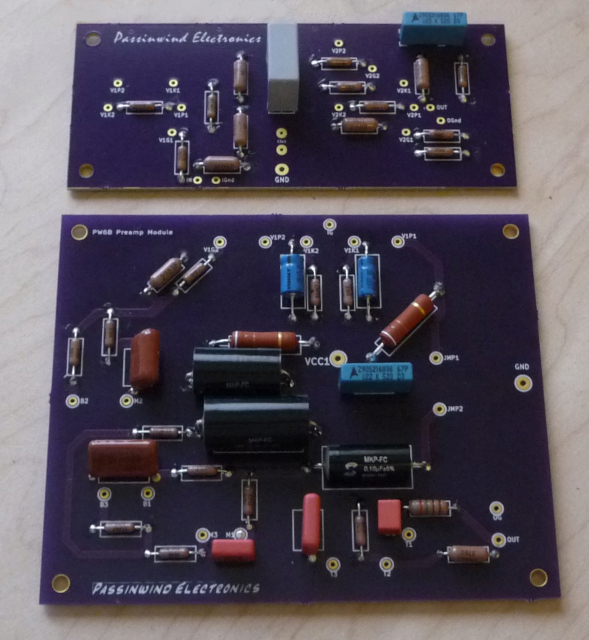
Nearly a decade ago I bought a van load of MI electronics parts from a friend in the repair business, including a few cool tube power amp boards and the associated power transformers. These were surplus repair stock for a now defunct early 00s guitar amp line with a few unusual features, and I thought I might be able to work up a decent DIY bass amp based on one. There were a lot of other interesting things in that load though, and I concentrated on the DSP stuff for a year or three before finally starting in on the new amp design. I already had a leftover set of preamp PCBs from a 2015 rack preamp build and figured I could adapt them:
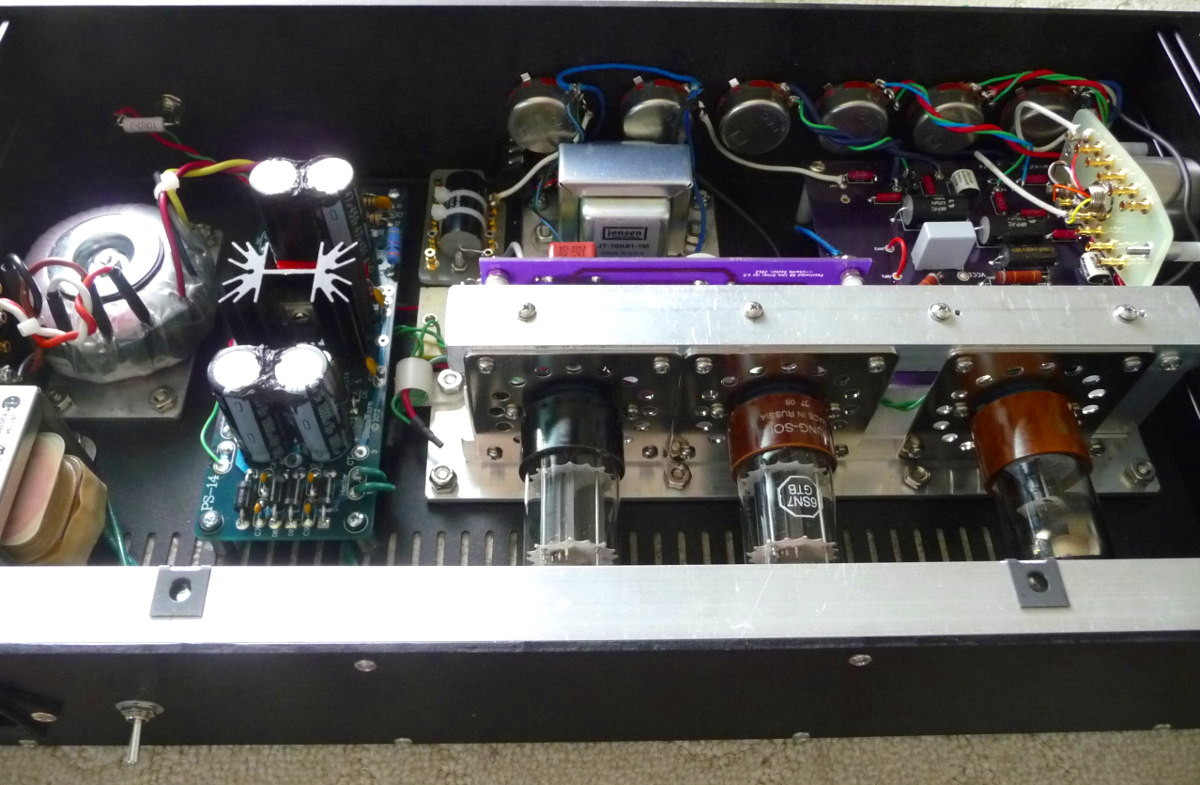
Those are from the rack preamp build, which looked something like this inside:
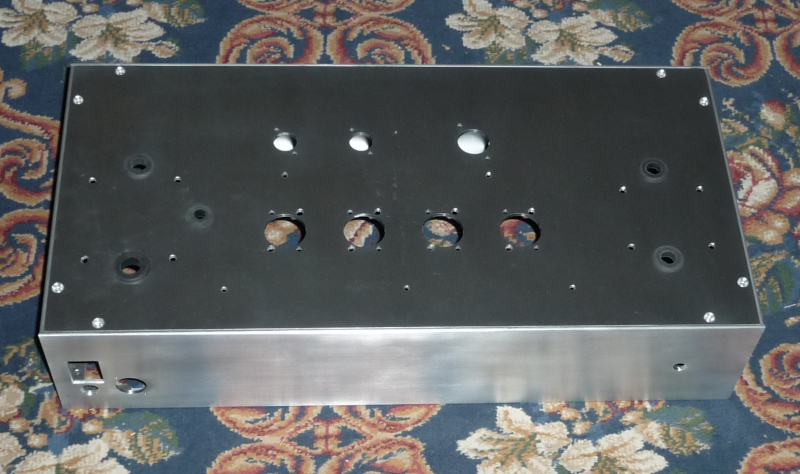
The logistics of the new build were much different, but equally challenging in their own way. Lots of custom cabling, precision drilling beyond my capacity, etc. I settled on these guys to make me a custom chassis: Landfall Systems . The website is barely there now, but it used to be pretty real and the owner was cool to work with. CNC machining was reasonably priced and I only screwed up one aspect, which I was able to work around fairly easily. They would have just made a new top plate if needed anyway though. I only had them machine the tough parts, mainly the tube socket mounting. That got me here:
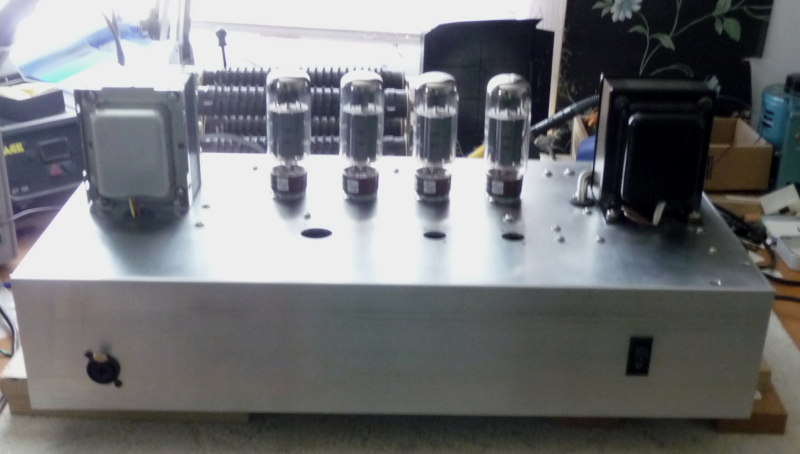
Before I committed to a front panel layout I decided to build up the power amp section and try a variety of preamp schemes to see what complemented the unusual power amp format, which features a single opamp front end driving a step up transformer. There's no usual splitter/driver tube at all, just opamp-->transformer-->4 X EL34 power tubes. By now we're in COVID lockdown and I am playing with financial incentive boost money:
Power tubes are TAD EL34 STR, which were Shuguang production and much cheaper back then. I commissioned a Hiwatt DR103 clone transformer from Heyboer for the output, which they gave me a great deal on since they were as hungry for business as most other people at that time. I bought some Europly for a temporary shell and went down to see my friends at Marco Bass Guitars in Oregon for some tests on laser etching a front fascia plate:
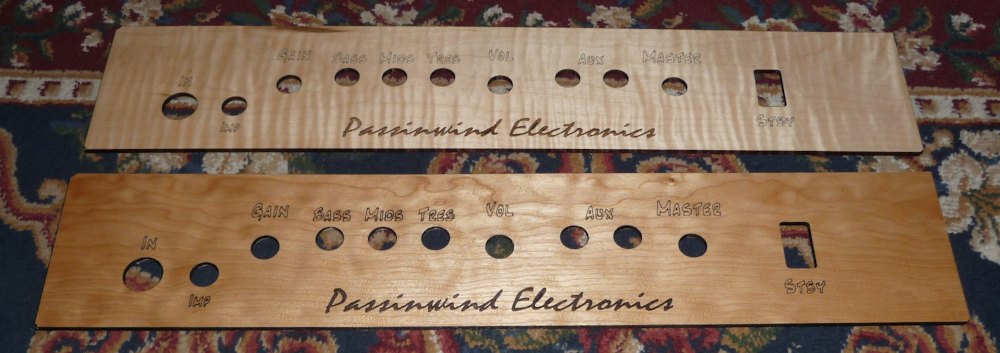
We made around half a dozen and these were the two I picked for the first build:
There was one more that I really loved, but it has a couple of fatal flaws:
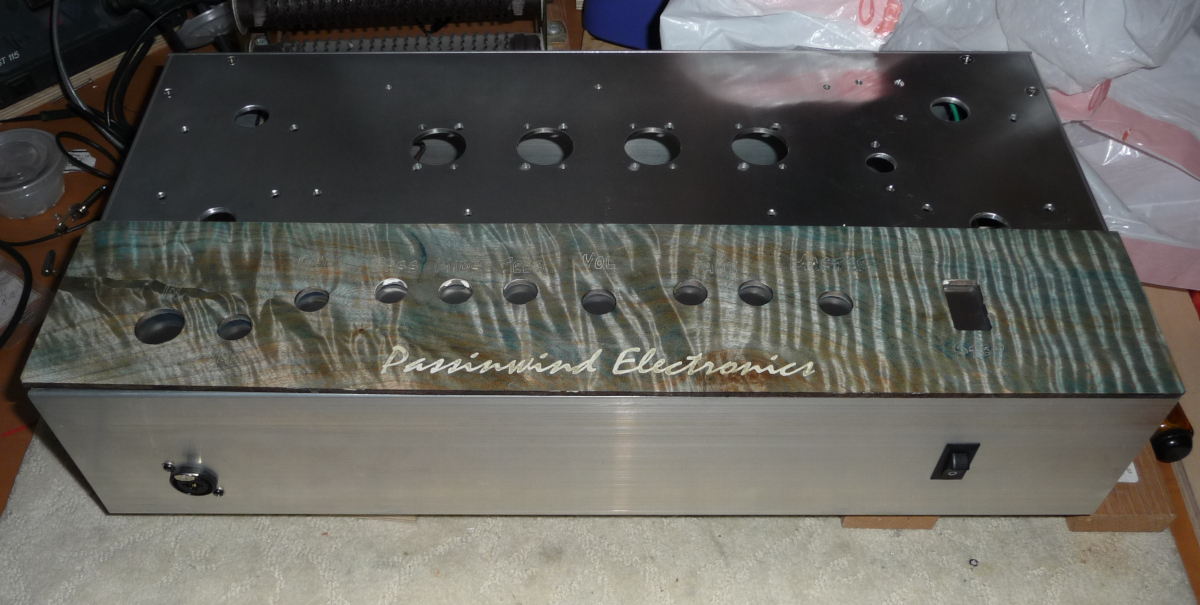
There will undoubtedly be a round 2 and I'm sure we can improve on this aspect considerably. On to the wood knobs, from Etsy vendor Pickknobs:

They did a few different custom sets for me and I may have them do at least a couple more yet.
So I ran the power amp with different tube and solid state preamps for a few months, including the older version of the one pictured above. Everything sounded good through it and it's not especially demanding at all as far as signal level or impedance. My favorites were the original rack pre, (PW6B) and this solid state half rack one, the PW7B:
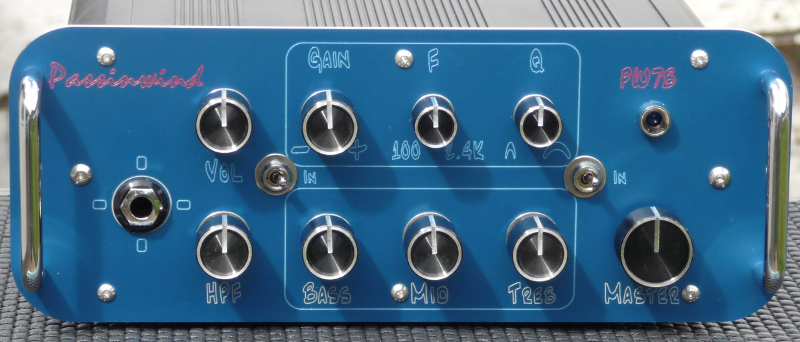
I figured I could implement an aux/power amp input and run the PW7 or various pedals as an alternative front end, and use my spare PW6 boards as the default internal preamp. Naturally I decided to tweak the EQ tuning a bit though, so I went on an LTspice binge that ultimately ended up lasting over five years. Life got in the way, then health issues got real, a helicopter ride ensued, yada yada. I survived, eventually started getting healthier, and at that point in early 2026 I just wanted to finish this thing up and probably trade it away, since I'm mostly playing acoustic guitar these days and haven't played a real gig since 2018. The power amp had long ago been removed for safekeeping and shop conditions did it no favors, but luckily I had a fresh replacement handy and it was time to carry on.
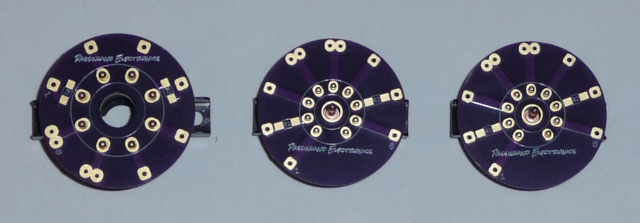
I made up some tube socket breakouts with SMD grid stopper resistors right at the tube pins:
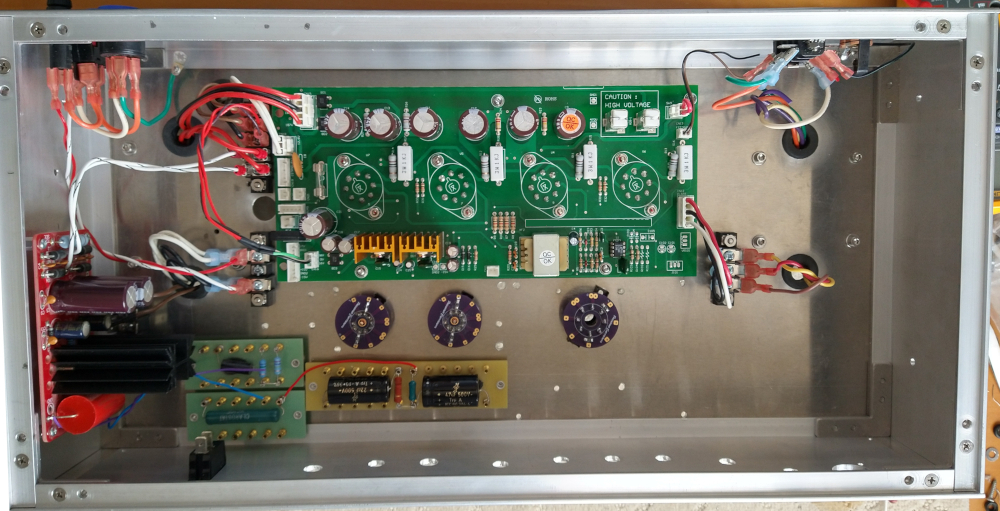
For this build I settled on 50s and 60s vintage NOS 12SL7 and 12AU7 tubes, the older preamps had used 6SL7 and 6SN7. My power transformer already has the right taps for regulated 12V filaments, so I ran with that. I still needed a filament voltage regulator board, heater voltage elevation board, and high voltage resistor/filter string for the preamp, which got me to here via turret boards and a Glassware Audio 12V regulator kit:
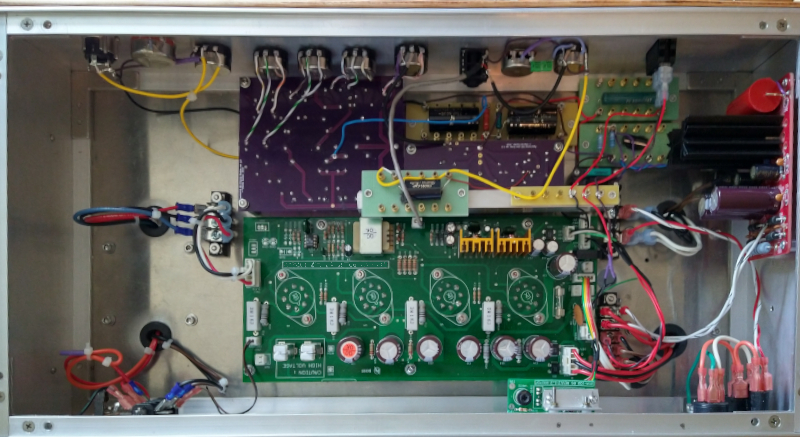
..and right about then I realized that Heyboer had sent me the wrong output transformer six years ago, a 50 watt one that still managed to make 90 clean watts on my test bench, and even sounding great while doing that. Could have would have should have caught that in 2020, but nope. I emailed the owner, he confirmed his mistake, and offered to make me a new one for half retail. So I build up the preamp section, work through some inevitable glitches with grounding and wiring details, and test in 60 watt mode with two output tubes. Sounds OK, then good, then really good as I iron things out. By now it looks like this, with TOCOS pots plumbed in:
Two months later I received the new output trafo, and since the original CNC mounting holes were for the big one anyway it fit with no modifications:
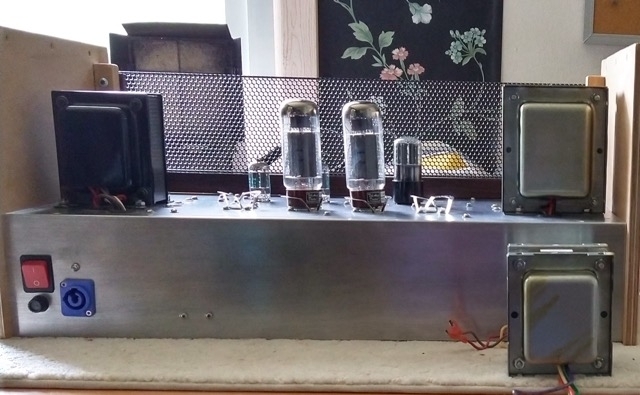
Much beefier, and initial bench testing with all four output tubes shows 100 watts on the nose before visible clipping. I've added a fourth tone control in what was going to be the Aux volume slot, which does something like Presence or maybe Air. Similar to a Fender amp's brightness switch, adding a cap bypass across a volume control, in this case the Master. The tone controls are optimized specifically to complement my DIY onboard preamps, with EQ curves that swerve in different places as much as possible. Somehow I appear to have nailed this on the first try, which is frankly shocking. The bass I'm mainly testing with has a filter preamp on the bridge and a Bass/Mids boost/cut format for the neck pickup, with active mixing via two detented boost/cut volume controls. Not necessarily an intuitively native fit with what looks to be an old school tube widget, but somehow it works beautifully.
Still to go: the input impedance selector implementation. I don't even own a passive bass, but I may occasionally want to play an electric guitar through this thing, or at least try a Fender bass through it someday. Currently I am running at a 100k ohm nominal input impedance and I may even want to go lower at some point too if I ever want to run studio gear into the front end. I'll probably go with a 4 position selector, but the switch I'm using can be configured for anything between 2-12 positions, so I have options.
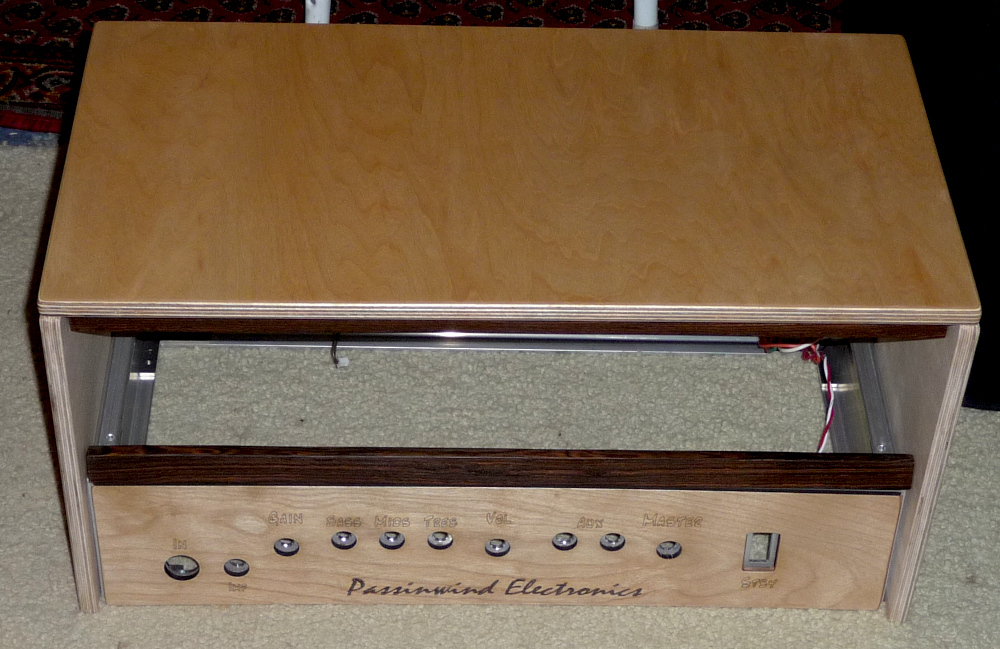
Oh, I suppose I ought to throw up a crappy phone pic of the nearly finished build too, I'll have to get a proper beauty shot done eventually.
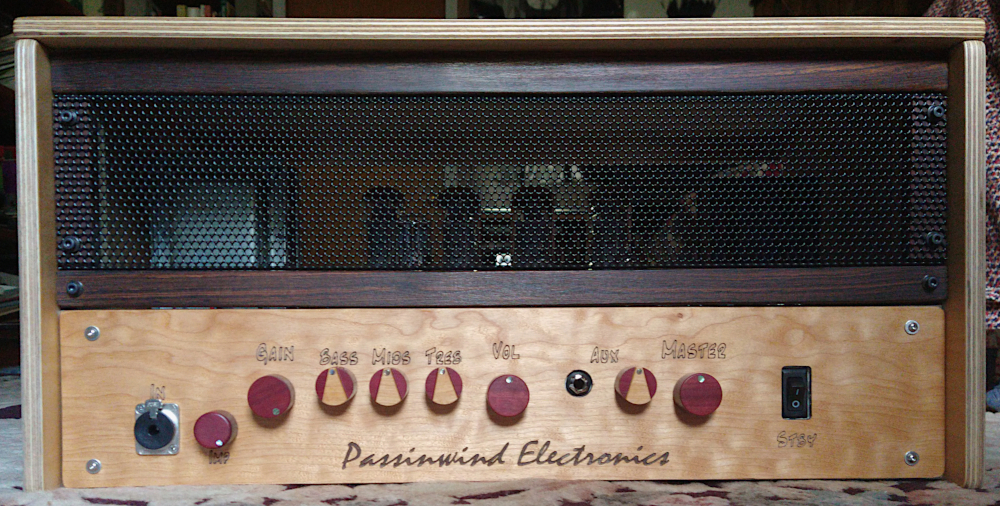
I expect to do a finger jointed hardwood shell soon, probably myrtlewood, and a revised front panel with updated control labels. But for now I'm going to bolt up the plywood shell, throw some simple brass corners on it, and just enjoy for a bit.
Those are from the rack preamp build, which looked something like this inside:
The logistics of the new build were much different, but equally challenging in their own way. Lots of custom cabling, precision drilling beyond my capacity, etc. I settled on these guys to make me a custom chassis: Landfall Systems . The website is barely there now, but it used to be pretty real and the owner was cool to work with. CNC machining was reasonably priced and I only screwed up one aspect, which I was able to work around fairly easily. They would have just made a new top plate if needed anyway though. I only had them machine the tough parts, mainly the tube socket mounting. That got me here:
Before I committed to a front panel layout I decided to build up the power amp section and try a variety of preamp schemes to see what complemented the unusual power amp format, which features a single opamp front end driving a step up transformer. There's no usual splitter/driver tube at all, just opamp-->transformer-->4 X EL34 power tubes. By now we're in COVID lockdown and I am playing with financial incentive boost money:
Power tubes are TAD EL34 STR, which were Shuguang production and much cheaper back then. I commissioned a Hiwatt DR103 clone transformer from Heyboer for the output, which they gave me a great deal on since they were as hungry for business as most other people at that time. I bought some Europly for a temporary shell and went down to see my friends at Marco Bass Guitars in Oregon for some tests on laser etching a front fascia plate:
We made around half a dozen and these were the two I picked for the first build:
There was one more that I really loved, but it has a couple of fatal flaws:
There will undoubtedly be a round 2 and I'm sure we can improve on this aspect considerably. On to the wood knobs, from Etsy vendor Pickknobs:
They did a few different custom sets for me and I may have them do at least a couple more yet.
So I ran the power amp with different tube and solid state preamps for a few months, including the older version of the one pictured above. Everything sounded good through it and it's not especially demanding at all as far as signal level or impedance. My favorites were the original rack pre, (PW6B) and this solid state half rack one, the PW7B:
I figured I could implement an aux/power amp input and run the PW7 or various pedals as an alternative front end, and use my spare PW6 boards as the default internal preamp. Naturally I decided to tweak the EQ tuning a bit though, so I went on an LTspice binge that ultimately ended up lasting over five years. Life got in the way, then health issues got real, a helicopter ride ensued, yada yada. I survived, eventually started getting healthier, and at that point in early 2026 I just wanted to finish this thing up and probably trade it away, since I'm mostly playing acoustic guitar these days and haven't played a real gig since 2018. The power amp had long ago been removed for safekeeping and shop conditions did it no favors, but luckily I had a fresh replacement handy and it was time to carry on.
I made up some tube socket breakouts with SMD grid stopper resistors right at the tube pins:
For this build I settled on 50s and 60s vintage NOS 12SL7 and 12AU7 tubes, the older preamps had used 6SL7 and 6SN7. My power transformer already has the right taps for regulated 12V filaments, so I ran with that. I still needed a filament voltage regulator board, heater voltage elevation board, and high voltage resistor/filter string for the preamp, which got me to here via turret boards and a Glassware Audio 12V regulator kit:
..and right about then I realized that Heyboer had sent me the wrong output transformer six years ago, a 50 watt one that still managed to make 90 clean watts on my test bench, and even sounding great while doing that. Could have would have should have caught that in 2020, but nope. I emailed the owner, he confirmed his mistake, and offered to make me a new one for half retail. So I build up the preamp section, work through some inevitable glitches with grounding and wiring details, and test in 60 watt mode with two output tubes. Sounds OK, then good, then really good as I iron things out. By now it looks like this, with TOCOS pots plumbed in:
Two months later I received the new output trafo, and since the original CNC mounting holes were for the big one anyway it fit with no modifications:
Much beefier, and initial bench testing with all four output tubes shows 100 watts on the nose before visible clipping. I've added a fourth tone control in what was going to be the Aux volume slot, which does something like Presence or maybe Air. Similar to a Fender amp's brightness switch, adding a cap bypass across a volume control, in this case the Master. The tone controls are optimized specifically to complement my DIY onboard preamps, with EQ curves that swerve in different places as much as possible. Somehow I appear to have nailed this on the first try, which is frankly shocking. The bass I'm mainly testing with has a filter preamp on the bridge and a Bass/Mids boost/cut format for the neck pickup, with active mixing via two detented boost/cut volume controls. Not necessarily an intuitively native fit with what looks to be an old school tube widget, but somehow it works beautifully.
Still to go: the input impedance selector implementation. I don't even own a passive bass, but I may occasionally want to play an electric guitar through this thing, or at least try a Fender bass through it someday. Currently I am running at a 100k ohm nominal input impedance and I may even want to go lower at some point too if I ever want to run studio gear into the front end. I'll probably go with a 4 position selector, but the switch I'm using can be configured for anything between 2-12 positions, so I have options.
Oh, I suppose I ought to throw up a crappy phone pic of the nearly finished build too, I'll have to get a proper beauty shot done eventually.
I expect to do a finger jointed hardwood shell soon, probably myrtlewood, and a revised front panel with updated control labels. But for now I'm going to bolt up the plywood shell, throw some simple brass corners on it, and just enjoy for a bit.
Last edited: