D

Enjoy the benefits of a premium membership!
Upgrade Account
-
TalkBass has been independent since 1998. Add your voice.
Create a free account to reply to discussions, view embedded media, and browse with fewer display ads.
Join free Log in
Want zero display ads or expanded classifieds tools? Compare plans.
You are using an out of date browser. It may not display this or other websites correctly.
You should upgrade or use an alternative browser.
You should upgrade or use an alternative browser.
A mystery wrapped in an enigma
- Thread starter B-Mac
- Start date
More options
Who Replied?



I had an L1000. It was not in any way active. And it was awesome. And I have a first year SB1. Also not active.

Me too.I have both passive and active basses... is that non-binary?
Not what this is about though.
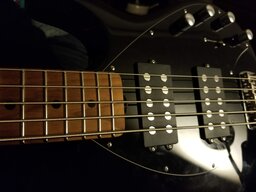
I also have both active (ebmm g&l and spector) and passive (fender) basses. I dont trip about them being active or passive, I like how they all sound.

Since I’ve joined TB I’ve noticed a strong disdain for active electronics whether or not the pups are active or passive.
I've been on here quite a while, and while there are people with preferences, I haven't noticed this "strong disdain" that you speak of.
I have both passive and active basses... is that non-binary?
Part of you must have strong disdain for the other part. If you're not wallowing in self hate, there's something wrong with you. ;-)

drumvsbass
Commercial User
- Aug 20, 2011
- 1,981
- 4,324
- Disclosures
- I work for Long and McQuade Musical Instruments Canada in Sales.
It stems from an attachment to tradition and ubiquity. But also, If you want a Pbass for the Pbass sound, why would you get an active Pbass when that was NEVER the sound of a 'traditional' Pbass. Why else would you buy a Pbass?
The only real argument for active electronics is if you are recording direct and you really don't trust the engineer. Every other place you'd likely have an EQ of some sort at your disposal be it an amp or preamp or channel strip...
That said, all my basses are currently active. But, I could count on one hand the number of times I have ever touched the mid knob on any of them.
The only real argument for active electronics is if you are recording direct and you really don't trust the engineer. Every other place you'd likely have an EQ of some sort at your disposal be it an amp or preamp or channel strip...
That said, all my basses are currently active. But, I could count on one hand the number of times I have ever touched the mid knob on any of them.
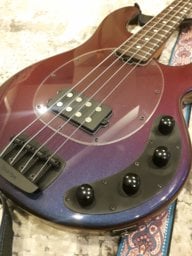
I don't know, but I always find it amusing when people say they don't like active basses because of the battery maintenance. I usually don't have to change batteries on a bass in less than a year at a time if I had to guess. I've also never encountered any issues with an active bass on a gig. Maybe I am just lucky or perhaps my basses don't drain batteries as fast as others, not really sure.
We all play basses that rely on active circuitry somewhere in the chain. I personally like my electronics on the floor, some like them in their bass, some have an amp behind them, some mix these things. I have my reasons for what I do, but if I see/hear someone else playing bass, I focus on whether or not they're making good music. What gear they're using is perhaps interesting, but pretty far down the chain of concerns.

IMO - it's best just to enjoy what you've got. As far as I'm concerned - less knobs is better, but that's because when I play bass that just adds one knob to the bass equation. If you're not a knob and know what you're doing, feel free to have as many knobs as you want on your bass.
I don't know, but I always find it amusing when people say they don't like active basses because of the battery maintenance.
As a FOH person, I've replaced batteries in acoustic guitars dozens of times. Many of those times, the player had no idea why his or her guitar wasn't working. The last live recording gig I did, my in ear pack went out - as a FOH person, I always made sure I handled battery chages. As a player, I assumed that the sound guys (we had a FOH person and a monitor person) had that covered, but in the middle of a tune, oops. Luckily it was a tune that I['ve played a gazillion times before, and a pretty simple part. I finished the tune (last in the set), and when I listened on Youtube, I couldnt tell that I missed a beat. Anyway, when I'm doing production stuff, I have a very different brain installed than when I'm playing. As a player, I'm much less likely to be paying attention to technical details - like how much battery life I have.
If the battery bought me something that I couldn't get otherwise, I might have active basses, but I have much more flexibility with having my basses passive. I like to be able to tweak the sound of my basses with capacitive loading, you can't do that with active pickups - the whole point of EMG's active stuff is that their sound doesn't change with loading. My tone controls (beyond a simple one or two on the bass) are on my pedalboard - having them there means I can change them to a different kind whenever I want, without having to rewire a bass.
All that said, there are folks that can run circles around my playing on an active bass. I understand how to design circuits in my basses and generate different sounds much better than them, but when it comes to playing, what I got is what I got. For that issue, I got nothing.


G&L's M-series basses (e.g. M-2000), introduced decades after Mr Fender's demise, are G&L's only always-active (preamp always on) basses. The M-series pickups, like those of all G&L bass models, are passive.
Many players of G&L basses that feature a preamp (e.g. L-2000) play their basses in passive mode most of the time; switching on the preamp only when necessary.
To call G&L's MFD pickups hot understates it. Accordingly, several G&L models, such as the SB-1, do not include a preamp at all.
Therefore, the premise of the OP does not stand.
Many players of G&L basses that feature a preamp (e.g. L-2000) play their basses in passive mode most of the time; switching on the preamp only when necessary.
To call G&L's MFD pickups hot understates it. Accordingly, several G&L models, such as the SB-1, do not include a preamp at all.
Therefore, the premise of the OP does not stand.
Last edited:

@B-Mac - About the only thing I could suggest is that these people you’re speaking about simply prefer that Fender basses stay the way they are. A conjecture borne out by the failure of the very innovative Fender Dimension bass to gain traction in the bass world. Which was a real pity IMO since the Dimension was a very capable and nicely executed bass.
G&L, while still a “Fender” of sorts, doesn’t threaten to rock the continuity of Fender’s PB/JB product line. So these same people are more open to major changes - provided such changes are confined to G&L and MM basses.
FWIW, when it comes to a PB I like it to sound as traditional PB as it gets. Because I really like that sound and consider a PB to be perfect at doing what it does. I don’t want it “better” or “more up to date.” I want it for that classic vintage PB vibe. And I feel much the same way about JBs. If I want “different,” I’ll look at something else entirely.
As far as active fenders go, I don’t care for them. Not because I’m a member of the PB/JB Conservation Party. It’s only because I never really much liked the way any active Fender I ever played sounded. I don’t categorically object to putting active electronics in a JB. I’ve got an Audere preamp in one of mine. And it’s a fine bass. But I don’t consider its sound to be what I think iof as a “JB sound.” And with that preamp in it, it’s not really a JB anymore. It’s (to me anyway) now a really nice bass that just so happens to look like a JB, if that makes any sense.
G&L, while still a “Fender” of sorts, doesn’t threaten to rock the continuity of Fender’s PB/JB product line. So these same people are more open to major changes - provided such changes are confined to G&L and MM basses.
FWIW, when it comes to a PB I like it to sound as traditional PB as it gets. Because I really like that sound and consider a PB to be perfect at doing what it does. I don’t want it “better” or “more up to date.” I want it for that classic vintage PB vibe. And I feel much the same way about JBs. If I want “different,” I’ll look at something else entirely.
As far as active fenders go, I don’t care for them. Not because I’m a member of the PB/JB Conservation Party. It’s only because I never really much liked the way any active Fender I ever played sounded. I don’t categorically object to putting active electronics in a JB. I’ve got an Audere preamp in one of mine. And it’s a fine bass. But I don’t consider its sound to be what I think iof as a “JB sound.” And with that preamp in it, it’s not really a JB anymore. It’s (to me anyway) now a really nice bass that just so happens to look like a JB, if that makes any sense.
Last edited:
I don't get this crippling fear of batteries in active basses, that some people exhibit.
In the 30 years I've been playing my StingRay, I think I've needed to change the battery maybe 7 or 8 times - and only one of those times was the battery depleted to the point that it was having any effect on the instruments output.
There's a video from CLF, where they dig out Leo's original StingRay prototype (it has a reverse P, very similar to the conventional P on the EBMM Cutlass, and Caprice, and has cut only EQ).
The bass still has the same battery Leo put in it 40 years ago, and it works fine (if they did put in a fresh one, they make no mention of it, but clearly the old one didn't leak, or they'd have had some work to do).
In the 30 years I've been playing my StingRay, I think I've needed to change the battery maybe 7 or 8 times - and only one of those times was the battery depleted to the point that it was having any effect on the instruments output.
There's a video from CLF, where they dig out Leo's original StingRay prototype (it has a reverse P, very similar to the conventional P on the EBMM Cutlass, and Caprice, and has cut only EQ).
The bass still has the same battery Leo put in it 40 years ago, and it works fine (if they did put in a fresh one, they make no mention of it, but clearly the old one didn't leak, or they'd have had some work to do).
@B-Mac Fender’s PB/JB
I could really go for a Fender Peanut Butter and Jelly Burrito , right about now.
I could really go for a Fender Peanut Butter and Jelly Burrito , right about now.
Me too!!!

Sure. They’re fattening as it gets. But boy are they ever good!
I say go for it. Take-out’s open till midnight on weeknights. Who's driving?


[QUOTE="I also very much enjoy both Kellogg's cornflakes, and the activity they were invented to suppress.[/QUOTE]
I approve this message.
I approve this message.