• TalkBass has been independent since 1998. Add your voice.
    Create a free account to reply to discussions, view embedded media, and browse with fewer display ads.
    Join freeLog in
    Want zero display ads or expanded classifieds tools? Compare plans.

About "bass frequencies need space to develope" myth

To everyone who ever said something like "bass frequencies need space to develop" on TB:

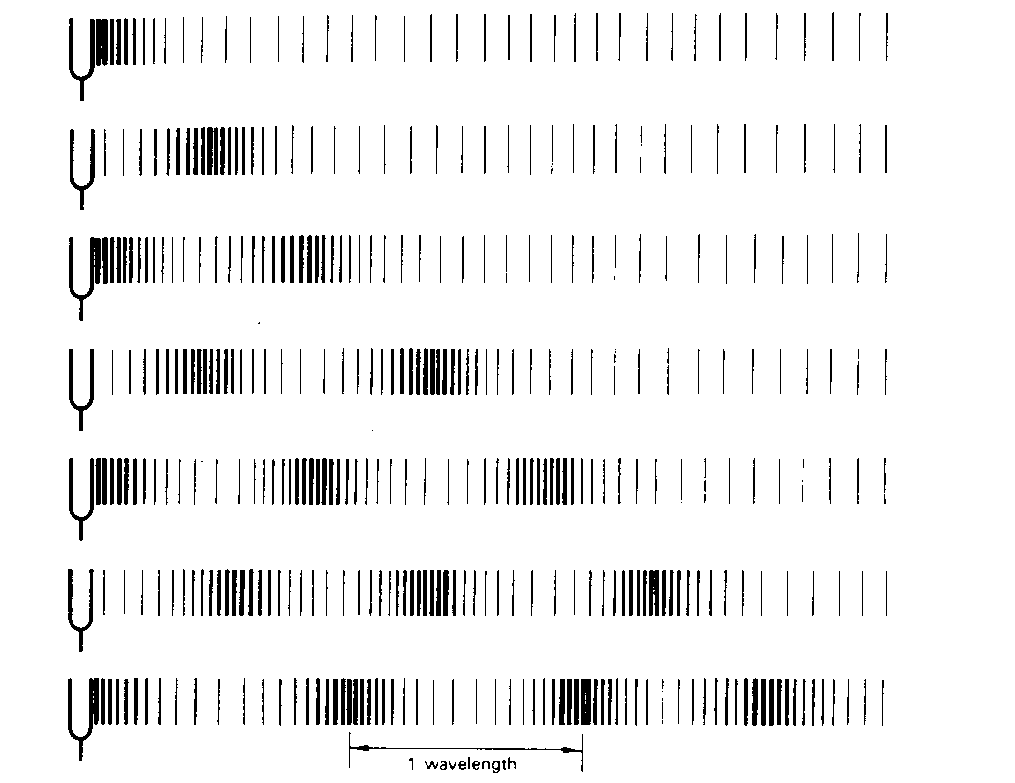
1. "Sound wave" is not this:
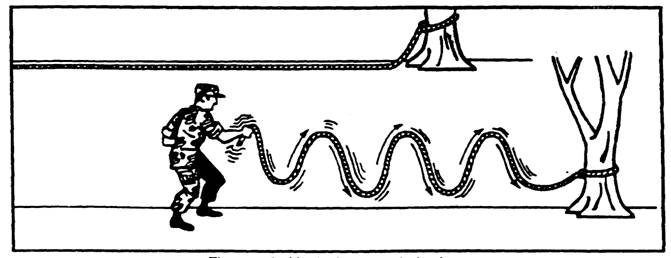
y_cc9e6765.jpg


Sound wave is this:

Image222.gif


Yes, soundwave consists of moving compressions and rarefactions of air. It doesn't need "space to develop" like a rope wave.

The reason why sound seems more "bassy" when you move farther from amp is that higher frequencies get adsorbed by air faster than lower ones. But they both still get adsorbed, no "development" here.
Another reason may be sound interference.

2. If physics is too boring for you, just think: if low frequency sound wave actually needed space to develop, you wouldn't hear any bass in your headphones.

Thanks for the attention.

I know, this topic is beaten to death, but i think there must be some sticky or FAQ or something: i see this myth repeating all the time in different threads. Or we may just give myth-spreaders link to this thread instead of repeating the same explanations every time.
 
  • Like
Reactions: DukeLeJeune
I believe this myth developed from the use of folded horn "W" boxes for low end, e.g. the Acoustic 360, EV Elminator, Peavey FH-1, etc. Now with those things, there was some truth to the experience. Standing right in front of one of those you wouldn't hear the low end. But 15 -20 feet out front it'd be shaking everything. People just extrapolated from the performance of a specific cabinet design to low frequencies in general.

John
 
I believe this myth developed from the use of folded horn "W" boxes for low end, e.g. the Acoustic 360, EV Elminator, Peavey FH-1, etc. Now with those things, there was some truth to the experience. Standing right in front of one of those you wouldn't hear the low end. But 15 -20 feet out front it'd be shaking everything. People just extrapolated from the performance of a specific cabinet design to low frequencies in general.

Folded horn cabs don't need space for low frequencies to develop, either. If you checked again for the phenomenon, you'd probably find that the lows are indeed there when you're close up.
 
I dunno what the phenomena was, maybe it was the mids ('cause those things don't really have any highs) but standing right in front of one I could never hear myself. I remember playing through one at an open-mic thing. I kept turning it up because the drummer and guitarist said they couldn't hear me. After our songs, I talked to my buddy who owned the rig (Acoustic 360) and he said couldn't hear any one excpet me, and he was getting into watching the beer bottles dance across his table...
 
Little bit of truth there. The propagation of the signal "develops" as it travels through the air and reverberates through the room. Sound is a wave and the lower the fq. The longer the wave. It's kind of how / why you "tune" a room in a studio or elseware. You find the natural "center" of the room acousticly and design around it. Or you engineer the room to put the dead spot where you want it.
 
Little bit of truth there. The propagation of the signal "develops" as it travels through the air and reverberates through the room. Sound is a wave and the lower the fq. The longer the wave. It's kind of how / why you "tune" a room in a studio or elseware. You find the natural "center" of the room acousticly and design around it. Or you engineer the room to put the dead spot where you want it.

The existence of room modes does not mean that acoustical waves "develop" over a distance.
 
  • Like
Reactions: DukeLeJeune
Little bit of truth there. The propagation of the signal "develops" as it travels through the air and reverberates through the room. Sound is a wave and the lower the fq. The longer the wave. It's kind of how / why you "tune" a room in a studio or elseware. You find the natural "center" of the room acousticly and design around it. Or you engineer the room to put the dead spot where you want it.
That's because of reflections from the room, not anything to do with the sound wave "developing". If you are out in an open field, the SPL falls away exponentially with distance irrespective of frequency.
 
Both your representations are severely lacking when it comes to sound propagation through a medium. Both are two dimensional and both are good for showing the concept. A better representation might be looking at that tuning fork from the top or showing the concentric rings from a pebble dropped in a lake. As far as sound developing that would be called "focus". Frequency, amplitude, atenuation, focus, reflections, refractions, and other sounds all play a role called "acoustics". That can be a very complex mess for a brainiac physics teacher to discuss. A less educated TBer/musician might call it "takes time to develop".

The notes you don't play are the most important ones.
 
James Judson said:
Both your representations are severely lacking when it comes to sound propagation through a medium. Both are two dimensional and both are good for showing the concept. A better representation might be looking at that tuning fork from the top or showing the concentric rings from a pebble dropped in a lake. As far as sound developing that would be called "focus". Frequency, amplitude, atenuation, focus, reflections, refractions, and other sounds all play a role called "acoustics". That can be a very complex mess for a brainiac physics teacher to discuss. A less educated TBer/musician might call it "takes time to develop".

The notes you don't play are the most important ones.

Exactly. So many people want to split hairs over terms for arguments here.
 
the difference between the right term and the wrong term is often only a hairs-breadth, so "splitting it" is sometimes necessary.

"developing" implies something not forming until further away, and that's just not what happens, so using that term is misleading.
 
Bob Lee (QSC) said:
The existence of room modes does not mean that acoustical waves "develop" over a distance.

That is correct for what were talking about here. But most non technical people will describe the way the sound "fills the room" this way. Those old baffled cabs and the beloved 8x10 svt are good examples . In small spaces they don't sound very good. Give them a stage and some room and their king.

Modulated transmitted signals can develop over distance but that is something different.
 
walterw said:
the difference between the right term and the wrong term is often only a hairs-breadth, so "splitting it" is sometimes necessary.

"developing" implies something not forming until further away, and that's just not what happens, so using that term is misleading.

True, but I bet you get that same term and answer from non technical people. It's ok we understand what they mean.
 
True, but I bet you get that same term and answer from non technical people. It's ok we understand what they mean.

Resonation takes space. Lower frequencies resonate better in bigger boxes.

Sound doesn't develop. film, characters, cases of influenza develop.

Might be a case of some folks saying "develop" when they are thinking "resonate".
 
Rf signals can will if you want them too. They are basically high pitched sound .

If you really want to split hairs you can say sound does, as soon as the full wave length comes off the speaker cone , or through the air between the headphones and your ear drums. But for all intensive purposes 30 Hz dosent change after its generated by the speaker. It's still 30 Hz.