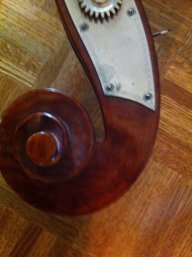
I just wanted to mention as a sidenote; my teacher used to tell me to play in the dark (in a spooky voice), he's a character. However I found practicing in the dark some of the time very useful IMO, because knowing the instrument is key, no pun intended because of what was said about knowing keys as well. Your bass may have some natural landmarks also if it's a vintage instrument maybe. I have no idea what you go through, Dave, on a daily basis but I commend you, you'll be good no matter what age you are becasue you have the drive. Fred

Enjoy the benefits of a premium membership!
Upgrade Account
-
TalkBass has been independent since 1998. Add your voice.
Create a free account to reply to discussions, view embedded media, and browse with fewer display ads.
Join free Log in
Want zero display ads or expanded classifieds tools? Compare plans.
You are using an out of date browser. It may not display this or other websites correctly.
You should upgrade or use an alternative browser.
You should upgrade or use an alternative browser.
Advice for a blind learner!
- Thread starter profdave
- Start date
More options
Who Replied?
I'd recommend really learning your positions, ie, become intimately familiar with where every note is on the neck. I studied out of the Simandl book for double bass, for my upright bass work, and I basically play without looking at the fingerboard most of the time. It's essential for sight reading, but I also think it would be really helpful for a person such as yourself, who can't rely on visual cues as much as other people.
I would agree with this. I rarely look at the neck of my bass. And I also studied from the Simandl book. Learn your positions.
I'm sure a physical bump of some sort could also help. Though it would drive me nuts.
This has been a VERY valuable skill for me. When I lived in Lake Tahoe, (years ago) I'd always get hired to play the "Wet Tee Shirt" contests in the area since I never had to look at my neck. Most of the other local guys had to look at the bass and would screw everything up when they looked at the girls instead.

Bryan R. Tyler
TalkBass: Usurping My Practice Time Since 2002
Staff member
Administrator
Gold Supporting Member
Supporting Member
- May 3, 2002
- 28,948
- 20,932
- Disclosures
- Reviewer: Bass Player Magazine
How is he typing this... The computer reads the text maybe, brail keyboard?
"Legally blind" is still sighted- it usually just means things like "what does the menu directly over my head at McDonalds say" or "someone is waving to me 14 feet away but I have no idea who it is"

Lots of good advice here. Here's a new one - In Ear Monitors (IEMs). They may improve how you hear yourself, especially in aurally crowded situations.
I would agree with this. I rarely look at the neck of my bass. And I also studied from the Simandl book. Learn your positions.
I'm sure a physical bump of some sort could also help. Though it would drive me nuts.
This has been a VERY valuable skill for me. When I lived in Lake Tahoe, (years ago) I'd always get hired to play the "Wet Tee Shirt" contests in the area since I never had to look at my neck. Most of the other local guys had to look at the bass and would screw everything up when they looked at the girls instead.
How cool was that ?


the Kubicki bases have nice sized fret markers on the side of the neck, as compared to the tiny little dots most other basses have.

Hey Man! Totally blind here. A good handful of ideas/suggestions here. IMO, the best and most important being your own suggestion. "...commit myself to simply practice, practice, practice so I can hit the notes without any visual input..." Know the fretboard man. Be the board, be the board, be the board.
I also think in ear monitoring is a good thing. You'll have the better chance to hear yourself. It's all individual, but in the long run, you don't really want to rely on (develop the habit?) a temporary fix like some sort of physical marker on your neck. Some day you're going to want a really nice bass that your not going to want to marr. Not to mention all the basses you'll be trying out over the next years.
I also think in ear monitoring is a good thing. You'll have the better chance to hear yourself. It's all individual, but in the long run, you don't really want to rely on (develop the habit?) a temporary fix like some sort of physical marker on your neck. Some day you're going to want a really nice bass that your not going to want to marr. Not to mention all the basses you'll be trying out over the next years.
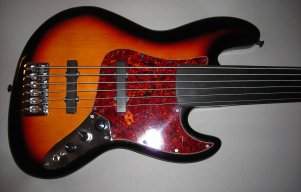
On top of what has already been said, perhaps something like a 5 or 6 string bass might not be a bad idea in the sense that it would help with avoiding a certain amount of left hand shifting.
Sounds like good advise to get a 5 or 6 string. Playing a 6 string on Frets 5 to 9 will pretty much cover many songs out there.
How cool was that ?
EXTREMELY COOL!!!
On the Nevada side they didn't have to keep any clothing on, and the winner would get Ski gear, so It was always about who could get the nastiest.
It was a time I was very thankful for having a good musical education. They even paid me pretty well. I would have done it for free. lol
I can see (yet?) but I'd like to be able to play a bass without looking at fingerboard completely. My way to achieve this is to have a markers in an imagination, then have left hand to commit those "virtual" movements. It's like a brain doing all the playing first; fingers should just follow...
It's hard and it needs more practice from me.
It's hard and it needs more practice from me.
i know this won't help at the moment, but i've been playing for two years and i already know which fret makes which note, so i don't even have to hear what im playing if my guitarists have cranked it up, i know what im playing just from experience, in a year or so you will be like that. That solves not being able to hear what your playing, and as for seeing, it must be really hard, but again over time you can tell which fret is which.
As funny as it sounds, I think you are barking up the wrong tree if you are looking for a visual solution to the situation. If you are legally blind, you will probably not be able to use your eyes to garantee note choices no matter what gimmick you find because when you factor in the crazy situations that we play in and how it affects the visability of the people who are supposed to be able to see but can't, you are going to be left behind no matter what. The eyes are not the solution. The work environment is just too crazy to rely on eyes, no matter what.
I would really recommend extensive quality time with the major scale up and down the neck in all keys. This will get you to learn the physical muscle memory you need but more importantly, you will eventually be familiar with all the intervals. Once you have the intervals down, you will be able to get in and out of trouble easily. It would be very long to explain exactly how you should practice the scale and to what extent, but any teacher worth their salt should be able to help you with this. If you you don't have one, write me here and I can send you a note to get you started. Your ears will lead.
In a sense, your situation is not much different from other musicians who rely strictly on their ears. It's just that you may not be able to have the training wheels (eyes) in the beginning. Long term, that may be a blessing because it will force you to develop the important stuff (ears) and forgo the unimportant stuff (eyes) that generally get in the way.
I'm impressed that you want to embetter yourself to learn a new instrument. If you stick to it, a whole world is waiting for you where sight is really not an issue. In music, the only disability we have are the one we are not willing to work on, not the ones we are born with. Music is the great unifier and equaliser.
John
I would really recommend extensive quality time with the major scale up and down the neck in all keys. This will get you to learn the physical muscle memory you need but more importantly, you will eventually be familiar with all the intervals. Once you have the intervals down, you will be able to get in and out of trouble easily. It would be very long to explain exactly how you should practice the scale and to what extent, but any teacher worth their salt should be able to help you with this. If you you don't have one, write me here and I can send you a note to get you started. Your ears will lead.
In a sense, your situation is not much different from other musicians who rely strictly on their ears. It's just that you may not be able to have the training wheels (eyes) in the beginning. Long term, that may be a blessing because it will force you to develop the important stuff (ears) and forgo the unimportant stuff (eyes) that generally get in the way.
I'm impressed that you want to embetter yourself to learn a new instrument. If you stick to it, a whole world is waiting for you where sight is really not an issue. In music, the only disability we have are the one we are not willing to work on, not the ones we are born with. Music is the great unifier and equaliser.
John
I can see (yet?) but I'd like to be able to play a bass without looking at fingerboard completely. My way to achieve this is to have a markers in an imagination, then have left hand to commit those "virtual" movements. It's like a brain doing all the playing first; fingers should just follow...
It's hard and it needs more practice from me.
That's exactly what I do when I write a bassline.
Hey Man! Totally blind here. A good handful of ideas/suggestions here. IMO, the best and most important being your own suggestion. "...commit myself to simply practice, practice, practice so I can hit the notes without any visual input..." Know the fretboard man. Be the board, be the board, be the board.
I also think in ear monitoring is a good thing. You'll have the better chance to hear yourself. It's all individual, but in the long run, you don't really want to rely on (develop the habit?) a temporary fix like some sort of physical marker on your neck. Some day you're going to want a really nice bass that your not going to want to marr. Not to mention all the basses you'll be trying out over the next years.
l see alot of really excellent ideas here. I'm ready to install them myself and I can see pretty normal.
1. 5 r 6 string bass. It's what I play. Scales are ACROSS the neck not up and down which means you only need to learn Intervals not positions up and down neck.
2. In-ear monitors. I suffer from "masking" myself which is when noise blocks out what you are trying to hear. In-ear plugs you right into the band which is then little different from playing along with a CD etc.
3. Tactile fret markers. I could see Braille bumps where the normal fret markers are or for a 5 or 6 string I could see them on the back of the neck just above where your thumb normally sits. That way they don't bother you when sliding around but still you can reach up with your thumb to find your location.
Personally I'd invent my own code. A single bump for in-between-frets and special codes to mark octave and usual markings. I'd use the on-the-fret system of a fretless rather than the between-the-frets system normally used on fretted basses.
And let me add that generally it's all about practice, intervals, scales, and familiarity. Even sighted you really can't be staring at your neck and standing you only can see the edge anyway. So that means the markers (yours too) generally are just used as a reference to get you started cold. After that muscle memory should kick in. I can see a mute switch that does not mute the monitor so you can just use your ears to find your place.
I've got a fretless bass with LED markers and I like it, but I"m thinking these "bump" markers TB just invented would be even better! I can see something as simple as that stick-on labels that those old Dymo guns used to make with raise letters. Theoretically one could munch a long strip with bumps in right place that you could stick on the side of the fretboard.
I don't know if this will help or not, but a pretty famous double bassist, Red Mitchell, had small finishing nails placed in the back of the neck, and used those bumps as a position reference for his thumb. Maybe something like that?


