Yeah, forgot to say I play with (nickel) rounds. Flats are a no-no for me, regardless style. Have tried a couple of times and were very pleased to return to rounds...

Enjoy the benefits of a premium membership!
Upgrade Account
-
TalkBass has been independent since 1998. Add your voice.
Create a free account to reply to discussions, view embedded media, and browse with fewer display ads.
Join free Log in
Want zero display ads or expanded classifieds tools? Compare plans.
You are using an out of date browser. It may not display this or other websites correctly.
You should upgrade or use an alternative browser.
You should upgrade or use an alternative browser.
Advice for Blues trio bass please!
- Thread starter Dr Improbable
- Start date
More options
Who Replied?
- Sep 4, 2010
- 3,304
- 2,730
- Disclosures
- Endorsing: Martin Keith Guitars
I wouldn't change basses. 2 ways i can think off: the Jack Bruce route (overdrive it a bit) or to bring in some low mids and treble. Not to the extent that you'll sound like a slapper all at once but just to bring up the presence. In both cases roundwounds and adding a tad of reverb or a very short delay helps.
Having played blues with P basses, J basses and Stingrays, I'd say all are good for blues.
IMO, the P edges out the J by a fraction, because the J has a thinner top end (forget using that bridge pickup by itself...even if Jaco did it). Granted, the J is a little more ballsy/growly down low with both pickups on and thus sounds really good when playing 4/4 walking lines, but the P bass just has THE perfect sound for blues. It moans like a mutha! Flats or rounds with the tone rolled off
Stingray is fine too, with the proviso that you use flats with the tone rolled off. Zingy, clanky bass is an absolute no no when playing blues.
I'm currently playing a sadowsky metro 5. Very good blues sound with 50/50 pickup blend or blend knob favoured towards neck pickup, with vintage tone control 'on'. Beautiful sound
IMO, the P edges out the J by a fraction, because the J has a thinner top end (forget using that bridge pickup by itself...even if Jaco did it). Granted, the J is a little more ballsy/growly down low with both pickups on and thus sounds really good when playing 4/4 walking lines, but the P bass just has THE perfect sound for blues. It moans like a mutha! Flats or rounds with the tone rolled off
Stingray is fine too, with the proviso that you use flats with the tone rolled off. Zingy, clanky bass is an absolute no no when playing blues.
I'm currently playing a sadowsky metro 5. Very good blues sound with 50/50 pickup blend or blend knob favoured towards neck pickup, with vintage tone control 'on'. Beautiful sound
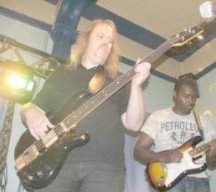
In retrospect, I'm thinking some of it is the drummer being timid. A little swing goes a long way.
This is with the previous bass player. Kind of a train wreck, IMO. I want to anchor it down better.
Not sure it was the drummist's fault - it sounded as though it was all a bit low-key due to studio constraints. Sounded fine for what it was, but I felt it needed more volume & energy
a bit like this:
This video is appropriate for this thread:
Good example of "space" creating tension, changing dynamics, single bass (yeah, a Precision) backing single guitarist, and Beth Hart as always a phenomenal example of modern blues.
Good example of "space" creating tension, changing dynamics, single bass (yeah, a Precision) backing single guitarist, and Beth Hart as always a phenomenal example of modern blues.
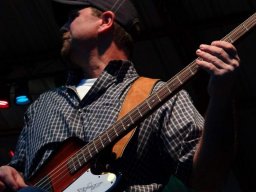
This video is appropriate for this thread:
Good example of "space" creating tension, changing dynamics, single bass (yeah, a Precision) backing single guitarist, and Beth Hart as always a phenomenal example of modern blues.
Good stuff! Thanks for posting. The drummer was killing any free sonic space with his crash cymbal though, and at times even covering up other instruments.

not sure if this will help, I have done lots of gigs as a two piece, guitar and bass, here is the highlight of my musically life as I got to play bass with the amazing Steve Kimock doing a very bluesy "Don't Think Twice". Steve takes two solos starting at 5:30 . I think (IMHO) I do a good job keeping the rhythm and melodic structure along with keeping a ear open to Steve's licks and responding to them. also Jack and Jorma are in the room at Fur Peace listening....Invalid Link Removed
Contrary to popular opinion here on TB, I don't think your choice of gear makes much of a difference. I can still get whatever tone I'm after with whatever bass and amp combo I'm playing at the time. Rant over! I like to leave lots of room in general, then when the guitarist solos, I'll add some chords or some maybe more intricate runs to fill the space a little more. In a rock context, I used to add a little chorus and a slight volume boost to fill out the sound more, but I don't run effects with my blues outfit. I do prefer the feel and sound of flats (Chromes), but rounds work with just a little EQ, I just don't care for the feel of them now.
The MM won't do. A quality p or j bass with Labella Jamerson Set flatwounds into a 1x15 or add a 2x10.
For reference: The goto rig for electric blues for sometime used to be the G-K 800RB into Hartke 1x15 and 2x10 or the 410XL. Before that, it was the Ampeg SVT, and before that the B15 Flip-Top.
Ideally, you want a fat thumping tube sound with a quick decay. I also play in a blues trio ala Albert King, Collins, Jimmie Ray Vaughn (always a great backup band), Stevie Ray Vaughn (Tommy Shannon!!!), etc. for those gigs my rig is:
Sadowsky Jazz Bass with Jamerson Labella Flats and single coil Pick-ups. Demeter VTB201 (original) into a Demeter 300 power amp and the Demeter 3x10 cab. For outdoor gigs I add another 3x10.
Check out Mesa Boogie!
For reference: The goto rig for electric blues for sometime used to be the G-K 800RB into Hartke 1x15 and 2x10 or the 410XL. Before that, it was the Ampeg SVT, and before that the B15 Flip-Top.
Ideally, you want a fat thumping tube sound with a quick decay. I also play in a blues trio ala Albert King, Collins, Jimmie Ray Vaughn (always a great backup band), Stevie Ray Vaughn (Tommy Shannon!!!), etc. for those gigs my rig is:
Sadowsky Jazz Bass with Jamerson Labella Flats and single coil Pick-ups. Demeter VTB201 (original) into a Demeter 300 power amp and the Demeter 3x10 cab. For outdoor gigs I add another 3x10.
Check out Mesa Boogie!

I use a Jazz with nylon tapewounds. I wouldn't worry too much about filling the space during a solo - it gives the soloist more room to work with and a lower sonic baseline has the potential for more dynamics and drama in the solo.

I don't see the trio as a problem, more of a blessing. You get more space, more control of the dynamics, less clutter on stage and more money. What's not to like? A three legged stool doesn't wobble.
Been there, done that. I felt the solo sections felt thin also. I found that playing the same bass line, more expressively was the key to making up for the lack of chording by the guitar player.
You're supporting while staying out of the way of the vocals and chords.
Then you support differently during the guitar solo by using dynamics. Rushing or dragging the beat, changing volume, changing the amount of beats in a given phrase, vibrato.
You're supporting while staying out of the way of the vocals and chords.
Then you support differently during the guitar solo by using dynamics. Rushing or dragging the beat, changing volume, changing the amount of beats in a given phrase, vibrato.
I would concetrate on establishing a good rythmic foundation than worry about what gear is going to be the bomb, sounds like what you have will work fine. In time you will find what works and what doesnt, just get out there and have some fun.
I'm not following the line of thinking that you have to have this rig or that bass. Players have different techniques and different styles and what works for one guy won't work nearly as well as the next. The equipment is part of the equation but how you play is a huge part that shouldn't be overlooked imo.
I respectfully disagree that there has ever been a go-to rig for any type of music that the general population has agreed upon. Heck, just read a few threads on TB and that seems clear.
I love P basses, but there are as many guys who dislike Fenders as who like them. The same is true for flats/rounds. The same is true for any brand of amp. The same is true for any configuration of cabinet. There really never has a been any combination of bass/strings/amp/cabinet that was universally used in any type of music imo.
I do get the point that SVTs were (and are) a hugely popular amp, but I've never equated it to the blues. It's a powerful beast and I've seen them on many a rock stage. I was around in the 70s and Acoustics with folded horns were equally popular at that same time.
The flip tops were very low powered rigs associated with the Motown sound. Of course people used them for all sorts of things, but because of the power lots of folks opted to use them in the studio and then something else on stage.
I guess everyone has different experiences, but we started out on Bassmans and Kustoms then moved on to Peaveys then the SVT/Acoustic era. After that the possibilities seemed to multiply and now there are many choices.
Choosing your gear is important. How you play is too.
I respectfully disagree that there has ever been a go-to rig for any type of music that the general population has agreed upon. Heck, just read a few threads on TB and that seems clear.
I love P basses, but there are as many guys who dislike Fenders as who like them. The same is true for flats/rounds. The same is true for any brand of amp. The same is true for any configuration of cabinet. There really never has a been any combination of bass/strings/amp/cabinet that was universally used in any type of music imo.
I do get the point that SVTs were (and are) a hugely popular amp, but I've never equated it to the blues. It's a powerful beast and I've seen them on many a rock stage. I was around in the 70s and Acoustics with folded horns were equally popular at that same time.
The flip tops were very low powered rigs associated with the Motown sound. Of course people used them for all sorts of things, but because of the power lots of folks opted to use them in the studio and then something else on stage.
I guess everyone has different experiences, but we started out on Bassmans and Kustoms then moved on to Peaveys then the SVT/Acoustic era. After that the possibilities seemed to multiply and now there are many choices.
Choosing your gear is important. How you play is too.
I play in a blues trio/quartet (depending on money), and I use a P bass (albeit a Sandberg until I got my MIJ Fender P) with TI flats, into an Ampeg SVT-VR + 810 cab, or the Ampeg B100R combo.
I like TI flats in the trio because it's got good mid range sound, which is what you tend to notice anyway.
I like TI flats in the trio because it's got good mid range sound, which is what you tend to notice anyway.

Calebmundy
Supporting Member
- Apr 5, 2007
- 1,134
- 817
- Disclosures
- Endorsing Artist: DNA Amplifiers, Lākland Basses
I would suggest turning up some low end and volume first. It might be all you need. Maybe roll of some highs a bit on the bass.

I guess I should have justified all my comments and personal suggestions with IMO or IME, but I figure that's a given along with any obvious advice like, technique and creativity always trump gear.
So, IME: When I talked to Gary Upton about building my upright he asked me what kind of music I play and how (technique) I play. From this conversation Gary was able to make specific design suggestions about what style and size of bass along with what strings, bow, and amplification I should consider. I took his suggestions seriously and I was very pleased with the outcome and how well he was able to make a gear prescription to satisfy my sonic and technical needs.
There should be no reason why this same logic would not also apply to the world of electric bass. Certain aspects of instrument construction and materials used when applied to certain styles or technique will yield more pleasing results more often then others.
Is it foolproof or concrete? No, but there are trends in gear selection based upon past players and the color of sound they produced using what gear they had available at that time for the musical styles they played that worked and became apart of what we associate as a particular sound. It wouldn't take much to prove the existence of collective agreeability for specific sonic textures and musical genre.
Now obviously, the market has grown exponentially from the days of Dunn and Jamerson and so to then, our choices. However, IMO and IME, when I think of classic electric blues players that recorded iconic blues albums that appeal to to me, I look to see what they played and how they played to get their sound.
There are reasons why trends in gear usage exist for various types of music that range from choice and availability to chance and artistic taste, but with every trend you will also have your outliers. With that being said, what then? Well, after you've done some research like asking others with experience, investigating the history of iconic players and personal favorites, and playing some different types of gear, you still have to trust your own ears.
Or, try a Chinese no-name copy of whatever and play it through a keyboard amp you bought at a yard sale. That could be fine too.
So, IME: When I talked to Gary Upton about building my upright he asked me what kind of music I play and how (technique) I play. From this conversation Gary was able to make specific design suggestions about what style and size of bass along with what strings, bow, and amplification I should consider. I took his suggestions seriously and I was very pleased with the outcome and how well he was able to make a gear prescription to satisfy my sonic and technical needs.
There should be no reason why this same logic would not also apply to the world of electric bass. Certain aspects of instrument construction and materials used when applied to certain styles or technique will yield more pleasing results more often then others.
Is it foolproof or concrete? No, but there are trends in gear selection based upon past players and the color of sound they produced using what gear they had available at that time for the musical styles they played that worked and became apart of what we associate as a particular sound. It wouldn't take much to prove the existence of collective agreeability for specific sonic textures and musical genre.
Now obviously, the market has grown exponentially from the days of Dunn and Jamerson and so to then, our choices. However, IMO and IME, when I think of classic electric blues players that recorded iconic blues albums that appeal to to me, I look to see what they played and how they played to get their sound.
There are reasons why trends in gear usage exist for various types of music that range from choice and availability to chance and artistic taste, but with every trend you will also have your outliers. With that being said, what then? Well, after you've done some research like asking others with experience, investigating the history of iconic players and personal favorites, and playing some different types of gear, you still have to trust your own ears.
Or, try a Chinese no-name copy of whatever and play it through a keyboard amp you bought at a yard sale. That could be fine too.
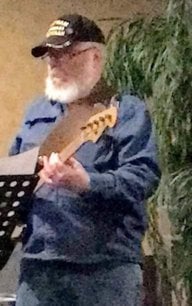
I play in a Blues trio with an occasional keyboard, but usually just the trio. I usually play a Fender Jazz Bass through a Carvin BX500 head and a BRX10.2 cab. For really large venues or outdoor gigs I play through a Carvin B2000 head and a BRX10.4 cab. My second and third choice of bass is a Fender Precision or a G&L ASAT. The Jazz bass is the one I use the most. I have no problem filling in behind a single guitar. The main thing to keep in mind is playing blues in a three piece is to keep bass line moving with a walk up and down or a double tap on the notes. Adjust the EQ on your amp so it is heavy on the low end. You have to be in the pocket with the drummer all the time. We do SRV, Jimmy Vaughn, Junior Wells, Buddy Guy, BB King type stuff. It's all good.
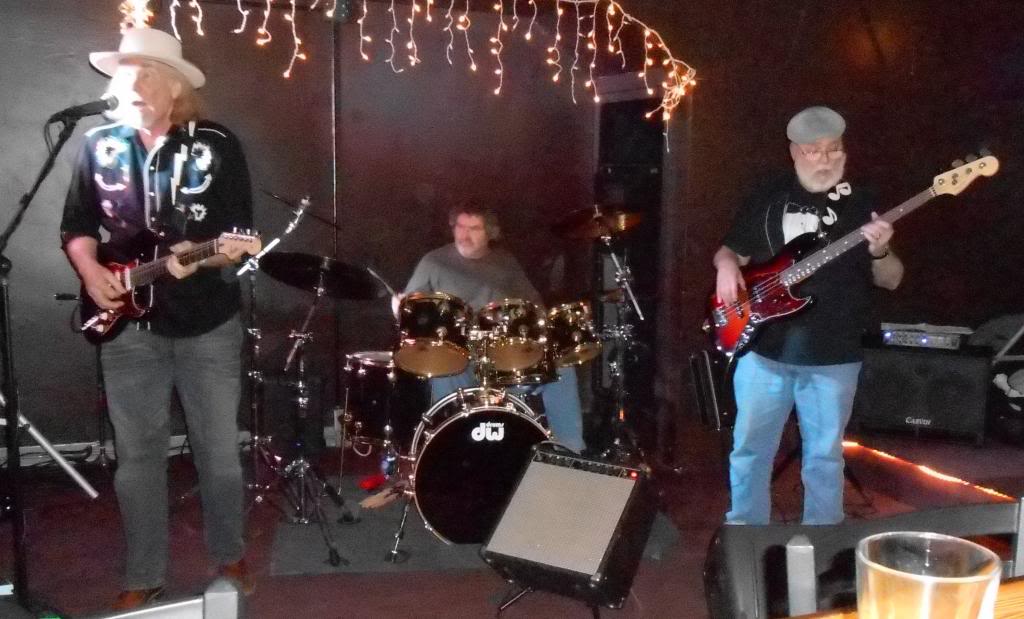
I recommended an Epi Rumblekat, but after watching the youtube thing I wouldn't suggest spending one dime to play with those guys.
Your stuff is fine.
The guitar player's tone is bad (imo), maybe because of Epi HB's and/or a lame amp.
The drummer lacks pep.
There needs to be an interaction aka locking up between the drums and bass for that type of thing. The way it is now, it comprised of 3 parts boring.
Your stuff is fine.
The guitar player's tone is bad (imo), maybe because of Epi HB's and/or a lame amp.
The drummer lacks pep.
There needs to be an interaction aka locking up between the drums and bass for that type of thing. The way it is now, it comprised of 3 parts boring.


