• TalkBass has been independent since 1998. Add your voice.
    Create a free account to reply to discussions, view embedded media, and browse with fewer display ads.
    Join freeLog in
    Want zero display ads or expanded classifieds tools? Compare plans.

Advice for Blues trio bass please!

Just make a sound you dig and dig in!:D

My experience, trying to fill the void with special gear, effects or flash, and something seems to get get lost.

Look at most of the succesful trios, or the giant four piece trios-with-vocalists.
Generally the bass gear is not "trio unique".
Not much use of effects or 8-strings, maybe some overdrive or tube gain.

As far as approach, a couple of guys like Randy Jo Hobbs have done nifty double stops or rhythm guitar-ish techniques, but they are the exception.
The strong trios may use dynamics as a rhythm section;
>more subtle and muted during vocals
>more open and aggressive during solos
The drummer might help fill things out by moving form hi-hat to cymbals during solos.

These things coupled with a locked-in groove, and the listener can be plenty satisfied with what's on their plate.
 
Take a page from Tommy Shannon's play-book. A jazz.

Also, in a trio format, one of the best questions to ask is "Just how much can I get away with not playing" (not all the time of course). The more space you lay down, the bigger the sound when you come back and play something.

Early Johnny Winter, early SRV.

Pino with Mayer is also exemplary.

I've been (re)listening to some older blues albums. (Remastered Albert King, Muddy). What strikes me is how easy and open everyone played on them.
 
+1 to the posters who said it's the playing, not the equipment, and that playing less is way better than playing more. I use a P bass with flats once in a while, but mostly a cheap LTD short-scale 5-string. More importantly, I leave more space and use dynamics more than most bass players, and the guys I play with, both in a blues trio and a modern country 5-piece band, love the way I free up space to make them stand out and sound better.

Short version: for trios, quartets, blues or what have you: dynamics > din, space > clutter, taste > equipment.
 
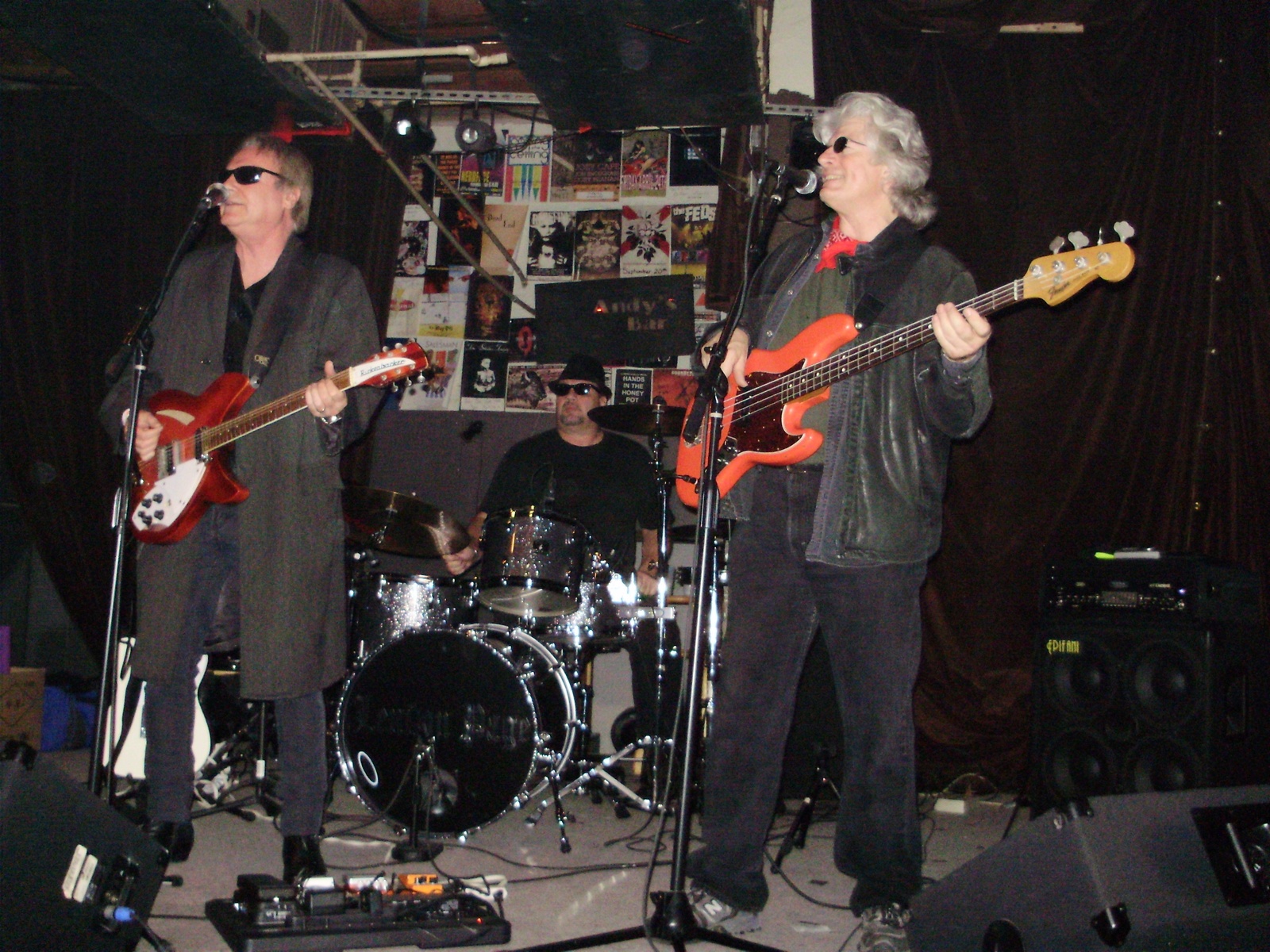
This worked:

Andys_bar4.jpg
 
All of those are good suggestions. Here's another one. Buy a 5 string and tune it EADGC. (Remove the low B, move all the strings down one place and add a C on top). This allows you to add chord fragments on the higher strings while still playing the bass on the lower strings. It takes a little practice but as you mentioned, it only needs to be done during the solos - then you go back to playing regular 4 string bass on the bottom 4 strings. Here's a quick sound file:
 

Attachments

A lot of the blues recordings in the 50's and early 60's were done before round wound strings existed.Fender basses were the basses played with flats or nylon.Those strings will give you that traditional tone.Ampegs and Fender amps work well.Most modern amps can cut it but I imagine its also the traditional tone you after.Speaker wise 15's will give you a fatter sound than 10's.To have both would be nice just for different acoustical situations.If I walked out the door to go and do a blues gig i would be carrying either my 61'P or 77'J with flats on them.Being honest here I did use a Tobias 6 string back in 1990 which enabled me to play both chords and lines but that band did not have a traditional blues sound.Just by definition of the fact that the chords are gone when the solo comes up in a trio the sound will thin out.Just dig in and play the lines.Listening back in a recording you may be surprised to find out that its not as thin as you think it is.
 
I play in a jazz/blues trio. Great drummer with Studio series (?) Yamaha drums (good playing AND good sound), a tasteful and skilled guitar player with Stratocaster or Les Paul through all tube Marshall half stack, modest volume. I have tried bringing different basses to the band and found that my Precision works best. I have a boutique fretless five stringer that sort of gets lost in the mix (ehhh...), a very good, Active Jazz five stringer that has a very big, "wide" tone but lacks a bit of low mid "punch" or my Danelectro Longhorn that a bit light on "authority" compared to the P.
All the basses are good but the slightly throaty and barky tone of the Precision just sounds right and full with the band. The Longhorn would definitely be my second choise.
 
I play in a Blues/funk/R&B trio with a frontman/harp player, so basically the same format.
I've been with that band for 6 years and up until last year did it with a Stingray 5 (I now play a Lakland most of the time) and had no trouble filling the "space".

How do you set the EQ and pickup switch on the SR5? My suggestion: set the pickup selector in Series mode, boost the mids, a little bass boost and roll off the treble a little.
 
Blues = P-Bass or work on your EQ more.

It's no surprise that the word on TB for blues is P-bass with flats and tort guard. And yeah, I've got one. A P/J 5er in burst with tort guard and flats. It does a fanstastic job as you might expect. But it's not my main blues axe nor the main axe of a number of other blues bassists in town. We all own G&L L2500 basses that give you the versatility in tone you need. I've got two. One fretted and one fretless. Say no more.
 
I've been playing blues, rock, and country in trios since 1980. That's when I first went from a 6 piece band to a 3 piece. I was very concerned about filling in what I perceived to be "empty space" in the music. At the time, I actually considered getting a BC Rich 8 string bass. I also thought that I needed to play lots of notes.

What I eventually learned, is that getting a big full sound is not about filling in all the empty space. It's about having a big fat tone, and making each and every note really count. And, playing extremely tight with your drummer.

I've always used Fender Precision and Jazz basses with Rotosound Swing Bass strings. I used a GK 400B with 2 JBL 15s, but the sound didn't happen for me until I got my Ampeg SVT.