• TalkBass has been independent since 1998. Add your voice.
    Create a free account to reply to discussions, view embedded media, and browse with fewer display ads.
    Join freeLog in
    Want zero display ads or expanded classifieds tools? Compare plans.

Am I foolish starting on a 5 stringer.

Get some in-person lessons if you at all can. Piano is a great start as you can read bass clef and rhythms. But playing bass is nothing like playing piano. Taking some lessons will correct any bad habits that you've already developed early. Unless you're a prodigy you've probably started doing some things wrong. An instructor will correct those and get you on the right path. Also, nothing wrong with starting on a five string. The most important thing is that you aren't fighting the instrument. As long as it's set up well and plays well, that's all that matters.
 
I would think that's much more difficult since the pinky is attached to the hand with the finger that are playing. Of course the thumb is on the hand, but it's more on its own than the pinky.
Wouldn't work with a pick but it's fairly easy when playing finger style. Thumb is anchored either to pickup or string, index and 2nd finger pluck, sometimes 3rd too, pinky is curled underneath muting the lower strings as you move down. Just mutes E string, occasionally the A. As I said, it just does it automatically, when my ear tells it to. Easy Peasy.
 
  • Like
Reactions: el jeffe bass
Hey guys

So I am a 58 year old beginner. I bought a 5 String Samick Corsair bass from a mate who was upgrading. I was wondering if I was a bit hasty in getting a 5 string over a traditional 4 string. Been teaching myself for a few weeks and wondering if my learning curve would be less steep on a 4 string bass.
I have played piano for many years so music theory is no problem. 58 year old smallish hands do come with extra challenges.
Lastly if I do change to a 4 stringer would a short scale bass be a consideration.
Learning a new instrument is hard, perhaps this concern will be overcome with practise.

Thanks in advance
No, not at all, and stick with a standard scale, because….
If you approach it as if it were a 4-string with a bottom E, postioning your fingering on the fifth fret(as if it were the first), on the B string, would be the rough equivalent of playing a short scale, but you still have the option of finging closer to the nut for lower notes on the B, or playing down there on the other strings if it’s comfortable for you.
 
Last edited:
In person lessons from a good teacher is far more valuable than deciding between a 5 or a 4. I played 4’s growing up in the 70’s. Switched to 5’s exclusively from 90 to 2015. Now back to 4’s exclusively. Like others have said, its only 5 notes, and if you put a Hipshot d-tuner on a 4, its only 3 notes.

A good teacher will make a 4 string difficult enough. That low B is often simply not needed.
 
  • Like
Reactions: XICO
58 year old smallish hands do come with extra challenges.
Nothing wrong with starting a five string, I had debates if it is "starting a new instrument" others will yell that playing a four string is no different...

But I wanted to add that I would hate for you to have the "grass is greener" struggle. I saw you bought that bass already, as someone with small fingers and a small man, I would also give five string Ibanez's a try. Super skinny necks, very nice five strings. Yamaha TRBX series is also some nice skinny necks IMO.
Short scales are also great for small hands, I prefer short scales myself.

I agree get lessons, nothing wrong with starting a five string. For my sheet reading, I wish I had one since a lot of Salsa/Cumbia goes low and playing open E is so annoying and I love reading sheet music to find alternative ways to play, I love staying within the 1 to 5 fret range for me.

Good luck you got it! You can always buy a short-scale, 4 string later on to add to your axe choices.
 
  • Like
Reactions: XICO
Hey guys

So I am a 58 year old beginner. I bought a 5 String Samick Corsair bass from a mate who was upgrading. I was wondering if I was a bit hasty in getting a 5 string over a traditional 4 string. Been teaching myself for a few weeks and wondering if my learning curve would be less steep on a 4 string bass.
I have played piano for many years so music theory is no problem. 58 year old smallish hands do come with extra challenges.
Lastly if I do change to a 4 stringer would a short scale bass be a consideration.
Learning a new instrument is hard, perhaps this concern will be overcome with practise.

Thanks in advance
I started in my mid50s and wish I'd started on a 5.

I can't prove it but I suspect it's easier to go from 5 to 4 than the other way round, but in any case it really isn't that big a deal. After a week you'll wonder what the fuss was about.

But the real point to grasp is not how many times you hit that open B. As people are so anxious to point out, it's not that often. The real benefit is that low E-flat especially if tou play jazz, and the ability to play E-G across the board with that fatter string and less reach. And all 3 octaves are within reach without the big shifts.
 
I stay on four strings. Lighter basses, thinner necks, and really only missing five notes at the end of the day.

I would not tell a beginner to get a five string, personally. It's extra work to learn to mute that seldom-used B when you're just starting out, and all the aforementioned factors, when combined, could lead to a poorer beginner experience.

If you end up with a five though, you can always remove the B for as long as you need.
A lot of people say it only adds 5 lower notes are totally missing the point of a 5 string. Yes, when playing songs (especially tuned down, like drop D or whatever) those lower notes come in handy without also having to downtune.

However, for me, having played 5 string bass for more than 20 years, I can play most songs without ever having to reach way out near the headstock, effectively turning the 5 string into a very short scale and far more comfortable playing bass. Especially after hurting my shoulder on my fretting side.

A 5 string gives the player more positions to work with in addition to the ability to construct bass lines that can come from under the low "E" of a traditional 4 string. Absolutely nothing wrong with 4 string basses as I still play them, but I do love experimenting with additional strings.

Start out with whatever you want. I started out playing guitar 45 years ago.

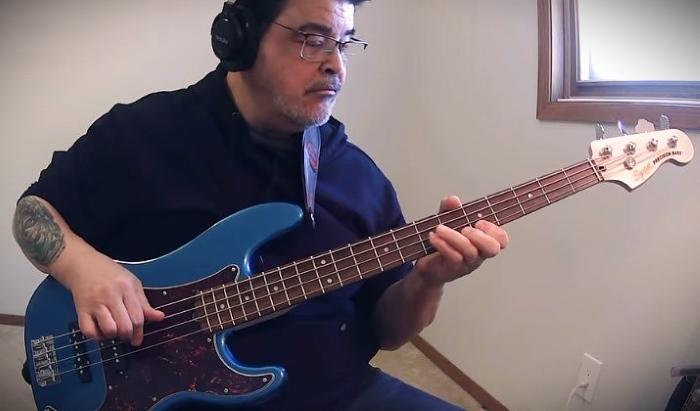
Precision-PJ2.jpg


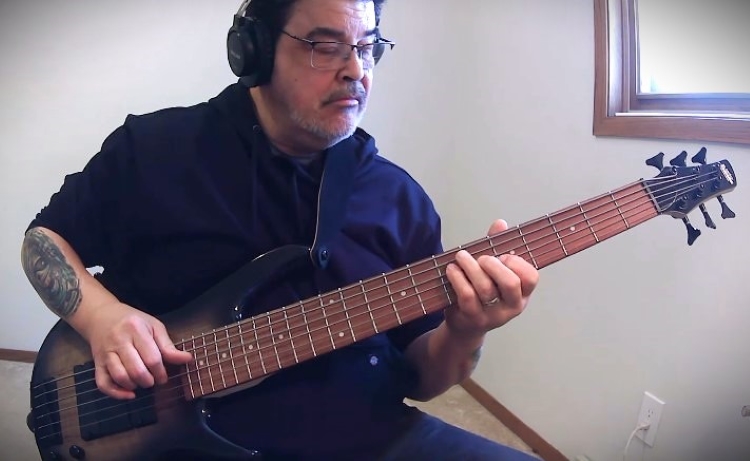
SR206-Mark2.jpg
 
Hey guys

So I am a 58 year old beginner. I bought a 5 String Samick Corsair bass from a mate who was upgrading. I was wondering if I was a bit hasty in getting a 5 string over a traditional 4 string. Been teaching myself for a few weeks and wondering if my learning curve would be less steep on a 4 string bass.
I have played piano for many years so music theory is no problem. 58 year old smallish hands do come with extra challenges.
Lastly if I do change to a 4 stringer would a short scale bass be a consideration.
Learning a new instrument is hard, perhaps this concern will be overcome with practise.

Thanks in advance
I think you nailed it with the last line: learning a new instrument is hard! I moved to 5 a few years back after playing 4s for 20 years and it took a while to feel normal. Now I never pull out my old 4 string.
But also run by a guitar shop and try a 4 some time. It might be possible that just feels better; for some 5s just never feel right.
 
Hey guys

So I am a 58 year old beginner. I bought a 5 String Samick Corsair bass from a mate who was upgrading. I was wondering if I was a bit hasty in getting a 5 string over a traditional 4 string. Been teaching myself for a few weeks and wondering if my learning curve would be less steep on a 4 string bass.
I have played piano for many years so music theory is no problem. 58 year old smallish hands do come with extra challenges.
Lastly if I do change to a 4 stringer would a short scale bass be a consideration.
Learning a new instrument is hard, perhaps this concern will be overcome with practise.

Thanks in advance
I started on an unlined fretless 4-string and quickly added a fretted 6-string. I have "smallish hands" I suppose. My piano hands spread is a 9th. I play upright. I don't care for short scale basses in terms of their sound, feel and variety of available instruments relative to 34-inch scale instruments. Given the piano and upright, my hands get a lot of stretching anyway, and I'm sure yours do too. I think ultimately, a 5-string is a good choice, and given the expanding or expanded range of so many genres that increasingly seem to make a 5-string bass an almost necessity, it would be ultimately good to have one. I'd still recommend starting on a 4-string for the vision and familiarity of the fretboard that you can learn on that instrument, and then adding a 5-string down the road.
 
  • Like
Reactions: XICO
I stay on four strings. Lighter basses, thinner necks, and really only missing five notes at the end of the day.

I would not tell a beginner to get a five string, personally. It's extra work to learn to mute that seldom-used B when you're just starting out, and all the aforementioned factors, when combined, could lead to a poorer beginner experience.

If you end up with a five though, you can always remove the B for as long as you need.
That all depends on the style of music played. And five extra notes can make a HUGE difference.
 
  • Like
Reactions: jam.majors
If anything I think the fretboard layout is more logical and straight forward on a 5 string, because you got 3 octaves mirroring each other across at any point of the board, so it is easier to orientate one self on the fretboard to start with, locating notes, doing scales, chords e.t.c.

However if you got small hands a 5 string might propose a greater physical challenge to start with than a 4 string would, the fretboard being wider.

I do not have the longest fingers, and I literally can't fret the lowest string above about the 12th fret with my pinky, unless I swap my thumb up front (instead of holding it in support behind the neck), even if the string spacing is about as tight as it gets, just 16.5mm.

String spacing is definitely a thing to consider, if you decide in favor of a 5 string, as it determines how wide the fretboard gets towards the end of the neck, but also, obviously, how much space you got to pick the strings in between.

Personally I like the tight 16.5mm string spacing, but I know that not everyone appreciates this, and prefers 19mm string spacing, even if it means a wider fretboard.

Another thing to consider is the tuning, some people prefer to tune it E to C, getting extended upper end (fairly common for jazz), for chord and melodic work, rather than the extended low end, the traditional B to G standard tuning of a 5 string.
 
Last edited:
  • Like
Reactions: XICO
Hey guys

So I am a 58 year old beginner. I bought a 5 String Samick Corsair bass from a mate who was upgrading. I was wondering if I was a bit hasty in getting a 5 string over a traditional 4 string. Been teaching myself for a few weeks and wondering if my learning curve would be less steep on a 4 string bass.
I have played piano for many years so music theory is no problem. 58 year old smallish hands do come with extra challenges.
Lastly if I do change to a 4 stringer would a short scale bass be a consideration.
Learning a new instrument is hard, perhaps this concern will be overcome with practise.

Thanks in advance
I believe since you’re just starting the5 string is a great choice.
 
  • Like
Reactions: XICO
Ive been playing for 53 years on nothing other than 4 strings. Never even saw a 5 string for the first 20 of those years. Considering how much unbelievable music has been produced on 4 strings, I think the 5th string is really a want , not a need.
Those players who want those extra notes deal with the extra width and whatever technique issues come with the instruments. And...more power to them!
But..to the OPs question, if your wanting the extra range a 5 string provides, it only makes sense to start on one from the jump. But if you find it uncomfortable, you don't need it. And if small hands or limited reach is causing you problems, a short scale might be just the ticket.
 
  • Like
Reactions: ghostdog93
Hey guys

So I am a 58 year old beginner. I bought a 5 String Samick Corsair bass from a mate who was upgrading. I was wondering if I was a bit hasty in getting a 5 string over a traditional 4 string. Been teaching myself for a few weeks and wondering if my learning curve would be less steep on a 4 string bass.
I have played piano for many years so music theory is no problem. 58 year old smallish hands do come with extra challenges.
Lastly if I do change to a 4 stringer would a short scale bass be a consideration.
Learning a new instrument is hard, perhaps this concern will be overcome with practise.

Thanks in advance
The secret to being above average on a 5 string is to begin playong it as a 4 string so you become proficient at more complex riffs anf build dexterity.

The second stage is to add B string notes that complement the 4 string playing rather than being an equal playing string.

The final stage is to practive pattens across the neck so your left hand does less walking up the neck and instead walkes across the neck such as in playing scales.

This gives you option for playing positions when learning songs so proficiency will align with playing comfort.
Good luck with it.
 
  • Like
Reactions: JengDoe
The secret to being above average on a 5 string is to begin playong it as a 4 string so you become proficient at more complex riffs anf build dexterity.

The second stage is to add B string notes that complement the 4 string playing rather than being an equal playing string.

The final stage is to practive pattens across the neck so your left hand does less walking up the neck and instead walkes across the neck such as in playing scales.

This gives you option for playing positions when learning songs so proficiency will align with playing comfort.
Good luck with it.
As far as I am concerned this is not a great piece of advice.

Best way to learn any instrument is to learn to play the actual instrument as it is is and as it is intended.

A 5 string bass is a not a 4 string bass with an extra string, it is a somewhat different instrument in its own regards, and ought to be treated as such.
 
Last edited:
I would also give five string Ibanez's a try. Super skinny necks, very nice five strings. Yamaha TRBX series is also some nice skinny necks IMO.
Actually, that was my second question. I’ve been considering the Yamaha TRBX 505/605, some Ibanez models, and the Solar AB2.5. I like the Solar the most, but it’s more expensive, and I’ve heard the quality of the 2.x series isn’t that great. Also, the AB1.5 only comes in black, which is a big downside for me.
2025-05-02_17-37.png

Considering how much unbelievable music has been produced on 4 strings, I think the 5th string is really a want , not a need.
I just want to play covers, and some of the original bass parts are written for 5-string instruments. At the moment, I'm transposing some of the notes to fit my 4-string bass.