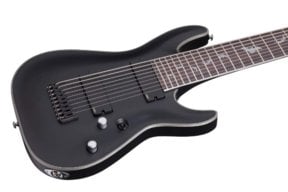
Moving from 4 to 5 is a bit of a challenge, suddenly there's notes below your low note, wider fingerboard and an extra string to know where the notes are. Some people find it crucial, some don't, it depends on your taste and musical situation.
Same I don't really dig the B, it has it's use it just not my jam but I dig the C. I switched my 5 to have a high C back in 2005 liked it way better, it has just become how I tune a 5 now. My main bass now is a 6 tuned EADGCF which for me was just the next step in what I've been doing for the last 15 years. I might have a low B again if I get a 7 or an extended range fingerboard.
I have a five string that I like, but I hardly use the fifth string. Other than that... I have a 6, and a bunch of 4's. I really like the 6 because I dig the C string, but I don't care for the B string. Instead I'm going for the baritone range once I put electronics back in it, it'll be strung EADGCF#
I know: The horror.
Usually, you're facing 35" scale or longer for a good B string. That negates the usefulness of the C string. So... you're trading off, and I'm not a fan of fanned frets. It still compromises my finger reach. I can only kind of do one finger per fret on a 34" scale. I'm sorry for any small fingered folk trying a fanned fret 35" or 36" even though I guess it'd be easier than just a standard 35" or 36" scale.
Same I don't really dig the B, it has it's use it just not my jam but I dig the C. I switched my 5 to have a high C back in 2005 liked it way better, it has just become how I tune a 5 now. My main bass now is a 6 tuned EADGCF which for me was just the next step in what I've been doing for the last 15 years. I might have a low B again if I get a 7 or an extended range fingerboard.