I'd like to describe my problem, but I'm not even sure I have the right terminology (in " ") at my disposal to do so.
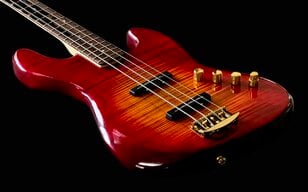
I've had a 5 string bass made and it came with a set of Bartolini MK5CBC (Classic Bass). The tone of this bass is wonderful at practice volume and everything seems to be "bell-like" and clear. However, the tone is "huge" and everything is incredibly "smooth". However, "smooth" might not be what I'm looking for. I play rock and metal and when I crank my volume it's like mashing down the bass keys on a piano. Huge tone...no "punch", no "percussive" quality. It's like is missing a certain degree of "focus".
I've been looking into replacing these pickups and have been wondering about the Original Splits (Reverse P [P2 Shape - XXP25M]) and Original Quads (P an Reverse P [P2 Shape - XXP25C]). Which leads me to the question: What's the difference between a P and Reverse P?
My former main bass was an Ibanez SR805 with the Bartolini MK-1s. That bass seemed to have better "punch" that my new bass, although the tone was much "thinner".
I've had a 5 string bass made and it came with a set of Bartolini MK5CBC (Classic Bass). The tone of this bass is wonderful at practice volume and everything seems to be "bell-like" and clear. However, the tone is "huge" and everything is incredibly "smooth". However, "smooth" might not be what I'm looking for. I play rock and metal and when I crank my volume it's like mashing down the bass keys on a piano. Huge tone...no "punch", no "percussive" quality. It's like is missing a certain degree of "focus".
I've been looking into replacing these pickups and have been wondering about the Original Splits (Reverse P [P2 Shape - XXP25M]) and Original Quads (P an Reverse P [P2 Shape - XXP25C]). Which leads me to the question: What's the difference between a P and Reverse P?
My former main bass was an Ibanez SR805 with the Bartolini MK-1s. That bass seemed to have better "punch" that my new bass, although the tone was much "thinner".
Last edited: