• TalkBass has been independent since 1998. Add your voice.
    Create a free account to reply to discussions, view embedded media, and browse with fewer display ads.
    Join freeLog in
    Want zero display ads or expanded classifieds tools? Compare plans.

Double Bass Amp For Bluegrass

If you don't like the amp color but don't mind the cabs, run into the effects loop of the rumble. This bypasses the amp sound and just gives you clean power.

I don't think it's the perfect solution but it's free to try and I don't think a perfect solution to db amplification exist.

Pair it with a clean preamp/eq if you need it. I like the mxr 81 as a clean preamp. It's not designed around db but it works well enough
 
I've been holding off on my reply to the OP question because I didn't want to rock the amp-power boat, but I'll speak up since there seems to be some consensus, just to really address some concepts related to amps and bluegrass.

While most of the replies here are great for general DB use with jazz and other genre, bluegrass is a somewhat different animal because of the one thing that really sets it apart: Acoustic Jamming...

If you're wanting an amp that you can use to make sure you are heard over banjos, fiddles and other loud acoustic stringed instruments in bluegrass jams, you really want one that is not going to make every one else in the jam angry. The most common rule of thumb in strict bluegrass jams is no amps, no drums, no electric instruments, and you can add to that, no sounding electric. So for the double bass in bluegrass jamming, the safest amp to use is no amp. IF you feel that you have to use an amp to be heard in a bluegrass jam, complaining to the banjo, fiddle and other loud acoustic instrument players that they are playing too loud is fully acceptable, especially in high level jams where this kind of problem shouldn't happen in the first place because experienced bluegrass instrument players should know to use appropriately sensitive volume.

That said, less high-level bluegrass jams do happen, and less experienced bluegrass instrument players often do play too loud. A good, not-too-subtle sign to them that they are doing so is that you have to start using your amp with your double bass, and often even the threat to do so is enough to get people to quiet down.

It's worth mentioning that because of that strong preference for pure acoustic sound, unless they have experience from other genre, most bluegrass instrument players have no experinece with setting up and moderating an amp or a PA properly for use with bluegrass. As a result, those bluegrass jams that do allow amps usually find themselves having amp-wars because players will continually raise their volume until they are loud enough to hear themselves over everyone else. This is a very nasty thing.

On stage is a completely different matter, but still at least one of those rules of thumb still applies: no sounding electric. The best way to avoid this on the festival stage is to use mics, not piezos, and when at all possible, leave the EQ and other tone settings to the bluegrass-experienced FOH. If you're doing your own sound system for an event, a smaller situation or venue, again, the best bet is to use mics instead of piezos, and also hire someone as a regular part of your band to understand how you want to sound, to help schlep and setup, and to run your sound system while you're playing.

Our main band (really in the context of ownership, my wife and I) owns two separate complete sound systems:

One is a fully blown wired PA with multiple PA-quality 550W speakers, full 20 channel mixer, good quality mics, stands, and all the wiring that is required to make it work. And we have a regular sound guy who helps schlep and setup, and who runs the sound system while we play. If we get a gig where this PA system is required we charge significantly extra for use of this hardware and to pay our sound guy. We'll use this with weddings or other special events that will pay well enough to use it, and it works out very nicely.

The other sound system is comprised of the same mics and stands, the necessary wiring, but instead of the mixer and PA speakers we use three Roland Cube Street amps which each support two separately EQ, voicing and tone-controlled mic inputs, and we use a Roland Micro Cube Bass RX amp for my DB (which provides the same settings and also can accomodate a mic). These are all battery operated so we don't have to plug in, and they all offer a "clear" or "mic" voicing so we can avoid sounding electric. We'll use this sound system when we aren't getting paid for our own sound but want it for our own convenience, and/or when playing gigs outside or in venues that don't have electric power. It will serve audiences of up to around 50 people inside or out, and we can set it up and leave it through the whole gig. The key to successfully using small speakers is to get them up off the ground where they are no longer shooting sound into peoples' feet and legs.

The Roland Micro Cube Bass RX is my go-to bass amp, I can use it as a personal monitor while also feeding an FOH, or I can use it as a stand alone amp. I have used it successfully for audiences up to around 100 people, both inside and outside.. It is also what I threaten to use in jams if people don't use appropriately sensitive volume.

My DB has a piezo system and a mounted mic; for bluegrass and other more tone-sensitive genre my first choice is the mounted mic, for louder genre or if I really want to annoy in loud bluegrass jams, I'll use the piezo system. I also use wireless dongles with my DB and PA/amp situations -- playing a DB plugged in and without cables is a remarkably wonderful thing.
 
Last edited:
I've been holding off on my reply to the OP question because I didn't want to rock the amp-power boat, but I'll speak up since there seems to be some consensus, just to really address some concepts related to amps and bluegrass.

While most of the replies here are great for general DB use with jazz and other genre, bluegrass is a somewhat different animal because of the one thing that really sets it apart: Acoustic Jamming...

If you're wanting an amp that you can use to make sure you are heard over banjos, fiddles and other loud acoustic stringed instruments in bluegrass jams, you really want one that is not going to make every one else in the jam angry. The most common rule of thumb in strict bluegrass jams is no amps, no drums, no electric instruments, and you can add to that, no sounding electric. So for the double bass in bluegrass jamming, the safest amp to use is no amp. IF you feel that you have to use an amp to be heard in a bluegrass jam, complaining to the banjo, fiddle and other loud acoustic instrument players that they are playing too loud is fully acceptable, especially in high level jams where this kind of problem shouldn't happen in the first place because experienced bluegrass instrument players should know to use appropriately sensitive volume.

That said, less high-level bluegrass jams do happen, and less experienced bluegrass instrument players often do play too loud. A good, not-too-subtle sign to them that they are doing so is that you have to start using your amp with your double bass, and often even the threat to do so is enough to get people to quiet down.

It's worth mentioning that because of that strong preference for pure acoustic sound, unless they have experience from other genre, most bluegrass instrument players have no experinece with setting up and moderating an amp or a PA properly for use with bluegrass. As a result, those bluegrass jams that do allow amps usually find themselves having amp-wars because players will continually raise their volume until they are loud enough to hear themselves over everyone else. This is a very nasty thing.

On stage is a completely different matter, but still at least one of those rules of thumb still applies: no sounding electric. The best way to avoid this on the festival stage is to use mics, not piezos, and when at all possible, leave the EQ and other tone settings to the bluegrass-experienced FOH. If you're doing your own sound system for an event, a smaller situation or venue, again, the best bet is to use mics instead of piezos, and also hire someone as a regular part of your band to understand how you want to sound, to help schlep and setup, and to run your sound system while you're playing.

Our main band (really in the context of ownership, my wife and I) owns two separate complete sound systems:

One is a fully blown wired PA with multiple PA-quality 550W speakers, full 20 channel mixer, good quality mics, stands, and all the wiring that is required to make it work. And we have a regular sound guy who helps schlep and setup, and who runs the sound system while we play. If we get a gig where this PA system is required we charge significantly extra for use of this hardware and to pay our sound guy. We'll use this with weddings or other special events that will pay well enough to use it, and it works out very nicely.

The other sound system is comprised of the same mics and stands, the necessary wiring, but instead of the mixer and PA speakers we use three Roland Cube Street amps which each support two separately EQ, voicing and tone-controlled mic inputs, and we use a Roland Micro Cube Bass RX amp for my DB (which provides the same settings and also can accomodate a mic). These are all battery operated so we don't have to plug in, and they all offer a "clear" or "mic" voicing so we can avoid sounding electric. We'll use this sound system when we aren't getting
I've been holding off on my reply to the OP question because I didn't want to rock the amp-power boat, but I'll speak up since there seems to be some consensus, just to really address some concepts related to amps and bluegrass.

While most of the replies here are great for general DB use with jazz and other genre, bluegrass is a somewhat different animal because of the one thing that really sets it apart: Acoustic Jamming...

If you're wanting an amp that you can use to make sure you are heard over banjos, fiddles and other loud acoustic stringed instruments in bluegrass jams, you really want one that is not going to make every one else in the jam angry. The most common rule of thumb in strict bluegrass jams is no amps, no drums, no electric instruments, and you can add to that, no sounding electric. So for the double bass in bluegrass jamming, the safest amp to use is no amp. IF you feel that you have to use an amp to be heard in a bluegrass jam, complaining to the banjo, fiddle and other loud acoustic instrument players that they are playing too loud is fully acceptable, especially in high level jams where this kind of problem shouldn't happen in the first place because experienced bluegrass instrument players should know to use appropriately sensitive volume.

That said, less high-level bluegrass jams do happen, and less experienced bluegrass instrument players often do play too loud. A good, not-too-subtle sign to them that they are doing so is that you have to start using your amp with your double bass, and often even the threat to do so is enough to get people to quiet down.

It's worth mentioning that because of that strong preference for pure acoustic sound, unless they have experience from other genre, most bluegrass instrument players have no experinece with setting up and moderating an amp or a PA properly for use with bluegrass. As a result, those bluegrass jams that do allow amps usually find themselves having amp-wars because players will continually raise their volume until they are loud enough to hear themselves over everyone else. This is a very nasty thing.

On stage is a completely different matter, but still at least one of those rules of thumb still applies: no sounding electric. The best way to avoid this on the festival stage is to use mics, not piezos, and when at all possible, leave the EQ and other tone settings to the bluegrass-experienced FOH. If you're doing your own sound system for an event, a smaller situation or venue, again, the best bet is to use mics instead of piezos, and also hire someone as a regular part of your band to understand how you want to sound, to help schlep and setup, and to run your sound system while you're playing.

Our main band (really in the context of ownership, my wife and I) owns two separate complete sound systems:

One is a fully blown wired PA with multiple PA-quality 550W speakers, full 20 channel mixer, good quality mics, stands, and all the wiring that is required to make it work. And we have a regular sound guy who helps schlep and setup, and who runs the sound system while we play. If we get a gig where this PA system is required we charge significantly extra for use of this hardware and to pay our sound guy. We'll use this with weddings or other special events that will pay well enough to use it, and it works out very nicely.

The other sound system is comprised of the same mics and stands, the necessary wiring, but instead of the mixer and PA speakers we use three Roland Cube Street amps which each support two separately EQ, voicing and tone-controlled mic inputs, and we use a Roland Micro Cube Bass RX amp for my DB (which provides the same settings and also can accomodate a mic). These are all battery operated so we don't have to plug in, and they all offer a "clear" or "mic" voicing so we can avoid sounding electric. We'll use this sound system when we aren't getting paid for our own sound but want it for our own convenience, and/or when playing gigs outside or in venues that don't have electric power. It will serve audiences of up to around 50 people inside or out, and we can set it up and leave it through the whole gig. The key to successfully using small speakers is to get them up off the ground where they are no longer shooting sound into peoples' feet and legs.

The Roland Micro Cube Bass RX is my go-to bass amp, I can use it as a personal monitor while also feeding an FOH, or I can use it as a stand alone amp. I have used it successfully for audiences up to around 100 people, both inside and outside.. It is also what I threaten to use in jams if people don't use appropriately sensitive volume.

My DB has a piezo system and a mounted mic; for bluegrass and other more tone-sensitive genre my first choice is the mounted mic, for louder genre or if I really want to annoy in loud bluegrass jams, I'll use the piezo system. I also use wireless dongles with my DB and PA/amp situations -- playing a DB plugged in and without cables is a remarkably wonderful thing.
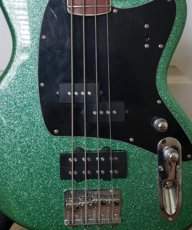
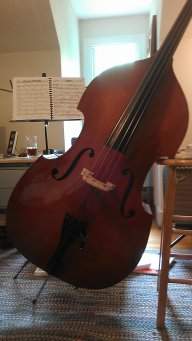
i completely agree. Mine was the first response to the OP, and I started to go down the road of asking if an amp is needed for performance or jamming. If the latter, my response would have been “fix your bass first.” One of my basses is a 7/8’s, full ply running Spirocore mediums. Some of my bluegrass colleagues call it a banjo killer. I bought it specifically for acoustic jams and it has delivered.
 
Nice to hear some experience from a bowed perspective. Can't say I'd be in many a situation where I'd have to use it for arco, but it'd be nice to know I could if the inspiration struck!
BTW, the duo I mentioned I was in, we played out in the Martinsburg/Berkeley Springs area, I lived in Great Cacapon. Where are you located in Almost Heaven? I now live in So.Delaware. Oddly enough, last year my duo partner moved 40 mins away. And we are working up a new book of tunes.
 
  • Like
Reactions: Quinn Roberts
i completely agree. Mine was the first response to the OP, and I started to go down the road of asking if an amp is needed for performance or jamming. If the latter, my response would have been “fix your bass first.” One of my basses is a 7/8’s, full ply running Spirocore mediums. Some of my bluegrass colleagues call it a banjo killer. I bought it specifically for acoustic jams and it has delivered.
For reference I'm looking for an amp for gigging. Haven't had the need for an amp at a jam yet; I pray that remains the case.

BTW, the duo I mentioned I was in, we played out in the Martinsburg/Berkeley Springs area, I lived in Great Cacapon. Where are you located in Almost Heaven? I now live in So.Delaware. Oddly enough, last year my duo partner moved 40 mins away. And we are working up a new book of tunes.
I'm outside of Morgantown a little ways. I've always been a bit envious of the music scene around the Martinsburg area; always seems to be thriving.
That's great you guys are able to keep playing together too. :thumbsup:
 
As an update to this thread, (get ready for another OP ignores majority of advice in thread post) I think I've settled on the Markbass combo. First, It'll allow me to have a backup amp head and cabs were something to ever happen. And it seems like the more financially sound thing to do at the moment. Instead of taking a gamble hoping the Clarus will make my Rumble cabs sound crystal clear I know that the Markbass (while maybe not being as clear as the Clarus) will at least be a step in the right direction and certainly be an upgrade compared to what I currently have.

I'm still learning a lot from this thread though so I hope the conversation and recommendations continue to flow. Again, thanks to everyone whose posted here! :thumbsup:
 
  • Like
Reactions: eadg98005
If you don't like the amp color but don't mind the cabs, run into the effects loop of the rumble. This bypasses the amp sound and just gives you clean power.

I don't think it's the perfect solution but it's free to try and I don't think a perfect solution to db amplification exist.

Pair it with a clean preamp/eq if you need it. I like the mxr 81 as a clean preamp. It's not designed around db but it works well enough
I finally tried this idea out and I must say, aside from the reduction in volume, I was very pleased with the sound I got! This will be comforting to know going forward should I have to use this setup.
 
  • Like
Reactions: Ric Vice
In line with Jarred’s suggestion, you could purchase a Headway EDB-2 H.E. That way you’ll have a great preamp to use with the Rumble, into a powered speaker, or as a stand-alone into the mains. That will give you the option of using it as a microphone preamp as well.

C344169A-51FB-4E53-BB4A-F9D73FC91075.jpeg
 
Last edited:
Hi all, recently I've been researching various amps to use in a mostly bluegrass setting. I'd also like it to be somewhat versatile (sounds decent bowing, can run a bass guitar through it, etc), but that isn't my highest priority.

My current setup is a Rumble 500 head running into two older Rumble cabinets (the 112 and 2x8). I'm not a fan of the coloring provided by the Rumble, but I'm mostly pinning that on the amp not the speakers.

I was originally looking at the Markbass CMD 102p, but am now torn between it and the Acoustic Image Clarus SL amp and trying to use it with my current cabinets (though I plan to upgrade the cabinets later on down the line (they can't last forever)). I've always heard nice things about Markbass amps, but the "natural" tone provided by the Clarus has my interests peaked.

What's the consensus on Markbass setups for double bass and in a bluegrass/acoustic setting? How does it's tone compare to the transparency of the Clarus? And finally, am I out of my gourd thinking the Clarus would keep that clarity with my current speakers?

I'm also open to any other amp recommendations you all have to offer, though I don't really want to spend much more than the 102p.

Thanks!
Quinn

To eliminate the Rumble "coloring," have you tried running a preamp you like between your bass and the Rumble 500's Effects Return? I've used both Fishman Platinum Stage and Aguilar Tone Hammer Preamp/DI through a Rumble with good results.
 
  • Like
Reactions: Quinn Roberts
If i were a gigging bluegrasser, i would go with a powered PA speaker and use a mic on my bass. If the gig has a PA system for the band, i would likely just bring the mic and preamp. Or bring just the bass if the group is doing a traditional single mic setup. No piezo pickups would be allowed on the bass. I generally think using a piezo with a bass amp is a bad practice for bluegrass, but to each their own.
 
If i were a gigging bluegrasser, i would go with a powered PA speaker and use a mic on my bass. If the gig has a PA system for the band, i would likely just bring the mic and preamp. Or bring just the bass if the group is doing a traditional single mic setup. No piezo pickups would be allowed on the bass. I generally think using a piezo with a bass amp is a bad practice for bluegrass, but to each their own.
Well, I play regularly in a bluegrass band (often a loud one - young guys with pedalboards and such) and really have no option but to go with a pickup in that scenario. So its either an Eminence EUB with a Realist Lifeline or a Shen Hybrid with a Full Circle. Both sound just fine and are pretty natural sounding. I run them into a Genzler Magellan 350 and Genzler10-2 array (1 or 2 cabs, depending on venue size). If we play a venue that's large enough for professional sound then I go direct and let the sound guy do their thing.
 
In line with Jarred’s suggestion, you could purchase a Headway EDB-2 H.E. That way you’ll have a great preamp to use with the Rumble, into a powered speaker, or as a stand-alone into the mains. That will give you the option of using it as a microphone preamp as well.

View attachment 4320982
To eliminate the Rumble "coloring," have you tried running a preamp you like between your bass and the Rumble 500's Effects Return? I've used both Fishman Platinum Stage and Aguilar Tone Hammer Preamp/DI through a Rumble with good results.
I've actually been looking at the Headway preamp a good bit; a decent preamp is definitely next on my list of items to get. I figure it'd help clean up my signal immensely. Plus, I'd like to get a mic pickup eventually so it's pretty cool how you can blend two signals together and that the second channel supports a mic through XLR. That was a reason the Clarus appealed so much to me (minus the XLR connection).

The Fishman was what I was originally looking at for quite some time, but I think I'm starting to stray away from that direction for whatever reason.
 
  • Like
Reactions: BobDeRosa
Well, I play regularly in a bluegrass band (often a loud one - young guys with pedalboards and such) and really have no option but to go with a pickup in that scenario. So its either an Eminence EUB with a Realist Lifeline or a Shen Hybrid with a Full Circle. Both sound just fine and are pretty natural sounding. I run them into a Genzler Magellan 350 and Genzler10-2 array (1 or 2 cabs, depending on venue size). If we play a venue that's large enough for professional sound then I go direct and let the sound guy do their thing.

Well when we're talking "newgrass" or anything progressive then anything goes. But i was thinking more traditional bluegrass.