• TalkBass has been independent since 1998. Add your voice.
    Create a free account to reply to discussions, view embedded media, and browse with fewer display ads.
    Join freeLog in
    Want zero display ads or expanded classifieds tools? Compare plans.

Amp Longevity

20180210_165543.jpg

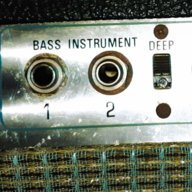
Built in the 70s...purchased, used, in the early 80s....new tubes in the 90s
Soldiered through 40 years of torture tests that would shred a crash test dummy.
Relegated now to semi-retirement and the occasional jam.
Flicked on the power switch this morning and... the little red light still comes on.
I don't know about now vs then, but, back then, Ampeg built em like tanks.
 
My oldest tube amps are from the early 60s. Pretty sure they will be around long after I am gone. Most components are replaceable, although they may not be period authentic.

My oldest solid-state amps are from the 90s. There are many semi-conductors in these amps that are obsolete. Finding authentic replacements would be difficult to impossible. An engineer or really good tech may be able to select functional substitutes. Probably not worth the effort and cost, and better to just buy a new amp.

IMHO, solid state amp tend to become disposable sooner. There are some older solid-state amps that will probably be around for awhile though. Stuff like the Sunn Coliseum Bass or GK 800RB. Perhaps ironically my oldest solid state amp is a GK 2000RB.
 
  • Like
Reactions: mikewalker
Does not even have to be tube to keep on working forever. Many GK 400RB are still ticking. I even bought a 200RB for a TB'er here in rural New Mexico, older than your amp - older than a 400RB for sure, so maybe late 70's. It was quiet, not a closet queen, because it was used a lot. No service other than cleaning the pots, the seller who is probably 70 said.

My Mesa 400 is much older than your buster. This was the first version with 6505 tubes. It is running fine. Because Mesa Boogie used good components, capacitor replacements are not usually needed on Mesa Boogie amps, that's more like a Fender thing because they used cheap components which unfortunately is desired by the vintage collectors.

Mesa does need to make money. And they would not make it if they kept on making tube bass amps. So class D moving forward.

They are used by pros and they have experience with the metal genre and the touring business. They also had a longer warranty than most. Meaning they always made tough products even before Andy came on board. But they are also not a snobby boutique outfit, so their amps can be serviced anywhere except by point to point handwired charlatans
 
During the 1950-s -1980's when tube amps were at their heyday, in general quality manufacturers were looking at a 10-20 year lifecycle. models didn't change very often, so there were a lot built over those years (for example, only 500/year x 20 years represents a total production build of 10,000 units). What we see in the marketplace now are the ones that survived, and many of these have had significant repairs though "closet and attic" finds may still work without repairs.

Lower level manufacturers often built with 5-10 year lifecycles, these were offered with 90 day to 1 year warranties and not as many survived because they weren't as desirable combined with the same high cost of repair.

Today, quality manufacturers are still designing around 10-20 year lifecycles, though some are looking at longer lifecycles where practical. The difference is that component development occurs MUCH faster than before, meaning that old components become obsolete at a faster pace than ever. The advantage of this is that new features and greater performance is possible at a lower cost, the disadvantage is that some parts being used (especially in the digital world) run the risk of being discontinued by the component manufacturers.

How often do components become unavailable during a production run, and how do manufacturers cope with that in general? (Obviously, it will depend on which components).
 
The bass amp I use the most is over 40 years old. In my studio I've got several guitar/bass tube amps that are 50-60 years old. Actually, the oldest "amp" I've got is nearly 70 years old. It's an old tube radio from 1957 that sounds shockingly good for a warm/fat guitar tone (probably due to using the turntable input with the RIAA eq curve). When driven hard it produces the creamiest overdrive I've ever heard.

Note from the health&safety department: When using that old tube radio for recording I go wireless to avoid electrocuting the guitar player if anything bad should happen. That tone is worth risking a fried Line6 Relay over, LOL. It has been rock solid so far and I've used it a lot in the studio. It's great for listening to records too, it has a surprisingly fat bass response. Far better than most old radios from this era and the original 50s Mullard tubes are probably worth more than what I paid for it at a flea market!

All my amps are still working perfectly. Most of them have been in my possession for several decades and with a few exceptions they've only needed minor repairs/service. Mostly just worn tubes. But I take good care of them and I don't buy junk. The only amp I've had any serious problems with was an early 2000s Ampeg V4BH and a Selmer Treble'n'Bass MkI that came into my possession with a somewhat dodgy output transformer (got a direct replacement from Mercury Magnetics and it has been rock solid ever since).

I also love using old tube based tape recorders as guitar amps. Old Tandbergs can be amazing for guitars in the studio and they are built like tanks, both mechanically and electronically. When take good care of they can last several life times. In fact, many of them already have. They certainly don't make consumer electromics like this anymore! Plus they look amazing with the mahogany cabinet. The only thing that seems to break down on these old Tandberg tape recorders is the included crystal mic which I suspect wasn't very good to begin with, LOL.

Of course there's lots of junk out there that hasn't survived over the years but old tube amps can usually be restored if you're willing to pay the price and when done properly they should provide years of service.
 
  • Like
Reactions: logdrum
Agedhorse once mentioned the number of cycles expected for a standard footswitch (as in, the actual button you press with your foot) is about 15,000 times.

Peace,
SoundSupport
Yes. The manufacturers of individual components, especially mechanical components like switches, jacks, and relays do provide that data for their products. It can be found in their specification sheets. This is done so that whoever is buying that component to put in a product has some idea of how many times it can be actuated before failure. This is not the same as determining an expected lifespan for the product that the component is used in. When you look at the spec sheet for an amp, they don't tell you how long they think it will last.
 
  • Like
Reactions: Wasnex
Also, do manufacturers have a certain amount of projected lifespan for their products?

I a way, I think they do in regards to parts availability of proprietary parts. Once certain parts are gone, repairs may become difficult or impossible. If the manufacturer goes away, sourcing proprietary parts may also become impossible, depending on where the spares stock ends up.

Some manufacturers are far better than others regarding length of time of spare parts availability, or the parts on hand last longer due to higher reliability. Also, some lower cost amps may be farmed out to an OEM factory a production run at a time, and are completely unsupported beyond warranty replacement. They are in essence throw away items.
 
View attachment 4783417
Built in the 70s...purchased, used, in the early 80s....new tubes in the 90s
Soldiered through 40 years of torture tests that would shred a crash test dummy.
Relegated now to semi-retirement and the occasional jam.
Flicked on the power switch this morning and... the little red light still comes on.
I don't know about now vs then, but, back then, Ampeg built em like tanks.

They weight like a tank too!
 
  • Like
Reactions: Pdaddy1978
How often do components become unavailable during a production run, and how do manufacturers cope with that in general? (Obviously, it will depend on which components).
It use to be that over the life of a product, 4 or 5 parts may need to be re-sourced, the longer the lifespan of a model, the more resourcing may be needed. Generally, finding alternate parts isn’t a big deal.

Since COVID, this has changed considerably. Parts becoming unavailable due to ridiculous lead times (<say 26 weeks) skyrocketed.

When designing products some designers (me included) have always included pre-approved alternative parts within a product’s BOM (bill of manufacture). Today, those who haven’t are pretty much hating life because all of that work now has to be done on every model they have designed that’s still in production on an emergency basis. If they used parts without an alternate, a redesign is necessary to accommodate new electrical properties, different pin out or physical package parts.
 
Electronics all eventually go bad. Capacitors go bad, resistors and other components get out of spec, etc.

I've been in the technology field for well over 30 years and I've been asked a number of times why computers start having issues when they age. It's all due to the electronic components. They simply wear out over time. I always use the example of a bending a paperclip back and forth. Eventually, it will break. It's no different with electronic components. They get hot, expand, then cool, and contract. The expansion and contraction will cause loose connections, shorts, and just wear on the components.

The higher the quality of the parts, the longer it will last.
 
  • Like
Reactions: Pdaddy1978
Well reliability is one thing, servicability is another, when electronics goods reach the level of desirability of collectors or afficinado, things are differents. the guy (gal) with a an original tweed bassman or 68' superlead will do anything he can to keep his treasure in life, my cousin (guitar), who pay 4K for his Mesa Mark V, doesn't consider his amp as use and throw electronics.

The main concern is tubes, hope some companies here will eventualy start manufacture again some.:)
 

Latest posts