• TalkBass has been independent since 1998. Add your voice.
    Create a free account to reply to discussions, view embedded media, and browse with fewer display ads.
    Join freeLog in
    Want zero display ads or expanded classifieds tools? Compare plans.

Ampless Rig a.k.a. using IEM and a DI

What would you do?


  • Total voters
    24
Hello,

I have a little chunk of money saved and wanted to buy some gear.
I asked a friend about live sound in general and he told me that about 90% of the time he could easily go through the PA with his Sansamp, using his amp only for monitoring.

I strongly consider having this pedalboard:

Bass -> Tuner -> Compressor -> Darkglass B3K -> either Zoom B3 or Aguilar TH DI or MXR or whatever -> PA

I could buy a "small", cheap combo (~100-200W) and using it for rehearsals and eventually for on-stage monitoring, but I would rather get some IEMs, I prefer using headphones in general to amps or even my sound system at home when I listen to music.
This seems like a good idea for me, I won't have much to carry to concerts, especially if I'll use IEMs.

I'm asking for advice: is this a good idea, and what gear should I buy first?
I ain't in a band currently and most probably won't be in the next couple of years.
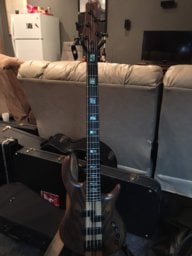
I only have a bass right now, a Spector Rebop 5 DLX.

Thanks in advance.
 
so it looks like we have the same bass!....i love mine! :)

anyways most important i thing is to get a reasonable bass amp that has a PRE DI out. for two reasons. One you can practice and hear, smaller shows you can use it and it would make a great stage monitor. Second is that you can go direct into the system and still use an IEM system. i personally use both, the amp to keep feel, and then also to fill the ambient gap that would exist (in a live environment) in not having an amp.

so for my setup is as follows

Bass => Sennheiser EW100 Wireless => MultiFX (Yamaha Magic Stomp Bass) => Tech 21 Boost DLA => Tech 21 Bass Paradriver Programmable => DI out to PA, 1/4" out to Amp (TC Helicon BG250 combo).

and then from the PA into my Sennheiser IEM System.

the reason i have separate lines to the PA, and to the Amp, is that i have dialed in the sound i like and send that both to the PA, and to the Amp. Then if i need to change my sound on my amp due to room etc, or adjust levels etc, i can do so knowing that my sound going to the PA is unchanged, and clean, and sounding the way i like it.

i hope this helps
 
I'm confused, are you doing a lot of sub gigs? At what kind of venues? While I love the idea of IEM's, it's often not practical for a lot of gigs and venues where their monitoring system is not up to the task of giving good bass at appropriate levels for monitoring. That wouldn't bother you with your IEM's but a drummer and the rest of the band would suffer. There are also situations where getting a good mix to your IEM's could be difficult.

Not knowing more about your end goal makes it hard to give good recommendations.
 
I did a gig at which I went ampless. The sound engineer forgot to send any of my signal to the monitors and I was unable to communicate that during the gig, or there was an issue. Either way, nothing made it to the monitors. An amp on stage as an option isn't a bad idea, even if you don't need it.
 
It really depends on what kind of gig you are playing. Small bars / parties - the minimal setup would be tough, but for big venues - sure.

If you do both, get a small/mid rig for those small/mid gigs and your IEM setup for the big gigs. Stay flexible mean you have more value.
 
In an ideal world, where you're playing lots of gigs at venues with strong bass through the PA and monitor feeds to IEMs, I'd say get a combo and the IEMs. IEMs are great at keeping stage volume down, and I'm all about preserving hearing. However, you'll still want the combo for rehearsal and other non-PA situations.

That being said, if you're not in a band or playing at a church that uses IEMs, you'll probably be at least supplementing the PA with your amp a lot of the time over the next several years.

What would I really recommend? Get a decent amp rig that you like, and use it. Wait until you're playing in IEM compatible venues regularly before you buy a pair.
 
I play keys/guitar in a band that I used to play bass in. I'm frequently bugging the bass player to turn up and it would drive me nuts if he got rid of his amp and went IEM only. I can't trust our monitors and wash from mains to really communicate what he's doing.
 
My standard setup is direct with a custom pedal board and IEM's. I have to preface it with that we are a self contained band and run our own sound so it's always consist. I don't really need an amp so I don't carry one on the road.
 
My only regular gig right now is church. We all go DI and use IEM's. We have our own mix and can control that mix via our iPhones. It's pretty nice.

I do a little "fill in" work now and again. For small, background music type gigs and smaller venues I use my Genz Benz Shuttle 3.0-10T with a110 extension mini stack. Works great. If it's a bigger gig there's PA to do the work. If IEM's are not an option I'll bring my little stack for the stage, if IEM's will work, I bring those.

Works for me around here. If I had to carry a little bigger room or louder gig, I'd need a little bigger rig. Fortunately what I have works for me. If I needed more I'd probably go Aguilar TH500 and a pair of 12's. Then I could just use 1 cab for smaller gigs.
 
My standard setup is direct with a custom pedal board and IEM's. I have to preface it with that we are a self contained band and run our own sound so it's always consist. I don't really need an amp so I don't carry one on the road.


My setup is very similar to this. We too only use our own FOH PA. No amps, no floor monitors. Signal path is: Bass - SansAmp BDDI - PA mixer - Sennheiser wireless transceivers - Wireless body receivers with Shure SE425 IEM's - individual mix control via iPad running StageScape s/w app. Drummer uses digital set of Roland drums. Stage sound levels are non existent. The only somewhat negative thing about this is that we only hear the mix in our IEM's and not the FOH that the audience is hearing.

TD
 
In my group, lead singer and guitar player uses IEM. Guitar uses no amp just multi pedal. DRummer and I use powered floor monitors. I use Shure wireless to BDDI to PA. We bring our own FOH and I run it from stage. Plenty of bass for me through monitor. I'm always in the crowd checking levels and such.

We're using 2 QSC K12s and a KW18 sub. Works great for our needs and easy transport and setup. Just did a show last week and a fellow musician from another band was blown away by the overall clarity, volume and quality of the mix from our FOH. He remembers the day we used to lug around a ton more gear. I said that's for the birds. He went out this week, ditched his old stuff bought something similar and wants me to see them next week at his gig. I told him I'll be there in support of a fellow band.

He got extra credit, got himself a digital board, we're still using our A&H MixWiz3. Great board and allows all four of us to have a separate monitor mix.
 
As noted, IEM's are for folks that have full FOH support everywhere they play. Until you get there, you need an amp that is capable of matching volume with an un-mic'd drumkit. It's just part of being a bass player. Don't be like the singers who show up with nothing and expect all the gear needed to amplify their instrument will be provided for them by other people.
 
IEM's are great - but if you are playing in a band where some aren't using them you need to have some stage level. If you are using a B3 (which I do sometimes) a powered monitor as a stage rig is a viable option. using a powered wedge lets you hear what you sound like in the house - especially if you are using Amp sims. The xlr (DI) out goes to the PA and the 1/4 out goes to the powered monitor. I then use the parallel out of the powered monitor to my IEM's. I personally highly recommend the use of a Rolls PM351 for your IEM's. The Rolls box allows me to take a line from the PA (either a parallel out from the FOH sub, or using a y split cable from the FOH send, or an aux send from the desk) my microphone goes thru the rolls box to the desk, and receives my bass (from the B3/powered wedge) and allows me to mix them together for my taste.

It needs to be said - if you run IEM's and a rig or IEM's alone, you can't just show up to a gig and expect everything to come together. I spent a lot of time at home setting up my IEM, using an iPod to simulate a FOH send, working out what signal path worked the best, making or purchasing leads to give me options for hook up with various systems. numerous xlr - 1/4" adaptors and y split cables are in my bag to ensure I don't get to gig and not be able to hook up to the PA. Further to this I run a Symetrix 501 compressor/limiter in line prior to my IEM as protection from signal spikes - mainly from the FOH. With wedges still on stage for others in the band, feedback is a possibility.

I hope that helps.
 
When I was still touring, I switched from amps to IEMs. It was a terrible idea. All of the time I saved from having to set up my stuff was replaced with me setting up the PA by myself while everyone else was still loading in their rigs. The IEM's sounded fantastic though. I could always hear myself. On a more serious note, get yourself a cheap line mixer; You can put your bass into it along with whatever mix you're getting from the house and, even if they mute you, you can hear yourself.
 
As from the beginning of 2013, I have moved almost exclusively to IEMs. HOWEVER, I could only do that because in one of the two main bands I play in, I actually run sound myself and have a set up where I can get a great sound in my IEMS. With the second band, we have a professional sound engineer, who really knows his stuff, is there at each gig and has the expertise to make IEMs work well.

For all other situations I bring an amp because:

1. Using IEMs is a much bigger challenge than just plonking an amp on stage and being done with it, especially if it is a small gig (trio type thing)
2. IMO, IEMs only sound great (not just ok) when you have a stereo mix. A stereo mix requires the use of 2 AUXes from the board. Multiply that by the number of musicians and you will quickly run out of AUX outputs on the most common mixing boards. Sound engineers not used to cater for that will tend to think you are a diva for requesting a stereo mix.

Mixing for IEMs is still a bit of an unknown, even for mixing engineers who have been in business for years. I have done a lot of research and experimenting in this time and have found that creating a good mix for IEMs takes a degree of skill and understanding of what can make or break an IEM mix - including aspects of stereo mixing, proper reverb choices and proper compression and limiting. In my experience, most people/engineers are under the impression that creating an IEM mix is simply a question of raising the levels of different instruments in the individual mix (no wonder such mixes make you feel disconnected from the stage/people).

A great IEM mix is a wonderful thing but unless the people entrusted to give you a good mix know what they are doing, you are better off using an amp.
 
Hello,

I have a little chunk of money saved and wanted to buy some gear.
I asked a friend about live sound in general and he told me that about 90% of the time he could easily go through the PA with his Sansamp, using his amp only for monitoring.

I strongly consider having this pedalboard:

Bass -> Tuner -> Compressor -> Darkglass B3K -> either Zoom B3 or Aguilar TH DI or MXR or whatever -> PA

I could buy a "small", cheap combo (~100-200W) and using it for rehearsals and eventually for on-stage monitoring, but I would rather get some IEMs, I prefer using headphones in general to amps or even my sound system at home when I listen to music.
This seems like a good idea for me, I won't have much to carry to concerts, especially if I'll use IEMs.

I'm asking for advice: is this a good idea, and what gear should I buy first?
I ain't in a band currently and most probably won't be in the next couple of years.
I only have a bass right now, a Spector Rebop 5 DLX.

Thanks in advance.
I'd be happy if I can be totally IEM, ampless and wireless onstage just like Geddy Lee now. I'd learn to be able to.
But to achieve that, I still have to 'pass' some 'road' before, considering that not all gig situations are easily could accept the 'concept'. Although the 'acceptation' is and should getting better time to time now & in the future.
The biggest challenge for me is actually the learning curve, how to tell my mind that it can be done as good as the old way, my own reluctance to change my old habit LOL.

Specially answering the OP: by read your Original post, for your situation now, IMHO IEM is good choice if you like it. Even if you have to consider that actually "it might not really a cheaper choice" too. Perhaps buy an inexpensive combo could be the cheaper if not cheapest choice for you.
 
Last edited:
My drummer is the only one in the band using IEMs. Everyone else uses amps and hear the vocals and a bit of everything else in the wedges. Guitar players are mic'ed and I go Post-EQ DI (SansAmp) into the P.A. or sometimes in stereo with one pre and one post at bigger places with a pro house system.
I couldnt imagine going without my amp. Call me crazy, but I feel claustrophobic wearing IEMs. Ive tried them several times and couldnt make it through more than a song or two with them in. Sounded great, but just felt so strange to me. But thats just personal preference. I am happy with just hearing my bass in my amp and in the sidefills.
If Im playing with a provided p.a. where i know the monitors wont be good and theres no sidefills, ill split my signal and use a small combo amp as my own bass monitor at a reasonable volume of course, in addition to my main amp.
We are a self contained band for the most part, but we will occasionally use a provided p.a. even if its a semi-questionable one for the sake of saving time and vehicle space, or if professional sound is provided. However if I were playing traditionally "quieter" music, I could see my self going dry D.I. only and possibly using one IEM. But its hard rock.. so half stacks, monitors, and stage volume it is. To me, it adds to the feel and the vibe of the gig. Luckily we have a resourceful sound guy with us most of the time, as well as band members who also have experience in pro sound. As a team, we are able to control everything and make everyone happy most of the time.
To me a drawback of using IEMs is having to trust someone to mix them for you, as mixing IEMs is much different from mixing wedges as a few people here have pointed out. So why not just do it myself?
My drummer does this and it works out for him. However, between communicating with the sound guy, dialing in my sound, and helping manage stage volume, ect. I have way too many distractions going on as it is. The last thing I need is a mixer to deal with on top of everything else.
With all that being said. Try them, see how you like them. More and more bass players are switching to them everyday, so there must be some advantages.