• TalkBass has been independent since 1998. Add your voice.
    Create a free account to reply to discussions, view embedded media, and browse with fewer display ads.
    Join freeLog in
    Want zero display ads or expanded classifieds tools? Compare plans.

Amps / Cabs / Pedals and cold

Hey all,

My SUV is getting close to biting the dust, and I’m looking at buying a pickup truck from a friend and putting a cap on the back.

The big obvious difference is that when I’m moving my gear it won’t be in a heated space like it is with my current car. The cap will keep it out of the elements of course but not control the temperature.
There’s space enough in the front behind the seats to keep my bass, but if I take stuff to a gig everything else will have to go in the back.

So what’s the risks here? I live in Maryland, but I’m thinking of driving out to Colorado this February. I’d be able to move my gear inside when I’m not driving, but it could still get pretty darn cold back there during the trip.

Amp is a traynor yba 200-2, all Tube, cab is an ear candy bass bomb 2x12, and I also have a pedalboard I keep in a flight case.
 
Last edited:

Hey all,
My SUV is getting close to biting the dust, and I’m looking at buying a pickup truck from a friend and putting a cap on the back.
The big obvious difference is that when I’m moving my gear it won’t be in a heated space like it is with my current car. The cap will keep it out of the elements of course but not control the temperature.
There’s space enough in the front behind the seats to keep my bass, but if I take stuff to a gig everything else will have to go in the back.
So what’s the risks here? I live in Maryland, but I’m thinking of driving out to Colorado this February. I’d be able to move my gear inside when I’m not driving, but it could still get pretty darn cold back there during the trip.
Amp is a traynor yba 200-2, all Tube, cab is an ear candy bass bomb 2x12, and I also have a pedalboard I keep in a flight case.

The biggest risk, IMO would come from not allowing your cab, or any other gear in the back, have time to warm up and have any condensation evaporate off before actually needing to set up and start playing.

Longer term risks would primarily be associated with materials expanding and contracting from the temperature changes - especially if sudden. It might seem weird, but I've heard that in those situations insulating gear with blankets and what not could still help - especially by making sure that the temperature changes aren't as abrupt. Things to look for in those situations would be loose screws and such that might work themselves loose from all of the change.

With that all being said, bands have a long tradition of carting gear around in cold climates in non-temperature-controlled trailers, so what you'd be doing would be nothing new. Respectable pro-level gear should be up to the challenge in those situations (refraining from calling it abuse, because IMO it isn't).
 
On the other end of the spectrum, be careful putting hot tubes back there when it's really cold. Giving the amp a few extra minutes to cool before load out may be one new habit to form, if you don't already let it do that for a good ten/more minutes.

Depending how hard you push the rig, your cab might want an extra three to five too. Just be aware, like stated above, that abrupt extremes are your biggest threat.
 
In addition to thermal shock is mechanical shock. Bouncing around can take a toll. Your back seat has some pillow action that helps. Some foam or a bed type air mattress can help if the roads are rough. Quilted moving blankets are good to use.

Moving Blankets 72" x 80" - New York Box - Shipping Supplies & Moving Boxes
This is excellent advice IMO. Think about this problem from the standpoint of how a cab or head produced in say California or sold by Sweetwater makes its way to a music store or your house in Maryland. Much of the trip will likely be in unheated spaces in trailers, delivery trucks and/or shipping containers. Factory packing and packaging provides handling and mechanical vibration protection with some moisture/humidity protection in the form of an enclosed desiccant and a plastic bag, but not protection from ambient temperatures in the shipping environment.

As long as you provide some shock/vibration protection, allow time for the equipment to warm-up to its operating environment pay attention to moisture/condensation when changing environments, you should be fine IME. When transporting gear, think about how it was protected by the factory when it was shipped new and try to provide similar protections.

As a final thought, when travelling with my gear I frequently take it to my room when staying overnight. Yes it's a pain, but I'm usually as nervous about outdoor environmental conditions in hotel parking lots as I am about people "parking lot shopping". I suspect that in bands that travel a lot and stay overnight frequently, as much gear is lost to theft as it is to anything else.
 
Last edited:
  • Like
Reactions: beans-on-toast
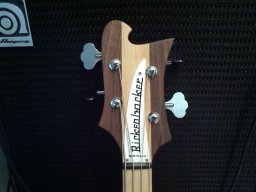
I ordered a Rickenbacker, it took a long time for it to be delivered from the factory. You can’t always plan on when something will be delivered. It was shipped to me on what turned out to be the coldest period of the year in January in the north east. Of course, I was going nuts worring about it.

I made sure that it acclimatized to room temperature before I unpacked the double box and opened the case. It all turned out just fine. Thirty years later, it’s still fine. Gear is tougher than you think.

It’s the thermal changes and mechanical bouncing around that are stressful. Proper acclimation and a bit of common sense when handling can go a long way.
 
  • Like
Reactions: Al Kraft
As a fellow Merlander I can give you this. I have a P.U. with a cap. I have an S.S. head and an 8 10 cab that have lived in the back of that truck for a few years now with no problems from either of them. I have transported both basses and Tube heads in the back of that truck in some very cold weather with no ill effects. I won't leave guitars , basses or my tube heads in the back of the truck overnight in any kind of weather. Humidity and wide temperature changes can cause condensation in the tube stuff and aren't considered a good thing for guitars either. My band has a trailer that keeps all the P.A. gear (amps and cabs) lights and the guitar players S.S. amps in it. Never had a problem with any of it.
 
Can't you keep your head in the truck as well? That would help with the tubes and the temp/moisture change.

I can when I’m by myself (and I prolly will be when I drive across the country) but with another person in the front there won’t be room for it. There’s a space behind the seats buts it’s not wide enough for my head, and besides that’s where my instrument(s) need to go.
 
I can when I’m by myself (and I prolly will be when I drive across the country) but with another person in the front there won’t be room for it. There’s a space behind the seats buts it’s not wide enough for my head, and besides that’s where my instrument(s) need to go.

I would see if someone else could transport the head, unless you have enough time to let it warm up. Even better, get a class D head and leave the big head with tubes home.
 
  • Like
Reactions: Marko 1
lol... excellent idea for a lot of reasons. :)
No it ain't :cool:;) Keep rockin those tubes. Keep bringing the amp AND your other great in at night. ..the amp and cab mainly due to the possibility of theft. .
Wild temperature changes here too... but I've never had a problem with any of my tube amps. Just let em acclimatize 1st. Try and keep the big-a-da-bumps to a minimum.
As Beans states, the gear is usually much more robust than most guitarist's egos :cool::thumbsup:
 

Latest posts