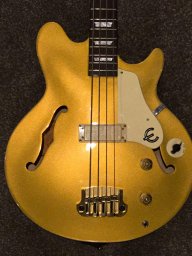
If a bass doesn’t sound good plugged straight into an an amp, all the pedals n the world aren’t going to improve it.Tone chasing.... The rabbit hole that has no bottom.

Enjoy the benefits of a premium membership!
Upgrade Account
-
TalkBass has been independent since 1998. Add your voice.
Create a free account to reply to discussions, view embedded media, and browse with fewer display ads.
Join free Log in
Want zero display ads or expanded classifieds tools? Compare plans.
You are using an out of date browser. It may not display this or other websites correctly.
You should upgrade or use an alternative browser.
You should upgrade or use an alternative browser.
analysis paralysis rant
- Thread starter DaveParker39
- Start date
More options
Who Replied?

Play, tweak the knobs until it sounds good, don’t worry about how others think it sounds, just play on the beat, the wrong note at the right time is better than the right note at the wrong time, no one cares as much as you about your tone or what you are playing

I rely on knowing my gear does a good job and habitually using settings that have proven reliable,
and then not worrying about tone beyond that.
It's totally normal. Our perceptions and feelings are in constant flux around objectively unchanged phenomena.
Another reason I do not obsess about my tone
and then not worrying about tone beyond that.
After a few hours of too many adjustments, ill be happy with my sound. Then the next day it sounds totally different and not in a good way. Ear fatigue? Idk.!?
It's totally normal. Our perceptions and feelings are in constant flux around objectively unchanged phenomena.
Another reason I do not obsess about my tone
Last edited:
I go as far as recording keeper guitar parts without an amp much of the time.
Can I get big rock tones? Yes. Plenty of gear and recording experience. Do those “good” sounds fit in the music I write and record? Nope.
So sometimes I just plug right into a mixer channel and play.
I was ocd about technique and consistency/endurance during my gigging years. I think that was the right choice for me.
Can I get big rock tones? Yes. Plenty of gear and recording experience. Do those “good” sounds fit in the music I write and record? Nope.
So sometimes I just plug right into a mixer channel and play.
I was ocd about technique and consistency/endurance during my gigging years. I think that was the right choice for me.

Appreciating the support and discussion, everyone!
Yeah, I read something on TB about how my amp is scooped here or there and adjust controls, play like that for awhile, then more the dials back to where I started. Or I start playing with my EQ on the bass, get it all wound up sideways, wonder why I am hearing things I don't usually hear, then turn the settings back to neutral where they stay until I start messing them up again.
One of the things that stood out for me in the video "Rig Rundown" with Chris Squire was how he had most of his controls taped down so he wouldn't mess them up. He said things could "get pretty weird" if his settings got inadvertently altered while he was performing.
Reminds me a bit of the joke about the new, automated cockpit of the latest air transport jets. Only two in the cockpit, a pilot, and a German Shepard. Pilot's job is to feed the dog, dog's job is to make sure the pilot doesn't touch the controls.
One of the things that stood out for me in the video "Rig Rundown" with Chris Squire was how he had most of his controls taped down so he wouldn't mess them up. He said things could "get pretty weird" if his settings got inadvertently altered while he was performing.
Reminds me a bit of the joke about the new, automated cockpit of the latest air transport jets. Only two in the cockpit, a pilot, and a German Shepard. Pilot's job is to feed the dog, dog's job is to make sure the pilot doesn't touch the controls.

When I'm super busy and booked up with gigs, recording---i'm a LOT less OCD about the minituae than when I have more time on my hands. Of course, I've got everything dialed for said work so I just count on that, and there's no time for all the second-guessing unless something goes really awry.
My tone lesson/breakthrough was playing my Jerry Jones/Dano Longhorn, a bass with a distinctly nasal, tubby midrange voice. They actually sound kind of awful when played solo.
But the way that bass sits in a mix is nothing short of amazing. I used it for a video shoot a couple days ago and the engineer came up to me and asked me what the h*ll bass it was and went on profusely about how easy it was to mix, didn’t even need EQ, etc.
Lesson learned. Again.
But the way that bass sits in a mix is nothing short of amazing. I used it for a video shoot a couple days ago and the engineer came up to me and asked me what the h*ll bass it was and went on profusely about how easy it was to mix, didn’t even need EQ, etc.
Lesson learned. Again.

Chase notes and rhythms not tone and gear. The tone will take care of itself. Save your mind and soul from the marketing machine.
I find that when i have to many options/knobs it is much easier for me to fall into the trap of spending ages adjusting settings instead of just playing / practicing. I love my P-bass for this reason. Sometimes i turn the tone up, sometimes down. Sometimes i need to turn the volume down a bit. This is enough adjustment to play 99% of the songs i want to play. It always just works.
Pretty much how I feel about it too. When I have the option I don't even switch on the pre on my active basses. 80% of the "tone" is in your fingers anyway.I find that when i have to many options/knobs it is much easier for me to fall into the trap of spending ages adjusting settings instead of just playing / practicing. I love my P-bass for this reason. Sometimes i turn the tone up, sometimes down. Sometimes i need to turn the volume down a bit. This is enough adjustment to play 99% of the songs i want to play. It always just works.
I think it's all about giving yourself a goal when you sit down to play.
I'm gonna practice this lick for X minutes. Or I'm gonna record this entire track today. Or I'm gonna fix my tone so I don't lose the middle notes in this passage.
Chasing tone is definitely a worthwhile investment of time. But only if that's what you're aiming to do with the time you have today.
Definitely something I do a lot whenever I get a new piece of gear or swap out a component, etc. But not something I wanna do every time I pick up an instrument.
I'm gonna practice this lick for X minutes. Or I'm gonna record this entire track today. Or I'm gonna fix my tone so I don't lose the middle notes in this passage.
Chasing tone is definitely a worthwhile investment of time. But only if that's what you're aiming to do with the time you have today.
Definitely something I do a lot whenever I get a new piece of gear or swap out a component, etc. But not something I wanna do every time I pick up an instrument.
I also have OCD and I do this a lot! This is one reason why I can no longer watch YouTube or be on any social media.I'm currently in one of those places where I sit around fiddling with knobs and questioning my settings and gadgets and it is getting in the way of my playing.
Admittedly as someone with OCD I am predisposed to do it, but I seem to be doing it more lately. Chasing some uncertain tonal sweet spot.
I know the answer is to just PLAY and stop thinking so much, but it's still obnoxious at the moment.
Anyway, rant over, and here this is in case you ever find yourself in a similar spot wondering if it's "just you"... it's not!
Having OCD and not wanting to deal with analysis paralysis is why I have learned to enjoy the instruments that I have. I recently acquired my first fretless bass because it gave me different sounds than what my fretted basses can give me. But I didn't acquire any basses for over three years until recently. I'm in the minority here on TB, but I have to be aware of my mental and financial health.
I suggest you journal about how and what you're feeling. That has helped me so much! Once you info-dump everything into your journal, start playing and have fun.
This reminds me of what Keith Richards has said in several interviews. He wrote a children's book about a time before The Rolling Stones existed and how he learned how to play guitar when he was a kid. Young Keith's grandpa Gus told him that he can play his old acoustic guitar only if he can get it off the wall. So Keith had to climb on furniture to get the guitar off the wall. Once he did, his grandpa taught him how to play acoustic guitar. He got his first electric guitar years later - once he learned the basics.It's helpful to think of your bass like an acoustic instrument. What's the best sound you can get with it unplugged? What technique makes it vibrate the best? Practice and memorize that technique. Then plug in straight with no efx and flat eq and work your technique the same way. This, IMO, produces the best tone you're going to get. Then worry about the knobs. Knobs can help accentuate good tone, but they can't create it.
Side note - his daughter illustrated the book.
Last edited:


