• TalkBass has been independent since 1998. Add your voice.
    Create a free account to reply to discussions, view embedded media, and browse with fewer display ads.
    Join freeLog in
    Want zero display ads or expanded classifieds tools? Compare plans.

Double Bass Anima Nova

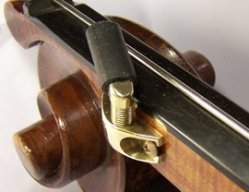
Just got an Anima Nova soundpost put in my bass... and I was very hesitant to do so based on the fact that only a few people have done it. My verdict?

Get it. It’s not a joke, and it’s not snake oil. It makes a legitimate difference, and I think it’s the way to go based on the results I’ve had. It’s the most amazing thing. I’m still messing with it, so I won’t post full results yet, but I’ll get around to it.
 
I had one put on my Arnold Schnitzer last week and while I found the difference to be subtle in the shed the luthier installed it in, when I got it back to work and in a real acoustic space- holy. The difference is not subtle. My bass feels like it was only vibrating 75% before. The sound is not only substantially louder, and fuller, but with a wider spectrum of overtones, and more fat, solid core. sure, $600 is an expensive soundpost, it's a relatively cheap way of vastly improving my sound quality.

I'm not sure if it's a function of simply having a post that fits as perfectly as possible by the nature of its design, or something else, but I don't really care.
 
Admittedly my DB is aluminum so a lot of things are different, but from a volume standpoint my Alcoa woke up dramatically when I made my adjustable soundpost longer.

I'm using low tension strings.

Here's my theory:

I'm pretty convinced there is an optimal total tension between the top of the bridge and the lower end of the soundpost that strongly contributes to the best resonance -- uniquely on each double bass. Given the tension that the strings apply, having this total tension either too low or too high will reduce that resonance...

With low tension strings, making the soundpost slightly longer is going to raise that total tension, and in doing so, reach up to that double bass' optimal total tension.

With high tension strings, making the soundpost slightly shorter is going to lower that total tension, and in doing so drop down to that double bass' optimal total tension.

Swapping out soundposts does something, but then there are questions about the effect of the different densities of the wood that each of the soundposts is made of.

The only practical and reliable way to test and find that unique optimal total tension on any double bass is with a single adjustable soundpost.

Implied with this is that the strings need to be broken in before doing this test -- new strings will apply noticeably higher tension than broken-in strings.
 
Implied with this is that the strings need to be broken in before doing this test -- new strings will apply noticeably higher tension than broken-in strings.
Really? I would reckon the tension is a function of weight, vibrating length and desired pitch, all of which are more or less constant for a specific string. But I could see why you would wait to experiment with the sound post untill the strings have settled for other reasons. But perhaps there is something I am missing.
Edit: Wait, as the string stretches, it gets thinner, that is lighter, so less tension is needed for the same pitch, ah....
 
Admittedly my DB is aluminum so a lot of things are different, but from a volume standpoint my Alcoa woke up dramatically when I made my adjustable soundpost longer.

I'm using low tension strings.

Here's my theory:

I'm pretty convinced there is an optimal total tension between the top of the bridge and the lower end of the soundpost that strongly contributes to the best resonance -- uniquely on each double bass. Given the tension that the strings apply, having this total tension either too low or too high will reduce that resonance...

With low tension strings, making the soundpost slightly longer is going to raise that total tension, and in doing so, reach up to that double bass' optimal total tension.

With high tension strings, making the soundpost slightly shorter is going to lower that total tension, and in doing so drop down to that double bass' optimal total tension.

Swapping out soundposts does something, but then there are questions about the effect of the different densities of the wood that each of the soundposts is made of.

The only practical and reliable way to test and find that unique optimal total tension on any double bass is with a single adjustable soundpost.

Implied with this is that the strings need to be broken in before doing this test -- new strings will apply noticeably higher tension than broken-in strings.


I like some of your points, but string tension doesn't change over time. It is a simple function of mass per unit length. Strings may get more flexible as they wear in, and appear to have less tension. I think that the success of the Anima Nova - which I considered snake oil when I first heard about it - is twofold. 1: The adjustability, and the fact that the luthier no longer has to carve the edge surfaces, which makes adjustments much easier. You get this in the copycat products as well, but what you don't get is 2: Zero compression. A wood soundpost will compress somewhat and absorb vibrations. A full CF one will not. I found this to make a real difference on the low end of my bass.
 
  • Like
Reactions: Don Hergert
I like some of your points, but string tension doesn't change over time.
String tension does change over time because the core stretches and therefor mass gets from the vibrating part into the pegbox part. A little bit might come in form the underlengths but a lot less than what gets into the pegbox.
It depends on the string how much the stretching is (see my posting about elongation of strings here on Talkbass) and how much mass gets away, but since the mass changes on the same pitch the tension goes down a bit.

Other factors come in like the bridge often leans more towards the nut after stretching of the strings, so the effective vibrating string length get shorter and the mass smaller, but the stretching of the string (core) is a factor.
 
new strings will apply noticeably higher tension than broken-in strings.
Edit: Wait, as the string stretches, it gets thinner, that is lighter, so less tension is needed for the same pitch, ah..
Strings may get more flexible as they wear in, and appear to have less tension.
String tension does change over time because the core stretches and therefor mass gets from the vibrating part into the pegbox part.

Thank you all for sharing your wisdom on this! Honestly I hadn't thought about the physics of time and stretching when I made that "broken in" statement, I was mostly going by feel and how much tuning has to happen when strings are new. And some types of strings do "feel" more stretched and need more tuning when new than others do, especially if they are synthetic core like I've been using, or in particular, gut. It may be that some metal core strings don't stretch that much.

In many ways our double basses -- even my aluminum one -- are living and breathing things. Something as subtle as tension from one set of strings to another -- even just a new set of the same kind -- can make such a difference.
 
Well, even the windings in most cases get with the core into the pegbox and therefor even more mass loss. But in the real world grease gets into the microspaces in between the slightly separated windings (the microspaces make the strings more flexible) and that means mass added as well as with the grease on the surface of the string. So again tension will rise a bit until the next big (ultrasonic?) cleaning.
 
  • Like
Reactions: Don Hergert
I think that guts can change tension, but mostly as a result of humidity changes. Synthetic core? I've been playing Obli for 18 years now and don't notice any stretching after the first few days. Since I don't play professionally any more my current set has actually been on the bass for ten years. They absolutely don't stretch. I can pick up the instrument after a month of neglect and it is always almost perfectly in tune.
 
Hmmm, that's interesting. My mix of SilverSlaps EA/SBW-Deluxe DG requires tuning just about every time I play my Alcoa. I'm pretty sure it's temperature changes that cause this; this is 2 years in with these strings. Most frequently the SilverSlaps go A little sharp and the SBW-Deluxe go A little flat.
 
I have got to start saving my gig money and (in the meantime) learning more about this sound post!! This makes so much sense to me and would save so much time and energy trying to find the "sweet spots" on different basses in terms of length and placement....Where did you track yours down? I can't find anyone in US that stocks it regularly and/or has it on their website. Link?
 
Just a comment on our previous discussion...

Regarding what I'm going to call the "total compression" concept that I was trying to convey in posts above, though, that is not the same as the varying string tension based on stretching that we were discussing. I'm thinking string tension, varying or broken-in or not, by definition is what really defines pitch.

The "total compression" concept in my theory is really a combination of string tension, build, setup, material densities and the volume inside the double bass, that together respond either positively or negatively when "sprung" with the sound post. So the solution that adjustable sound posts provide is the ability to test various "total compressions" on the fly, to find the right one.

Granted that adjustments to the length of an adjustable sound post don't have to be done often once that optimum "total compression" is found, but having that adjustment ability whenever setup is changed is a wonderful thing!
 
Mine is a home-made 4-footed combination of hardwood, stainless steel and stiff sheet aluminum. I adjust the length by adding or removing washers in various locations, including the main post and each of the 4 feet, accessing it for removal and adjustment through my DB's access panel. So it isn't adjustable in "real time" under string tension. In my experience with this in my bass, the key is getting the total compression right.

When I got the total compression just right, the bass became remarkably loud and clear.

While I do really like the 4-foot option mine has because it addresses all tone producing areas of both of the bridge feet, having the ability to adjust sound post length in real time without changing anything else in setup would be very nice (and save a lot of time). On the other hand, because of the design, this sound post is extremely solid and should never "auto-adjust".

(Edited to clarify design.)
 
Last edited:
Mine is a home-made 4-footed combination of wood, stainless steel and stiff sheet aluminum. I adjust the length by adding or removing washers in various locations, accessing it through my DB's access panel. So it isn't adjustable in "real time" under string tension. In my experience with this in my bass, the key is getting the total compression right.

When I got the compression just right, the bass became remarkably loud and clear.

While I do really like the 4-foot option mine has, having the ability to adjust sound post length in real time without changing anything else in setup would be very nice (and save a lot of time).
Some users of the Anima Nova made similar experiences...
Invalid Link Removed
So the combination of the two elements seems to be important..
 
I think that many of you may be experiencing for the first time how a very good fitting soundpost is like, more than a magical new device.

I hear you, but this is coming from a position of (much!) experience. For those of us that are much more novice, the potential to test and try different positions and tensions without having to cut new wood each time potentially saves a ton of time on our learning curve. They’re cost prohibitive at present though and I think they only sell to luthiers. — James, would you order and sell me one for +20%? <wink> For real, though — I’m super curious about it and a sucker for time saving gadgets.