
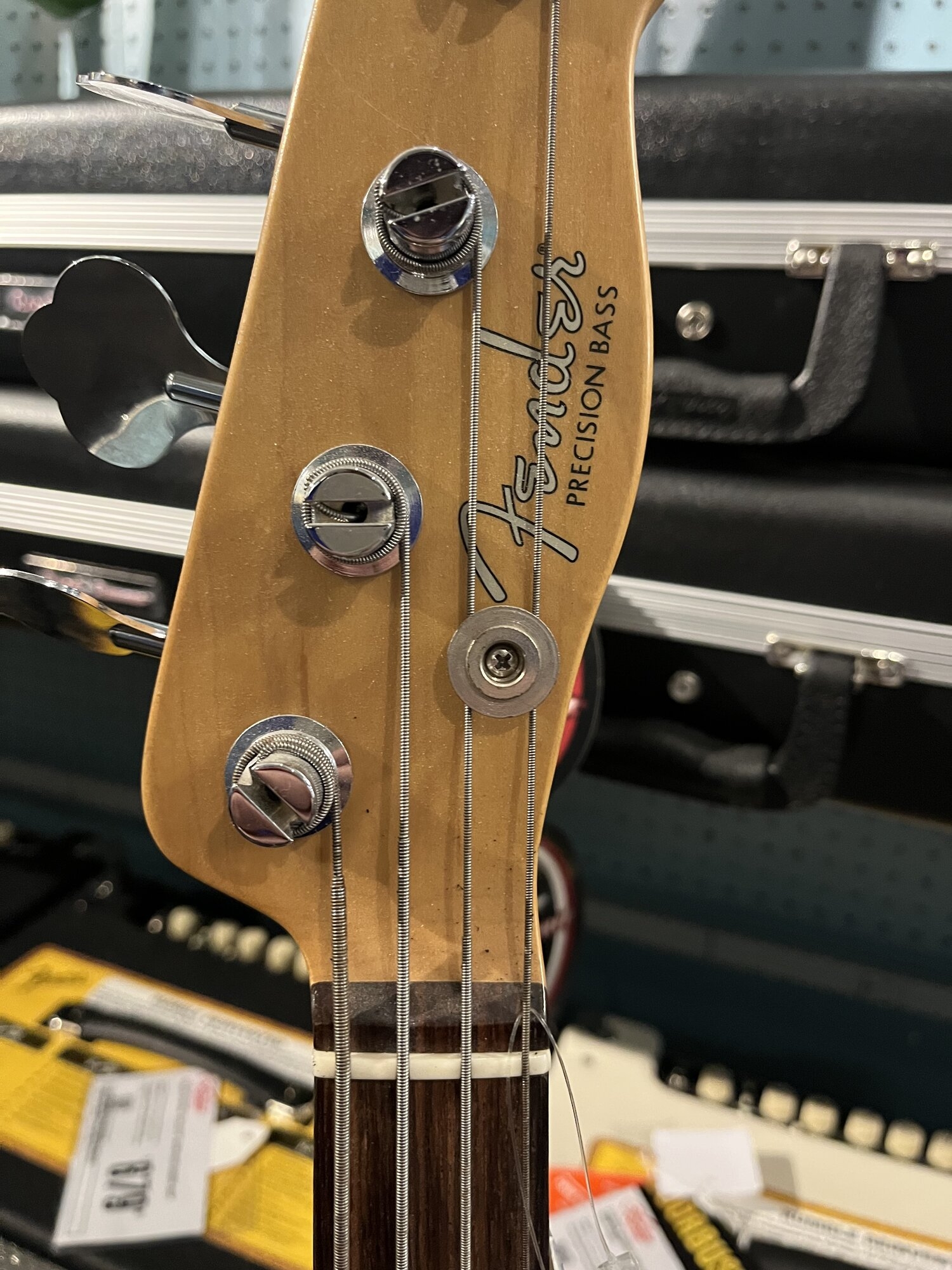
Sorry for posting another one of these threads! These are either stock Fenders that come preinstalled on their instruments, or maybe Ernie Ball Slinky's. Any ideas? They were on a Mike Dirnt Roadworn P. Thanks!!!!

Enjoy the benefits of a premium membership!
Upgrade Account
-
TalkBass has been independent since 1998. Add your voice.
Create a free account to reply to discussions, view embedded media, and browse with fewer display ads.
Join free Log in
Want zero display ads or expanded classifieds tools? Compare plans.
You are using an out of date browser. It may not display this or other websites correctly.
You should upgrade or use an alternative browser.
You should upgrade or use an alternative browser.
Another "What Strings are These" Thread..
- Thread starter BigDrew
- Start date
More options
Who Replied?

Strings without silks could also be Rotosound Rotobass strings. How do they feel on yout fingers? Are they "Rotosound rough"?

Rotosound strings come with color-coded ball ends, red-blue-white-red (e-g).Strings without silks could also be Rotosound Rotobass strings. How do they feel on yout fingers? Are they "Rotosound rough"?
A question for the OP... What color(s) are the ball ends on them?
Last edited:
Do you see the bridge on that bass from the picture that was provided? How can you tell there are color-coded ball ends on that bass? All we have to work with is a picture of the headstock.Rotosound strings come with color-coded ball ends, red-blue-white-red (e-g).
A question for the OP... What color(s) are the ball ends on them?


I guess you are asking because maybe you like them and are trying to replace them with the same strings?
Like others have said they could be several brands without silk and gold ball ends...
IMHO I would get those rusty old strings off ASAP and put on a set that you know you like...my 2 cents lol
Like others have said they could be several brands without silk and gold ball ends...
IMHO I would get those rusty old strings off ASAP and put on a set that you know you like...my 2 cents lol
Someone suggested they could be Rotosound Roto Bass, so I simply asked the question to see if the OP could find out if the ball ends were colored or not. Now we know they're not.Do you see the bridge on that bass from the picture that was provided? How can you tell there are color-coded ball ends on that bass? All we have to work with is a picture of the headstock.


I checked the picture on Fender's product site for this bass (Invalid Link Removed) and the E and A string have the same taper as the E and A string in OP's first picture.
Also, the ball ends of Fender strings used to be brass colored until a few years ago, and the fact that your bass still has the original Badass II bridge dates it as an earlier model.
Conclusion: These are very probably the stock strings that the bass came with: Fender® 7250M Nickel Plated Steel Roundwound, Long Scale, (.045-.105 Gauges), PN 0737250406.

Also, the ball ends of Fender strings used to be brass colored until a few years ago, and the fact that your bass still has the original Badass II bridge dates it as an earlier model.
Conclusion: These are very probably the stock strings that the bass came with: Fender® 7250M Nickel Plated Steel Roundwound, Long Scale, (.045-.105 Gauges), PN 0737250406.
Attachments

Last edited:

Fender 7250m. Greatest bass strings of all time.
The factory ones tend to be all one color. But if you buy a pack the ball end colors are different.
The factory ones tend to be all one color. But if you buy a pack the ball end colors are different.
This is correct. Fender strings used as factory strings have all brass ball ends, while the ones in retail packages are color-coded, gold-red-silver-green (E-G).The factory ones tend to be all one color. But if you buy a pack the ball end colors are different.


