

Enjoy the benefits of a premium membership!
Upgrade Account
-
TalkBass has been independent since 1998. Add your voice.
Create a free account to reply to discussions, view embedded media, and browse with fewer display ads.
Join free Log in
Want zero display ads or expanded classifieds tools? Compare plans.
You are using an out of date browser. It may not display this or other websites correctly.
You should upgrade or use an alternative browser.
You should upgrade or use an alternative browser.
Any disadvantages to short scale basses?
- Thread starter RockNRollRanter
- Start date
More options
Who Replied?
So, I"m walking around Sally's {Salvation Army} a few weeks ago and there, laying on the counter, is a short scale bass going by the brand name Memphis. It was obviously older and set up in a P-bass configuration. They were asking $40.00 for it and hey, just like any TBer there was no way in hell I wasn't taking it home. It wound up needing pots, a set of rounds, and a dust off.
Full disclosure, I am a long thin necked sort of fellow, Ricky's, Tbirds, EB3, Fury, Jazzers, and the like, I've got a big fist.
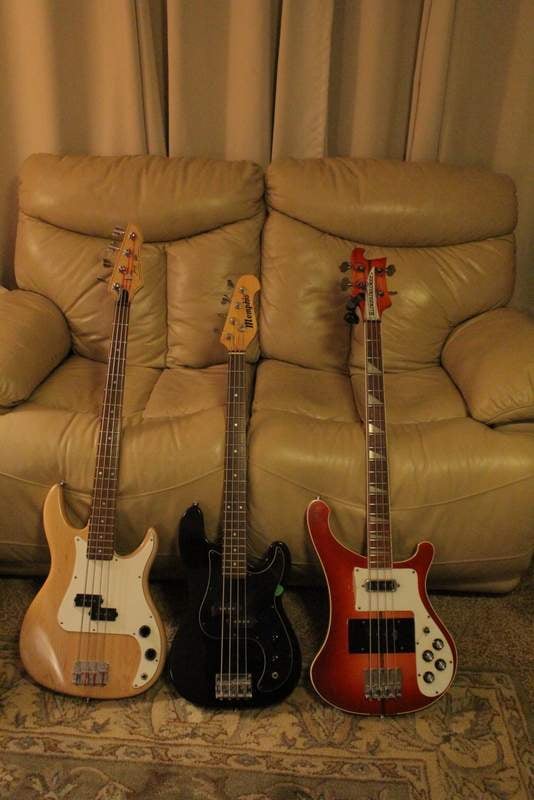
I took the little sucker to this coffee house gig [Rockin' Blues] I do where I stand for three hours on a 12"X12" tile kickin' it like a bobble head stuck to the dash.
Oh my gosh, sounded sweet through a Markbass 210 combo. Weight- 7.3lbs. I wasn't clobbering the guitar players mike stand all night and it was as easy to play as a Tele. I worked hard on the intonation before taking her out and walked it up over the 12th plenty. The overtones rang true to life. The "P" pick up on this thing is ridiculous. I had a blast with it.
There are a lot of good choices out there, and we've seen some beauties on this thread, but if you or anyone else happens to see one of these dogs running around ebay for <$100. bring it home! (make sure it's a shorty!)
Full disclosure, I am a long thin necked sort of fellow, Ricky's, Tbirds, EB3, Fury, Jazzers, and the like, I've got a big fist.
I took the little sucker to this coffee house gig [Rockin' Blues] I do where I stand for three hours on a 12"X12" tile kickin' it like a bobble head stuck to the dash.
Oh my gosh, sounded sweet through a Markbass 210 combo. Weight- 7.3lbs. I wasn't clobbering the guitar players mike stand all night and it was as easy to play as a Tele. I worked hard on the intonation before taking her out and walked it up over the 12th plenty. The overtones rang true to life. The "P" pick up on this thing is ridiculous. I had a blast with it.
There are a lot of good choices out there, and we've seen some beauties on this thread, but if you or anyone else happens to see one of these dogs running around ebay for <$100. bring it home! (make sure it's a shorty!)
Last edited:

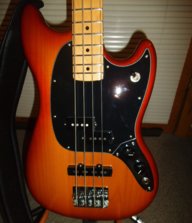
One downside to a short scale is that it's short. Some people think a bass should be long. Merely a matter of looks or aesthetics.
But also, a 6'5", 350 lb. big, big guy cradling a small bass might look a little off in proportions.
That said - I only play short scales. Less basses and strings to pick from are the only downsides I've run into.
But also, a 6'5", 350 lb. big, big guy cradling a small bass might look a little off in proportions.
That said - I only play short scales. Less basses and strings to pick from are the only downsides I've run into.
As others have stated, there are differences, but not necessarily disadvantages.
Availability of both instrument choices and strings is less an issue than it used to be thanks to the internet.
Short scale basses will have less noticable harmonics - especially from the lower strings, but that's only an issue if you go for a particularly "hi-fi" kind of tone, which many people don't, and can be compensated for easily with a quality amp and cab.
Often, shorties are lighter, balance better and require less of a reach to play in first position - no disadvantages there!
Plenty of players have gotten fantastic sounds from shorties, and many of them did so when the selection of both strings and basses was more limited.
If a shorty feels more comfortable to you, you should absolutely play one.
Whether you switch or not, I do suggest you explore upright bass (Simandl) fingering. You may find it a lot more comfortable on long and short scale basses.
My first teacher was a small guy with small hands and he used - and encouraged me to use - Simandl fingering when I was starting out. As a tall guy with fairly big hands it didn't make much sense to me.
Later, I studied with the great jazz and funk bassist Kim Clark. She, too, suggested I use Simandl fingering as well as learning the more common finger-per-fret fingering. Again, I didn't really understand why, but I went along with her and I'm glad I did. Now that I'm older, I find Simandl fingering much easier on my hands and only use finger-per-fret for tricky, technical passages. No matter what scale length you play, the Simandl fingering reduces the amount of stretching you need to do, which is much gentler on your hands. If I'm not mistaken, Ed Friedland has students learn both fingerings in his bass method books.
Sorry to get off the short- scale topic a bit, but I felt it was pertinent.
Availability of both instrument choices and strings is less an issue than it used to be thanks to the internet.
Short scale basses will have less noticable harmonics - especially from the lower strings, but that's only an issue if you go for a particularly "hi-fi" kind of tone, which many people don't, and can be compensated for easily with a quality amp and cab.
Often, shorties are lighter, balance better and require less of a reach to play in first position - no disadvantages there!
Plenty of players have gotten fantastic sounds from shorties, and many of them did so when the selection of both strings and basses was more limited.
If a shorty feels more comfortable to you, you should absolutely play one.
Whether you switch or not, I do suggest you explore upright bass (Simandl) fingering. You may find it a lot more comfortable on long and short scale basses.
My first teacher was a small guy with small hands and he used - and encouraged me to use - Simandl fingering when I was starting out. As a tall guy with fairly big hands it didn't make much sense to me.
Later, I studied with the great jazz and funk bassist Kim Clark. She, too, suggested I use Simandl fingering as well as learning the more common finger-per-fret fingering. Again, I didn't really understand why, but I went along with her and I'm glad I did. Now that I'm older, I find Simandl fingering much easier on my hands and only use finger-per-fret for tricky, technical passages. No matter what scale length you play, the Simandl fingering reduces the amount of stretching you need to do, which is much gentler on your hands. If I'm not mistaken, Ed Friedland has students learn both fingerings in his bass method books.
Sorry to get off the short- scale topic a bit, but I felt it was pertinent.


Op, my partner plays a short scale bass's and full scale (heck, even extended scale instruments) and this is basically what we have noticed.
The common short scale "problems" only exist because of the instrument design. for example, the warwick rockbass bridge is a 2 piece design that "takes off" 2 or so inches of the string length because the ball end of the string is a fair distance from the actual bridge saddle. That means you can buy standard length/gauge strings and get achieve lower tuning's. plus, you're not limited to the small choice in short scale strings.
the fenders and other brands we tried have the tuning key too close to the nut so when you are winding up regular gauge strings they begin to over lap and buzz at the tuning peg. Another thing we noticed was that because the ball end of the string is so close to the actual bridge saddle the thicker end the string wouldn't fit into the tuning peg slot.
FWIW, we actually got a rockbass short scale tuned to Drop C# with standard Dr high beam 45-105 strings and its sounds absolutely incredible. Tension is perfect as well.
The common short scale "problems" only exist because of the instrument design. for example, the warwick rockbass bridge is a 2 piece design that "takes off" 2 or so inches of the string length because the ball end of the string is a fair distance from the actual bridge saddle. That means you can buy standard length/gauge strings and get achieve lower tuning's. plus, you're not limited to the small choice in short scale strings.
the fenders and other brands we tried have the tuning key too close to the nut so when you are winding up regular gauge strings they begin to over lap and buzz at the tuning peg. Another thing we noticed was that because the ball end of the string is so close to the actual bridge saddle the thicker end the string wouldn't fit into the tuning peg slot.
FWIW, we actually got a rockbass short scale tuned to Drop C# with standard Dr high beam 45-105 strings and its sounds absolutely incredible. Tension is perfect as well.

I use short scale exclusively. I have found that using .050-.110 long scale strings work perfectly on both my Warwick and Squier Jag basses. Tonally they are monsters they have clarity and low end thump. There are no downsides except one. I came from using 34" scale fender Ibanez and Warwick basses and I do not in any way miss the long scale. The only downside is the lack of available choices of basses in the short scale. I highly recommend the Squier Jag as a good starter short scale.
- Dec 8, 2012
- 448
- 263
- Disclosures
- Hire me to design your band's Merch.
If you get a chance, try playing an Ibanez Grooveline G104. Super skinny neck and the way the bass sits puts it s lot closer to your center. This may not help at all with the four finger stretch, but having your elbow tucked in actually allows you to make those stretches far easier because of the vertical positioning of your wrist. You might just have a 34" scale bass here (in a Grooveline) that will feel more like a short scale bass.

I started out on short scale and played them for years before I got my first Fender Jazz, which I hated for years. I've always said that I believe it's easier to go from long scale to short scale, than the other way around. Now I'm comfortable with both, but my favorite bass to play is still, and will always be my SS Coronado II which was my second bass that I owned. My first was a SS Kalamazoo KB which was really junk and would never stay tuned.
Back on point, there's absolutely a down side to short scales, and I'm surprised no one has brought it up. The down side is string selection, not as many choices as with LS, and SS tend to buzz easier so a GOOD setup and string choice is essential. Other than that, SS's rule!!!
I own 4 shorties, Coronado II, Musicmaster, SG, Jag, and I'm listing them in the order of my preference. People recommend the Jag a lot but it's my least favorite shorty.
057912
There are a lot more choices for strings right now than there used to be. True a lot if not most of your local stores don't carry many if any, but if you go to Welcome to Bass Strings Online - Your Custom Bass String Shop... or [Invalid or Expired Link Removed] you can find most anything you can think of. You need to do a good setup on any bass, be it short, medium, long scale.
I have about 30 shorties right now. From ones I've built, to ones I've rebuilt to factory ones. All of mine have flats or tapes on them.
So you'd need a higher action to avoid buzzing I guess?
No you don't! I have all my shorties with very low action and don't have one that has any fret buzz anywhere on it. But I take the time to set all mine up properly, as you should do with every bass regardless of scale length.

Interesting that there is a lot of short scale threads all of a sudden!
I started playing short scale back in the 60's with a rented Eko (horrible) a borrowed EB-3 and then bought a Hagstrom Hag II with what is still the best neck in bassdom and played it non-stop for many years. I looked at a P bass at that time, but they seemed HUGE compared to the Hagstrom and they were so expensive - nearly $200!
I later did buy a nice Am. Std. P and then, thanks to TalkBass GAS a succession of other 34" basses. Now, my hands are getting older and slower and I find that the short scale is beckoning again and I have started acquiring more medium and short scale basses to see which will suit me best.
I find that there IS a sound difference - the long scale basses have more "air" and definition at least when played solo. With the band you really can't tell and no one in the audience cares. Really
Medium scale is nice. My favorite is the Aria Pro II from the 80's I think. The big problem is the dearth of MS strings. There are just darn few of them. You can't just use long scale strings and wind 'em up - the tension is not correct and the sound suffers. Mustangs are a problem because they are string-through and require medium scale strings, so I sold both of mine. You can't get T.I's or Sunbeams in Medium scale. A deal-killer for me.
Short scale!!! - YAY! Hofner - awesome, woody sound, tight string spacing - great for a guitar player that uses a pick. The Gretsch 2202 is so nice with a very thick sound. The Ibanez miKros are surprisingly well made, comfortable and sound really good. The best value by far is the Squier VM Jag SS - a truly fabulous bass with terrific sound and fast, easy neck for less than $200? Crazy. For me - I am back playing my 2 Hag IIs again most of the time, and a Lakland Hollowbody 30. Really nice with a very strong sound. My hands really prefer them.
Don't worry about playing shorties - do it if it feels comfortable to you.
I started playing short scale back in the 60's with a rented Eko (horrible) a borrowed EB-3 and then bought a Hagstrom Hag II with what is still the best neck in bassdom and played it non-stop for many years. I looked at a P bass at that time, but they seemed HUGE compared to the Hagstrom and they were so expensive - nearly $200!
I later did buy a nice Am. Std. P and then, thanks to TalkBass GAS a succession of other 34" basses. Now, my hands are getting older and slower and I find that the short scale is beckoning again and I have started acquiring more medium and short scale basses to see which will suit me best.
I find that there IS a sound difference - the long scale basses have more "air" and definition at least when played solo. With the band you really can't tell and no one in the audience cares. Really
Medium scale is nice. My favorite is the Aria Pro II from the 80's I think. The big problem is the dearth of MS strings. There are just darn few of them. You can't just use long scale strings and wind 'em up - the tension is not correct and the sound suffers. Mustangs are a problem because they are string-through and require medium scale strings, so I sold both of mine. You can't get T.I's or Sunbeams in Medium scale. A deal-killer for me.
Short scale!!! - YAY! Hofner - awesome, woody sound, tight string spacing - great for a guitar player that uses a pick. The Gretsch 2202 is so nice with a very thick sound. The Ibanez miKros are surprisingly well made, comfortable and sound really good. The best value by far is the Squier VM Jag SS - a truly fabulous bass with terrific sound and fast, easy neck for less than $200? Crazy. For me - I am back playing my 2 Hag IIs again most of the time, and a Lakland Hollowbody 30. Really nice with a very strong sound. My hands really prefer them.
Don't worry about playing shorties - do it if it feels comfortable to you.


The "lighter, faster, more comfortable" argument for short scale basses doesn't hold up, either. My last shorty was a Dan Armstrong - heavy with a P-bass-like neck. I also played a Mustang bass for a bit. I'm on Gibson Thunderbirds now and the thin neck profile in a 34" scale is perfect, and body-wise, those basses are LONG. Something like a Fender Jazz (what I learned on) might also be a good difference splitter. A thinner neck profile in a 34" scale might be what you need!
Tone-wise, with the right amount of patience and pedals and amp selection, you can dial up pretty much anything these days. Do what you love, stick with what you know.
90% of the shorties I own or have played are in fact faster and more comfortable to play. Which is why I bought them.
Some are a bit heavier...like the Epi EB-0 for one......but even that one was faster and more comfortable on the wrists, fingers and tendons.
Personally I don't consider the Squier Jag SS to be particularly great.
It's tone wasn't anything to write home about and the one I had was a "neckdiver".
Got rid of it.
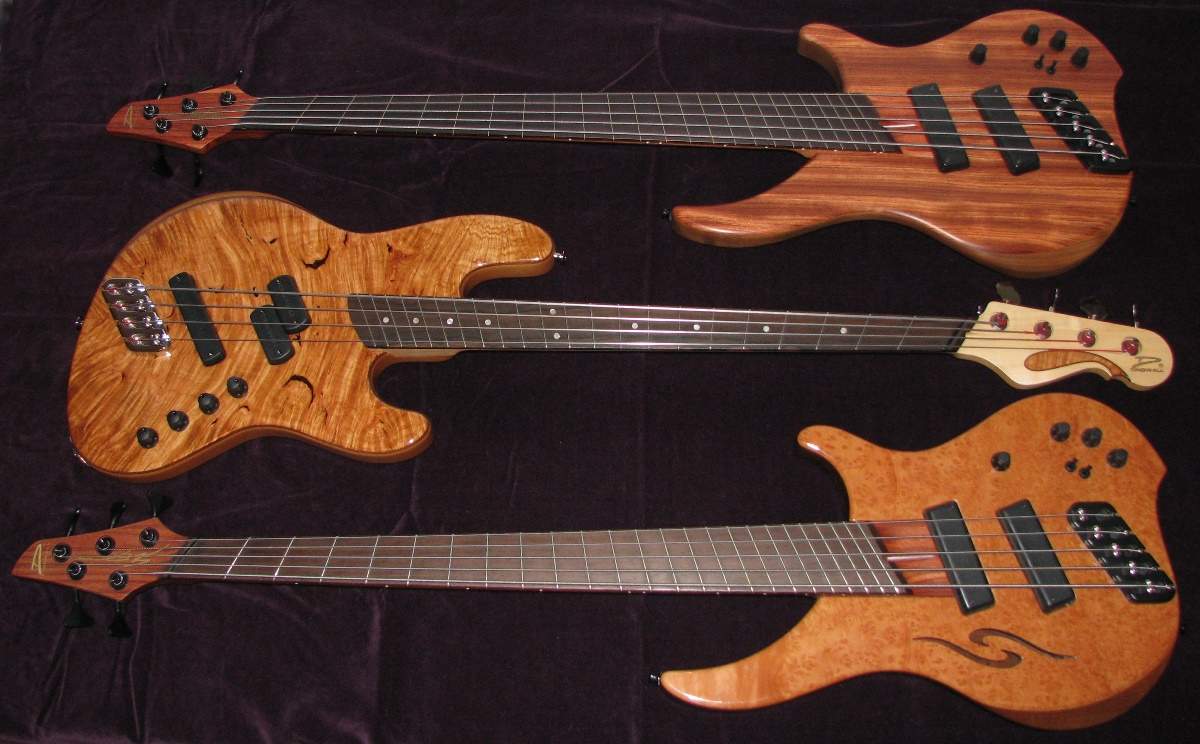
I am also a small hand, smaller person. I actually started on a short scale and worked my way towards the longer scales. Currently I play Dingwall fanned fret basses and that has made a difference for how my hands feel after playing. While my favorite is the 5 string Afterburner II (with 37" B string) (top is fretless, bottom is fretted), their Super J models (middle) would be a good compromise which gives you 34.25" on a 4 string, 35" on a 5, but the fanned frets make the difference. This Super JP has mandolin frets as well, so it can be played with a light touch.

My first decent BASS was a Fender Musicmaster (a birthday gift from my father) when I was 12. It was the perfect size, very comfortable for my small preteen hands and allowed me to learn and play everything from Yes and J. Geils to Cream and Alice Cooper (the Killer album). When that bass was ripped off, it broke my heart.
Wow. You guys are awesome! Thanks for all the great comments! After reading everything (and doing some pondering on the train home from work) I've come to the conclusion that perhaps staying long-scale would be better for my technique and just more convenient, but I'll definitely be on the lookout for a thinner neck for my next bass--my Ibby Gio's pretty fat. So, compromise.  Someone here mentioned a Thunderbird and its thin neck...I've always adored the look and sound of the 'bird. There's an Epi at the local music store so I may just try it out. (I'm strict on trying before buying.) Glad to hear ahead of time that the neck is thinner. I may just end up snatching one!
Someone here mentioned a Thunderbird and its thin neck...I've always adored the look and sound of the 'bird. There's an Epi at the local music store so I may just try it out. (I'm strict on trying before buying.) Glad to hear ahead of time that the neck is thinner. I may just end up snatching one! 
Good plan But in the end I say if you come across a short scale that is comfortable, don't avoid them. If anything, get a short if you find one you can try and like because they are good to practice on when you have small hands and want to rehearse for a long time without worrying about the stretches towards the low frets. I am also a girl, small hands and short arms haha. my preference lies with short scale and only certain long scale necks. some long scales I find are awful, some don't feel an inch over 30 when they're actually 35". I think it's a lot to do with how the neck feels and the profile rather than the scale necessarily, also the way you hold the bass on your body if playing standing makes a lot of difference to how well you can fret with the small hands and far apart frets.
But in the end I say if you come across a short scale that is comfortable, don't avoid them. If anything, get a short if you find one you can try and like because they are good to practice on when you have small hands and want to rehearse for a long time without worrying about the stretches towards the low frets. I am also a girl, small hands and short arms haha. my preference lies with short scale and only certain long scale necks. some long scales I find are awful, some don't feel an inch over 30 when they're actually 35". I think it's a lot to do with how the neck feels and the profile rather than the scale necessarily, also the way you hold the bass on your body if playing standing makes a lot of difference to how well you can fret with the small hands and far apart frets.
In my (admittedly limited) experience it has seemed like the low E strings on basses with a scale of about 30" or less feel and sound a little flabby. That may just be personal bias, since I personally prefer 34", but that's how it's seemed on the few I've played.
End of the day, though, the increased comfort of playing on the bass that fits you best will more than compensate for any marginal disadvantages that instrument may have.
End of the day, though, the increased comfort of playing on the bass that fits you best will more than compensate for any marginal disadvantages that instrument may have.


