I'm not a girl and even though I am an average sized guy my hands are not terribly comfortable on a fiver. To some extent you just have to get used to it, I suppose. If you play enough of them in stores you will hone in on the ones that feel most natural to you right out of the box. I would assume those will also be the ones that are easiest to adapt to.
Fender fives all (I think) have 19mm string spacings at the bridge and fairly wide necks. I find it difficult to finger the B string on most Fenders though my right hand feels at home on the string spacing which is the same as most fours use. I only tried it one time and my reaction to a given fiver can vary from day to day but oddly enough the Squier Active Deluxe V played much better for me. Don't know why but you should try one before you give up on Fenders if you find that the others don't work for you.
At the other extreme is the Peavey Millennium 5 AC BXP in a local shop that I have tried hard to love. I like everything else about it but the Peavey tech tells me the string spacing is only 15.9 mm. That makes it very easy to reach the B string. It makes my right hand feel like it is constantly "tripping" over strings that are just too close together at the bridge end for comfortable plucking. It may well be an ideal bass for those with smaller hands though so you definitely want to try one if other basses are too wide for you. I do not know if the other Peavey models use the same spacing or not.
In between those extremes and the most comfortable for me so far are the Ibanez SR fives at 16.5 mm and the Schecter Raiden series and Diamond P Custom 5 at 17 mm. I have played the SR305 and SR505 but I believe all the SR's are very similar in spacings and neck dimensions. They are about the best for me. The Schecters play very well too, they give me just a bit more trouble reaching the B. If I decide to buy a five it will most likely be a Schecter or Ibanez.
I tend to obsess over the fingering ease of a five string because I want one primarily to get more range from a single hand position so I plan to use the B string a lot. If you primarily want one to get the lower notes and will not be playing the B string a great deal then most of them play as well as a four on the top four strings and you may not need to worry about this as much as I do.
There are other options. Restringing with the bottom four strings of a five string set will give you BEAD as mentioned above. It will require refiling the nut so that the fatter strings fit, you may want to have a guitar tech do that for you. It gets you the low notes and if that is all you want it is a perfectly good way to go. A more extreme variant of this will give you all the range of a fiver from four strings. You use the BADG strings from a five string set (which still requires filing the E string slot on the nut) and tune the bass like a cello, CGDA. The strings are now tuned in fifths so all your fingering patterns will have to be relearned though you do at least know the note patterns for three of the strings. They're just in the wrong order! Obviously you don't quite get down to the B this way. You could modify the tuning to BGbDbAb to get there if you don't mind learning four new strings.
I did a search here on TB on "cello" and came up with a modest number of reports of TBers using the tuning. One mentioned that a female cellist friend of his was picking up the bass guitar too, using the CGDA tuning, and loving it. I even found some links to links to links to a small but growing community of double bass players who use this tuning. Evidently it was quite common before EADG became the norm though in that era there was no standard DB tuning, there were several common ones.
Personally, I am close to giving up on a fiver and buying a second four to tune CGDA. I'd keep my present bass EADG until I became comfortable on the "cello bass" and then I would convert it too. If I do buy a five then once I get comfortable on it I would probably convert my present bass to CGDA to see how they compare and decide which one to keep in the long run. That's my story today, it is very much a work in progress.
Good luck with your decision,
Ken




 Been playing bass 35 years. Even though I am only 5'4", my hands are very stretched out and flexible. Currently playing a 5-string with 34.5 scale. It's about doing it, over and over and over, warming up, stretching, playing, pushing. But if something hurts, stop stop STOP. I had a fling with a "real job" that required a lot of typing and it wrecked my wrists for bass for a year; could only play short scale, with braces on and ibuprofen in. Quit that job nonsense, healed up, new band, back to bass.

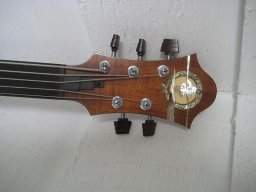


 My left hand had to get used to stretching a little more, but now I absolutely love that bass.
 Just be aware and take things easy up front, like trkelley and Lo-E said. Stop and take a break if your hands start to hurt.