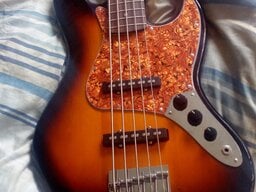
I am a pedal head and have been reverse engineering and building for a little while. I have just been turned on to obsidian wiring and I must ask someone with experience - what is this sorcery?!

TalkBass has been independent since 1998. Add your voice.
Create a free account to reply to discussions, view embedded media, and browse with fewer display ads.
Join free Log in
Want zero display ads or expanded classifieds tools? Compare plans.


This is why I live in the south.It can kill white walkers!
The solderless harness people?



I am a pedal head and have been reverse engineering and building for a little while. I have just been turned on to obsidian wiring and I must ask someone with experience - what is this sorcery?!
I understand obsidian wire is known for its sharp, glassy tone...
***SNIP***



Not sure about the others but I appreciated your knowledge on obsidian. I remember going on a field trip somewhere as a kid and there was obsidian to be found along the trails. Cool stuff.This is very strange. I've never heard of Obsidian Wire although I am very familiar with obsidian as I am an amateur flint knapper and have about 150-lbs of the stuff. Obsidian is also known as volcanic glass. It comes from lava that cooled very quickly after emerging from the bowels of the earth.
Virtually all of mine is the classic black obsidian, which is the most common type. It is great for flintknapping because it breaks with a concoidal frature (think of a round cone-shaped hole in glass from being shot with a bb). Because it reliably breaks in that fracture angle, you can shape it into arrow heads, spear heads, knives, axes, etc., just like you can flint.
It is extremely sharp. It is actually capable of the sharpest edge in the world - on molecule thick. HOWEVER it is also extremely brittle. If you drop it, it breaks. Great for arrow heads and spear heads where that sharpness makes a difference and ridiculous to use as an axe where durability matters because if it doesn't break on the first swing, it will probably break on the next. Shards of it can be used for skinning and field dressing deer. An obsidian knife can be used too, but being obsidian, it doesn't bend at all. That is what makes it so brittle - it will break instead of bending.
I'm guessing they don't actually use obsidian but instead are using this as a brand? There's just no way you could make wire out of a material that you can't melt, is a very poor conductor of electricity, is not flexible, and is impossible to make a smooth wire out of because it is so brittle. And if you were using it to mount controls on, it's just too fragile for that. You could break it by bumping your bass or even pushing in you instrument cord with too much force.
Sorry for the long bit on obsidian wire. I see that it is a brand offering solderless connections for guitar and bass control panels. Still don't see where they might use actual obsidian in it. I see they did trademark it, so I'm presuming it's just a catchy name for their brand.
I installed a set of solderless EMGs once. The pickups were great, but the connectors were crap and I ended up soldering them anyway.
Hope these guys have it figured out better.