Really tidy package they provide. The wire inserts in the receiver were pretty tough for me and I don't think that bit needs to be a struggle.

Enjoy the benefits of a premium membership!
Upgrade Account
-
TalkBass has been independent since 1998. Add your voice.
Create a free account to reply to discussions, view embedded media, and browse with fewer display ads.
Join free Log in
Want zero display ads or expanded classifieds tools? Compare plans.
You are using an out of date browser. It may not display this or other websites correctly.
You should upgrade or use an alternative browser.
You should upgrade or use an alternative browser.
Anybody know much about obsidian wire?
- Thread starter SixtyCycleHum
- Start date
-
- Tags
- wiring
More options
Who Replied?




The entire AV and low voltage industry switched over to phoenix connectors years ago. I dunno about that... Not to mention the standard 1/4" guitar cable ain't that solid a connection.Solderless connectors are great when you have enough voltage and current flowing through them to keep a good connection. Your house wiring (120 volts, amps of current) qualifies for that. Guitars and basses don't have signals that do that. You need a gas tight connection at every wire to connector and connector to connecter interface or eventually you're hosed.
A good solder joint is a great thing.

Wow. That just blew my mind a little bit. No wires, just a PCB that the pot lugs fit into. Ka-boom!I have a Jazz Plus harness waiting to go into a build. It is a very nicely built piece…
View attachment 4936913
View attachment 4936915
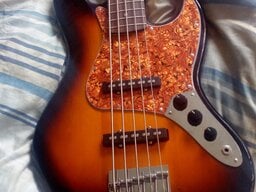
This is very strange. I've never heard of Obsidian Wire although I am very familiar with obsidian as I am an amateur flint knapper and have about 150-lbs of the stuff. Obsidian is also known as volcanic glass. It comes from lava that cooled very quickly after emerging from the bowels of the earth.
Virtually all of mine is the classic black obsidian, which is the most common type. It is great for flintknapping because it breaks with a concoidal frature (think of a round cone-shaped hole in glass from being shot with a bb). Because it reliably breaks in that fracture angle, you can shape it into arrow heads, spear heads, knives, axes, etc., just like you can flint.
It is extremely sharp. It is actually capable of the sharpest edge in the world - on molecule thick. HOWEVER it is also extremely brittle. If you drop it, it breaks. Great for arrow heads and spear heads where that sharpness makes a difference and ridiculous to use as an axe where durability matters because if it doesn't break on the first swing, it will probably break on the next. Shards of it can be used for skinning and field dressing deer. An obsidian knife can be used too, but being obsidian, it doesn't bend at all. That is what makes it so brittle - it will break instead of bending.
I'm guessing they don't actually use obsidian but instead are using this as a brand? There's just no way you could make wire out of a material that you can't melt, is a very poor conductor of electricity, is not flexible, and is impossible to make a smooth wire out of because it is so brittle. And if you were using it to mount controls on, it's just too fragile for that. You could break it by bumping your bass or even pushing in you instrument cord with too much force.
Sorry for the long bit on obsidian wire. I see that it is a brand offering solderless connections for guitar and bass control panels. Still don't see where they might use actual obsidian in it. I see they did trademark it, so I'm presuming it's just a catchy name for their brand.
I loved your story man. Lol! However, this must be said. I might be a bass player as well as neurodivergent. But I never once thought there was actually going to be obsidian in among all of this. It's a marketing shtick

It helps to have a BIG Rolodex file:
ObsidianWire | Solderless Guitar Wiring Harness | Guitar Electronics
Dude. There is never a time where you ain't a gotdang encyclopaedia and I appreciate you.
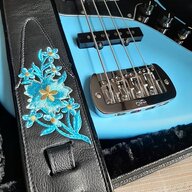
I put an Obsidian harness in my 2011 MIM Precision, the output jack was shot and I figured I'd replace the whole harness. It sounds good, it upped the output signal quite a bit with the stock pickups. What else are you going to buy that's made in Christchurch, New Zealand?
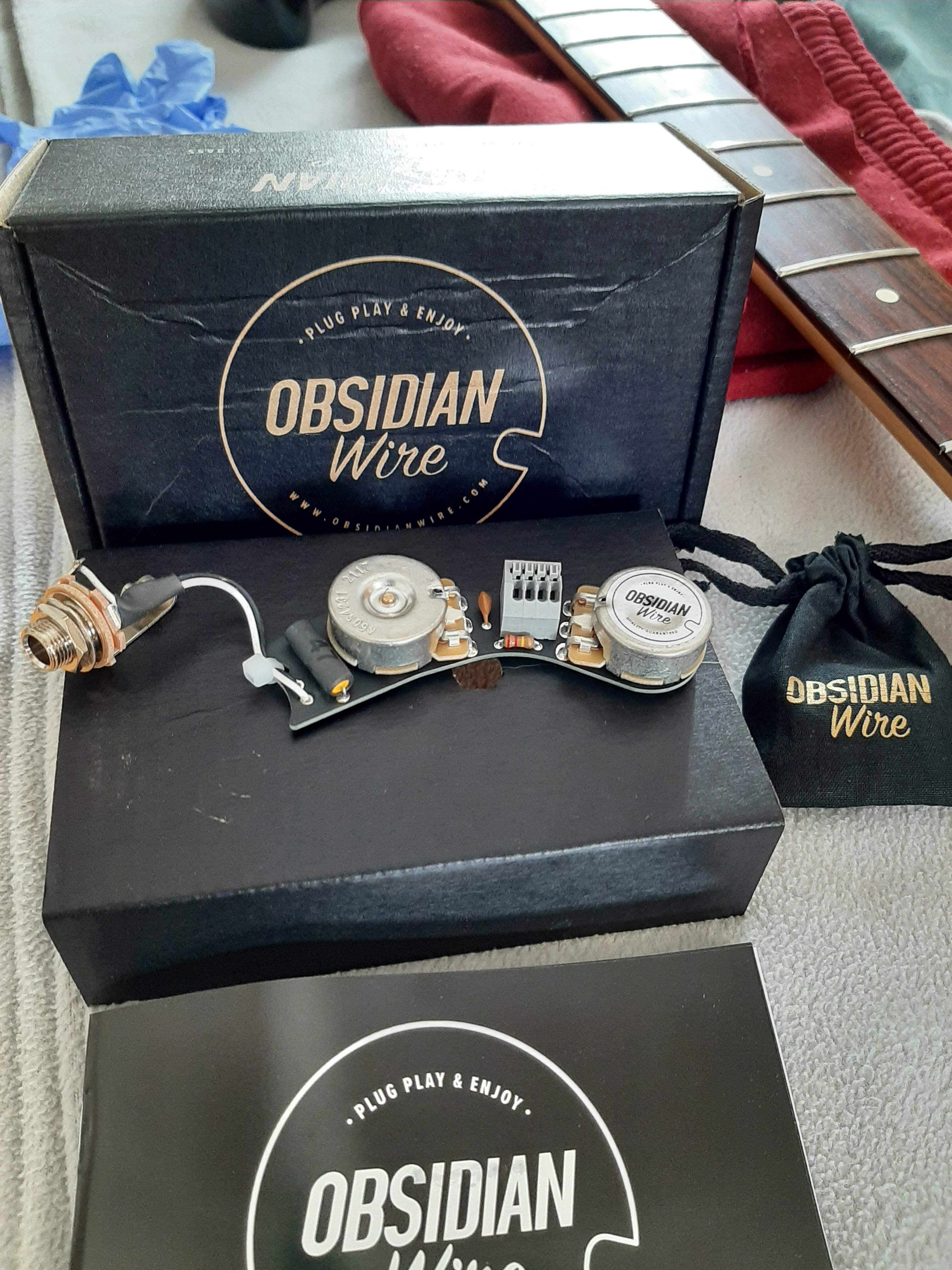
I put an Obsidian harness in my 2011 MIM Precision, the output jack was shot and I figured I'd replace the whole harness. It sounds good, it upped the output signal quite a bit with the stock pickups. What else are you going to buy that's made in Christchurch, New Zealand? View attachment 4937653
Look, man. I won't lie. I enjoy soldering very much for some reason. However, I'm way too intrigued. That looks incredibly tidy. I want.

I've got J-basses with Obsidian Wire kits. They have 2 versions,

a "Vintage Plus" and
[Invalid or Expired Link Removed]
"True Vintage '63".
A 63 kit has been installed in a Warmoth bass that I recently built, another one wil lbe installed in a Fender J, and I have a Vintage Plus kit that will be installed in a Maruszczyk as soon as my pickups arrive. The reason why I have these 2 versions is because they only had 1 Vintage Plus kit available at the time in the local store.
The kit is very easy to install:
a "Vintage Plus" and
[Invalid or Expired Link Removed]
"True Vintage '63".
A 63 kit has been installed in a Warmoth bass that I recently built, another one wil lbe installed in a Fender J, and I have a Vintage Plus kit that will be installed in a Maruszczyk as soon as my pickups arrive. The reason why I have these 2 versions is because they only had 1 Vintage Plus kit available at the time in the local store.
The kit is very easy to install:
I've got J-basses with Obsidian Wire kits. They have 2 versions,
a "Vintage Plus" and
[Invalid or Expired Link Removed]
"True Vintage '63".
A 63 kit has been installed in a Warmoth bass that I recently built, another one wil lbe installed in a Fender J, and I have a Vintage Plus kit that will be installed in a Maruszczyk as soon as my pickups arrive. The reason why I have these 2 versions is because they only had 1 Vintage Plus kit available at the time in the local store.
The kit is very easy to install:
They look so clean and tidy!
The quality is top notch. You will need a Fender USA control plate if you want to install one in a Japanese Fender.They look so clean and tidy!
I understand obsidian wire is known for its sharp, glassy tone...
I dunno. In my experience it was rather dark sounding.
But I admit it did cut through a mix quite well.

I have an Obsidian Jazz Bass solder-less harness. I bought it about a year ago. And I currently have it for sale on CL.I am a pedal head and have been reverse engineering and building for a little while. I have just been turned on to obsidian wiring and I must ask someone with experience - what is this sorcery?!
The model I purchased has a treble bleed circuit. I put it in a bass I was building at the time; played it; then took it back out and built my own harness.
Why? There was nothing wrong with the Obsidian harness. In fact they are very well made with quality components. I just didn't like the tone of the treble bleed. And I've used treble bleed circuits before. If you don't know - treble bleed circuits use a combo capacitor and resistor to prevent high frequencies from "bleeding" (dropping out) as you turn down one of the two volume knobs on a jazz-style bass. I've used others that did exactly that. The Obsidian actually cut lower frequencies and made the bass sound too thin.
Not quality in my experience. Obsidian Wire don’t use high quality pots. If they were to spend a bit more on using some nice CTS pots, it would make a big difference.The quality is top notch. You will need a Fender USA control plate if you want to install one in a Japanese Fender.
27149426[/URL], member: 388758"]The entire AV and low voltage industry switched over to phoenix connectors years ago. I dunno about that... Not to mention the standard 1/4" guitar cable ain't that solid a connection.
1/4” jack’s are typically wiped fairly often - every time you plug or unplug, the oxide gets some abrasion to keep it in check. Phoenix connectors are better than some other connectors, but for mission critical stuff (some of the gear I’ve worked on ended up in the White House), I’d avoid those connectors.
Last edited:
I would assume that Obsidian Wire is names as such because they are headquartered in New Zealand, a volcanic island structure.This is very strange. I've never heard of Obsidian Wire although I am very familiar with obsidian as I am an amateur flint knapper and have about 150-lbs of the stuff. Obsidian is also known as volcanic glass. It comes from lava that cooled very quickly after emerging from the bowels of the earth.
Virtually all of mine is the classic black obsidian, which is the most common type. It is great for flintknapping because it breaks with a concoidal frature (think of a round cone-shaped hole in glass from being shot with a bb). Because it reliably breaks in that fracture angle, you can shape it into arrow heads, spear heads, knives, axes, etc., just like you can flint.
It is extremely sharp. It is actually capable of the sharpest edge in the world - on molecule thick. HOWEVER it is also extremely brittle. If you drop it, it breaks. Great for arrow heads and spear heads where that sharpness makes a difference and ridiculous to use as an axe where durability matters because if it doesn't break on the first swing, it will probably break on the next. Shards of it can be used for skinning and field dressing deer. An obsidian knife can be used too, but being obsidian, it doesn't bend at all. That is what makes it so brittle - it will break instead of bending.
I'm guessing they don't actually use obsidian but instead are using this as a brand? There's just no way you could make wire out of a material that you can't melt, is a very poor conductor of electricity, is not flexible, and is impossible to make a smooth wire out of because it is so brittle. And if you were using it to mount controls on, it's just too fragile for that. You could break it by bumping your bass or even pushing in you instrument cord with too much force.
Sorry for the long bit on obsidian wire. I see that it is a brand offering solderless connections for guitar and bass control panels. Still don't see where they might use actual obsidian in it. I see they did trademark it, so I'm presuming it's just a catchy name for their brand.
I have a couple pieces of actual obsidian myself. I picked one piece up in Iceland and a couple others in Cappadocia, Turkey.

Well Thank You, 60.Dude. There is never a time where you ain't a gotdang encyclopaedia and I appreciate you.
Ummm…they do use CTS pots…Not quality in my experience. Obsidian Wire don’t use high quality pots. If they were to spend a bit more on using some nice CTS pots, it would make a big difference.
from their site:
COMPONENTS
Potentiometers: Obsidian® Custom CTS Pots 250K (+/-10%) Solid Shaft 1/4"
Capacitors: Vintage Plus // 150 Series Polyester Film 0.047UF - (+/-5%) or True Vintage 63 // Radial Metallized Polyester Film (+/-10 %)
Jack: Pro-Wired Switchcraft® J11 Mono
ObsidianWire for Jazz Bass®
Last edited:


