• TalkBass has been independent since 1998. Add your voice.
    Create a free account to reply to discussions, view embedded media, and browse with fewer display ads.
    Join freeLog in
    Want zero display ads or expanded classifieds tools? Compare plans.

Anyone else have a 'type'?

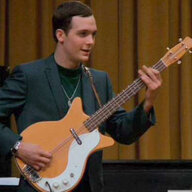
4 strings, comfortable, and low-cost.

Some will say I am inflexible, and maybe so, but my basses MUST be right handed.

Gotta say I'm in the same boat as these gentlemen. I'm pretty inflexible as well.

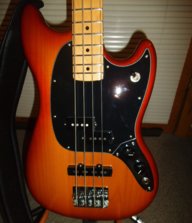
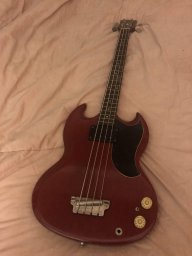
-single coil
-single pickup
-one volume knob
-one tone knob
-passive
-4 inline tuners
-short scale (30")
-colors, bright colors if possible
-no woodgrain or coffee table look finish
-no tort
-no brown-burst
-got a couple great deals and never spent more that $500 on any of my 4 basses

I don't ask for much I know. :D Just how my world spins.
 
Last edited:
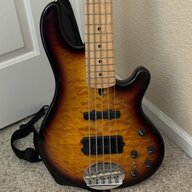
All of my basses have swamp ash bodies - all but one have roasted swamp ash bodies - I have a thing about weight, and roasted swamp ash gets the job done for minimal weight. And all but one have the same body shape - the differences are chiefly in pickups, their positions, and circuitry, including (on some basses) crossover circuits between pickups.
 
I had a type for a long time. Jazz neck width preference, not natural color, preferably not active, rosewood fingerboard. At least that's what I thought, but now I've gotta Dingwall NG3 that's active with a maple fingerboard, and am waiting on a Ripper to be shipped to me that's all natural lol.

I guess my preference these days other than the Jazzes is to not double up on basses that do the same thing (hence selling 1 of my 2 rics) Beyond that, comfortable to play.
 
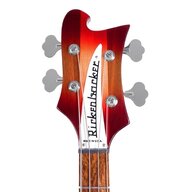
No type in terms of construction materials. But almost all of my basses are FSOs. The exceptions, off the top of my head are a cheap Hofner, a Rick, two Guilds, a Black Widow, and an old cheap-O hollowbody. That's a small percentage of my collection, with the rest being FSOs.
 
The wood on an electric bass has very minimal effect on tone. But I disagree with the OP regarding ash/maple providing more midrange. My basses made with ash/maple have the most scooped mids, and alder/rosewood ones definitely have more mids.
 
  • Like
Reactions: in tune
I guess it's finally time to admit that the only basses that stick around long term here are ash body basses. Some of them are heavy norther, some are super light swamp. Honestly, most of the time it's ash/maple, provided that they have a good midrange voice and aren't too scooped. I think for solid body fretted basses, Im really only comfortable with the attack and frequency presentation of ash, when it's done right. I always want to love alder, mahogany etc. as a body wood, but 9/10 it just doesn't quite sit right. 4, 5, 6, J, P, humbuckers, bolt on, neck thru, theyre all just ash. Minus that nice Koa Taylor in the back.

Anyone else find that they gravitate to one type of wood for a body or fingerboard? Besides neck wood, the body and board seem (to my ears) to have most impact on tone. Unless you're one of those that believe 'all woods sound the same and anyways, its all in the fingers', in which case, perhaps this thread may not be for you :)

View attachment 5274288

My "Type," is a lineless, dotless, fretless, four-string.
 
  • Like
Reactions: GodsLove66
23" scale fretless uke basses have been my choice for the past several years. Although I do have a 23" fretted Tiny Boy (with a body shape that I can't stand) and a fretted Mikro which I consider my 'long scale'.

23UkeCollection-07.21.22-1.jpg
 
  • Like
Reactions: n!k

Latest posts