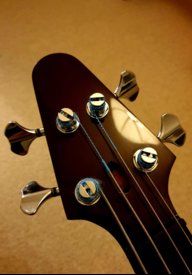
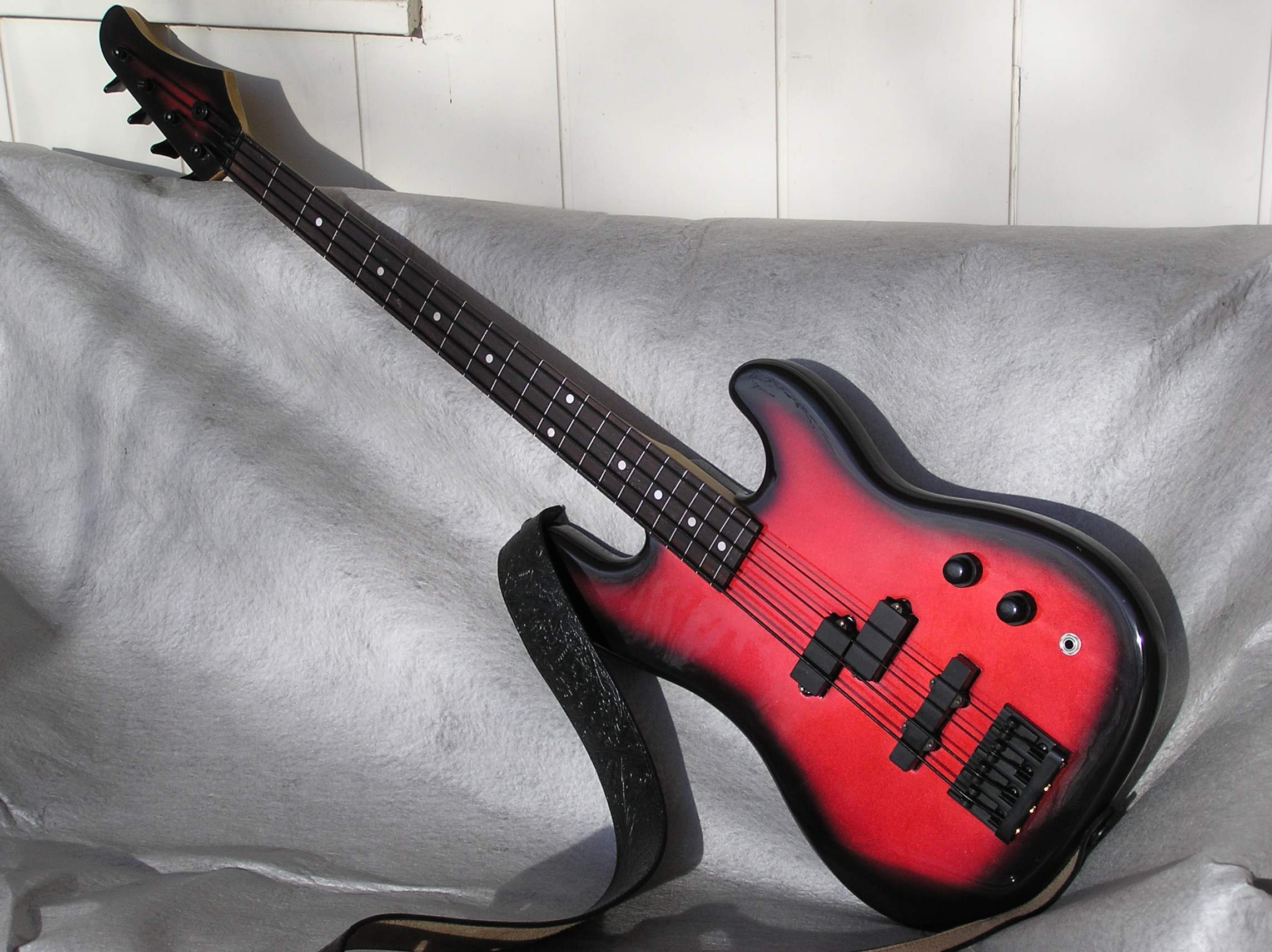
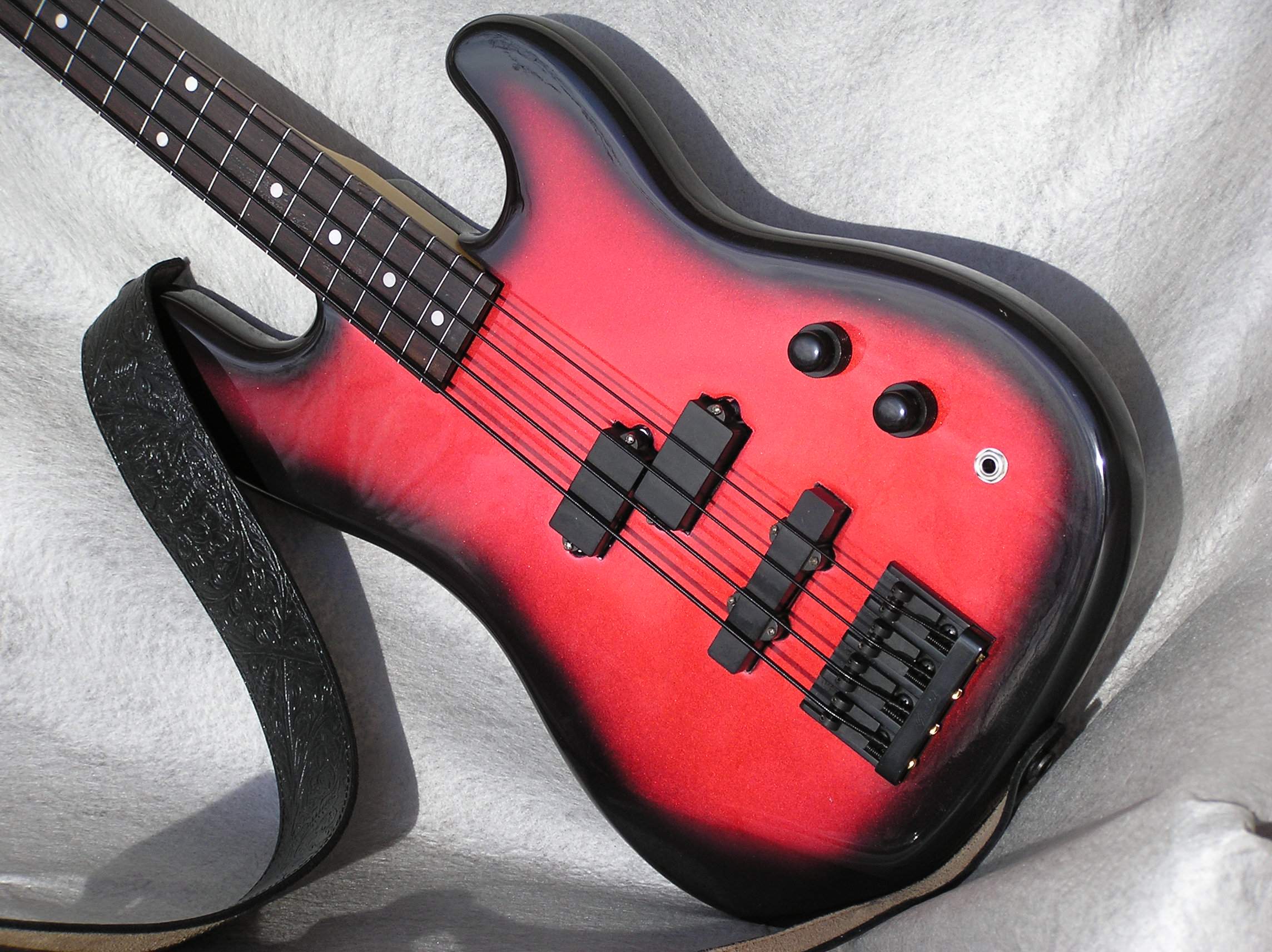
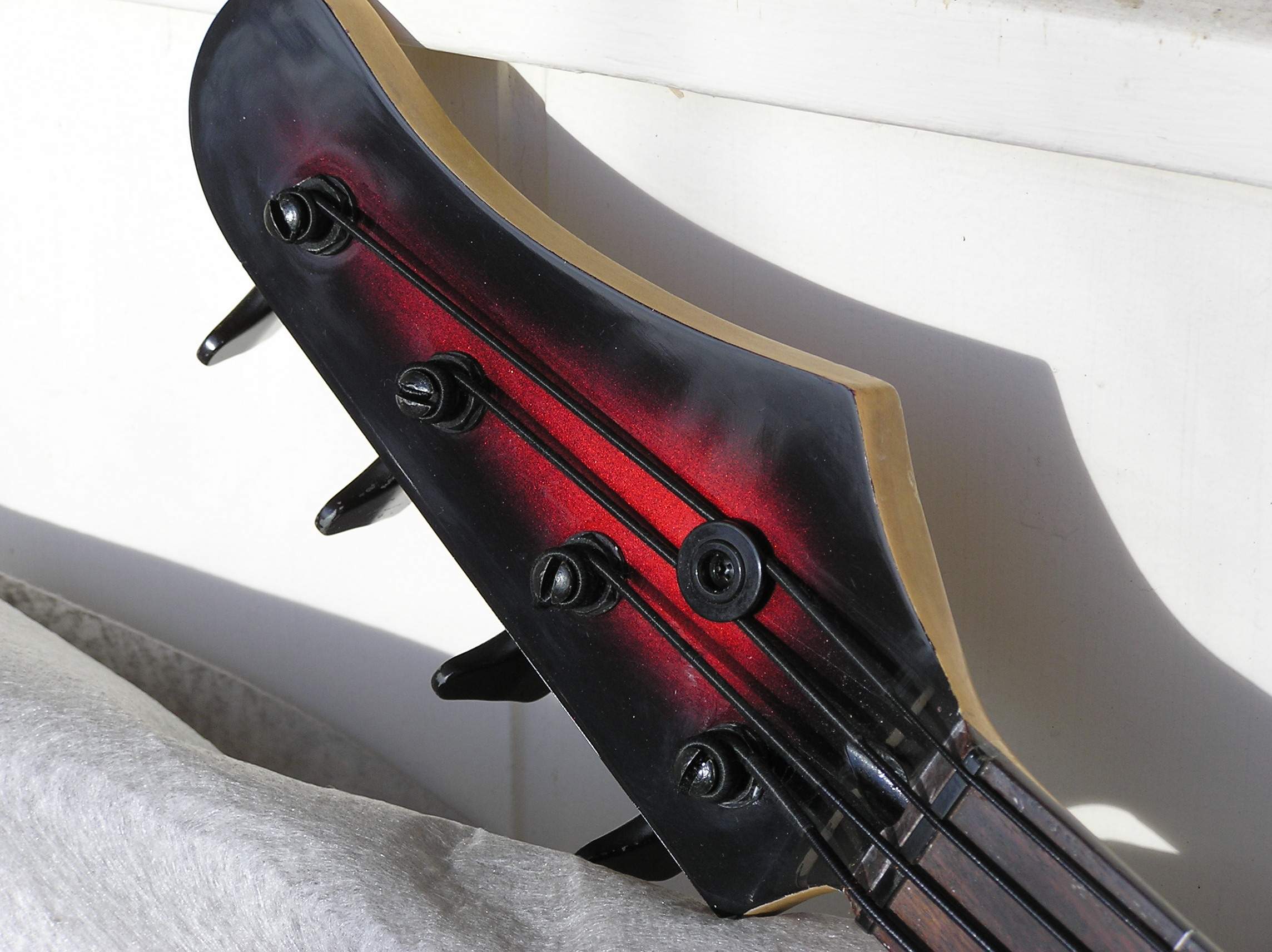
Most touch-up paint is acrylic lacquer. I bought acrylic lacquer from Stew-Mac and used it on my de-fretted bass. That allowed me to use undercoats of the same stuff. That was 20 years ago.

TalkBass has been independent since 1998. Add your voice.
Create a free account to reply to discussions, view embedded media, and browse with fewer display ads.
Join free Log in
Want zero display ads or expanded classifieds tools? Compare plans.



Better question, anybody finish a bass not using a lacquer developed for automotive? Ok, other than oil rubbed!

I used Rustoleum clear gloss lacquer as the final coat. Well, about five coats of it, actually. The color coats underneath were auto lacquer.Better question, anybody finish a bass not using a lacquer developed for automotive? Ok, other than oil rubbed!
I had one finished in shoreline gold at an automotive shop. The even contacted DuPont for the exact match.pretend i put a question mark in the title… whoops.
so i’ve found a website called
“automotivetouchup.com” which has TONS AND TONS of vintage color acrylic lacquer car finishes, including the original color for shoreline gold (oldsmobile 1960 gold mist, WA2553) which is the only fender specific acrylic lacquer i’ve ever found.
so an idea for finishing my precision bass in automotive paint (riverside gold or gold mist, not sure what color yet) was inspired both by 60s fender and a user here who had finished their p bass in 1970 ford gold metallic, and it seems i’ll be using this site for the paint. but i wonder if there’s anyone else around here who’s put car colors on their bass. if so, pictures are MANDATORY!!

Automotive lacquer will work fine as long as you do proper preparation for finishing. Half-assed prep yields a poor result with any finish but with lacquer it’ll be an epic fail.
I don't know much about finishing, and since people who do, are looking at and responding to this thread, I wanna see if I'm close to understanding how this works.
Lacquer isn't actual lacquer anymore, but just a name that got attached to solvent based paints and clear coats?
So, just saying "lacquer" doesn't really tell you what the product is, other than it's solvent based, correct? Just like saying "pants" doesn't tell you what kind or what they're made of.
Isn't it more important to say what kind of "lacquer" it is, like acrylic, nitrocellulose, etc?
And am I correct in thinking that polyurethanes cure chemically and pretty much anything else that cures by evaporating it's solvents is called a lacquer?
And where does that leave water based products? They dry by evaporating their water content and leaving the solids behind, but is there still a chemical process that binds and melts the solids left behind? Wouldn't they also be considered a lacquer?
I'm just trying to understand all the designations and how these things operate. Also, what is a lacquer and what isn't because there's no actual lacquer in any of these products (or is there?)
Is it the solvents? The binders? The solids? The viscosity? The dry time? The sheen?
Is it anything that isn't an enamel or a urethane?
Isn’t Reranch still closed?Reranch carries the Shoreline Gold Metallic in rattlecans as well, they have most of the popular Fender colors. Some good articles on prep and applying them. Full respirator mandatory, of course. Nitro is nasty stuff.
Guitar ReRanch ~ Available Colors
Isn’t Reranch still closed?
So, just saying "lacquer" doesn't really tell you what the product is, other than it's solvent based, correct?
Maybe it's different over your side of the pond, but over here you can get water-based lacquer.
I came across this product recently which seems to tick a lot of boxes, including the "burning in" quality of nitro.
EMTECH EM6000 WB Production Lacquer | Target Coatings
Not available over here unfortunately so I can't try it!