• TalkBass has been independent since 1998. Add your voice.
    Create a free account to reply to discussions, view embedded media, and browse with fewer display ads.
    Join freeLog in
    Want zero display ads or expanded classifieds tools? Compare plans.

Are there any bad basses anymore?

I agree with most of this, except for the sharp frets part. I bought a few inexpensive (under $220) basses that had sharp fret ends, but were otherwise flawless. No complaints though, an easy fix.

I suspect that the reason for the overall quality improvement is automated machining, but the aspects that require hand labor are still where corners are sometimes cut. Like fret dressing and contour sanding.
 
I suspect that the reason for the overall quality improvement is automated machining, but the aspects that require hand labor are still where corners are sometimes cut. Like fret dressing and contour sanding.
00 images2b2.png
 
IMO:
In general, there are some flawed designs; truss adjustment in/on the headstock, adjustable nuts, and maybe weight balancing issues etc. Tonally, it's all subjective; pick-up selection, PU configurations, scooped mids, too bright treble etc. Colors, number of strings, fingerboard/fretboard materials; yada yada.
Are there "bad basses"?
No.
Some manufacturers just have piss poor quality assurance throughout the fabrication process and end-of-line quality checks; wide tolerances and in general a "good enough" attitude. Perhaps it's a top down poor quality of leadership/management human resource issue; "mo' product mo' money."
With some exceptions, the further the process gets from the home office, the wider out-of-tolerances become more acceptable, and ultimately begins to be baked-in within the organization.
Quality is NOT expensive, apathy is.
 
  • Like
Reactions: csp
I have to ask, how can two basses that sound identical suddenly take on different qualities when played in the presence of another instrument? add 2 guitars, vocals and drums and what exactly happens then to change the tone? Logically speaking, it should be the other way around.

Because identical is never identical. There will always be subtle differences that get enhanced or differently obscured in the mix.
 
Walmart sells some pretty bad ones. You can also get some really bad ones online for like 40 bucks brand new.

I bought one, as I mentioned on here. It was $54.95. A no name white P bass. I bought it out of extreme curiosity. Told my wife worse case it could be turned into yard art, whatever. It came in...I played it and it played fine, the tuners were sloppy, that's all. I did a restring , set up ( mostly intonated ) the neck was straight and action consistent all the way down the fret board. This bass ( I have had it since last December) stays in tune as good as my old Jazz bass. Because of automation or perhaps in spite of it, guitars / basses are now more a game of branding and marketing rather than simply good or bad. Some of the bad experiences of folks buying high end boutique basses on here make me scratch my head. This cheapie bass has made me step back and reevaluate value and cost on not just guitars but many manufactured products. You can spend a whole lot of unessesary $ getting wrapped up in brand marketing campaigns.
 
I have to ask, how can two basses that sound identical suddenly take on different qualities when played in the presence of another instrument? add 2 guitars, vocals and drums and what exactly happens then to change the tone? Logically speaking, it should be the other way around.

It's a good question and well worth asking. I have a bass that on it's own sounds OK. When in the mix with my other band mates it sounds great. This particular brand of bass is well known for "sitting well in the mix". I have another bass that sounds wonderful on its own, but in the band it's just OK. I do small combo and solo work with the latter, band work with the former, and never cross over.
 
IMO:
In general, there are some flawed designs; truss adjustment in/on the headstock, adjustable nuts, and maybe weight balancing issues etc. Tonally, it's all subjective; pick-up selection, PU configurations, scooped mids, too bright treble etc. Colors, number of strings, fingerboard/fretboard materials; yada yada.
Are there "bad basses"?
No.
Some manufacturers just have piss poor quality assurance throughout the fabrication process and end-of-line quality checks; wide tolerances and in general a "good enough" attitude. Perhaps it's a top down poor quality of leadership/management human resource issue; "mo' product mo' money."
With some exceptions, the further the process gets from the home office, the wider out-of-tolerances become more acceptable, and ultimately begins to be baked-in within the organization.
Quality is NOT expensive, apathy is.

You had me in the first paragraph, but the after that, I couldn’t disagree any more strongly. Quality is absolutely expensive, especially when it comes to products that require any level of human intervention.
 
instrument quality build:
kinda depends when you bought an instrument
1964: first guitar, Kent, from a pawn shop
Japanese:
bad build, weak sound, play action sucked (in 1964 what's a set up?)
the defining common factor from that time, everyone my age (14-15 yrs) had the same suck choices unless your rich parents could buy you that expensive Fender or Gibson.
forward present:
entry level instrument buyers now have many choices that are well made, playable and reasonably priced
the present is better than the past

I too started with a Kent at about the same time. I knew it was crap before I bought it, but it's all I could afford. It got me going and immediately started saving for a Fender Precision. I got a summer job and by the fall I was able to buy a proper bass.
 
Junk is definitely out there but if you stick with established brands it's harder and harder to find an instrument that is truly crap.

As folks have said, customer standards have come up, production standardised, cheap hardware is better than ever and the result is that every consecutive year seems to continue the golden age of affordable instruments.
 
  • Like
Reactions: tlite
You had me in the first paragraph, but the after that, I couldn’t disagree any more strongly. Quality is absolutely expensive, especially when it comes to products that require any level of human intervention.
I can understand your perspective.
I'll paraphrase much more intelligent people than I, "No matter what your job is, if you are a ditch digger or street sweeper be the best dang ditch digger or street sweeper out there."
Less expensive should not equate to cheap/bad. I can empathize with deadlines, end-of-day production numbers etc., to a point. Team building and instilling pride-of-place/work is not just for board rooms and shareholders meetings, let alone mid-level/executive level lavatory/WC breaks.
Honda, Toyota, and Nissan have far lower tolerances during their entire processes and produce higher quality vehicles than 99% of vehicles which have their namesake etched into anything north of the Isthmus of Panama. It's the dichotomy of leadership/management; do "I" care more about numbers and making money, or do "I" care more about producing the highest quality widget as possible while caring and instilling team and pride within the organization? Cultural investment.
One could always dig a $5 hole and plant a $50 plant and hope for the best, or dig a $50 hole for a $5 plant and know "it" will produce (Long term investment with proven results).
...and Voila, AI and robotics are massing at the industrial borders. While they will dominate and ultimately rule industry, just think of how much money will be expended with BMI culturally because of total lack OF TQL/TQM and investments in apathy.
Training one to place part A into part B can be expensive, instilling pride and encouraging "team" is less expensive and will benefit all; from initial discernment in hiring to the end user.
"Bad basses"? No.
Bad leaders IMO.
 
I worked at GC when they rolled those out, in the initial batch we received I think about 40% had obvious problems out the box
I bought one of the single cut six strings and three of the pots were unusable, way off center in their recesses so that the wood prevented them from turning. The GC manager thought it had been dropped and damaged but if so, without putting a single scratch on that gorgeous maple cap or denting the box.

For a bad bass, try a Luna. Some of their employees don’t seem to get that the frets should follow the curve of the fretboard.
 
instrument quality build:
kinda depends when you bought an instrument
1964: first guitar, Kent, from a pawn shop
Japanese:
bad build, weak sound, play action sucked (in 1964 what's a set up?)
the defining common factor from that time, everyone my age (14-15 yrs) had the same suck choices unless your rich parents could buy you that expensive Fender or Gibson.
forward present:
entry level instrument buyers now have many choices that are well made, playable and reasonably priced
the present is better than the past
Yup. This Golden Age of Guitars is a lot better quality gold than in the sixties.
 
  • Like
Reactions: Ghook
It's a good question and well worth asking. I have a bass that on it's own sounds OK. When in the mix with my other band mates it sounds great. This particular brand of bass is well known for "sitting well in the mix". I have another bass that sounds wonderful on its own, but in the band it's just OK. I do small combo and solo work with the latter, band work with the former, and never cross over.


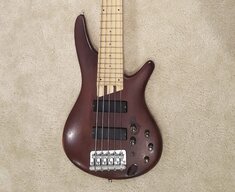
I currently use an Ibanez 5 string and I've used many brands before that, both short and long scale. What I've noticed is that the quality of my sound on any given day has little to do with the actual bass I'm playing. It's the amp I'm using, or whose PA I'm plugging into. It depends on if I get to EQ, or if some stranger dials in what I'm using. The longer I play the more skeptical I get about things like certain basses disappearing in a mix or hidden traits that come out in only in a mix. I'm not saying that I'm definitely right or wrong, just that I've seen many a person plug an instrument in and make a declaration about the instrument without ever looking at the amp. And of course we've all met that guy that suddenly hears magic after he sees the name on a headstock.

A few years ago I was messing around with my garage band and we were recording some stuff. I had a Ibanez SR300 at the time. Definitely more entry level but still decent. There was another fellow there with a much better Ibanez. I played both during the day and absolutely raved about this guys bass. How great it was, how awesome I sound, etc. During playback even I couldn't tell the different basses apart. I was listening with my eyes that whole time. That's just how easy it is to start attributing things that may not be there.
Again, I'm not saying anyone is right or wrong. I made similar "absolute" declarations when I switched from long to short scale. Usually I was wrong.