• TalkBass has been independent since 1998. Add your voice.
    Create a free account to reply to discussions, view embedded media, and browse with fewer display ads.
    Join freeLog in
    Want zero display ads or expanded classifieds tools? Compare plans.

Are you your own worst enemy? [Bad practice habits]

As a fellow human being*, do you (consciously) do things that make your bass playing/learning experience harder? Are you your own worst enemy? Do you set yourself up for failure?

How long have you been playing/practicing/learning? I'm going to say 10 years for me, just for a nice round number, even the the reality is several more years. Well who knows. I have owned basses since I was 20 anyway. (Yes, I was a late starter)

Here are 3 big problems I have created for myself over the years:

1) I have never tried learning a song 'by ear'. I wouldn't even know where to start. Even when I first started wanting to play back in the late '90s; since the internet was becoming a thing, I would just look online to find (usually incorrect) tablature of songs I wanted to learn. These days, I rely on Rocksmith. For those not in the know, Rocksmith is software/a game that allows you to plug your bass into your PC or console, and play along to songs while the tab is scrolled in front of you. It's fun as a game, but probably not the best learning tool. While the software is running, sometimes I can please myself by playing very well to (what seems to me) a difficult song. "Bernadette" by the Four Tops, for example. I spent a few days playing this song exclusively, and now I can almost 100% the song within the game. Turn off the computer though, and I don't even know what the first note is. I will just stumble willy nilly all over myself. I need to separate myself from this 'crutch'.

2) I never learned any scales. :eek:
I can play a "C major" scale starting on 8th fret of E and playing across the neck, but ask me to play it (or any other scale) anywhere else on the neck, and I will have to sit down with pencil and paper to figure it out. But yet, I may sit and watch an hour or two of videos of Scott Devine or Mark from talkingBass.com about scale pattern exercises when I have a slow night at work (Night Auditor here). What, am I hoping this will be absorbed by osmosis?

3) I never practice with a metronome. This is probably a result of mainly only 'practicing' by using Rocksmith. Metronome apps are free, I have one on my phone, a couple different ones on PC, even a physical one on a Peterson tuner .... and I still refuse to use them all.

So, there are three big things I need to work on/change if I ever want this to be more than just a very expensive hobby (I have spent almost $4K on gear in 2021 alone). I am hoping this thread will be a place where us underachievers can gather to encourage each other....

(Actually, I am hoping this will guilt me into being more responsible with my playing/practicing time. A thread I made a year or so ago kept me from making an unwise purchase earlier this year; I hope this thread has the same effect. That thread is completely unrelated to the matter at hand, but it is over here for whatever reason How many Warmoth Bodies have YOU ruined?)

Did anyone out there have bad habits like these, and manage to overcome? I would love to hear your story, although I know hard work and perseverance is all it really takes.

Thanks for listening.
I spent about 15 years never playing with standard finger plucking. Never had a need to.

I spent about 18 years never using my pinky. Never needed to.

I now do both pretty proficiently. It was a nice little struggle at first though.
 
The OP was talking about bad practice habits. I'm a newb bass player but long time drummer so take this for what it's worth, but I'm gonna go ahead and say spending at least *some* time learning songs by ear is not time wasted. Ear training was mentioned already. Plus not all gigs are about just learning a set of songs and playing them accurately. What about song writing with a band for example? I've done a ton of that (again as a drummer), and it's super valuable to have musicians that aren't lost without charts in that situation. And can roll with new ideas people are putting forth in real-time.

I think we're talking about 2 different things. I'd have to go all the way to the top of the thread, but I got the impression that he was eschewing tabs that were inaccurate in favor of sitting down with the ol' rewind button. Terrible waste of time.
 
  • Like
Reactions: millbaars
+1

I think that learning to play by ear has possibly been the most beneficial thing I've ever done, not only as a bassist, but as a musician in general. Contrary to your opinion, @shufflebass123 , learning by ear has significantly sped up my ability to learn anything. While yes, it is incredibly slow to start, as you get better and better, you'll pick up things faster, and probably even surpass the time it takes to figure out an inaccurate tab. Ear training has helped me to the point that I can predict chord changes if I've heard a song before but haven't ever played it. It's immensely helpful if a band wants to spontaneously cover something on stage or we are jamming or "writing" music (without actually writing it down).

I'm not saying any opinion is the correct one– just speaking from personal experience.

Like the gentleman above, we may be talking about 2 different things. If you have tab that is 80% correct but choose to eschew it in favor of starting from scratch, which is what I was able to gather from the post, and if your goal is learning a song for a gig or for chops, then every moment getting there to where you know the song is time wasted. You may be talking about some other learn by ear situation. If not, we'll agree to disagree.
 
  • Like
Reactions: BassGeekJack
Like the gentleman above, we may be talking about 2 different things. If you have tab that is 80% correct but choose to eschew it in favor of starting from scratch, which is what I was able to gather from the post, and if your goal is learning a song for a gig or for chops, then every moment getting there to where you know the song is time wasted. You may be talking about some other learn by ear situation. If not, we'll agree to disagree.

Ah okay. I think in a roundabout way, that's what I was getting at. In other words, I am in favor of the rewind button. The difference in time would be negligible to me, and hearing it out is more rewarding for me, personally. Of course, it depends what you're using to listen and all sorts of other factors. I usually stream from my phone and can rewind a couple of seconds using the time tracker. But everyone's got their method.
 
#1. Stop beating yourself up for what you don't know and what you can't do. The only way to reach your goal is to begin at the place where you are right now. You've built barricades to your learning that a good teacher can help you break through IF you'll do what he says the way he says. Find a good teacher and follow through with practicing exactly what he gives you to work on. If you don't "connect" with that teacher, try another. You need someone who can work well with you.

My quick take: Uninstall Rocksmith, pick one bass, one cord, one tuner, one metronome and one amp. Put all the other gear in a box in the closet, it's all unhelpful distraction in your situation. You do NOT need a certain sound to learn musical rudiments. Concentrate on the music and the lessons. Accept that it's much harder to unlearn then learn than it is to learn from zero. It'll take longer than you like but you can do it as long as you focus.
 
My biggest bad habit is that I might pick up the guitar instead of the bass. :) I got both at the same time and study both concurrently, though bass is about 75% of my focus.
After that, the big problem is that "practice" too often consists of playing fun riffs instead of sticking to an actual course of study. I'll get interested in some new area of music, and I'll learn about that style and look up some music and play around with some riffs that are (kind of) within my reach. I am a beginning so just hitting the right notes is still hard! I feel like I should probably spend more time on boring exercises.

Oh, and we have 4 (cheap!) basses... all different... and I often switch between them. How does this feel on long scale, medium scale, short scale? Rounds vs flats vs tapes? Fretted vs fretless? Experiencing those differences is fun and interesting but I am sure dicking around like that slows me down.

I also easily get distracted by studying the music theory that is exposed in the songs I look at. What key is this? What chord progression is in use? What chord tones might I be able to play here? Why does this bar sound good, what are the intervals in use? None of that is helping me play the notes written down on the paper in front of me, but it sure is interesting.

I try to use a metronome a lot. Without one, it is all too easy to fool yourself into thinking you're rocksteady. Playing with one is humbling, for me anyway.
 
  • Like
Reactions: El_Charro
We can agree to disagree. I don't know how any musicians could expect a person to fake their way through what is by any objective measure one of the most difficult basslines ever written. If someone asked me that question and took any response other than 'I'll go home and learn it' as unacceptable, I would consider them to be unreasonable douche bags that I no longer want to play with. On the other hand, by osmosis of learning songs for years, I could easily fake my through a CCR or any other middling rock song blindfolded and drunk.

Can you imagine asking a keyboard player to just fake his way through 'Turkish March' or a guitar player to just fake his way through a Satriani tune? Because anyone asking that player to fake their way through that is an unreasonable douche bag and not worth my time.

There is, among musicians, an overall complete lack of understanding and a complete disinterest in what we do, especially from guitar players who think because they have 2 more strings and play chords that they are automatically somehow supoerior musicians. We won't even get into it about how most guitar players haven't got a clue as to what makes a diminished chord a diminished chord, or an augmented or a suspended. They just play it, oblivious to what's in it. Maybe I'll start a thread about how guitarists are f@cking morons and musical illiterates. But I digress. They think bass is easy and you can just pull 'YYZ' out of your ass. People like that need a smack upside the head.

I stick by my stance.
Your stance is fine. But please don't take my comments out of context.

First, I'm a bass player and have a ton of flexibility in what I can get away with. A keyboard player doesn't typically have as much flexibility in most cases. And I'm not talking about faking my way through a Yes or Rush song or songs that have heavy bass iconic riffs (Yes,. Rush, RCHP, etc). I'm talking about your "middling" rock/country/Motown song.

My mention of the impromptu "can you play XYZ?" scenario in an audition would not typically be the only factor, but could be a tie breaker - if I'm band auditioning 10 players and 4 of them are pretty equal, I'm going to go with the guy who shows me who can fake it through a song well. Some bands are good enough to take requests and play stuff they haven't rehearsed or formally worked out. Everyone basically knows the song well enough to get through it.

If that's not your bag, that's fine. But being able to learn songs by ear has value. IMO, it should be a part of the practice routine
 
I wish I'd had even a smidge of the resources available today, for free, on the web.

Any of you other long in the tooth players remember the vinyl albums called "Drum Drops"? A drum machine? Sci-fi future stuff! Wearing out albums and learning stuff by ear or with friends, usually with plenty of errors.

Click on Talkingbass instead of Talkbass, you've got lessons and challenges for years, including a great presenter, tab and real notation and a visual how to. Free. Plus tools like a drum machine.

The computer is a double edged sword. Great tool, timesucking distraction. Even if you have a private space and great practice set up, the Internet is a click away, ready to suck you down the reddit or YouTube rabbit hole.

Cutting out the computer can help. Lots of study books come with a cd of audio examples. You just need a playback device and a way to hear yourself, the example and metronome or drum machine to play the exercise without hearing anything but you and the beat.

Something like a Zoom B3 and headphones.

I put the examples in a playlists, and still use the computer for online content, but turn off any alerts or things that beep or ping. 45-60 minutes and take a break.

Learn to read music. Crack the code. Not talking about fluid, first time through, studio pro sight reading. But crack the code. Tab sucks for rhythmic subdivisions. Sing the parts.
 
My 2 cents: learning by ear is over rated and not only doesn't make you a better player: it wastes time that you could use to become a better player.

Will musicians hire you for a gig because you eschewed tabs and learned by ear? 'Wow, you know, we audtioned this bass player. He over plays and his timing is terrible. He never practices with a metronome. And he should get a teacher. But we hired him anyway because he learns really well by ear. He doesn't use any of these online resources that people who became players prior to the internet could only dream of. What a stud.' If you think that that conversation has ever happened or will ever happen in the history of music, then I want what you're smoking. Learning by ear, using no other resources like tabs, is a waste of time and a fool's errand. All it will do is hold you back. It will quite literally do nothing else for you but that. If you're a great learn by ear guy and don't use tabs or watch videos, newsflash: no one gives a sh!t and it in no way, shape, or form makes you a better musician. Congratulations.

Take all the time you're wasting doing that and work every single day with a metronome. Here's a timing excercise that will absolutely make you a better musician:

1. Set your metronome to 40 BPM. You can start by setting it to 50 or 60. But 40 should be your goal.
2. Play a major scale or any scale you want, with the first note and the fourth note being on the click.
3. Repeat same, but with the second and fifth note on the click.
4. Repeat same, but with the third and sixth note on the clcik.
5. Repeat same, but with the fourth and seventh note on the click.
Just no. No, no, no, no, no.

First, not every song is tabbed out. Second, most tab you find on the internet is wrong anyway. Third, the more you do it, the faster you get at it. Fourth, it's fantastic ear training which is used by good musicians every time they play.

In the 50 years I've been playing and studying music, I've NEVER heard any good musician say that transcribing music is a waste of time. Other than when I was studying classical music every single teacher I've ever had has encouraged it. It's actually the BEST thing you can do to improve your musicianship, but it's hard so a lot of people don't bother.

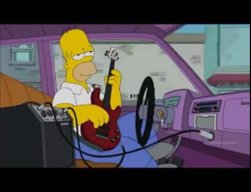
homer hard work.jpg
 
If that's not your bag, that's fine. But being able to learn songs by ear has value. IMO, it should be a part of the practice routine
+1

It's funny that this came up. I'm playing mostly guitar these days and studying with a jazz teacher. In my last lesson I was playing him a Grant Green solo from Cool Blues that I transcribed and he said, "You know, in the end that's probably the best thing you can do to expand your vocabulary."

I will add that knowing your chords, scales and theory help tremendously. If you watch someone that doesn't know any chords, scales or theory try to figure out a line, they tend to view every single note as a legitimate choice to try. If you watch someone that knows all that; in addition to their ear, they know that the obvious choices are likely chord tones, notes of the scale and passing tones.
 
Just no. No, no, no, no, no.

First, not every song is tabbed out. Second, most tab you find on the internet is wrong anyway. Third, the more you do it, the faster you get at it. Fourth, it's fantastic ear training which is used by good musicians every time they play.

In the 50 years I've been playing and studying music, I've NEVER heard any good musician say that transcribing music is a waste of time. Other than when I was studying classical music every single teacher I've ever had has encouraged it. It's actually the BEST thing you can do to improve your musicianship, but it's hard so a lot of people don't bother.


Big agreement on this content from Ifmn16. Transcribing (or learning by ear, however you look at it) songs/solos/what-have-you, puts to use all of the skills you need as a musician. Ear training, rhythm, phrasing, technique, theory (hopefully), and much more. Isolating your practice time into categories like technique, theory, playing along, etc, is great and a valuable way to practice, but sitting down and learning a song and transcribing it puts it all together.

As mentioned, it is a slow and laborious process. The most learning I ever did and the most advancement as a musician was when I was unemployed for seven months and I sat down and started transcribing Stone Temple Pilots songs, and learning James Jamerson lines from Motown. Best seven months I ever spent playing bass by far.
 
Other than when I was studying classical music every single teacher I've ever had has encouraged it.


What amuses me is dictation exercises are part of the classical pedagogy as well! They all seem to have classes involving that stuff but instrumental lessons never encourage it which seems weird, but there is a lot we can learn from that world and a lot from our world we can use as well. Somewhere in the middle is a pretty thorough music education.

Transcribing classical stuff is a really good exercise as well. Transcribing a 4 part choral or choir really gets your ears together in hearing voicing and harmony.

I can categorically say that in my professional career I have had to learn music by ear. I've never been given a tab, and if I was I'd be pretty insulted that someone's telling me what frets to play a note on. You'd never tell a piano player where any of their notes are.

Having said that, if someone's got no intention of playing music beyond a few songs at a party or a campfire then maybe tab is okay for them to do that? But that's not learning an instrument any more than a learning a few phrases from a phrase book is speaking another language.
 
  • Like
Reactions: PaulYeah
Respectfully disagree. Anything you can do to improve your ability to learn songs is beneficial. I agree that it should not be the only way you can learn a song - reading (in any form) is a huge benefit - but being able to learn songs by ear is good as well.

Using your little audition example as a basis, no, it should not impress anyone that you learned the audition list by ear. Who cares how you got there? But when you're there and they throw a curve ball at you: "Hey, do you know XYZ?" and you're able to say, "I've never played but could probably fake my way through it" - and do so - could be the difference between getting the job or not. You need to spend a lot of time doing ear training to be able either play a song you've only ever heard or pick up a song that you've never heard on the fly. I can play many songs (that I've never even heard of) competently by the third verse. That comes from spending a lot of time with ear training. That's what I do when I just want to play for fun - put on a Pandora station and just play with whatever pops up.
----------------------------------------------------
Thank you for posting- This is an interesting take.

As someone who primarily relies on tabs myself- This may sound like a stupid question, but if you just put on Pandora or iTunes and play along to the song without tabs- How do you "know" if you're playing the song correctly?

I'm sorry if this appears to be an incredibly stupid question, but this is one of the reasons I don't just put something on and try to rock out along with it- I'm worried I'm not hitting the right notes/not playing along correctly. I also sometimes have issues singling out the bass part when the drums and guitar are present. (Obviously I can tell when only the bass is playing).

I feel like I'm kind of caught in this weird paradox bc I am a visual learner so playing along with Songsterr has helped me a ton and I've even memorized a few pieces of songs I play regularly, but I know that I need to get away from tabs at some point and focus on just listening bc music is auditory, not visual.

I have done the exercise where I play the tab first and then try to play the song without looking at the tab, but I feel like all that does is give me bad habits and while I can usually tell if the song is going up or down in pitch, I have no way of knowing if I'm playing it "right" or not bc I worry I'm hitting the wrong notes as I'm playing along.

The heart of my question- Do you have any tips on playing along by ear to songs?

I understand that notating a song note for note is supposed to help with this, but I've never really understood how to do that (maybe I just need more acute hearing?).

If I ever wanna get in a band- I'm worried I'm gonna learn something incorrectly and it's going to come back to haunt me later.

Would REALLY appreciate any advice even if it's just to relax and not take it so seriously.

Thanks! \m/
 
  • Like
Reactions: comatosedragon
Just no. No, no, no, no, no.

First, not every song is tabbed out. Second, most tab you find on the internet is wrong anyway. Third, the more you do it, the faster you get at it. Fourth, it's fantastic ear training which is used by good musicians every time they play.

In the 50 years I've been playing and studying music, I've NEVER heard any good musician say that transcribing music is a waste of time. Other than when I was studying classical music every single teacher I've ever had has encouraged it. It's actually the BEST thing you can do to improve your musicianship, but it's hard so a lot of people don't bother.

View attachment 4215895

You're taking what I said out of context. Obviously, if there's no tab, you have to learn it by ear. And obviously, if the tab isn't 100% correct, you learn the incorrect parts by ear. I was talking about learning from scratch that which is already tabbed because someone, either OP or someone else, don't remember, essentially said that. Whether it's by ear, tab, or anything, if your goal is to learn the song, either for a gig or to learn a technique, every moment spent with the rewind button is a moment spent where you're not learning how to play fast triplets, double thumb, or whatever. I thought my comment and subsequent comments were pretty clear. At no point did I say or even imply that if something is hard, it's not worth doing. I've led my entire life with the knowledge that doing things that are challenging are ultimately much more rewarding. When I learn songs, I learn Steely Dan, Stevie, EW and F, Jaco. I don't learn 'Louie Louie.'

I see your mantra there about agreeable disagreement. I'm still disagreeing or clarifying agreeably here. But someone else might have reacted less calmly. Life Pro Tip: If you want people to disagree with you agreeably, couple of things:

1. Don't be rude and demean the person, which is what you did there with the Homer Simpson thing. I didn't report you. But one more of those and I will. Don't be so rude and demeaning.

2. Disagree with what they said, not your bogus interpretation of what they said. At no point, did I say that by ear all the time, in and of itself, is bad. I set up a very specific context for that, which you chose to ignore. And at no point did I say that doing something difficult is not worthwhile. I quite literally never ever even came close to saying that. This was like having an argument with your wife. Wives always interpret what you say. They're never on point with what a man actually said. So don't do that.

Follow these simple rules, and people will disagree amicably - which I'm still doing here because that's how I do things. Thanks for reading.
 
  • Like
Reactions: EddiePlaysBass
I was a decent player early on with nothing but a good ear. I quit playing for a long time and started back at age 45. I took lessons, learned to read, and leaned a ton of theory. The last 10 years have been a blast and working on the things I knew I was weak at made all the difference.
 
1) I have never tried learning a song 'by ear'. I wouldn't even know where to start. Even when I first started wanting to play back in the late '90s; since the internet was becoming a thing, I would just look online to find (usually incorrect) tablature of songs I wanted to learn. These days, I rely on Rocksmith. For those not in the know, Rocksmith is software/a game that allows you to plug your bass into your PC or console, and play along to songs while the tab is scrolled in front of you. It's fun as a game, but probably not the best learning tool. While the software is running, sometimes I can please myself by playing very well to (what seems to me) a difficult song. "Bernadette" by the Four Tops, for example. I spent a few days playing this song exclusively, and now I can almost 100% the song within the game. Turn off the computer though, and I don't even know what the first note is. I will just stumble willy nilly all over myself. I need to separate myself from this 'crutch'.

2) I never learned any scales. :eek:
I can play a "C major" scale starting on 8th fret of E and playing across the neck, but ask me to play it (or any other scale) anywhere else on the neck, and I will have to sit down with pencil and paper to figure it out. But yet, I may sit and watch an hour or two of videos of Scott Devine or Mark from talkingBass.com about scale pattern exercises when I have a slow night at work (Night Auditor here). What, am I hoping this will be absorbed by osmosis?

3) I never practice with a metronome. This is probably a result of mainly only 'practicing' by using Rocksmith. Metronome apps are free, I have one on my phone, a couple different ones on PC, even a physical one on a Peterson tuner .... and I still refuse to use them all.

1) Learning songs by ear: My method is to find chord charts or tabs online, then play along, fixing any mistakes in the tab that I notice. By the end of this exercise I've usually learned the song 90%. Takes a few weeks for complex songs to sink in so my muscle memory can recall them rather than my regular old brain memory.

2) Scales: I find scales kinda easy - learn them starting on different notes. Learning pentatonic arpeggios is more useful IMO. The in between notes are easy to just fill in by ear. Once you get the shapes down it's easy to transpose to different keys. Daric Bennett has some great videos on youtube for scales, modes, arpeggios etc.

3) Metronome - I never used to practice with a metronome, but I started recently using Carol Kaye method where she uses the metronome on the 2 & 4 (like a snare hit) instead of on every beat. Really helps since it forces you to imagine the 1 & 3 beats to fill in the time. This video was a real eye-opener for me (sorry I can only find it as a FB link)

 
You're taking what I said out of context. Obviously, if there's no tab, you have to learn it by ear. And obviously, if the tab isn't 100% correct, you learn the incorrect parts by ear. I was talking about learning from scratch that which is already tabbed because someone, either OP or someone else, don't remember, essentially said that. Whether it's by ear, tab, or anything, if your goal is to learn the song, either for a gig or to learn a technique, every moment spent with the rewind button is a moment spent where you're not learning how to play fast triplets, double thumb, or whatever. I thought my comment and subsequent comments were pretty clear. At no point did I say or even imply that if something is hard, it's not worth doing. I've led my entire life with the knowledge that doing things that are challenging are ultimately much more rewarding. When I learn songs, I learn Steely Dan, Stevie, EW and F, Jaco. I don't learn 'Louie Louie.'

I see your mantra there about agreeable disagreement. I'm still disagreeing or clarifying agreeably here. But someone else might have reacted less calmly. Life Pro Tip: If you want people to disagree with you agreeably, couple of things:

1. Don't be rude and demean the person, which is what you did there with the Homer Simpson thing. I didn't report you. But one more of those and I will. Don't be so rude and demeaning.

2. Disagree with what they said, not your bogus interpretation of what they said. At no point, did I say that by ear all the time, in and of itself, is bad. I set up a very specific context for that, which you chose to ignore. And at no point did I say that doing something difficult is not worthwhile. I quite literally never ever even came close to saying that. This was like having an argument with your wife. Wives always interpret what you say. They're never on point with what a man actually said. So don't do that.

Follow these simple rules, and people will disagree amicably - which I'm still doing here because that's how I do things. Thanks for reading.
I responded to what you wrote. I didn't take anything out of context, you changed the context with subsequent posts, which I didn't read. This happens all the time on TalkBass. Someone posts something, then when people disagree with them, it's "Well that's not what I meant." I can't respond to what you meant, only to what you wrote.

Save your threats. Go ahead and report me if you think I broke the rules.
 
I'm sorry if this appears to be an incredibly stupid question, but this is one of the reasons I don't just put something on and try to rock out along with it- I'm worried I'm not hitting the right notes/not playing along correctly. I also sometimes have issues singling out the bass part when the drums and guitar are present. (Obviously I can tell when only the bass is playing).

Let me first put this out there: I don't get hung up on note for note bass lines. I always focus on 1) groove and form, 2) any signature lines that an average person would miss if it's not there (like the Bass solo on "All Right Now".) As long as the groove is being served most people will never know that you're not playing the original bass line note for note. There are a few bassists that I will try to work out exactly what they are doing because I enjoy the way they craft lines and their lines actually advance the song a bit. Three notables are Tiran Porter (Doobie Brothers), John Paul Jones (Zeppelin) and Jamerson (Motown). If you're in a tribute band, you may have to focus more on the original line. I honestly doubt that the pro bassists even actually play all of their recorded lines - in many case, bass lines are grooves - playing the arpeggio upside down or sideways makes little difference as long as the groove is there.

So in this context there really is no "correctly", there is "am I supporting the song?" So what if I flub it? - I'm just jamming for my own pleasure. But doing this adds to my personal vocabulary and I have actually been able to play songs with in bands that I've never formally worked out just because I do this. And with Pandora, I typically get a lot of repetition and each time I hit a given song, I usually play it a little better and add a little more pizazz. There's more benefit to doing this than just learning songs - I learn and absorb new licks and phrases that I can use in other situations.

I understand that notating a song note for note is supposed to help with this, but I've never really understood how to do that
Notating or transcribing a line is usually more helpful for the signature bits or if you need to go down the "note for note" route. Typically, if I am learning a song for a band, I will grab a chord chart of the interwebs and then try to use it along with the track. I often need to adjust it for accuracy, and my ear training makes this pretty quick most of the time.

If I ever wanna get in a band- I'm worried I'm gonna learn something incorrectly and it's going to come back to haunt me later.
I personally have never run into anyone who complained that I wasn't playing the song "right enough". I take that back, I was moving from one band to another who had a common song (Gimme Three Steps). Each band played with different degrees of attention to the original. The new band asked me to try to play it more like King. I wasn't playing it wrong per se, I was playing what fit the band that was doing it. Another reason to be able to adapt lines as called for - not all bands play a song the same way.

I just had an audition with a new band (very good band) last weekend, and I mentioned that I'm not a note for note kind of guy and they all laughed and told me not to expect that from them either. "If the audience wants to listen to THAT version of the song, they should buy the CD." (Yeah we're old school.) We played it close enough to recognize and most of your listeners won't even notice what you're doing differently.

Pro music is covered by other pros all the time - is the fact that Aerosmith plays "Come Together" completely different than the Beatles wrong? IMO, no, it's just their take on the song.

Again, ear training is just one tool - reading chord charts, sheet music and tabs are all good tools to have.
 
Last edited:
The heart of my question- Do you have any tips on playing along by ear to songs?

I am too unskilled to be giving advice but I can share a recent epiphany that I had. I started playing along with jam tracks... that's just drums plus a chord progression. Once you know the chords used in a song (which are derived from the key), then you know what you're "allowed" to play. Once you can hear the progression moving, you will know what chord is coming next, and then at least you know the root note to hit.

Playing this way is a very, very different experience than playing a full song on Songsterr. It makes you think in different ways and I also found that it was a lot of fun, even though I wasn't playing the "real" song, just a vastly simplified bassline of mostly root notes.

I would recommend picking one of your favorite Songsterr tracks, figuring out the chords, and writing them down on a printout. Then try playing along while thinking about the chords instead of the bassline as written... even if you are only hitting the chord root note on the 1. After that makes sense, study the bassline as written, to see how it uses the chord tones. If you don't know about how intervals between notes are used to build chords, you'll have to look in to that too. It is a lot to take in... but once you have done this you will understand the song in a way that is very different than memorization.

(There's a computer/mobile app called iReal Pro which is dedicated to playing these kind of jam tracks. It's expensive for a mobile app at ~$15 but I found it really valuable. )

To play along by ear to a song you have not studied, you need to figure out the key, which then gives you a big hint as to which chords may be used. Like, if the song keeps coming back to A, the key is probably A, which means the song is probably made with these chords.

upload_2021-3-25_11-45-37.png


Some chord combinations are more likely than others, for example I-IV-V is very common and if the key is A, that means the song uses A/D/E chords.

If that is all unfamiliar, check out this article. It will blow your mind.
 
I would not say that I'm my own worst enemy, but there are definitely gaps in my knowledge that would benefit from closing. Top three are: I can't read music very well, I have poor left-hand technique, I lack ear-training and cannot distinguish what notes are simply by listening. Of the three, the one I would like to address the most is ear-training - and I might do it this year. I'm interested in finding a vocal coach because I have a very horrible singing voice and I'm hoping that improving in that regard might help my note recognition as well.
 
  • Like
Reactions: comatosedragon